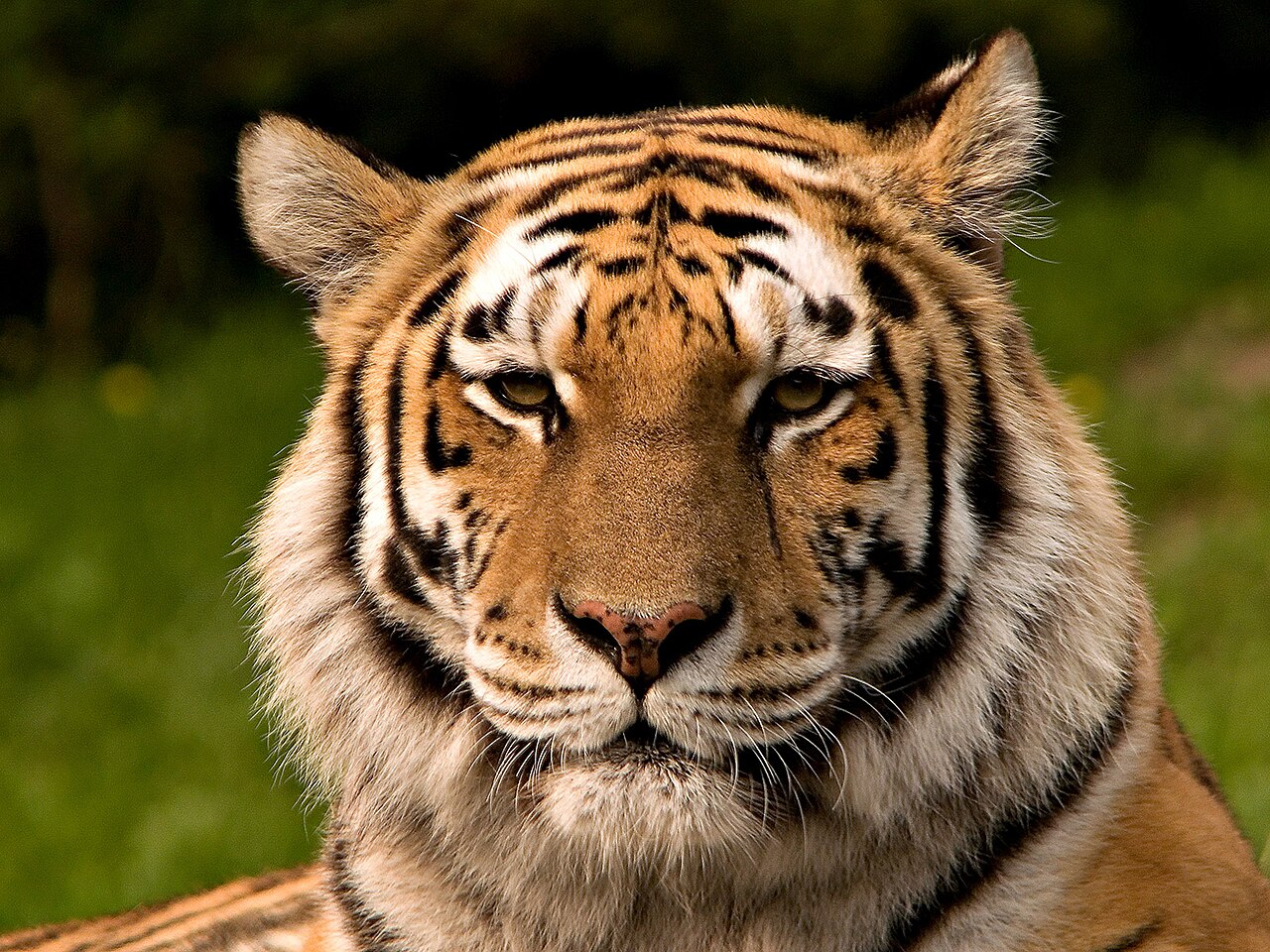
Tiger Symbolism: What It Means as Your Spirit Animal
Tiger symbolism stands for strength, courage, willpower and protection. As a spirit animal it asks you to use that power with patience rather than force. The tiger (Panthera tigris) has been a guardian, a mount of gods and a zodiac sign across Asia for millennia, so its meaning shifts with the tradition.
As a spirit animal the tiger means courage and independence with a shadow side of anger and burnout; in dreams and repeated signs it is typically a call to act on something you have prepared. A chasing or attacking tiger warns of anger or a conflict you have been avoiding.
What Does a Tiger Symbolize?
A tiger symbolizes raw strength, courage, independence and protection. In animal symbolism the big cats hold the top of the power scale, and the tiger takes the solitary end of it. It stands for self-reliance rather than leadership.
The emotion a tiger represents is passion held in check, strong feeling that is released only when something is at stake.
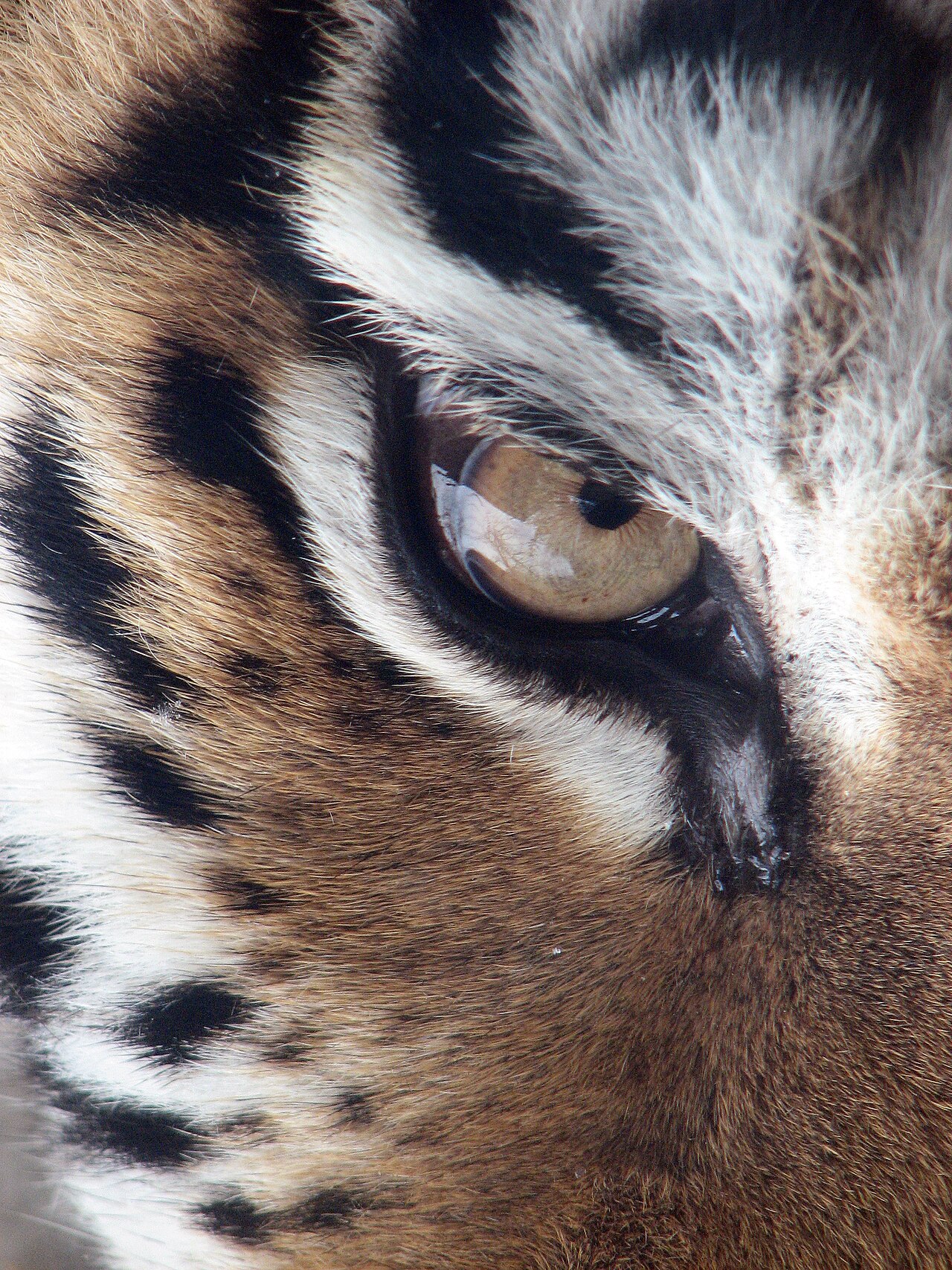
Tiger energy means focused drive. A tiger is an ambush hunter that waits in cover for a long time and then commits everything to one rush. Applied to a person, tiger energy looks like patient preparation followed by a single decisive move, and it fades fast if the effort drags on.
The Tiger as a Spirit Animal, Totem, and Power Animal
As with other animal spirit guides, a tiger spirit animal is a guide that shows up for a season of your life, a tiger totem is a lifelong companion, and a tiger power animal is the one you call on in a specific challenge.
People who claim the tiger as their animal describe themselves as bold, self-directed and restless with routine.
Tiger people can be aggressive when crossed, can isolate themselves because asking for help feels like weakness, and tend to burn out after short bursts of intense effort. Call on the tiger before a confrontation, a big decision or a boundary you need to set.
Tiger Symbolism in Chinese Culture and the Zodiac
In Chinese culture the tiger symbolizes bravery, protection and royal authority, and it is the third of the 12 zodiac animals. Tiger years include 1986, 1998, 2010 and 2022, with the next one in 2034, each starting at Chinese New Year in late January or February, so people born in January of those years usually belong to the Ox. People born in Tiger years are described as brave and competitive, a natural protector.

The tiger counts as king of the beasts in China, and the reason is written on its forehead. The stripes there are traditionally read as the character 王, meaning king. The White Tiger, Baihu, is one of the Four Symbols of Chinese cosmology, guardian of the west and of autumn.
That protective role reaches into the nursery. Tiger-head shoes and hats for small children are typically meant to ward off harm.
Tigers in Hindu and Buddhist Traditions
The gods most linked to tigers are Durga, Shiva and, in Buddhism, Padmasambhava. In Hindu tradition the tiger carries the goddess Durga into battle. She rides a tiger or a lion, depending on the region, when she fights the buffalo demon Mahishasura, and the animal beneath her stands for power placed in the service of protection. Shiva meditates on a tiger skin, which in Hindu reading shows mastery over desire and ego.
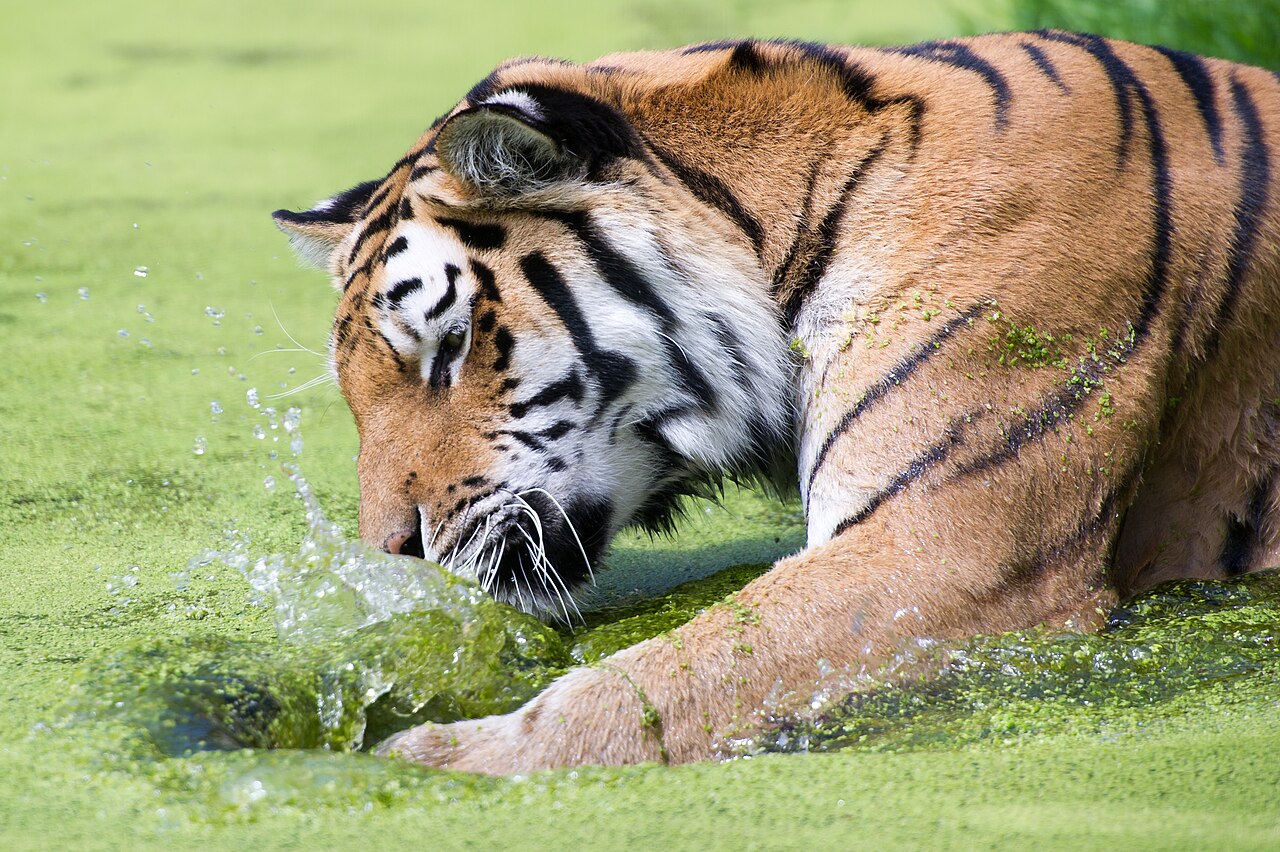
Buddhist tradition turns the tiger into a test of compassion. In one of the Jataka tales, a prince finds a starving tigress about to eat her own cubs and offers his body to her so that all of them survive.
In Bhutan the tiger is a vehicle again. Padmasambhava, honored as Guru Rinpoche, is said to have flown on the back of a tigress to the cliff where the monastery of Paro Taktsang, the Tiger’s Nest, now stands.
Tigers in Japanese and Korean Myth
Japan has no wild tigers, so Byakko, the White Tiger of the west, came in through Chinese cosmology and appears on the walls of the Kitora tomb near Asuka.
Korea tells the tiger’s story with a twist. In the Dangun founding myth a tiger and a bear both ask to become human and are told to stay in a cave eating only garlic and mugwort. The bear endures and becomes the mother of Dangun. The tiger gives up and leaves, so in Korean tradition the tiger stands for impatience as much as for power.
Korean folk painting makes the tiger kindly. It serves as the messenger of the mountain spirit Sansin, and minhwa paintings show it grinning or sitting beside a magpie, comic rather than threatening. Hodori, the tiger mascot of the 1988 Seoul Olympics, is that friendly tiger as a modern national symbol.
Seeing a Tiger: Dreams, Signs, and Omens
Seeing a tiger is typically a good omen of protection, and it turns into a warning when the tiger chases or attacks you. A dream or sign has to be read by what the tiger was doing and how you felt.
| Situation | Typical reading | Question to ask yourself |
|---|---|---|
| Chased by a tiger | An avoided conflict is gaining on you | Who am I angry with and have not told? |
| Calm tiger beside you | Power under control, allies at hand | What could I attempt this month if I trusted my own strength? |
| White tiger | Protection and a spiritual turning point | What belief am I ready to leave behind? |
| Tiger attacking you | Open conflict or your own temper breaking loose | Where did I lose my patience this week? |
| Tiger cub | New strength still growing and in need of protection | Which young plan or skill needs shelter before it can fight? |
| Repeated tiger images | A nudge to act on a prepared plan | What have I rehearsed but never started? |
| Dead tiger | End of a forceful phase, loss of drive | Which battle can I finally put down? |
Frequently Asked Questions
Does the Bible say anything about tigers?
Yes, in a few older translations. Tigers do not appear in the King James Version, but the Catholic Douay-Rheims Bible, following the Latin Vulgate (tigris), renders Job chapter 4, verse 11 as “The tiger hath perished for want of prey,” and the medieval Wycliffe Bible also puts a tiger in that verse. Other English Bibles translate the same Hebrew word as lion.
What is a tiger’s worst enemy?
Humans. Adult tigers have almost no natural predators, so poaching for skins and bones, the loss of forest habitat, the loss of prey and conflict with people are what cut their numbers, according to the World Wildlife Fund.
What are the 12 spirit animals?
The Chinese zodiac has 12 animals, Rat, Ox, Tiger, Rabbit, Dragon, Snake, Horse, Goat, Monkey, Rooster, Dog and Pig. Your zodiac animal is fixed by birth year, while a Western spirit animal can change with a phase of your life.
Is the white tiger a different symbol from the orange tiger?
Yes. In Chinese cosmology the White Tiger Baihu is a guardian of the west and autumn, while the ordinary tiger stands for courage and royal authority.
Is the tiger a national animal?
Yes. The Bengal tiger (Panthera tigris tigris) is the national animal of both India and Bangladesh. India manages its wild tigers through a network of tiger reserves under Project Tiger, and the Sundarbans mangrove forest shared by the two countries holds a tiger population that swims between islands.
Sources
- Encyclopaedia Britannica, Durga
- Encyclopaedia Britannica, Padmasambhava
- Bible Gateway, Job chapter 4 verse 11 (Douay-Rheims, Wycliffe, KJV)
- World Wildlife Fund, Tiger
- CITES, Appendices I, II and III