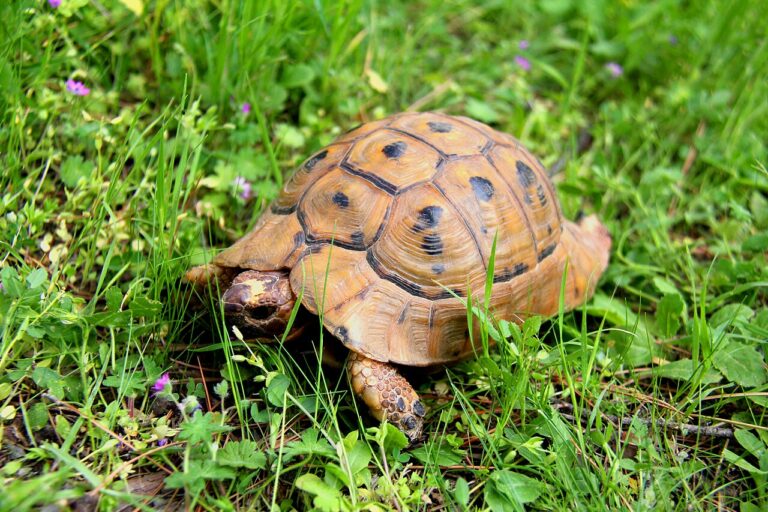
Sulcata Tortoise Care: A Complete Guide for a 70 Year Pet
Sulcata tortoise care comes down to four things: a large outdoor pen with a dig proof barrier, a diet that is almost entirely grass and hay, daytime warmth with a way to escape cold nights, and a plan for an animal that will outlive most of the furniture in your house. Get those right and the rest is routine.
The African spurred tortoise (Centrochelys sulcata) is the third largest tortoise on earth and the only giant species commonly sold as a pet in the United States. That mismatch, a 4 in hatchling that becomes a 100 lb grazing animal, is why rescues are full of them. This guide covers what an adult actually needs, what the hatchling years require, and the mistakes that shorten a sulcata’s life.
Sulcata tortoises need an outdoor grazing pen of at least 100 sq ft with a barrier buried 12 to 24 in deep, a diet of 90 percent grass and grass hay with no fruit or animal protein, daytime temperatures of 85 to 100 F, and a heated shelter for nights below 60 F.
| Requirement | Hatchling to 2 Years | Adult |
|---|---|---|
| Enclosure size | 4 x 2 ft minimum, indoors | 100 sq ft minimum, outdoors, more is better |
| Basking temperature | 95 to 100 F (35 to 38 C) | 95 to 100 F (35 to 38 C) |
| Night minimum | 75 to 80 F (24 to 27 C) | 60 to 65 F (16 to 18 C) |
| Humidity | 70 to 80 percent in the hide | Ambient, plus a humid burrow |
| Diet | Grass, weeds, hay, calcium daily | Grass and hay free choice, calcium twice weekly |
| Soaking | 15 to 20 minutes daily | Once or twice weekly |
Are Sulcata Tortoises Easy to Take Care Of?
The daily care is simple, and the long term commitment is not. A sulcata eats grass, drinks from a shallow pan, and spends most of the day grazing or sleeping in a burrow. There is no complex feeding schedule, no live prey, and no delicate humidity balance once the animal is past its first two years.
What makes them difficult is scale. An adult weighs 70 to 150 lb (32 to 68 kg), digs burrows 10 ft (3 m) long, pushes through chain link, and needs a heated shed through any winter with freezing nights. Very few owners who buy a hatchling have that infrastructure, and almost none build it in time.
Compared with a Russian tortoise, which lives happily in a large indoor table for its whole life, the sulcata is an outdoor livestock animal in a shell. If you have a fenced yard in a warm state, it is one of the easiest reptiles to keep. If you have an apartment, it is one of the hardest.
How Big They Get, and How Fast
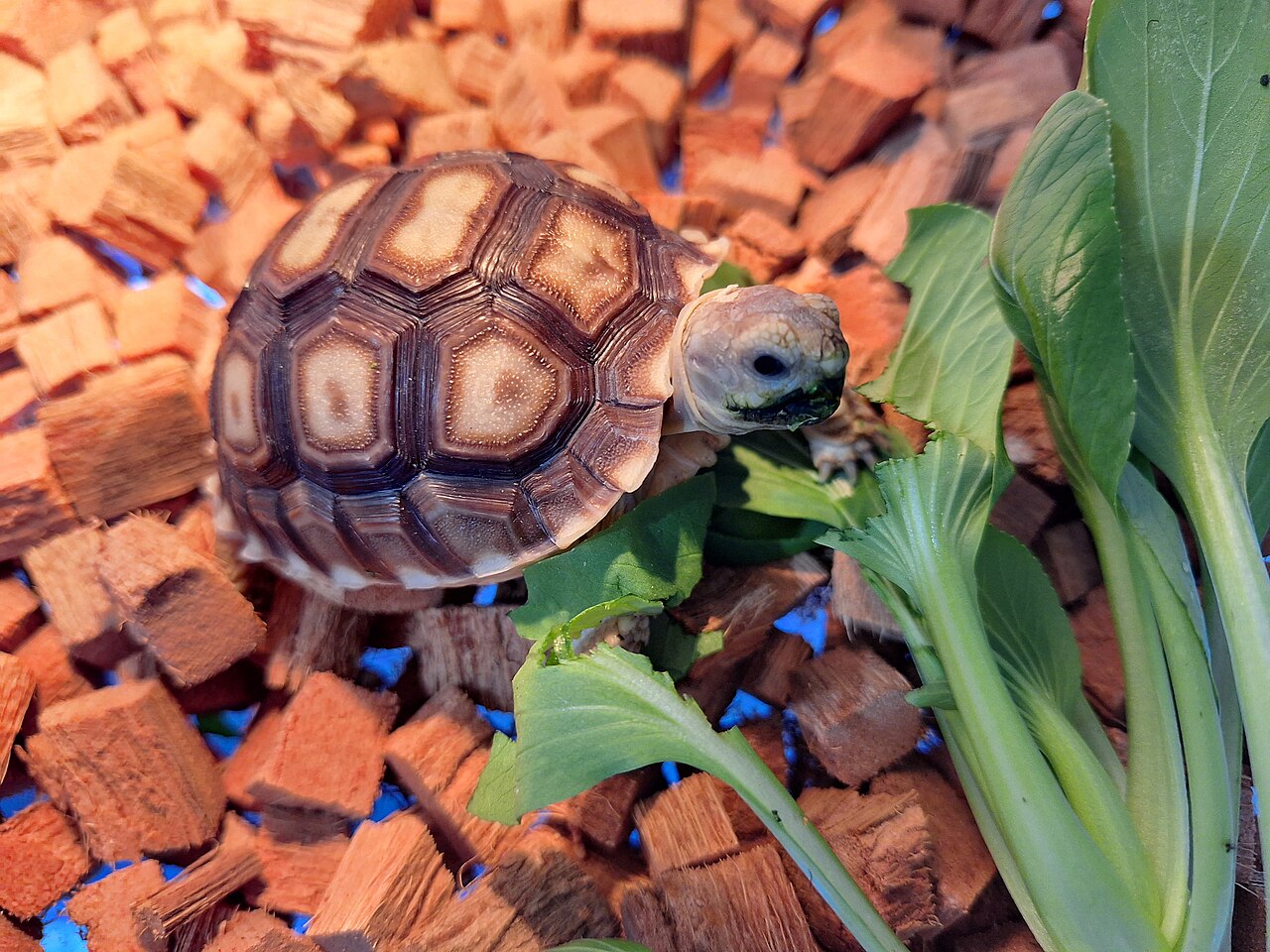
Sulcatas grow faster than any other tortoise commonly kept. A hatchling is about 2 in (5 cm) and 30 g. By one year it is typically 4 to 6 in, by three years 8 to 11 in, and by five years 12 to 16 in with a weight of 25 to 40 lb (11 to 18 kg). Growth continues for 15 to 20 years.
Adult size varies with genetics and feeding. Males commonly reach 24 to 33 in (60 to 84 cm) of carapace and 100 to 150 lb (45 to 68 kg), while females run smaller at 18 to 26 in and 70 to 100 lb. The largest recorded individuals exceed 200 lb (90 kg).
Fast growth is not the goal. Tortoises pushed with protein rich food grow quickly and develop deformed, lumpy shells and kidney damage. Steady growth on grass produces a smoother shell and a healthier animal, which is the whole argument behind the feeding rules below. Our sulcata tortoise species profile covers wild growth rates in the Sahel for comparison.
Housing an Adult: Space, Fencing, and Burrows

An adult sulcata needs a minimum of 100 sq ft of outdoor pen, and serious keepers give 400 sq ft or an entire fenced yard. Grazing space is the point. A tortoise that can browse live grass all day eats correctly without any effort from you and gets the exercise that keeps its weight reasonable.
Fencing must be solid and sight proof. Sulcatas walk into transparent barriers repeatedly and will flatten wire mesh, so use wood, block, or buried cinder wall at least 18 in (45 cm) tall with a footing sunk 12 to 24 in deep. They dig, and a tortoise that gets under a fence is gone within an afternoon.
Burrowing is normal behavior, not a problem to fix. In the wild they excavate tunnels up to 10 ft long to escape heat, and captives do the same. Keep burrows away from foundations, pools, and septic lines, or provide a large insulated shelter so the animal has a better option than digging.
Indoor Setup for Hatchlings and Winter

Hatchlings and yearlings live indoors in a tortoise table, not a glass aquarium. A 4 x 2 ft wooden table with 8 in walls works for the first two years, with a substrate of coconut coir and cypress mulch held damp enough to hold a shape when squeezed. Glass tanks trap stale air and stress young tortoises against the walls.
Equipment is short: a basking bulb over one end reaching 95 to 100 F, a UVB tube covering half the table, a humid hide, a shallow water dish sunk level with the substrate, and a flat slate for feeding. Replace linear UVB tubes every 12 months even if they still light.
Adults kept in cold states need an insulated shed with a thermostat controlled heater, sized so the animal can turn around comfortably. A 4 x 6 ft shed with a heavy rubber flap door and a pig blanket heater keeps a large sulcata safe through a northern winter.
Temperature and Humidity: How Cold Is Too Cold for Sulcatas?

Below 60 F (16 C) a sulcata should have access to heat, and below 50 F (10 C) it is at real risk. These animals do not hibernate and have no physiological strategy for cold. Chilled tortoises stop eating, fail to digest what is already in the gut, and develop respiratory infections that are difficult to clear.
The target range is 85 to 95 F (29 to 35 C) during the day with a basking spot of 100 F and a cooler shaded end. Nights in the 60s are tolerated by healthy adults. Hatchlings should not drop below 75 F at any point, and they are far less forgiving of a cold snap than adults.
Humidity is the part most keepers used to get wrong. The old advice to keep sulcatas bone dry because they come from arid Africa ignored that wild hatchlings spend their days in humid burrows. Young tortoises need a hide at 70 to 80 percent humidity, which is the single strongest defense against pyramiding.
Sulcata Diet: Grass First, Everything Else Second
A sulcata should eat grass and grass hay for at least 90 percent of its intake. Bermuda grass, orchard grass, and timothy hay all work, offered free choice so the animal can graze all day. This is a grazing species with a hindgut fermentation system built for high fiber, low protein forage.
Beyond grass, the useful additions are broadleaf weeds and edible flowers: dandelion, plantain, clover in moderation, hibiscus, mulberry leaves, and grape leaves. Opuntia cactus pads with the spines removed are excellent and add water and calcium. Dust food with plain calcium carbonate two or three times weekly for adults, daily for hatchlings.
Commercial tortoise pellets can be a small part of the diet if they are grass based, soaked before feeding. Skip anything grain heavy. The detailed feeding list, with quantities by age, lives in our sulcata tortoise diet guide.
Foods That Cause Damage
Animal protein is the most damaging single item. Dog food, cat food, and mealworms cause rapid shell deformity, gout, and irreversible kidney damage in a species that evolved on dry grass. A tortoise fed dog food for a year may look impressively large and be permanently harmed.
Fruit is the next problem. Sulcatas are not fruit eaters, and sugary food disrupts the gut flora they depend on for fiber digestion, which produces loose stool and bloating. This is a genuine difference between species: a red footed tortoise is a forest omnivore that does eat fruit, while a sulcata is not.
Limit spinach, kale, and beet greens because their oxalates bind calcium. Iceberg lettuce is harmless but worthless, and supermarket greens in general are too soft and too wet to build a healthy shell. Grass is not a budget option, it is the correct food.
Water, Soaking, and Should I Pour Water on a Tortoise?
Do not pour water over a tortoise’s head, because water forced into the nostrils can be aspirated and lead to pneumonia. Soaking is the correct method: place the animal in a shallow tub of lukewarm water reaching the bottom of the shell, and let it drink and absorb through the cloaca on its own.
Hatchlings should be soaked 15 to 20 minutes daily for the first year, then several times weekly. Adults need a soak once or twice a week in dry climates, and a permanent shallow water pan in the pen that they can walk into without tipping. Change the water daily, because they defecate in it.
Hydration matters more in this species than in most. Chronic mild dehydration is the main driver of bladder stones, which are common in sulcatas and often require surgery. A tortoise that urinates a clear liquid with only a little white urate paste is properly hydrated.
Preventing Pyramiding
Pyramiding is the raised, lumpy scute growth seen on most captive sulcatas, and it is caused by dry conditions during growth far more than by diet. Controlled studies on this species found that humidity, not protein level, was the dominant factor. It is permanent once formed, so prevention is the only treatment.
The protective measures are straightforward: a humid hide for every tortoise under about 10 in, damp substrate, daily soaks, and grass rather than pellets. Outdoor tortoises with access to a real burrow rarely pyramid, because the burrow holds high humidity even in dry air.
Mild pyramiding is cosmetic. Severe pyramiding is associated with deformed limbs, metabolic bone disease, and reduced lifespan, and it is a reliable sign that a young tortoise was kept too dry and fed too richly. Check the shell before buying any juvenile.
Signs of a Healthy Sulcata
A healthy sulcata is heavy for its size, active in the morning, and interested in food the moment it warms up. The shell should feel solid with no soft spots or flexing at the edges, the eyes clear and fully open, and the nostrils dry. Legs and neck should retract firmly rather than hang loose.
Weigh the animal monthly on a bathroom or livestock scale and write the number down. Steady gain in a juvenile and a stable weight in an adult are the most reliable health signal you have, because tortoises hide illness until it is advanced. A drop of more than five percent deserves a vet visit.
Common Health Problems and Vet Care
Respiratory infection is the most frequent illness and shows as bubbles or discharge at the nostrils, open mouth breathing, wheezing, and lethargy. It almost always follows a period of cold or damp cold housing, and it needs a reptile veterinarian and injectable antibiotics rather than a pet store remedy.
Bladder stones, shell rot, and beak overgrowth round out the common list. Stones follow chronic dehydration, shell rot follows wet bedding and poor airflow, and overgrown beaks follow soft food. All three are easier to prevent than to correct, and all three are routine for an experienced exotics vet.
Find that vet before you need one. Reptile capable clinics are scarce, and a 90 lb tortoise cannot be carried into a general practice on short notice. The Smithsonian National Zoo animal guide is a useful reference for baseline biology when you talk to a clinician unfamiliar with the species.
Should I Get 1 or 2 Tortoises?
One is the safer answer. Sulcatas are not social, and two males will ram each other repeatedly, flipping one another and causing shell damage and injuries that can be fatal in summer heat. Males also harass females persistently, to the point where a lone female may stop eating.
Groups can work with space. A single male with three or more females on a quarter acre, with multiple shelters and separate feeding areas, is a stable arrangement used by many breeders. Anything smaller than that turns into constant conflict, and the loser has nowhere to go.
If you want two tortoises, keep them in separate pens with a solid divider, not a shared yard. Species mixing is worse still; housing a sulcata with a leopard tortoise risks pathogen transfer between animals with different parasite tolerances.
Cost, Lifespan, and Planning Past Your Own
A hatchling costs $50 to $150, and everything after that costs more. A proper outdoor pen, a heated shelter, and the first year of equipment usually run $800 to $2,500, with ongoing costs for hay, electricity through winter, and occasional veterinary care. The tortoise itself is the cheapest part.
Lifespan is 70 to 100 years with good care, and captive animals in their fifties are common. That means most people who buy a hatchling will not outlive it. Written provision in a will, or a documented arrangement with a family member or a rescue, is a normal part of owning this species.
Rescues across the southwestern United States are overwhelmed with adult sulcatas surrendered by owners who ran out of space. Adopting one is cheaper, skips the fragile hatchling stage, and solves a real problem. Expected lifespan by age is broken down in our sulcata tortoise lifespan guide.
Frequently Asked Questions
Can sulcata tortoises smell?
Yes, and smell is their primary sense for finding food. Tortoises have a functional nose plus a vomeronasal organ in the roof of the mouth, and you can watch a sulcata extend its neck and sniff repeatedly before deciding whether to bite. They locate favorite plants by scent well before they see them.
Do sulcatas recognize their owners?
They learn to associate a specific person with food and will walk toward that person while ignoring strangers. Whether that counts as recognition or simple conditioning is debated, but the behavior is consistent and develops within a few months. Some individuals also tolerate handling from a familiar keeper and not from anyone else.
How much is a full grown sulcata tortoise worth?
Very little, and often nothing. Hatchlings sell for $50 to $150, while adults are frequently given away free or adopted out by rescues for a small fee because supply far exceeds demand. Breeding pairs with documented history hold some value, but a single adult is not an investment.
How big is a 4 year old sulcata tortoise?
A well raised four year old is typically 10 to 14 in (25 to 36 cm) long and weighs 15 to 30 lb (7 to 14 kg). There is wide variation depending on diet and whether the tortoise grazes outdoors year round. Animals much larger than this at four years were usually pushed with overfeeding.
Do sulcata tortoises hibernate?
No. Unlike Mediterranean and North American species, sulcatas have no hibernation or brumation phase and must stay warm and active all year. In the wild they escape seasonal heat and drought by retreating into burrows, which is aestivation rather than hibernation, and they continue feeding whenever conditions allow.
Can a sulcata tortoise live indoors full time?
Only for the first two or three years. After that no indoor enclosure in a normal house provides the floor space, the grazing, or the natural sunlight an adult needs, and permanently indoor sulcatas develop obesity, weak shells, and behavioral problems. Outdoor access for at least part of the year is a requirement, not an upgrade.