Red Footed Tortoise: Size, Cost, Lifespan, and Real Care Needs
The red footed tortoise (Chelonoidis carbonarius) is the friendliest large tortoise most American keepers will ever meet, and it is also the one most often bought before anyone checks the humidity bill. This South American species stays active, comes to the front of the enclosure when you walk past, and eats fruit with an enthusiasm that no Mediterranean tortoise shares. It is a genuinely good pet for the right household.
It is also a fifty year commitment in a shell that can reach the size of a dinner plate and needs tropical humidity every single day of a dry Midwestern winter. Below are the numbers that matter before you buy: adult size, real lifespan, current prices, the legal picture in the United States, and the honest answer to whether these tortoises know who you are.
Red footed tortoises grow to 11 to 14 inches (28 to 36 cm) and 20 to 30 pounds (9 to 14 kg), live 50 years or more, and cost 150 to 600 USD as captive bred hatchlings. They are legal to keep in most US states, tolerate handling better than most tortoises, and need 70 to 80 percent humidity year round.
| Quick Fact | Red Footed Tortoise |
|---|---|
| Scientific name | Chelonoidis carbonarius |
| Adult length | 11 to 14 in (28 to 36 cm), rarely 18 in (45 cm) |
| Adult weight | 20 to 30 lb (9 to 14 kg) |
| Lifespan | 50 to 60 years, some records past 80 |
| Price range | 150 to 600 USD captive bred |
| Humidity | 70 to 80 percent |
| Diet | Omnivore: greens, fruit, occasional protein |
What Is a Red Footed Tortoise?
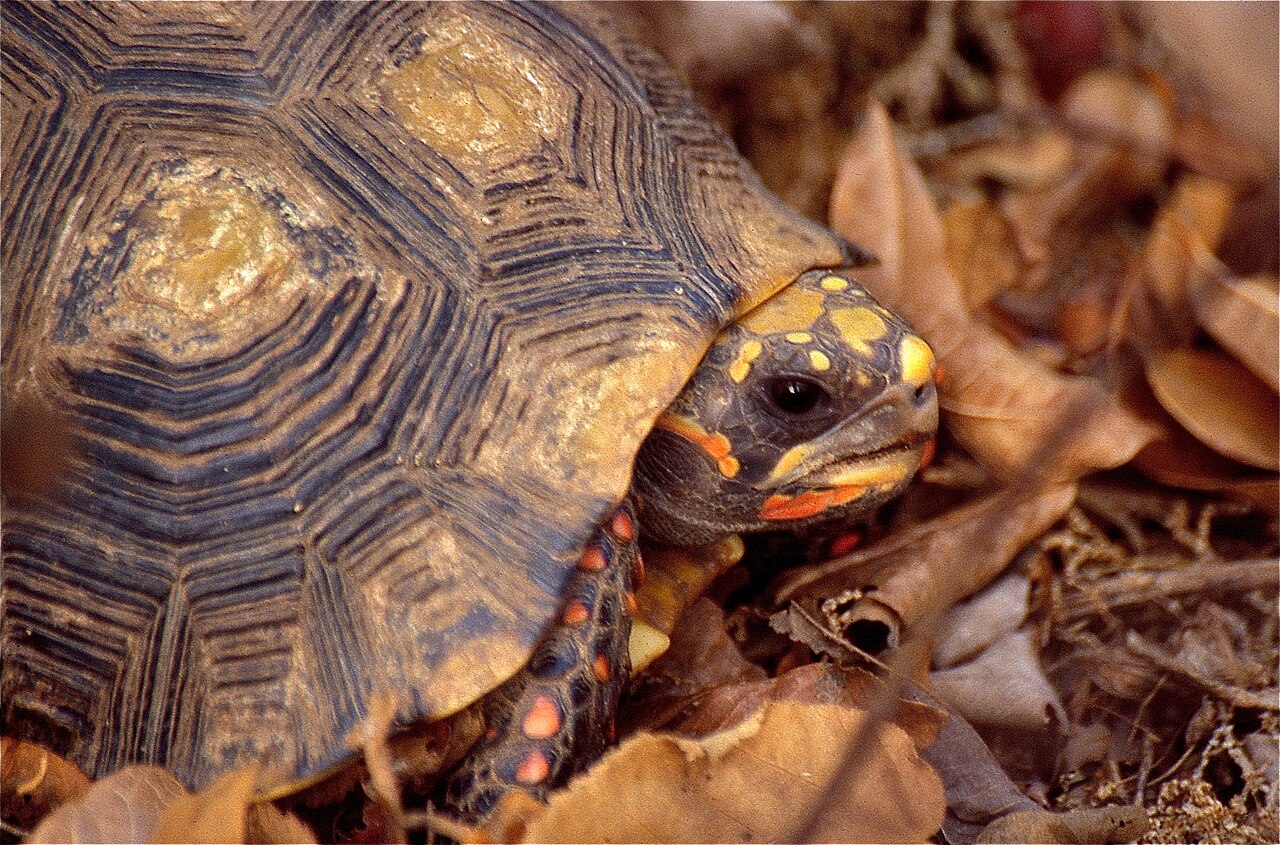
The red footed tortoise is a medium sized South American tortoise named for the orange to deep red scales on its front legs and head. Its shell is dark with a pale yellow patch in the center of each scute, and the sides of adult males pinch inward at the waist, giving them a shape often described as hourglass or peanut. No other tortoise in the US pet trade shows that combination of red limb scales and waisted shell.
Wild populations range from Panama south through the Amazon Basin to northern Argentina, plus several Caribbean islands, and they favor humid forest edges and seasonally wet savanna rather than desert. That origin explains almost every care requirement they have. A tortoise from a rainforest margin will not thrive on the dry, hay based setup that suits a Greek tortoise.
How Big Can a Redfoot Tortoise Get?
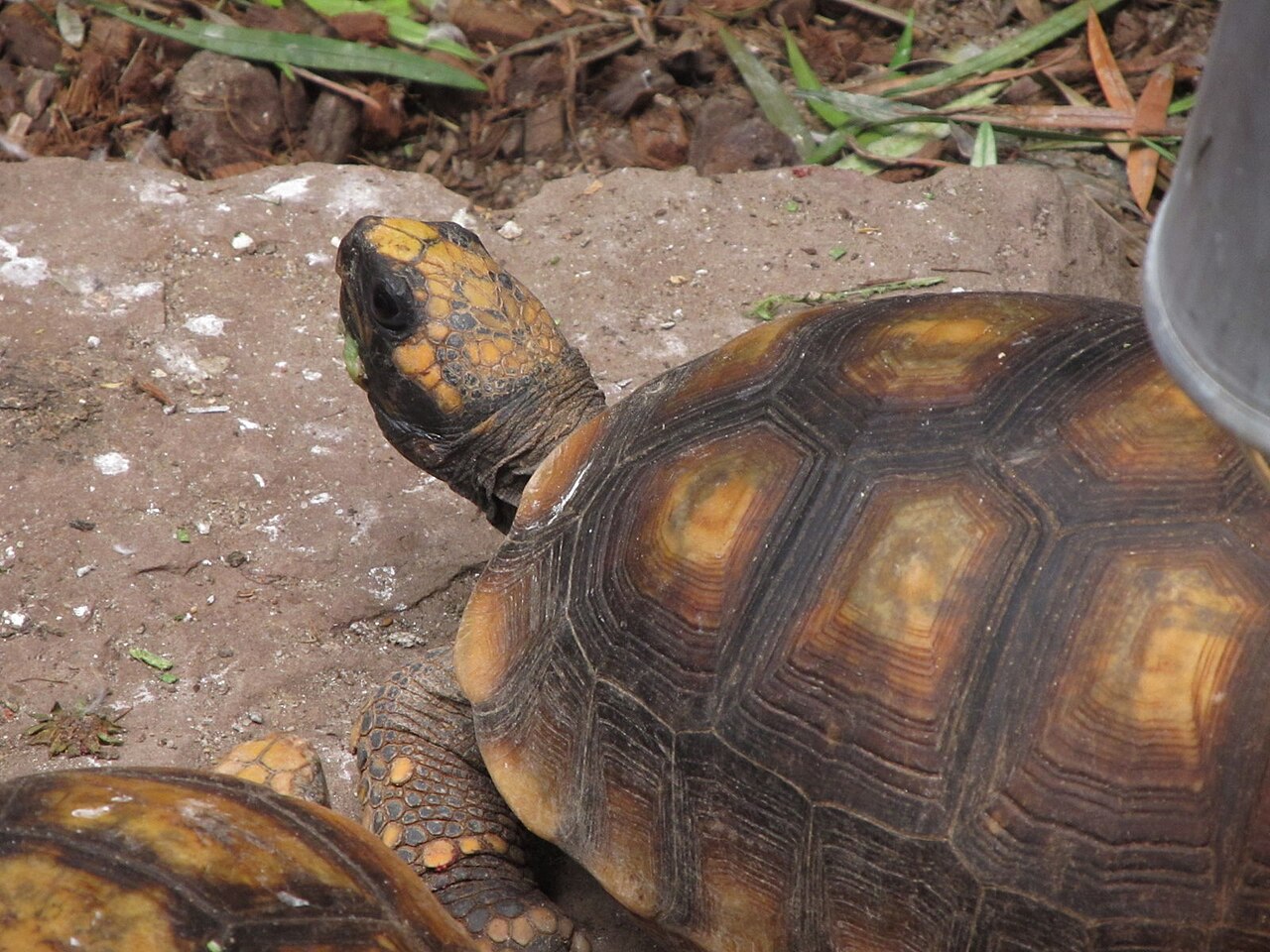
Most adult red footed tortoises reach 11 to 14 inches (28 to 36 cm) in shell length and 20 to 30 pounds (9 to 14 kg), with females typically a little longer and males more sharply waisted. Growth is fastest in the first five years and then slows considerably, and a well kept animal reaches adult size somewhere between five and eight years old.
Exceptional individuals go further. Specimens past 18 inches (45 cm) and 45 pounds (20 kg) turn up in older collections, usually animals that were kept warm and fed generously for decades. At the other end, the bloodline sold as cherry head, originating in southeastern Brazil, tends to top out around 9 to 11 inches (23 to 28 cm), which is why it is the version most often recommended for indoor keepers.
Red Footed Tortoise Lifespan
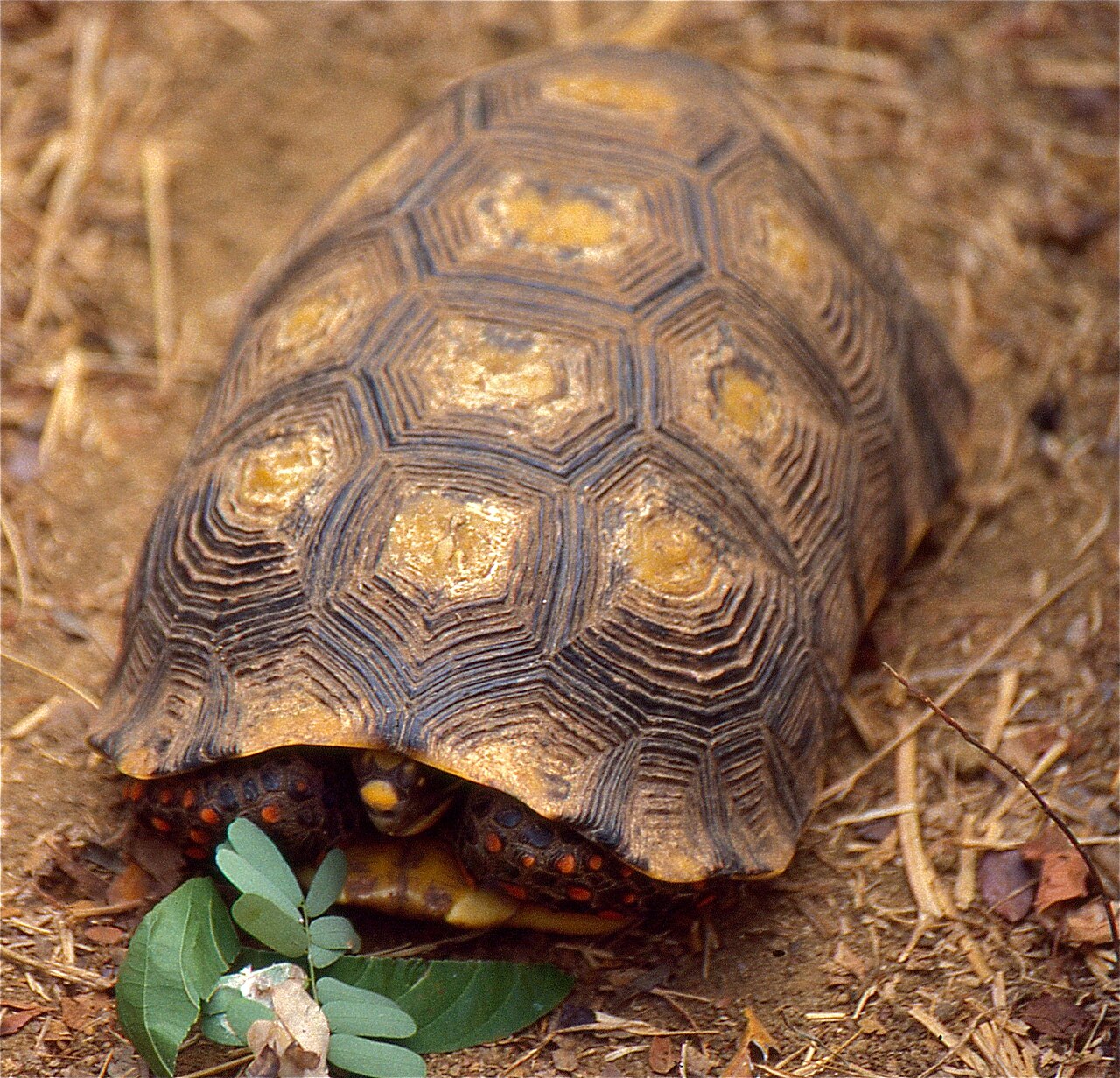
A healthy captive red footed tortoise lives 50 to 60 years, and claims of animals passing 80 appear in long running private collections. Published figures vary because almost nobody tracks a single tortoise from hatching to death, so treat any precise number with caution. What is not in doubt is that this animal will outlive the enthusiasm that made you buy it.
Plan for that directly. Write the tortoise into your estate arrangements, and be honest about who takes over if your circumstances change. Rescue groups across the United States are full of surrendered tortoises that were bought as hatchlings by owners who had no answer to that question.
How Much Do Redfoot Tortoises Cost?
Captive bred hatchlings run 150 to 400 USD from a reputable breeder, cherry head lines usually 250 to 600 USD, and well started juveniles or proven adults 400 to 900 USD. Prices rise in spring when hatchlings are scarce and drop in late summer after the season’s clutches come off. Wild caught imports are cheaper and are a bad buy: they arrive loaded with parasites and rarely adapt.
The purchase price is the small number. A correctly sized indoor enclosure, heat and UVB fixtures, a humid hide, a thermostat, and substrate come to 400 to 900 USD before the tortoise arrives, and electricity for heat and humidity runs 15 to 40 USD a month in a cold climate. Budget a further 200 USD or more per year for produce and a reptile vet who actually sees chelonians.
Is It Legal to Own a Red Footed Tortoise?
Yes, in most of the United States, keeping a captive bred red footed tortoise is legal without any permit. The species is listed on Appendix II of CITES, which regulates international trade rather than private ownership, so imports and exports need paperwork while a domestically bred animal generally does not. The U.S. Fish and Wildlife Service administers that side of the rules.
State law is where the exceptions live. Hawaii prohibits private reptile keeping almost entirely, and several states require permits or prohibit release and resale of nonnative reptiles, with Florida in particular tightening its nonnative species rules in recent years. Check your state wildlife agency and your city ordinance before you buy, not after, and keep the breeder’s receipt as proof the animal is captive bred.
Is a Red Footed Tortoise a Good Pet?
For a keeper who wants an interactive reptile and can deliver steady warmth and humidity, yes. Red foots are curious, bold around people, and far less prone to the stress hiding that makes many tortoises dull to own. They eat readily, they are hardy once established, and they do not hibernate, so there is no brumation period to get wrong.
They are a poor choice if you want a low effort animal or a small one. An adult needs at least 8 by 4 feet (2.4 by 1.2 m) of floor space, ideally more, and indoor humidity of 70 to 80 percent means a closed chamber rather than an open tortoise table. Anyone who wants a smaller, drier, lower maintenance species should look at a Hermann’s tortoise instead.
Enclosure, Heat, and the Humidity That Decides Everything
Aim for 80 to 85 F (27 to 29 C) on the warm side, a basking spot near 95 F (35 C), and a night temperature that never drops below 70 F (21 C). Humidity belongs at 70 to 80 percent, held with deep moist substrate such as cypress mulch or coco coir, a large humid hide, and a partly covered enclosure. Dry air is the single most common reason captive red foots develop lumpy, pyramided shells.
Give them UVB across a good part of the enclosure and a water dish wide enough to sit in, because red foots soak and drink far more than desert species. Outdoor time in a secure, shaded pen is excellent in summer in most of the US, but these tortoises cannot be left outside through a temperate winter the way a leopard tortoise sometimes can in the far south.
What Red Footed Tortoises Eat
Red foots are true omnivores, and that sets them apart from nearly every other tortoise in the trade. A working ratio is roughly 60 percent leafy greens and weeds, 30 percent fruit, and 10 percent other items, with a small portion of animal protein such as earthworms, a cooked egg, or a low fat wet cat food every one to two weeks. Wild animals scavenge carrion and insects, so this is normal rather than indulgent.
Good staples are dandelion, endive, escarole, collard greens, hibiscus leaves and flowers, mulberry leaves, papaya, mango, figs, and prickly pear. Dust with calcium several times a week for growing animals. Avoid iceberg lettuce, avoid dog food, and keep bananas occasional, since a fruit heavy diet without calcium is a reliable route to soft shell and runny droppings.
Do Redfooted Tortoises Bite?
They can, but bites are uncommon and almost never aggressive. A red footed tortoise has no teeth and no venom, just a hard keratin beak, and the usual incident is a hungry animal that mistakes a fingertip for a strawberry. On an adult that pinch can break skin and it stings, so hand feeding with fingers is a habit worth avoiding.
Feed from a dish or with tongs, wash your hands before and after handling, and treat any tortoise bite like any other puncture: clean it and watch it. Reptiles commonly carry Salmonella in their gut without appearing ill, which is the real health consideration in a household with small children rather than the bite itself.
Do Redfoot Tortoises Like to Be Held?
Almost no tortoise enjoys being lifted off the ground, and red foots are no exception, because being picked up mimics exactly what a predator does. What they do tolerate unusually well is contact at their own level: walking over your hands, accepting a shell scratch, and staying out in the open while you are in the room instead of bolting for a hide.
Keep handling short, support the whole body, and never carry them by the edge of the shell. Owners who report a tortoise that seems to enjoy attention are usually describing an animal that associates them with food and has learned it has nothing to fear, which is a reasonable result and more than most keepers get from an Indian star tortoise.
Can I Leave My Tortoise Alone for 2 Days?
A healthy adult red footed tortoise can be left alone for two days without trouble, provided heat and UVB run on timers and thermostats, the water dish is large and full, the substrate is freshly dampened, and a good volume of food is put out. Adults handle a short fast easily and often eat less when a room is quiet anyway.
Hatchlings and juveniles are a different case and should not go two days unattended, because they dehydrate quickly in an enclosure that dries out. For anything longer than a weekend, arrange a visitor. The failure mode is rarely hunger; it is a heat lamp that burns out or a humid hide that bakes dry while nobody is watching.
Do Red Foot Tortoises Recognize Their Owners?
Evidence points to yes, at least in the practical sense that matters. Tortoises have been shown to learn tasks, navigate mazes, and respond to individual cues, and red foots in particular are used in cognition research because they learn quickly. Keepers consistently report an animal that approaches a familiar person and retreats from a stranger.
Whether that counts as recognizing you or recognizing the shape and sound that brings food is unresolved, and anyone who tells you otherwise is going past the evidence. The behavioral difference is real either way, and it is the main reason this species feels more like a pet than a display animal, unlike most red eared slider turtles kept in the same homes.
What Is the Friendliest Tortoise to Have as a Pet?
Among commonly kept species, the red footed tortoise is the usual answer, along with the Russian tortoise for small setups and the Hermann’s tortoise for outdoor keepers in temperate states. Red foots score highest on the traits people actually mean by friendly: they stay visible, they approach people, and they tolerate a busy household without shutting down.
The yellow footed tortoise (Chelonoidis denticulata), its closest relative, has a similar temperament but grows past 27 inches (69 cm) and is far harder to house. The African spurred tortoise looks appealing as a hatchling and becomes a 100 pound (45 kg) lawn excavator. If the goal is a calm, manageable, genuinely sociable tortoise, the red foot and the marginated tortoise are the sensible ends of that choice.
Frequently Asked Questions
How long do red footed tortoises live?
Expect 50 to 60 years in good captive conditions, with credible reports past 80 years. Lifespan depends heavily on humidity, diet, and access to UVB during the growth years. Dry housing and a fruit heavy diet shorten it considerably, usually through shell deformity and kidney damage rather than any single dramatic illness.
Are red footed tortoises hard to care for?
They are moderate, not beginner level. Feeding and temperament are easy, but holding 70 to 80 percent humidity through a heated winter home takes a closed chamber and daily attention. Keepers who fail with this species almost always fail on humidity, not on food, and the damage shows as a pyramided shell that never smooths out.
Can two red footed tortoises live together?
Two females usually work in a large enclosure. Two males rarely do, since males ram and flip each other and the loser stops eating. A single male with two or more females is the most stable group, and any pairing needs enough floor space and multiple hides so a subordinate animal can get out of sight.
Do red footed tortoises hibernate?
No. They come from tropical and subtropical regions with no cold season, so they stay active year round and must be kept warm through winter. A red foot that goes quiet and stops eating in cold weather is not brumating, it is chilling down, and that is a veterinary situation rather than a normal seasonal rest.
Where can I find a red footed tortoise for sale?
Buy captive bred from a breeder who will show you the parents, the hatch date, and a recent weight, or adopt from a tortoise rescue, which usually has adults available for less than a hatchling costs. Avoid impulse buys at reptile expos, and skip any seller who cannot tell you whether the animal was imported.
What is the difference between a red footed and a cherry head tortoise?
Cherry heads are a regional form of the same species from southeastern Brazil, not a separate species. They stay smaller at roughly 9 to 11 inches (23 to 28 cm), show heavier red on the head, and often have darker shells. Care is identical, and the smaller adult size is why they command higher prices.