Hummingbird Poop: Size, Color and 3 Lookalikes Compared
Hummingbird poop looks like a small watery splash with a white or cream center, roughly 1/8 to 1/4 in (0.3 to 0.6 cm) across, and it dries to a thin chalky ring rather than a solid dropping. Because these birds live on nectar, hummingbird poop is mostly liquid, which is the single fastest way to separate it from the droppings of any other backyard bird.
That liquid signature is also why people find it in odd places: dotted across a car hood under a feeder, speckled on patio furniture, or in a tidy arc beneath a favorite perch. Below are the size, color and content details, the three droppings most often mistaken for hummingbird poop, and the sanitary part, which matters less than the internet suggests but still calls for gloves.
Hummingbird droppings are tiny, mostly clear liquid with a white or pale yellow solid speck, about 1/8 to 1/4 in (0.3 to 0.6 cm) wide when fresh. They land as a splash rather than a pellet, dry almost invisible, and accumulate in sprays under feeders and perches instead of in piles.
| Feature | Hummingbird droppings |
|---|---|
| Size | 1/8 to 1/4 in (0.3 to 0.6 cm) splash; solid part smaller than a pinhead |
| Shape | Liquid splatter or thin streak, no pellet, no coil |
| Color | Clear to milky white, sometimes cream, pale yellow, tan or dark flecked |
| Content | Mostly water and uric acid; traces of insect parts, never seeds or hair |
| Where found | Under feeders, wires, bare twigs, railings, car hoods, pool decks |
| Accumulation | Scattered spray of dozens of small marks, not a mound |
| Odor | Essentially none when fresh |
What Do Hummingbird Droppings Look Like?
Fresh hummingbird droppings look like someone flicked a wet paintbrush. The liquid fraction spreads on contact, so you get a 1/8 to 1/4 in (0.3 to 0.6 cm) blot with a denser white or pale yellow dot somewhere inside it, usually off center where the solid uric acid landed. On a dark car hood the mark reads as a faint water spot with a chalky middle; on a white railing it can be nearly invisible until it dries.
Dried marks are the ones people photograph and then cannot identify. Once the water evaporates, what remains is a thin pale ring or a short streak with a crusty speck, flat enough that a fingernail lifts it in one piece. Nothing in it looks like a pellet, which is the whole diagnosis: a bird the size of your thumb that drinks its weight in sugar water several times over cannot produce a formed dropping.
Hummingbird Poop Size, Shape and Color
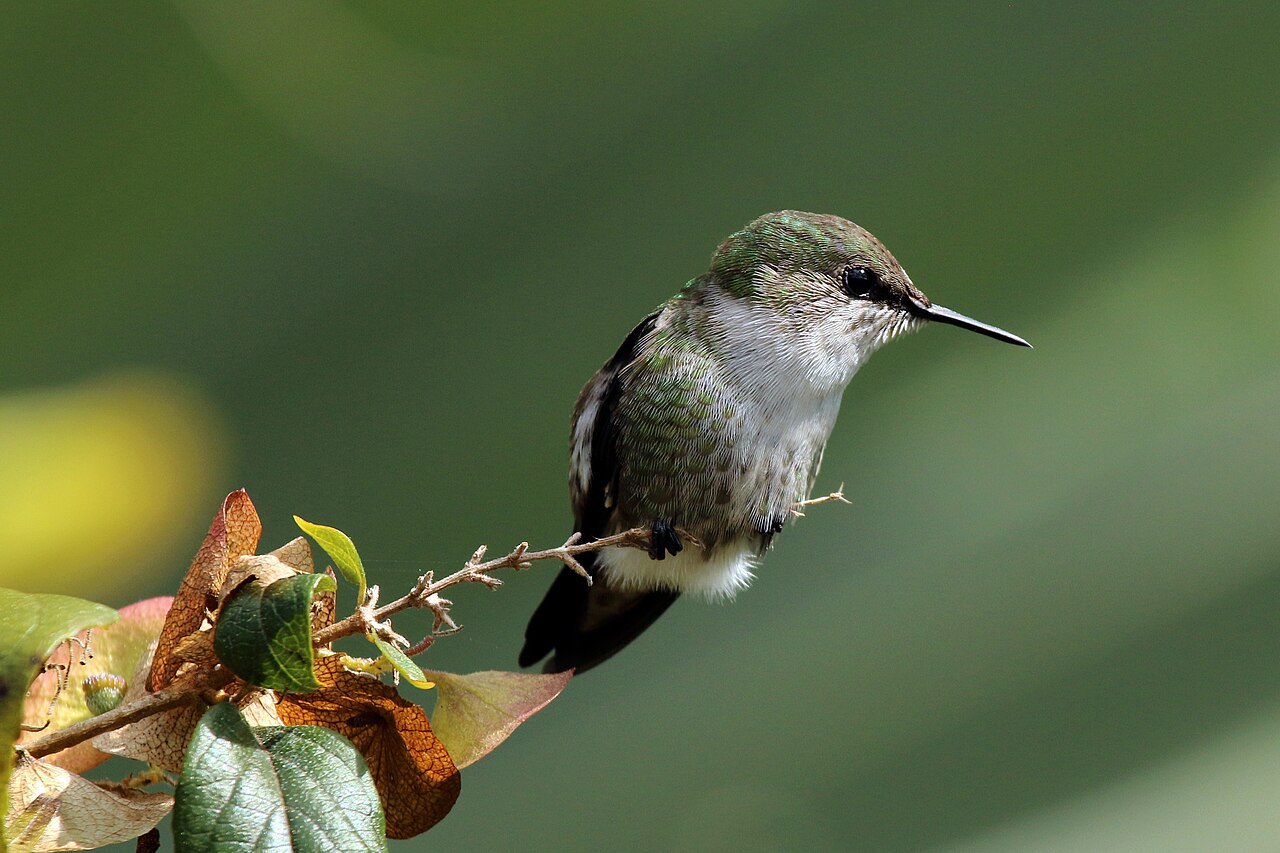
Size stays remarkably consistent because the bird is small and the volume per event is small. Expect a splash under 1/4 in (0.6 cm) and a solid component under 1/16 in (0.15 cm). Shape depends on what the dropping hit and from how high: a bird perched 1 ft (0.3 m) above a rail leaves a round blot, while one voiding in flight leaves a comma-shaped streak.
Color tracks diet. A bird running on clear sugar water and small insects produces clear to milky white droppings with pale yellow in the solid part. More insect feeding, which rises sharply in the nesting season, darkens the speck toward olive or brown and can add visible fragments. Red droppings are not normal and usually point to dyed commercial nectar rather than to blood, which is one more reason to skip red dye entirely. For what drives those shifts, see what hummingbirds eat across the season.
Why Hummingbird Poop Is Mostly Liquid
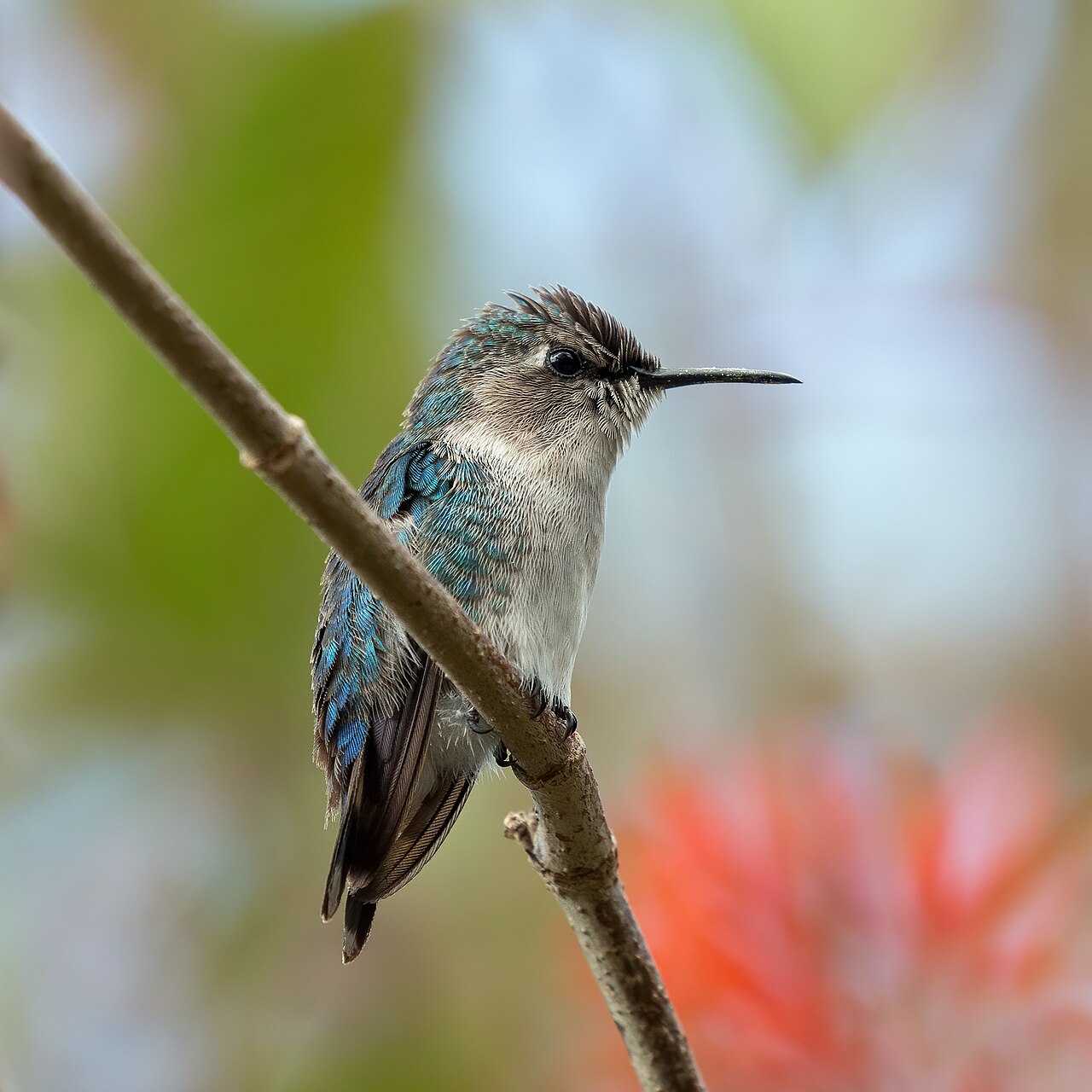
Birds normally combine urine and feces into one pasty dropping, since they excrete nitrogen as uric acid instead of dissolved urea. Hummingbirds break that pattern because nectar is roughly 80 percent water, and processing enough sugar to stay airborne means taking in enormous quantities of fluid. The excess leaves as dilute watery urine, with only a small solid fraction attached, a physiology the Cornell Lab covers in its ruby-throated hummingbird species account.
So the practical answer to whether hummingbirds poop or pee is both, in the same event, with the urine dominating. That also explains the texture difference people notice at mixed feeding stations: finch droppings under a seed feeder stay put as pasty blobs while hummingbird marks simply evaporate.
Where You Find Hummingbird Poop

Hummingbirds defecate from perches, not usually from the feeder port, so the mess collects under whatever they sit on while they digest. That means the bare twig 3 to 6 ft (1 to 2 m) from the feeder, a clothesline, a shepherd’s hook, a trellis wire, or the side mirror and hood of a car parked in the same spot every day.
Pattern matters more than any single mark. A hummingbird perch produces a loose constellation of small splashes spread over several square feet, refreshed through the day. A single large white splat on your windshield is a bigger bird. Dozens of pinhead-sized specks in a tight cluster on a wall are almost never bird droppings at all.
How Often Do Hummingbirds Poop?
Very often. An active hummingbird visits flowers or feeders every 10 to 15 minutes through the day and voids on a similar schedule, which adds up to dozens of events daily and far more in hot weather when fluid turnover is highest. Sitting at a feeder for an hour, a patient watcher will see the same bird defecate several times from the same twig.
That frequency is why accumulation under a favorite perch builds within days, and why a feeder area needs attention weekly rather than monthly. It also means the droppings themselves are a reliable activity log: fresh wet marks mean a bird used that perch within the hour.
Hummingbird Poop vs Bat Guano
Bats and hummingbirds both leave droppings in sprays under a roost or perch, which is where the confusion starts, but the material is nothing alike. Bat guano is dry, crumbly and dark, and it sparkles when you break it apart because it is packed with insect wing and shell fragments. It also piles up, since bats return to the same roost in numbers, so you find a mound in an attic, soffit or behind a shutter.
Hummingbird marks never form a mound and never crumble; they are flat films that dissolve again in rain. Location separates them further, since guano appears in enclosed spaces and hummingbird droppings appear in open air under wires and twigs. The same crumbly-versus-pasty logic applies when comparing bat poop and mouse poop.
Hummingbird Poop vs Finch and Sparrow Droppings
Small songbirds are the likeliest misidentification at a feeding station, because house finches, goldfinches and house sparrows perch in the same places. Their droppings run 1/4 to 1/2 in (0.6 to 1.3 cm), hold their shape as a pasty blob with a distinct white uric acid cap, and often contain visible seed hulls or fibrous plant material.
Hummingbirds eat no seed, so any dropping with hull fragments is not theirs. Songbird droppings also stay sticky for hours and stain, while hummingbird splashes dry clear within minutes on a warm surface.
Hummingbird Poop vs Insect Frass and Fly Specks
The tight clusters of dark pinpoints people find on siding, window frames and porch ceilings are usually insect waste. Fly specks are hard dark dots about 1/32 in (0.1 cm) across, laid down in dense groups near lights and entries. Spider droppings look like small dark ink splatters below a web anchor, and caterpillar frass under a shrub comes as dry ribbed pellets that look like coarse pepper.
Scale and dryness decide it. Insect waste is smaller than any hummingbird mark, concentrated rather than scattered, and immovable with water. If a dot will not soften under a damp towel, no bird made it.
Is Hummingbird Poop Toxic or Dangerous?
Hummingbird droppings are low risk, but they are still bird droppings. The pathogens associated with wild birds and feeding stations are Salmonella, Chlamydia psittaci, which causes psittacosis, and E. coli, and the realistic transmission route at a backyard feeder is contaminated hands and feeder surfaces rather than the droppings themselves. Guidance from the CDC on contact with wild birds and feeders comes down to the same two steps: do not handle droppings with bare hands, and wash hands afterward.
Histoplasmosis, the lung infection people most fear from bird waste, is tied to large aged accumulations of pigeon, starling or bat droppings in soil and enclosed roosts. A hummingbird perch does not produce that volume. The honest risk ranking for a feeder station is mold in old sugar water first, droppings second.
How to Clean Hummingbird Droppings Safely
Wear disposable gloves, dampen the area first so nothing becomes airborne, and never dry scrape or pressure wash droppings indoors. On decks, railings and furniture, warm water with dish soap removes fresh marks, and a solution of one part white vinegar to four parts water handles dried rings. Rinse and let surfaces air dry.
On a car, soak the spot with warm soapy water for a minute before wiping, because dried avian uric acid is acidic enough to etch clear coat if you grind it in. Feeders themselves matter more than any splatter: rinse and scrub every 2 days above 80 F (27 C) and every 4 to 5 days in mild weather, with hot water and a bottle brush rather than detergent residue. Discard nectar that looks cloudy or smells sour.
What Droppings Tell You About Nests and Activity
Droppings are a scouting tool. A thin ring of white specks on leaves below a branch fork, with no mound and no pellets, frequently sits under a hummingbird nest, because nestlings back up to the rim and shoot waste clear of the cup to keep it clean. The nest itself is the size of a walnut and bound with spider silk, so the splatter is often easier to spot than the structure.
Quantity and placement also tell you who is using a yard. Heavy marks on one twig mean a male is holding a perch and watching a feeder, while scattered light marks across a shaded shrub more often mean a nesting female hummingbird working a wider area. Before concluding a nest is active, read up on baby hummingbird timing, and compare the broader behavior notes in the hummingbird guide. Rodent droppings near the same feeder are a different problem, and squirrel poop versus mouse poop covers it.
Frequently Asked Questions
What do hummingbird droppings look like?
They look like a small watery splash, 1/8 to 1/4 in (0.3 to 0.6 cm) wide, with a white or pale yellow speck inside and no formed pellet. Dried, they leave a thin chalky ring or streak that lifts with a damp cloth, and they scatter in sprays beneath perches rather than piling up.
Do hummingbirds poop or pee?
Both at once, with urine dominating. Nectar is about 80 percent water, so hummingbirds shed large volumes of dilute watery urine alongside a very small solid fraction of uric acid. Most backyard birds produce a pasty combined dropping, which is why hummingbird waste looks wetter and smaller than anything else at a feeder.
What color is hummingbird poop?
Clear to milky white most of the year, with a cream or pale yellow solid speck. More insect feeding during nesting season darkens that speck toward olive or brown. Reddish droppings usually mean dyed commercial nectar rather than illness, and that dye serves no purpose for the bird.
Does hummingbird poop smell?
Fresh droppings are essentially odorless, because the volume is tiny and the diet is sugar water and small insects. A sour or yeasty smell near a feeding station almost always comes from fermenting nectar in the feeder, not from droppings, and it is a signal to empty and scrub the feeder immediately.
What does it mean if a hummingbird hovers in front of you?
Usually that you are standing between the bird and its feeder, or wearing red. Hummingbirds inspect anything that might hold nectar and defend feeding territory aggressively, including against people. Folk traditions read the hover as a message or a greeting, but the behavior itself is curiosity and territorial assessment.
Why shouldn’t you feed hummingbirds in the summer?
Summer feeding is fine; the real issue is spoilage. Above 80 F (27 C), a four part water to one part white sugar mix ferments and grows mold within 2 days, which is harmful to the birds. Keep feeders in shade, halve the fill volume, and change the nectar every other day.
Explore more: Animal Poop Identification: A Field Guide by Species