Egret Symbolism: 12 Meanings, Omens and What a Sighting Says
Seeing an egret is read almost everywhere as a sign to slow down and wait, and egret symbolism centers on patience, purity, clarity of purpose and good luck that arrives on its own schedule rather than yours. The reading comes from one observation anyone can repeat at a pond edge: a tall white bird stands motionless in shallow water for twenty minutes, then strikes once and feeds. Cultures that watched that for centuries turned it into a lesson about timing instead of effort.
American readings add a second layer. The great egret (Ardea alba) was hunted nearly to extinction for its breeding plumes around 1900, became the emblem of the conservation movement that stopped the trade, and is now common across the southern and coastal United States. Survival and return belong to its meaning here in a way they do not in older European folklore. What follows separates the traditions that actually say something about egrets from the modern spiritual writing that borrows from them, then works through the situations people search for one by one.
An egret symbolizes patience, purity, clarity and fortune that comes slowly, and most traditions treat a sighting as a favorable omen asking you to wait rather than act. Native American, Christian, Celtic and East Asian sources tie the bird to self reliance, vigilance and messages carried from water to land.
What Does It Mean to See an Egret?
The short answer is that a sighting marks a pause, not an event. In the folk readings collected from the Gulf Coast, the Carolinas and the Mississippi flyway, an egret appearing while you are stuck on a decision is taken as advice to hold position until the water clears. The bird itself does nothing dramatic, and that is the point of the symbol.
Three qualities carry across almost every tradition. White plumage reads as purity and honesty, the long stillness reads as patience and self control, and the solitary hunting style reads as independence. Where the readings diverge is in the question of whether the bird brings a message or simply models behavior, and that split runs along cultural lines rather than along anything the bird does.
| Situation | Common reading | What the tradition actually claims |
|---|---|---|
| Egret in your garden or yard | Peace arriving, a problem about to resolve | Modern spiritual writing, not older folklore |
| Egret at your window or on the roof | A message you have been avoiding | Borrowed from general white bird omens |
| Egret seen at night | Something hidden coming to light | Rare sighting, so readings are thin |
| Same egret returning daily | Confirmation you are on the right path | Usually a territorial bird on a feeding route |
| Dead egret found | End of a waiting period, release | Not an ill omen in most sources |
| Egret in a dream | Emotional clarity, patience being tested | Modern dream dictionaries |
| Group of egrets together | Community support, shared good fortune | Reflects real colonial roosting behavior |
Are Egrets a Good Omen?

Yes, in nearly every tradition that mentions them, egrets are a good omen. No major folklore source treats a white egret as a warning or a death sign, which separates it from the raven and the owl traditions that often get mixed into the same searches. The worst reading you will find is neutral, meaning the bird is simply going about its business and the sighting carries no charge at all.
The favorable reading is strongest when the bird is seen at water, which is its normal place, and weakens when the sighting is odd, such as an egret on a roof in a dry suburb. Odd placement is where the omen readings get specific, and those situations are handled in their own sections below. For the broader pattern across species, see what birds symbolize across traditions.
Egret Symbolism in Native American Traditions
Specific egret lore is less widely recorded than lore about eagles, ravens or cranes, and honest sources say so. In Seminole and Miccosukee accounts from Florida, where great and snowy egrets are year round residents, white wading birds are associated with wisdom gained through watching, and in some Lakota teachings about wading birds generally the quality named is determination held quietly rather than shown. These are presented here as beliefs held within those traditions, not as universal facts.
A second strand matters for anyone researching the plume trade. Egret feathers were trade goods across much of eastern North America long before the millinery boom, and their use in regalia gave the bird a status tied to dignity and standing. Modern writing that calls the egret a pan Indian symbol of patience is flattening dozens of distinct traditions into one claim, and that claim does not hold up.
Egret Symbolism in Christianity and the Bible

The Bible does not name the egret, and translations that reach for a white wading bird usually render the Hebrew term as heron. In Leviticus 11 the heron appears on the list of birds not to be eaten, which is a dietary ruling rather than a symbolic one, and nothing in the text assigns the bird a moral character. Any article telling you the egret is a biblical symbol of the Holy Spirit is extending the dove tradition, not quoting scripture.
That said, Christian folk reading in the American South does use the bird. White plumage reads as purity and grace received rather than earned, and the egret’s habit of standing in water has been preached as an image of waiting on providence. In medieval bestiaries the heron family stands for the soul that flies above the storm instead of being caught in it, which is the closest thing to a formal Christian egret symbol.
Egret Symbolism in Celtic and European Folklore

Celtic tradition is thin on egrets for a simple reason: the great egret was a rare visitor to Britain and Ireland until the last few decades, and the bird that carries the lore there is the grey heron. In Irish and Welsh material the heron is linked to the shoreline as a threshold between worlds, to patience, and to a slightly uncanny solitude. Where modern writing presents Celtic egret symbolism, it is almost always heron lore with the name swapped.
Continental European folklore is more interested in the egret as a luxury item than as an omen. Plume hunting made aigrette feathers a status marker in nineteenth century Paris and London, and the bird’s symbolic weight there is vanity and excess as much as grace. That double edge, beauty that invites destruction, is a genuinely European reading worth keeping.
Egret Symbolism in China, Japan and Korea
East Asian traditions give the egret the clearest and best documented symbolism of any culture on this list. In Chinese art the egret, lu, puns on a word for path or salary, so a painting of an egret with a lotus is a wish for a smooth official career, and egrets paired with lotus flowers are a standard motif for purity in office. The reading is specific and positive, and it appears on porcelain, scrolls and textiles for centuries.
In Japan the shirasagi, the white heron or egret, carries purity and a slightly melancholy elegance, and Himeji Castle is nicknamed the White Heron Castle for its resemblance to the bird in flight. Korean folk painting uses the egret in similar ways, often as a wish for integrity. If you want the East Asian reading in one line, it is clean conduct rewarded with advancement.
Seeing an Egret in Your Garden or Yard
An egret in the garden is read as peace settling on a household and as a sign that a problem you have been circling is about to resolve without a fight. Where there is a pond, the practical reading comes first, because a lawn pond with goldfish is a buffet and the bird will return until the fish are gone. Both things can be true at once, and the folklore does not require you to ignore the fish.
If the yard has no water at all, the sighting is unusual enough that traditions treat it as pointed. The common reading is that something good is arriving by an unexpected route and you should not chase it. Readers who get a different wading bird in the yard may want the blue jay reading for comparison, since that bird is the one most often reported as a deliberate visitor.
An Egret at Your Window, Roof or Driveway
A white bird at the window is one of the most searched omens in English, and the egret inherits the general reading: a message has arrived and you already know what it concerns. Older sources tie white birds at windows to news about someone absent, while modern spiritual writing frames it as your own intuition demanding attention. Neither version treats it as bad news.
Egrets on roofs are worth a second look in practical terms, because the behavior usually means a nearby colony or a roost tree has been disturbed. Along the Gulf Coast after storms, egrets and herons stand on roofs and in driveways for days while their usual roosts are flooded or stripped. The omen reading of upheaval resolving is, in that case, a fairly accurate description of what is happening to the bird.
Seeing an Egret at Night
Night sightings carry the strongest reading of anything on this list, which is something hidden coming into the open. Egrets are diurnal feeders, so a white wading bird under a streetlight or a parking lot light at two in the morning is genuinely out of pattern, and traditions that pay attention to timing read that out of pattern quality as the message.
In practice, many night sightings are not egrets. The black crowned night heron (Nycticorax nycticorax) feeds after dark, is pale underneath, and is mistaken for an egret constantly under artificial light. Great egrets do feed at lit fishing piers and spillways where light concentrates prey, so the sighting is possible, just uncommon. If you heard the bird before you saw it, a harsh single squawk points to the night heron.
Seeing the Same Egret Repeatedly
Repeated sightings are read as confirmation. In the folk logic of omens, once is noise and three times is a message, so an egret on the same fence post every evening for a week is taken as agreement with a decision you have already made. People most often report this during a stretch of waiting, such as a job search or a medical result, which is exactly when the patience symbol lands hardest.
The biological explanation is also a kind of confirmation. Egrets hold feeding territories and walk the same route at the same tide or the same hour, so the bird is reliable because it is a creature of habit. Readers who want the contrast should look at blackbird omens, where repetition is read as a warning rather than as reassurance.
Finding a Dead Egret
A dead egret is not an ill omen in most sources, which surprises people who expect white bird deaths to read as warnings. The usual interpretation is the close of a waiting period, with the emphasis on release rather than loss. Some Gulf Coast accounts go further and treat it as a debt being settled, a reading shaped by the plume hunting history that nearly erased the species.
There is a reporting duty worth knowing. Egrets are protected under the Migratory Bird Treaty Act, and dead birds found in numbers can indicate botulism, avian influenza or a pesticide problem, so your state wildlife agency wants the report. Do not collect feathers, since possession is restricted even for birds that died naturally. The Cornell Lab’s Great Egret species account is the quickest way to confirm the identification first.
Egret Dreams and What They Mean
Dream readings for egrets track the waking symbolism closely, which is unusual. An egret standing still in clear water is read as emotional clarity and a situation you can see to the bottom of, while an egret in muddy or churning water is read as patience being tested past comfort. A bird that flies off as you approach is the standard image for an opportunity that will not wait.
Flight direction matters in older dream material. An egret flying toward you is read as news arriving, away from you as something concluding, and circling as a decision still open. These come from twentieth century dream dictionaries rather than from any older tradition, so treat them as a shared vocabulary rather than as authority. The same frameworks handle bat dreams in the opposite register, as transition rather than clarity.
Egret as Spirit Animal, Totem and Power Animal
In modern spirit animal practice the egret is assigned to people who work slowly, stand apart and strike once, and the standard phrasing is that the egret teaches timing over effort. The totem reading adds self reliance, since egrets hunt alone even when they nest in dense colonies, and the power animal reading is usually invoked when someone needs to stop forcing an outcome. None of this comes from Native American totem systems, despite the borrowed vocabulary, and it is fairer to call it contemporary practice.
If the egret is your stated spirit animal, the challenge named alongside it is impatience disguised as productivity. The shadow side in these frameworks is a tendency to look composed while nothing is actually resolved. Readers building a personal set of animal meanings often pair it with the goldfinch for optimism and hare symbolism for quick instinct, since the three cover slow, bright and fast temperaments.
Frequently Asked Questions
What does it mean when a white bird comes to visit you?
A white bird visiting is read across most English language folk traditions as a message, a blessing or news about someone at a distance, and almost never as a warning. Egrets, doves and gulls all get folded into this reading. The common thread is that white plumage stands for honesty, so the message is treated as one you can trust.
What is the meaning of cattle egrets?
Cattle egrets (Bubulcus ibis) carry a reading of partnership and opportunity taken where it appears, because they follow grazing livestock and farm machinery to catch flushed insects. They reached the Americas on their own in the 1950s and spread fast, so they also symbolize successful arrival in a new place. Seeing them in a pasture is treated as a sign of practical, shared gain.
What’s the difference between an egret and a Great Egret?
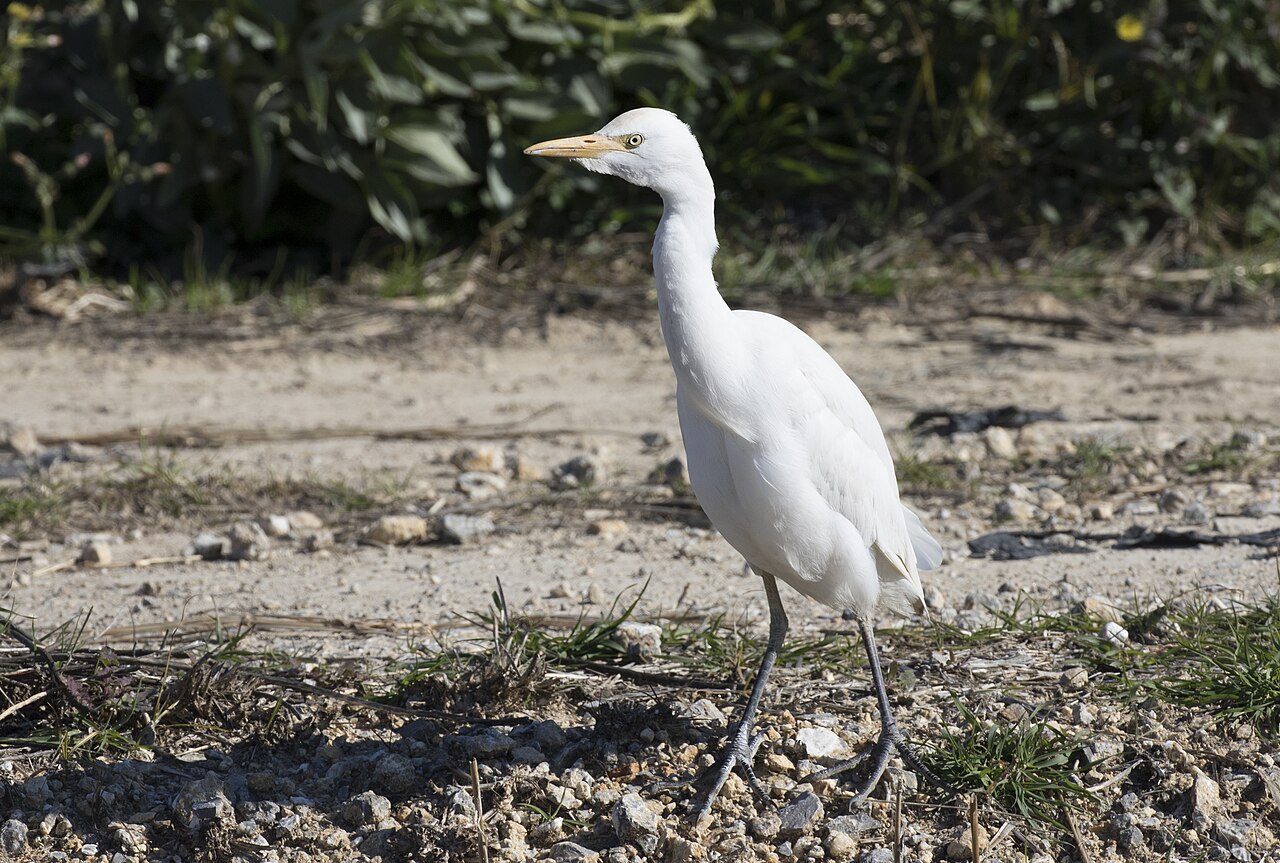
Egret is a loose term for several white herons, while Great Egret is one species, Ardea alba. The great egret is the large one with a yellow bill and black legs and feet. The snowy egret is smaller with a black bill and bright yellow feet, and the cattle egret is stocky with a short yellow bill and buff plumes in breeding season.
How rare is a snowy egret?
Snowy egrets (Egretta thula) are not rare today. They were nearly wiped out by plume hunting before 1918 and have recovered to roughly 140,000 birds across the Americas, common along both US coasts, the Gulf and inland wetlands in summer. They are less widespread inland than great egrets, so an inland sighting feels rarer than the population numbers suggest.
What is a group of egrets called?
A group of egrets is usually called a colony when nesting and a wedge or a siege when flying, with heronry used for the shared nesting site. Collective nouns for wading birds are largely literary inventions from fifteenth century hunting lists, so several terms compete. Colony and heronry are the two that biologists actually use.
Do egrets fly together?
Egrets feed alone but travel and roost together, so you will see them flying in loose lines at dawn and dusk between a shared roost and separate feeding spots. Mixed flights with herons, ibises and other egret species are normal. That split between solitary hunting and communal sleeping is exactly why the bird symbolizes independence and community at the same time.