Hawk vs Falcon: Key Differences Explained
Hawk and falcon are two words casual observers often use interchangeably for any mid-sized bird of prey circling overhead, but the two groups differ in body shape, hunting style, and even genetics enough that ornithologists once assumed they were closely related and later learned they are not. A hawk in the broad sense used on this site typically means a buteo like a red-tailed hawk, built for soaring on broad wings, while a falcon like the peregrine falcon is built for speed, with narrow, pointed wings and a tapered tail designed for a high speed dive called a stoop.
| Trait | Hawk | Falcon |
|---|---|---|
| Wing shape | Broad, rounded | Narrow, pointed |
| Tail shape | Broad, fanned | Tapered, straight |
| Hunting style | Soar and pounce, ambush | High speed chase, aerial stoop |
| Top speed | 40 to 60 mph diving | Over 200 mph diving (peregrine) |
| Beak | Simple hook | Hook plus tomial tooth |
Wing Shape and Flight Style
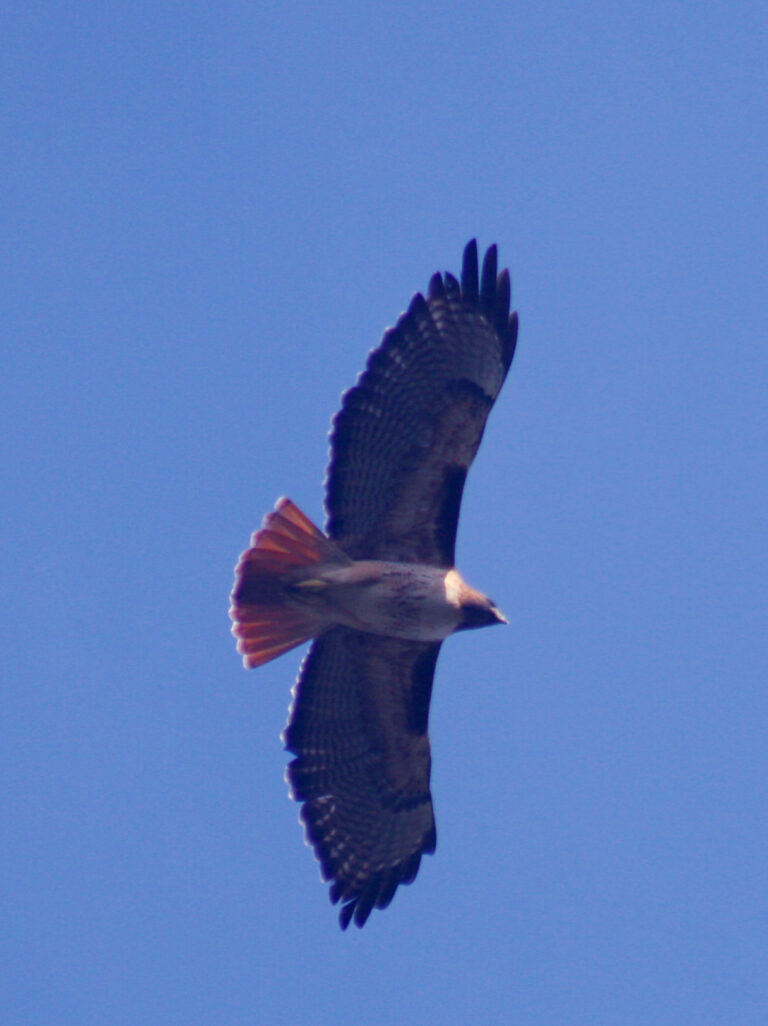
The single fastest way to separate a hawk from a falcon at a distance is wing shape. Hawks in the buteo group, including the red-tailed hawk and red-shouldered hawk, have broad, rounded wings built for catching rising thermals and soaring for long stretches with minimal effort. Accipiters like the Cooper’s hawk have shorter, more rounded wings suited to quick bursts through forest cover rather than open soaring.
Falcons, by contrast, have long, narrow, pointed wings that sweep back toward the tips, a shape built for sustained powered flight and extreme speed rather than effortless gliding. This wing shape is closer to that of a swift or swallow than to a typical hawk, and it is the main reason falcons can achieve the highest diving speeds of any bird.
This wing shape difference also shows up clearly in how each group flaps in level flight. A hawk’s wingbeats tend to be slower and deeper, often interspersed with long glides, while a falcon’s wingbeats are quick, shallow, and almost continuous, giving falcon flight a more mechanical, purposeful look even from a considerable distance and before any other field mark becomes visible.
Tail Shape and Silhouette
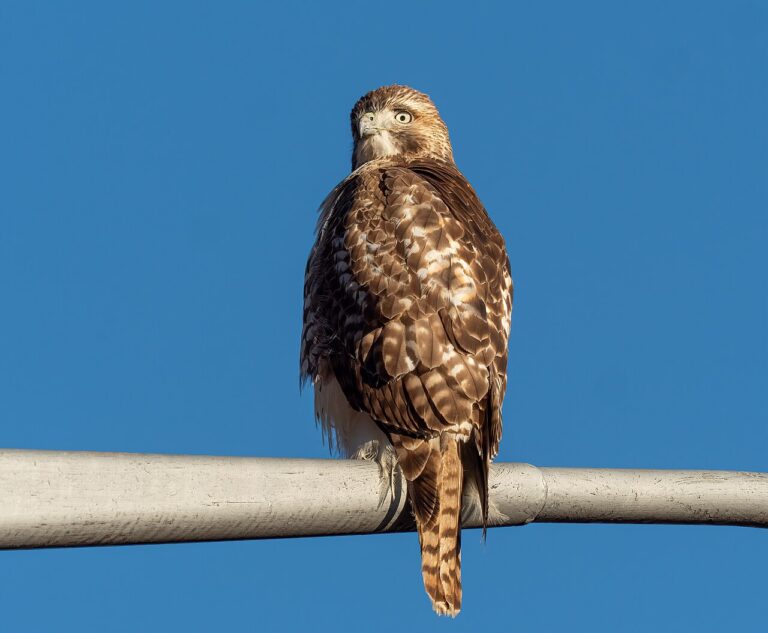
Hawks generally show a broad, fan shaped tail that spreads wide during soaring flight, providing lift and maneuverability at slower speeds. This broad tail, combined with the broad wings, gives most hawks a chunky, rounded overall silhouette when viewed from below against the sky.
Falcons show a narrower, more tapered tail that stays closed or only slightly fanned even during maneuvering flight, contributing to a sleeker, more streamlined, almost torpedo-like silhouette overall. Combined with the pointed wings, this gives falcons a distinctly different profile that experienced birders can often identify from a considerable distance without needing to see plumage detail.
Hunting Style
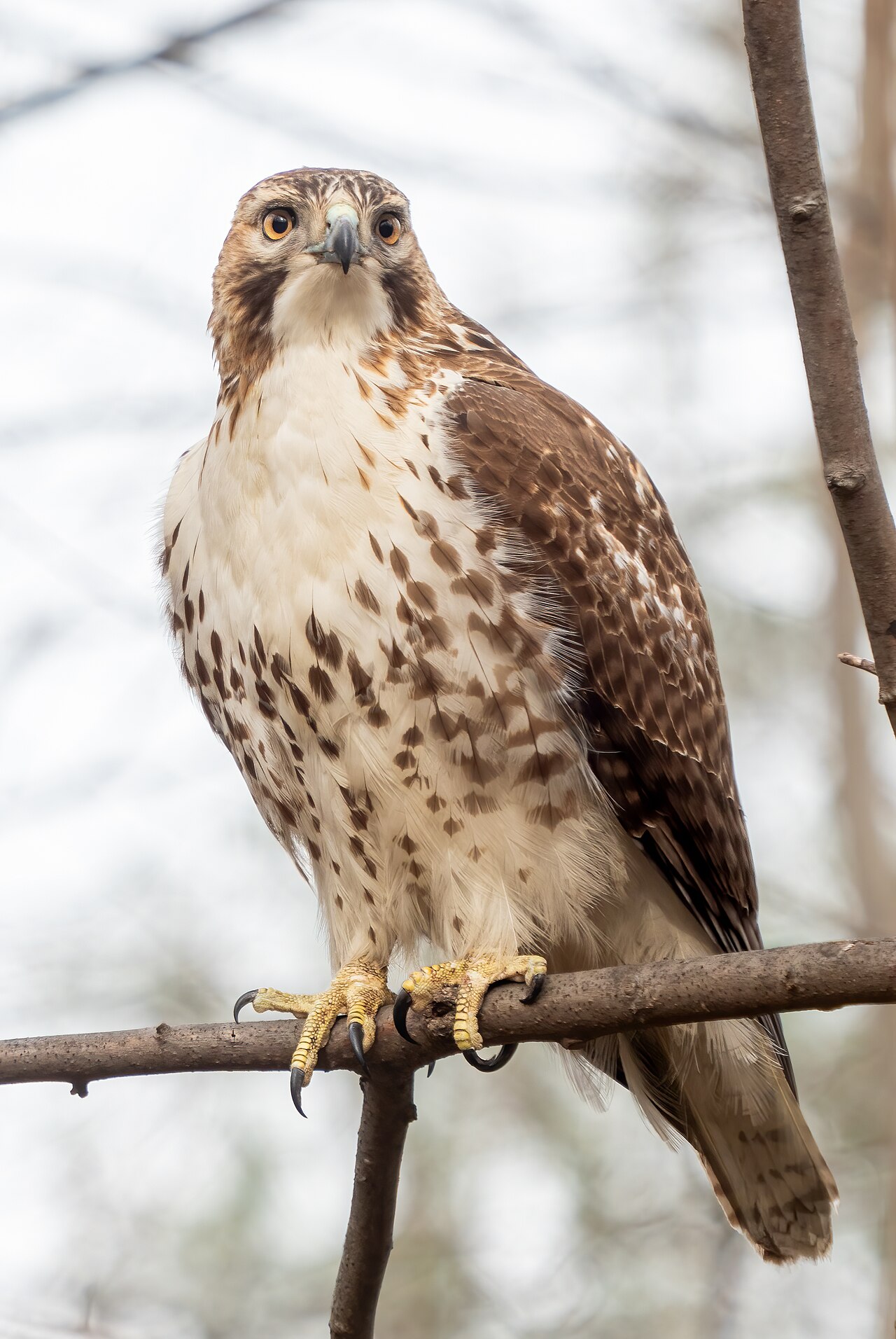
Most hawks hunt by soaring at moderate height scanning for prey below, or by perching quietly and ambushing prey that wanders within range, relying on power and surprise rather than raw speed. A red-tailed hawk, for example, often hunts from a roadside perch, dropping suddenly onto a rodent that has ventured into the open.
Falcons instead rely on speed and aerial pursuit, either chasing prey directly in level flight or climbing high above and then folding their wings into a near vertical stoop that can exceed 200 miles per hour in a peregrine falcon, the fastest measured speed of any animal on Earth. This stoop delivers a stunning blow that can kill or disable prey on impact, a hunting method essentially unique to falcons among North American raptors.
Beak Shape and the Tomial Tooth
Both hawks and falcons share the hooked beak typical of birds of prey, used for tearing flesh from prey. Falcons, however, have an additional small notch near the tip of the upper beak called a tomial tooth, which fits into a matching notch on the lower beak.
This tomial tooth allows falcons to sever the spinal cord of prey with a precise bite to the back of the neck, a killing method distinct from the crushing grip favored by most hawks, which typically rely on their talons rather than their beak to dispatch prey.
Size and Typical Examples
Common North American hawks range widely in size, from the small sharp-shinned hawk up through the much larger red-tailed hawk and ferruginous hawk. Falcons show a similar size range, from the small, colorful American kestrel up through the mid sized merlin and peregrine falcon, with the gyrfalcon standing as the largest falcon species in North America.
Because size ranges overlap significantly between the two groups, size alone is rarely a reliable way to separate a hawk from a falcon, making wing and tail shape the more dependable field marks in most situations. A large female kestrel, for instance, can appear roughly comparable in length to a small male sharp-shinned hawk, even though the two occupy entirely different families and hunting styles.
Regional field guides sometimes list additional species that reinforce this overlap, including the prairie falcon of open western country, which approaches the size of some smaller buteos while retaining every classic falcon field mark described above.
Taxonomy and Evolutionary Relationships
Despite their similar appearance and shared “bird of prey” role, hawks and falcons are not closely related on the evolutionary tree. According to genetic research summarized by the Cornell Lab of Ornithology, falcons are actually more closely related to parrots and songbirds than to hawks, eagles, or vultures, a surprising result that came from DNA studies conducted over the past two decades and that overturned decades of assumptions based purely on physical resemblance.
Hawks belong to the order Accipitriformes along with eagles, kites, and vultures, while falcons occupy their own separate order, Falconiformes, reflecting an example of convergent evolution where two unrelated groups developed similar body plans, hooked beaks, sharp talons, and keen eyesight, for a similar predatory lifestyle rather than through shared ancestry.
This split has practical implications for wildlife rehabilitators and falconers as well, since some husbandry and handling practices differ between the two groups despite their superficial similarity in appearance and general predatory behavior.
Quick Field Identification Checklist
When a raptor appears overhead, checking wing shape first is the fastest path to an identification. Broad, rounded wings with a fanned tail and slow, soaring flight point strongly toward a hawk, while narrow, pointed wings with a tapered tail and fast, direct flight point toward a falcon.
Behavior offers a second useful clue: a bird perched quietly scanning open ground is behaving like a typical hawk, while a bird flying with rapid, shallow wingbeats low over open country, or stooping from a great height, is behaving like a falcon.
Which Is More Likely Near Your Backyard?
Homeowners with bird feeders are far more likely to encounter a hawk than a falcon, since accipiters like the Cooper’s hawk and sharp-shinned hawk have adapted well to suburban yards, ambushing songbirds drawn in by feeders. These hawks perch quietly in nearby cover and launch a short, explosive attack when a songbird lets its guard down at the feeder.
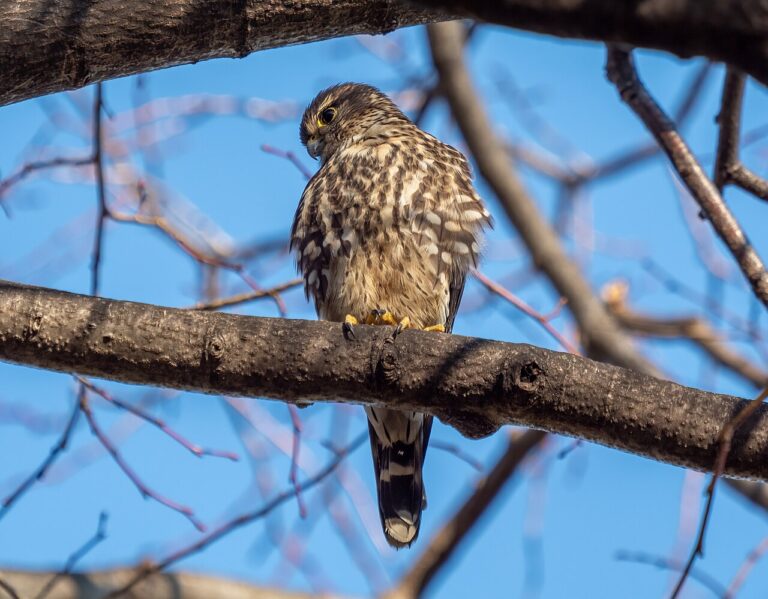
Falcons are less common in typical suburban settings, though the small American kestrel sometimes hunts insects and small rodents over open lawns and fields, and merlins occasionally pass through during migration in pursuit of flocking songbirds. A falcon perched near a feeder is a notable event worth reporting to local birding groups, while a hawk visit, though still exciting, is a fairly routine occurrence in many neighborhoods.
Related reading: Hawk vs Eagle.
Frequently Asked Questions
What is the main difference between a hawk and a falcon?
Hawks have broad, rounded wings built for soaring and ambush hunting, while falcons have narrow, pointed wings built for speed and aerial pursuit.
Which is faster, a hawk or a falcon?
Falcons are much faster, with the peregrine falcon reaching over 200 miles per hour in a diving stoop, far exceeding any hawk’s top speed.
Are hawks and falcons closely related?
No, despite similar appearances, genetic studies show falcons are more closely related to parrots and songbirds than to hawks, eagles, or vultures.
Do falcons and hawks hunt the same way?
Not usually. Hawks typically soar or ambush from a perch, while falcons rely on speed, chasing prey directly or diving from height in a high speed stoop.
What is a tomial tooth?
It is a small notch near the tip of a falcon’s upper beak, used to sever the spinal cord of prey with a precise bite, a feature most hawks lack.
Is a red-tailed hawk a falcon?
No, the red-tailed hawk is a true hawk in the buteo group, with broad wings and a soaring flight style very different from any falcon species.
How can I tell a hawk from a falcon in flight?
Look at the wings and tail. Broad, rounded wings and a fanned tail with slow soaring flight indicate a hawk, while narrow, pointed wings and fast, direct flight indicate a falcon.