White Dove Symbolism: Peace, Grief and What a Visit Means
Seeing a white dove almost always reads as a message of peace, forgiveness and a soul at rest. Across Christian, Native American, Celtic and East Asian traditions, the white dove arrives at the moment a conflict ends, a grief eases or a promise is made, and people who report a sighting usually describe it as calming rather than alarming. White dove symbolism is unusual that way: very few animal omens are read as good news so consistently.
The bird you actually see matters less than people assume. In the United States, a pure white dove in a yard is almost never a wild native species. It is usually a released Barbary dove (Streptopelia risoria) from a wedding or funeral, or a white homing pigeon (Columba livia domestica). That practical fact sits alongside the spiritual reading rather than cancelling it, and it also decides what you should do if the bird stays put.
A white dove symbolizes peace, purity, divine reassurance and the safe passage of a soul. In Christian belief it represents the Holy Spirit; in Native American and Celtic traditions it signals harmony restored after conflict. Seen after a death, it is widely taken as a sign the person is at peace.
What Does a White Dove Symbolize?
The core meaning is peace that has already arrived, not peace you are still waiting for. The dove in the Noah story returns with an olive leaf after the flood, which is why the bird became the emblem of a storm that has passed. That is the thread running through almost every tradition that uses the dove: resolution, mercy and the end of hostility.
Three secondary meanings travel with it. Purity, because of the unbroken white plumage. Fidelity, because doves pair closely and both parents feed the young. And messenger status, because homing pigeons carried human messages for thousands of years, so a dove arriving somewhere unusual is read as a delivery rather than an accident.
Compared with other birds in bird symbolism, the dove is the least ambiguous omen there is. A blackbird can mean warning or protection depending on the telling, but the white dove almost never carries a threat.
White Dove Meaning by Situation
Where and when the bird appears changes the reading more than the species does. The table below sets out how the common sightings are traditionally interpreted, with the practical explanation beside each one so you can hold both at the same time.
| Where you see it | Traditional meaning | Likely practical reason |
|---|---|---|
| In your garden or yard | Peace entering the household, a quarrel ending | A released or escaped bird looking for seed and water |
| At a window or on a sill | A message meant specifically for you | Reflection in the glass, or a bird used to being fed by people |
| At a funeral or soon after a death | The soul has safely passed and is at rest | Doves are often formally released at services |
| Returning on several days | A message you have not yet acted on | A lost domestic bird has settled on your property |
| At night or in low light | Comfort during a hard season, prayer being heard | Street lighting keeps roosting pigeons and doves active |
| Found dead | An ending accepted, a cycle closing, not a curse | Window strike, cat, or hawk predation |
| In a dream | Inner reconciliation, a decision you are at peace with | Recent grief, wedding or news of a birth |
What Does the Bible Say About Seeing a White Dove?
Scripture never tells anyone to watch for doves as omens, which is worth saying plainly. What it does is give the bird three heavy roles, and those are what modern Christian readings draw on. In Genesis 8 the dove brings Noah the olive leaf, proving the flood has receded. In Matthew 3, Mark 1, Luke 3 and John 1 the Spirit of God descends on Jesus at his baptism “like a dove.” In Leviticus, a pair of doves or young pigeons is the offering permitted to those who cannot afford a lamb.
Read together, those passages make the dove a sign of divine reassurance after hardship, of the Holy Spirit’s presence, and of an offering God accepts from the poor. That is why many believers who see a white dove at a graveside or on the morning of a difficult decision describe it as confirmation rather than coincidence.
Nothing in the text makes the sighting itself binding. In Christian teaching the dove points to the Spirit; it is not the Spirit. Treating a bird as a verdict on your circumstances goes further than scripture does, and most pastors will say so.
What Are the Characteristics of Doves in the Bible?
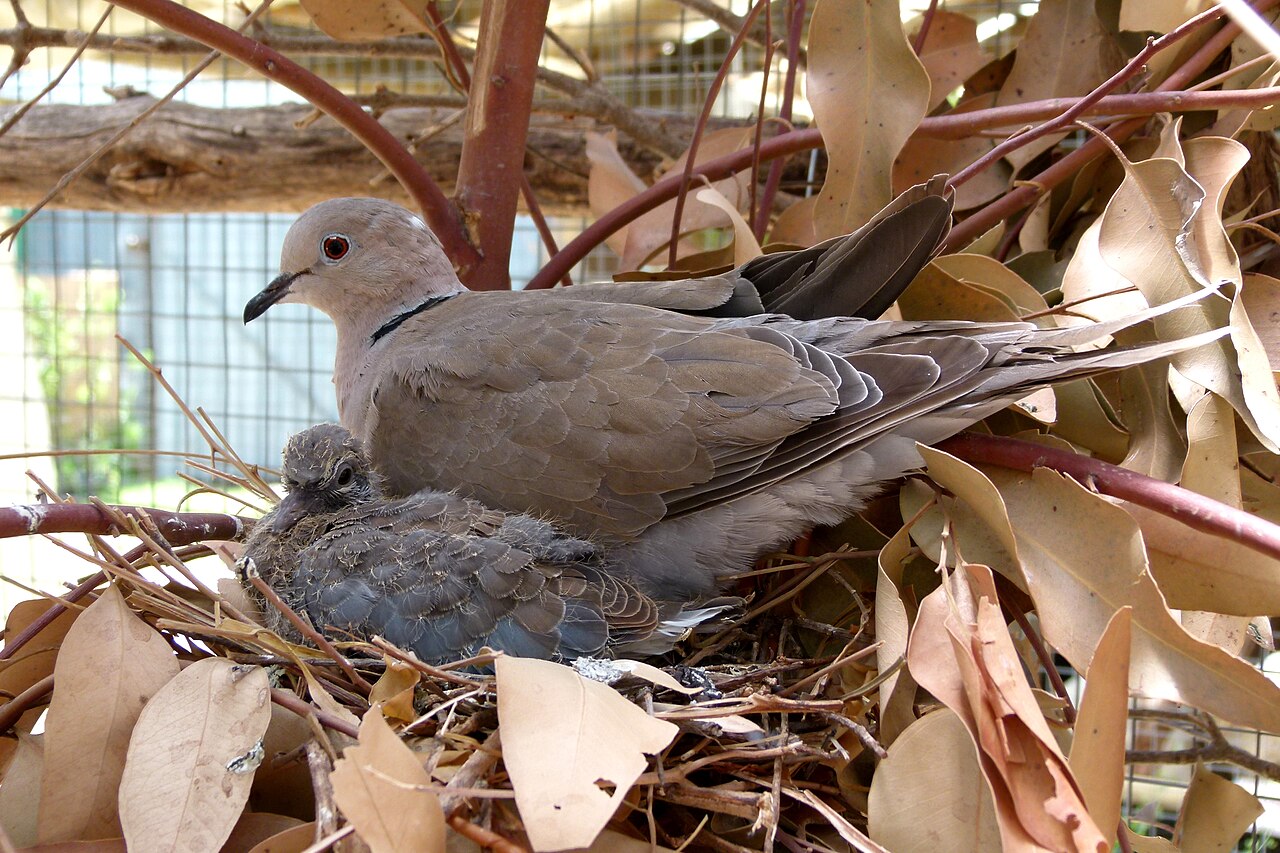
Biblical doves are gentle, vulnerable and loyal, and the text uses all three deliberately. Jesus tells his disciples to be “wise as serpents and innocent as doves” in Matthew 10:16, pairing shrewdness with harmlessness. The Song of Solomon uses “my dove” as a term of tenderness several times over.
The bird is also treated as easily frightened and easily lost. Hosea 7:11 calls Ephraim “like a dove, silly and without sense,” and Psalm 55:6 has the writer wishing for “wings like a dove” so he could fly away and rest. So the biblical dove is not a symbol of strength. It is a symbol of innocence that needs protecting, which is part of why its appearance reads as a promise of care.
Practically, the dove in scripture is the accessible sacrifice. Mary and Joseph bring two birds at the presentation in Luke 2:24, the offering of a family without means. That detail gives the dove a thread of humility that the eagle or the lion never carries.
White Dove Meaning in Native American Traditions
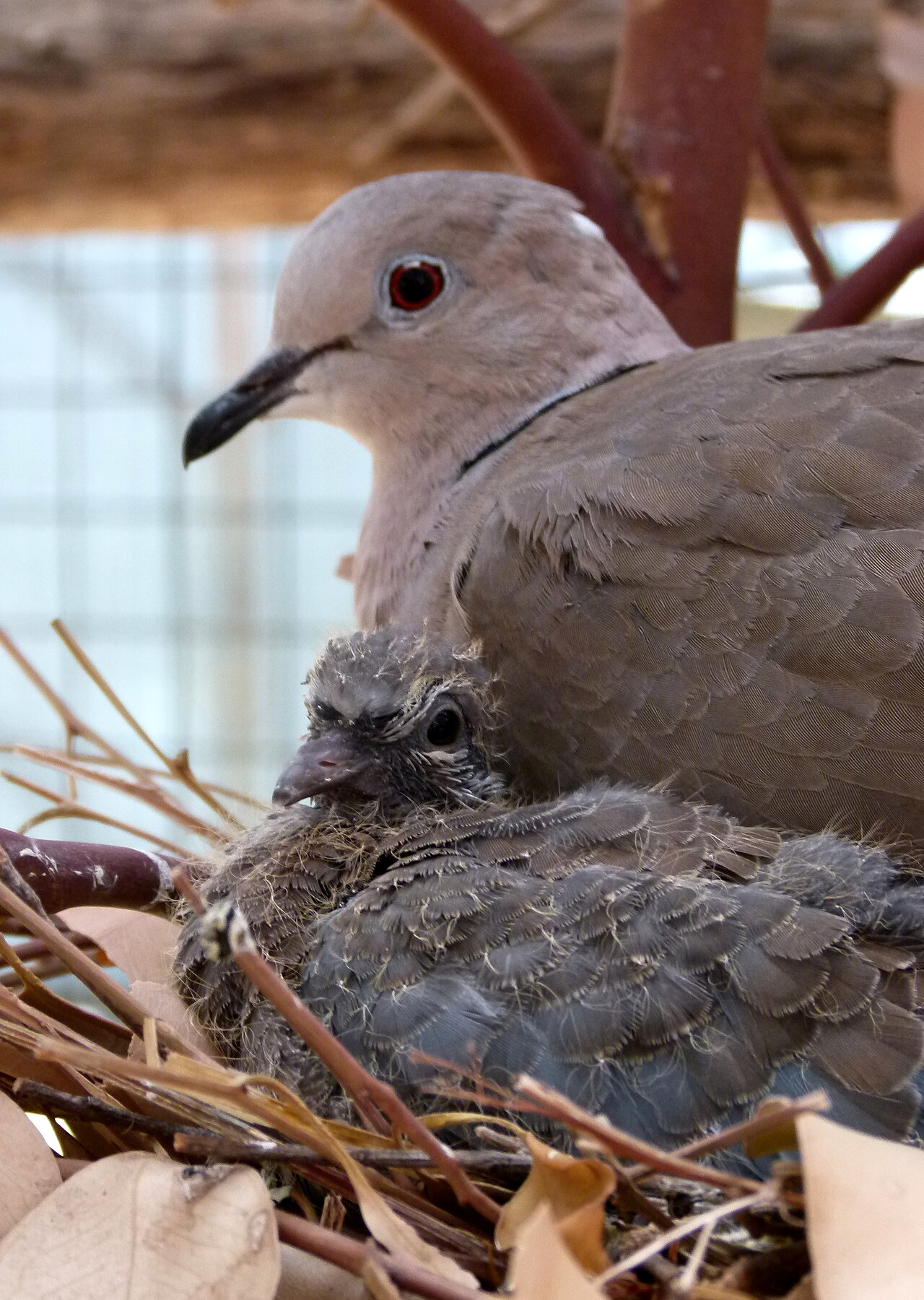
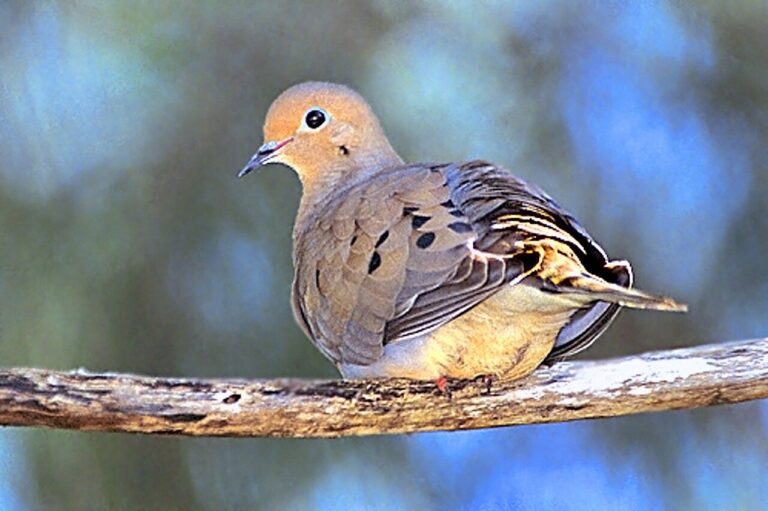
Beliefs differ sharply between nations, and no single “Native American meaning” exists. In several Plains and Southeastern traditions, mourning doves are connected with lament, rain and the voices of ancestors, and their call is understood as grieving carried on behalf of the living. In some Pueblo accounts, doves are associated with water and with guiding people to springs.
In Cherokee tradition, doves appear as peaceable birds whose presence is read against conflict. Where mourning doves are the common species, the symbolism attaches to that bird rather than to a white one, which is why mourning dove symbolism and white dove symbolism overlap in American folk belief.
The honest summary is that the white dove as a peace emblem is largely a Mediterranean and Christian inheritance, later adopted worldwide. Where Indigenous traditions speak of doves, the theme is usually grief, water and ancestors rather than treaty-style peace.
Celtic and Old European Beliefs
In Celtic lore the dove belongs to healing and to the boundary between worlds. The Irish saint Columba, whose name means dove, became the carrier of that association in Christian Ireland and Scotland, and holy wells linked to him were visited for healing. Earlier Celtic material connects doves with the goddess Brigid and with oracular sites.
Broader European folk belief gave the dove a role at the deathbed. In parts of Britain, Germany and Scandinavia, a white bird at a window was read as a soul departing or an announcement of a death in the family, which is the one tradition where the dove carries weight rather than comfort. In Greek and Roman religion, doves belonged to Aphrodite and Venus, which is where the dove’s link to love and marriage comes from.
East Asian Symbolism of the White Dove
In Chinese tradition, the dove and pigeon stand for fidelity, filial duty and long life, and the bird appears in classical poetry as a faithful pair rather than as a divine messenger. White itself is the color of mourning in much of East Asia, so a white bird near a household can read as connected to a death rather than to a wedding.
In Japan, the dove is the messenger of Hachiman, the deity associated with war and with the protection of the nation, and doves are kept at shrines such as Tsurugaoka Hachimangu in Kamakura. That gives the Japanese dove a guardian role closer to protection than to pacifism, even though the modern peace dove is now widely recognized there too.
What Does a Dove Symbolize When Someone Dies?
After a death, the dove is read as proof that the person arrived safely and is no longer suffering. This is the single most common reason people search for white dove meaning, and it is reinforced by practice: doves are formally released at thousands of American funerals every year, so the association is built by ritual as much as by folklore.
Grief counselors generally treat these sightings as healthy rather than magical thinking, as long as they comfort rather than control. A sighting that reassures you is doing what a symbol is supposed to do. A sighting you start waiting for, or that you read as a message to delay a decision, has stopped helping.
Two doves seen together after a loss are usually read as the person being accompanied rather than alone. Three doves carry a Christian reading of the Trinity, which is why that search comes up so often, though no scripture assigns a meaning to the number.
Seeing a White Dove in Your Garden or at Your Window
A dove in the garden is read as peace settling into the home itself, and the traditional emphasis is on the household rather than the individual. Folk belief in Britain and the American South connected a dove feeding calmly in a yard with a year free of serious family quarrels.
At a window, the meaning sharpens from the household to you personally. The window is a threshold, so a bird there is treated as a message that has been brought to your door instead of left in the open. The same logic appears in the readings for a blue jay at a window, though the jay is understood as a warning and the dove as reassurance.
Repeated window taps or a bird throwing itself at the glass is not a message. It is a territorial bird fighting its own reflection, and you can stop it by breaking up the reflection with soap, paper or exterior screening.
A White Dove at Night or Returning Again and Again
Doves seen at night are read as comfort during the hardest part of a season, and in several European tellings a dove heard after dark means prayer has been heard. The practical explanation is light. Rock doves and released birds will move and call under street lighting at hours when wild doves are roosting.
A dove that returns day after day is traditionally read as a message that has not been acted on yet. Folk advice is to ask what decision you have been postponing. The realistic reading is simpler: a lost domestic bird has found food, water or shelter on your property and has no reason to leave.
Finding a Dead White Dove
A dead white dove is not a curse in any tradition that treats the dove as a peace emblem. It is read as a cycle closing, usually an ending you have already accepted. Some European folk tellings make it a warning to tend a relationship before it is too late, which is the gentlest form a bad omen takes.
The common causes are window strikes, cats and hawks, and white plumage makes a released bird far more visible to predators than a wild-colored one. Handle the bird with gloves or a bag, double-bag it and put it in household waste, and wash your hands. If you find several dead birds in a short period, report it to your state wildlife agency, since clusters can indicate disease.
White Doves in Dreams
A dove in a dream is usually read as reconciliation that has already happened inside you, rather than as a prediction. Dream traditions treat a dove flying freely as a decision you are at peace with, a caged dove as a conscience under pressure, and a dove landing on your hand as forgiveness offered or received.
A dove that is injured or cannot fly points to a peace that is being held back, often by something unsaid. In Christian dream interpretation, the descending dove is read as the Spirit’s confirmation, drawing directly on the baptism accounts rather than on folk tradition.
White Dove as Spirit Animal, Totem and Omen
In modern spirit animal practice, the dove totem belongs to people who mediate, who refuse to escalate and who carry calm into tense rooms. The stated shadow side is avoidance: peace at any price, including silence where something needed saying. People who identify with the dove as a spirit animal are usually told to check whether they are making peace or just avoiding conflict.
As an omen the white dove is read as positive in nearly every tradition that uses it, with the deathbed belief in parts of northern Europe as the one exception. That consistency is unusual, and it is why the dove ended up on peace flags and treaty posters rather than any other bird. For the broader readings that apply to doves of every color, see dove symbolism.
If you want to know what bird you actually saw, the species accounts from the Cornell Lab of Ornithology are the place to check plumage and size, including the Rock Pigeon, whose white domestic varieties are mistaken for doves more than any other bird in North America. A yellow bird in the same yard is usually an American goldfinch, which carries its own set of meanings.
Frequently Asked Questions
How rare is seeing a white dove?
Rarer than seeing a dove, but not rare. No wild North American dove is pure white, so almost every sighting is a released Barbary dove or a white homing pigeon. In towns with regular weddings, funerals or pigeon keepers, these birds turn up several times a year.
Why are white doves so special?
Because three traditions stacked on each other. The Noah story made the dove a sign of a storm passing, the baptism accounts tied it to the Holy Spirit, and Greek religion linked doves to love. Add unbroken white plumage, which reads as purity, and the symbolism became hard to dislodge.
What should you do if you find a white dove?
Offer water and plain seed, keep cats away and look for a leg band. A banded bird is someone’s released dove or homing pigeon and cannot survive long alone. Contact a local pigeon rescue, dove release business or wildlife rehabilitator rather than relocating it yourself.
Is a white dove an omen?
It is treated as one, and almost always a good one: peace, reassurance, a soul at rest. The single common exception is a northern European belief that a white bird at a window announces a death in the family. No tradition reads a white dove as a threat.
When God sends a white dove, what does it mean?
In Christian understanding, the dove points to the Holy Spirit and to God’s reassurance after hardship, drawing on Noah’s olive leaf and the baptism of Jesus. Believers commonly read a sighting as confirmation or comfort. Scripture itself does not promise signs through birds, so the reading stays personal.
What are the most interesting facts about doves?
Both parents produce crop milk to feed their young. Doves drink by suction instead of tipping their heads back. Homing pigeons find their lofts from hundreds of miles away. A pair can raise several broods a year, and doves sit among the earliest domesticated birds, kept for at least 5,000 years.