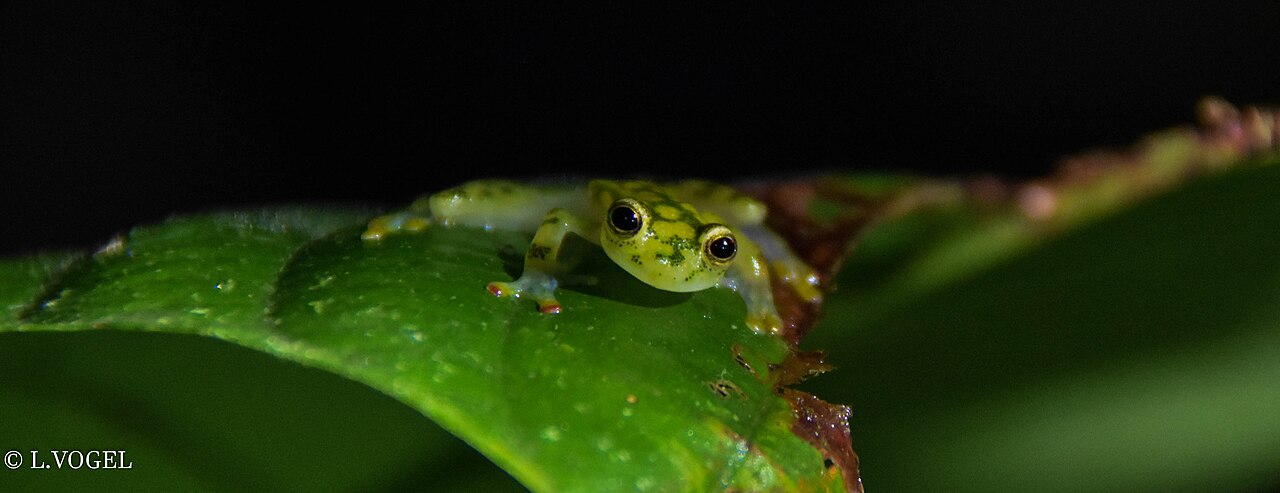
Glass Frog Facts: 5 Traits Behind Its See Through Skin
Glass frog facts start with the one everybody wants confirmed: you really can watch the heart beat through the skin of a living frog. The roughly 160 species in the family Centrolenidae, spread from southern Mexico to Bolivia, carry translucent bellies that leave the heart, liver, and intestines in plain view.
The green back is the part that fools people. Seen from above a glass frog looks like an ordinary small tree frog, and the window is only on the underside, which is exactly where a predator looking up from below would be.
Glass frogs are small tropical frogs, mostly 0.8 to 3 in (2 to 7.5 cm) long, with transparent belly skin that reveals their internal organs. They live along cloud forest streams in Central and South America, are not poisonous, lay eggs on leaves above water that males guard, and hide their blood in the liver while they sleep.
You Can Watch a Glass Frog’s Heart Beat
The belly skin of a glass frog lacks the pigment layers that make most amphibian skin opaque, so the beating heart, the white gut, and the bones show through. In females carrying eggs the clutch is visible as a pale mass inside the body.
Researchers use this as a live diagnostic tool. Sex, feeding state, and parasite load can be judged without dissection, which is rare in amphibian work and one reason the family is studied more than its size would suggest.
Can Glass Frogs Glow in the Dark?
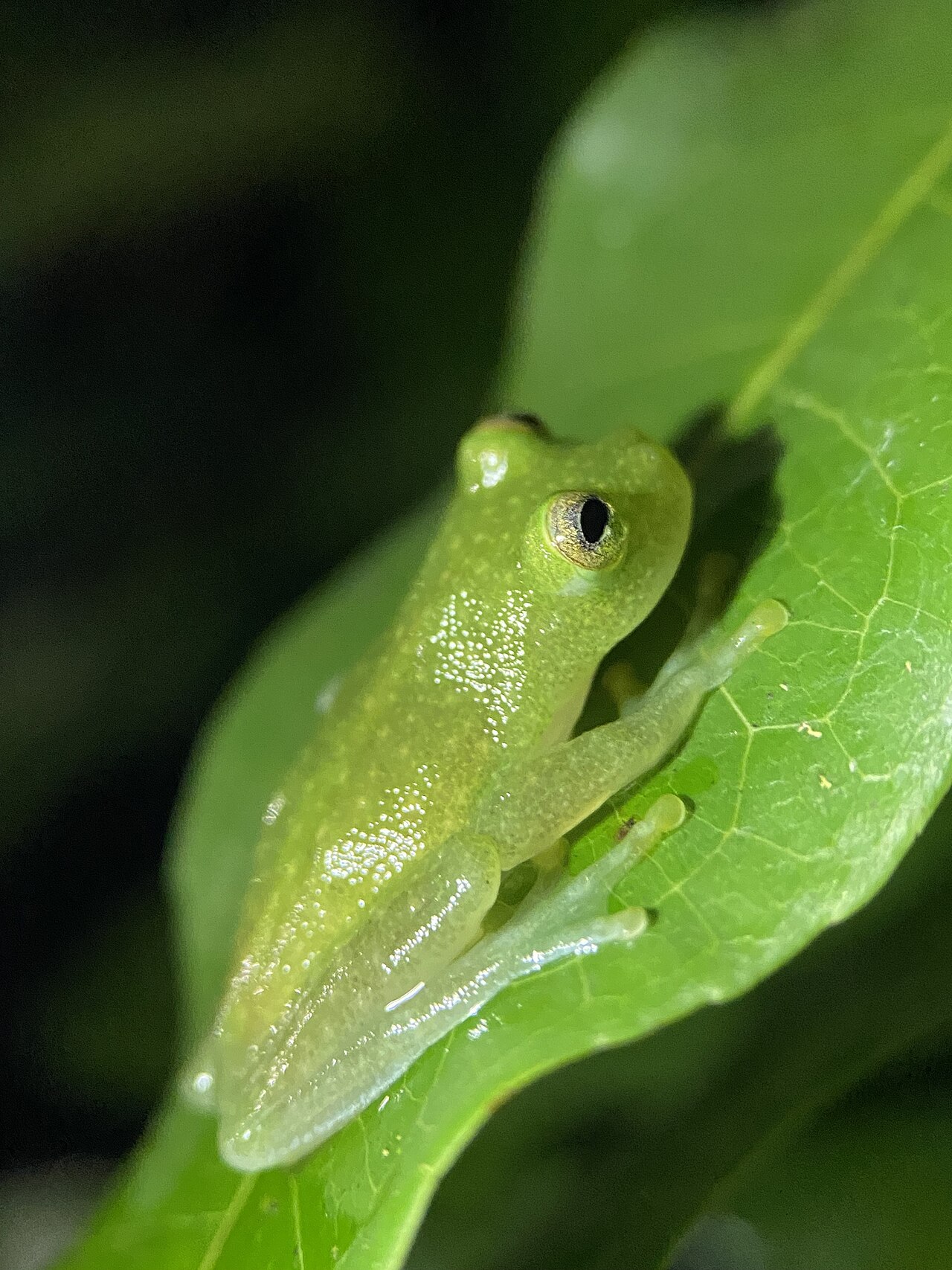
No. Glass frogs do not glow in the dark, because nothing about them emits light on its own. What some frogs do is fluoresce: under ultraviolet or blue light, compounds in the skin and lymph re emit a faint green glow, and this has been documented across a range of tree frogs.
In ordinary forest darkness a glass frog is simply hard to see. Their translucency softens the outline against a backlit leaf rather than hiding them completely, which works best while they sleep pressed flat in daylight.
They Hide Their Own Blood While They Sleep
This is the strangest confirmed fact in the group. A 2022 study of Hyalinobatrachium fleischmanni showed that sleeping frogs pull close to 90 percent of their red blood cells into the liver, which is lined with reflective crystals, roughly doubling how transparent they appear.
Packing blood cells that tightly would clot in almost any other vertebrate. How glass frogs avoid that is still open, and it is the reason haematologists now read papers about a 1 in frog.
Fathers Guard the Eggs
Glass frogs lay clutches of about 20 to 50 eggs on leaves and rocks overhanging fast streams, and in many Hyalinobatrachium species the male stays with them for weeks. He sits on the clutch at night, urinating over it to keep it hydrated, and kicks at wasps and predatory flies that come for the eggs.
When the tadpoles hatch they drop straight into the water below and burrow into leaf litter and gravel. Male care measurably raises hatching success, which sets glass frogs apart from familiar species such as the northern leopard frog that abandon their eggs entirely.
How Rare Is a Glass Frog?
The family as a whole is not rare, but individual species often are. Many are known from a single mountain stream or valley, and a substantial share are listed as threatened, mainly through cloud forest clearing, water pollution, and chytrid fungus.
Collection pressure added a second problem. In 2022 all glass frogs were placed on CITES Appendix II to bring the international pet trade under permit, a step normally reserved for species that trade can genuinely dent. Field research on their habitat continues at institutions including the Smithsonian Tropical Research Institute in Panama.
| Quick fact | Detail |
|---|---|
| Family | Centrolenidae, about 160 species |
| Size | 0.8 to 3 in (2 to 7.5 cm), most near 1 in |
| Range | Southern Mexico to Bolivia, cloud forest streams |
| Transparent part | Belly and limbs, not the green back |
| Eggs | 20 to 50 on leaves above water, often male guarded |
| Toxicity | Not poisonous to humans |
| Protection | CITES Appendix II since 2022 |
Related reading: Glass Frog Habitat.
Frequently Asked Questions
Can you touch a glass frog?
You can, but you should not. Glass frog skin is thin and absorbs whatever is on your hands, including soap residue, sunscreen, and insect repellent, and their small bodies lose moisture fast. Researchers who must handle them use clean, wet gloves and work quickly. Unlike the blue poison dart frog, the risk in that contact runs toward the frog.
Are glass frogs poisonous?
No. Glass frogs carry no significant skin toxins and rely on transparency and camouflage rather than chemical defence, which is why their colouring is muted green instead of the warning patterns of dart frogs. Their nearest thing to a defence is being difficult to see, helped by the way light passes through their edges.
How long can a glass frog live?
Reliable data is thin because few species have been tracked in the wild. Published estimates for the better studied species run from about 5 to 14 years, with most individuals probably falling far short of that. Temperate species such as the gray tree frog are documented much better, simply because they are easier to recapture.
How many glass frogs are left in the world?
Nobody has a total, and any single number you see is invented. Counts exist only per species and per stream, and they range from healthy local populations to species known from a handful of specimens. For the broader picture of the group, see our glass frog species profile, and for another Central American cloud forest species with an unusual look, the black eyed tree frog.