Vole Poop: Size, Color and the 3 Droppings It Gets Confused With
Vole poop looks like tiny green or brown rice grains, about 0.1 to 0.2 in (3 to 5 mm) long, with blunt rounded ends instead of the pointed tips of mouse droppings. You rarely find one alone. Voles leave them in heaps inside the shallow runways they cut through grass, and that location identifies the animal faster than the pellet does.
Anyone who finds pellets in a lawn, a garden bed or a garage is trying to decide between vole, mouse, rat and rabbit. Below are the measurements, the fresh color change, the confusions that come up most, and the cleanup rules public health agencies give.
Vole droppings are 0.1 to 0.2 in (3 to 5 mm) pellets with rounded ends, green when fresh and darkening to brown or black as they dry. They appear in clusters of a dozen or more inside grass runways, at burrow entrances, and under mulch or snow cover, not scattered across floors the way mouse droppings are.
| Feature | Vole droppings |
|---|---|
| Length | 0.1 to 0.2 in (3 to 5 mm) |
| Shape | Short cylinder, both ends blunt |
| Color fresh | Olive to yellow green |
| Color dry | Dark brown to black, dull |
| Contents | Ground plant fiber, no fur or bone |
| Where found | Runways, burrow mouths, under mulch |
| Pattern | Dense piles with clipped grass |
What Do Vole Feces Look Like Up Close?
Shape decides it. A vole pellet is a short fat cylinder with two blunt ends, closer to a rice grain than a seed, and it crumbles into fine fibrous powder rather than greasy fragments. There is no hair and no bone in it, because voles eat grass, roots, bulbs and bark.
Color is the freshness clock. Pellets from a vole feeding on green grass come out olive to yellow green and feel slightly soft, then stiffen and turn dark brown within two to three days. A pile of green pellets means the colony is active now, which decides whether a lawn needs treatment or only cleanup.
Where You Find Vole Droppings
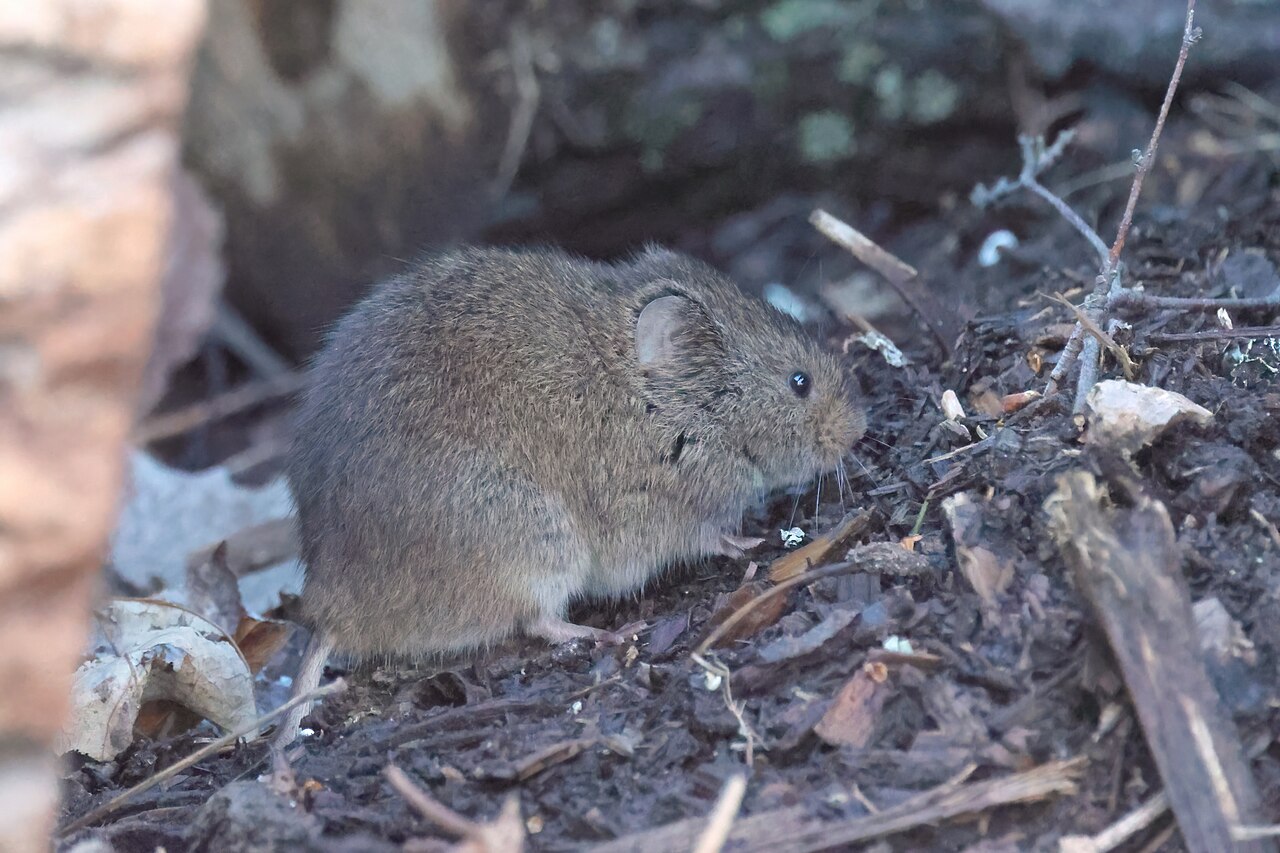
Voles maintain surface runways 1 to 2 in (2.5 to 5 cm) wide where the grass is clipped to the soil, and the droppings sit in those paths beside short cuttings of stem. Follow a runway and it ends at a burrow hole 1.5 to 2 in (4 to 5 cm) across with no soil mound over it.
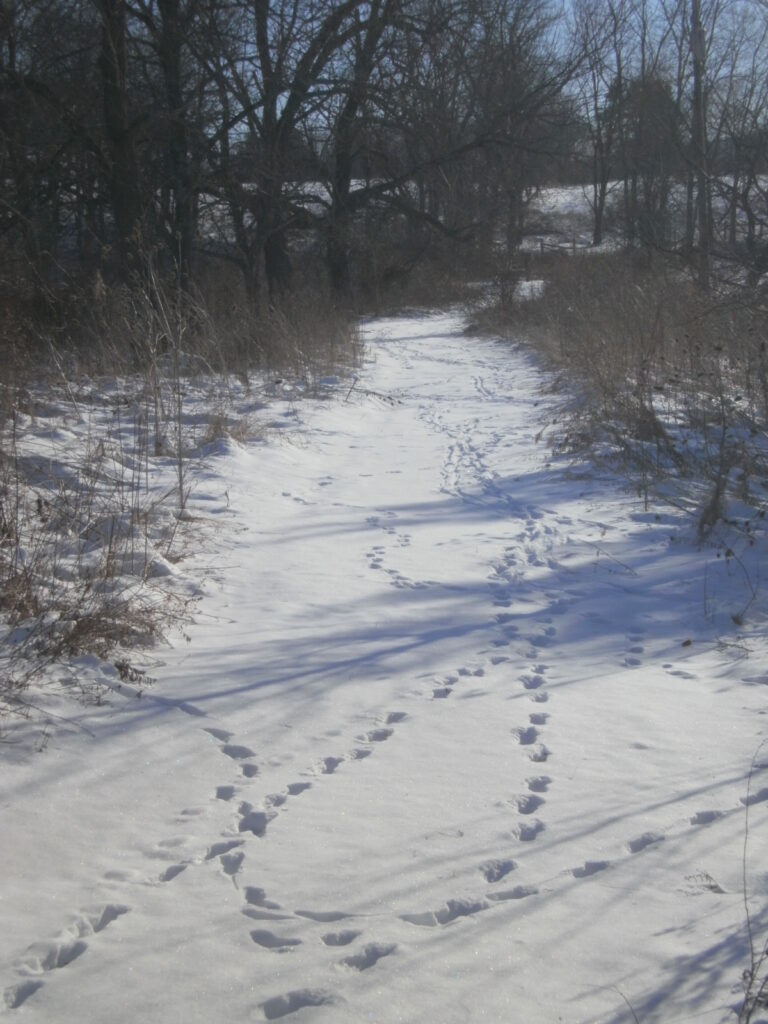
Snowmelt gives the clearest evidence, since voles tunnel under snow all winter and leave the runways printed across the lawn with pellet heaps at the junctions. Indoor vole sign is rare and limited to garages and crawl spaces, so pellets in a kitchen are almost certainly mice. Habitat narrows the list first, the same way it does for squirrel poop versus mouse poop.
How Can I Tell the Difference Between Vole Poop and Mouse Poop?
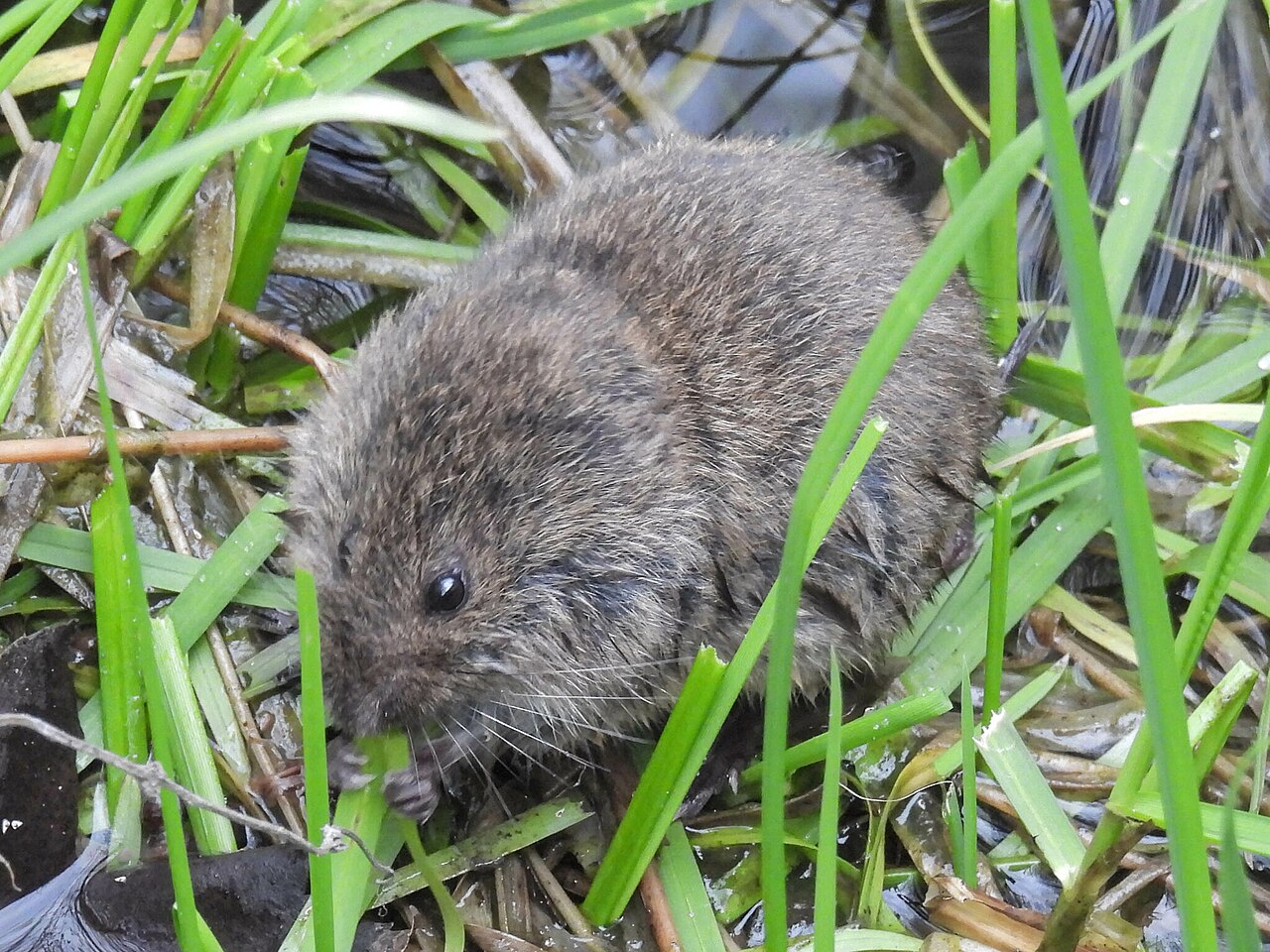
Shape, then placement. Mouse droppings are 0.1 to 0.25 in (3 to 6 mm) and taper to a point at one or both ends, they are dark from the moment they drop, and they scatter along walls, in drawers and across pantry shelves. Vole pellets are blunt at both ends, start green, and stay outdoors.
Content confirms it. Crush a mouse dropping and you find fur and chewed packaging; crush a vole pellet and you get plant fiber only. If the pellets came from inside a cabinet, treat it as mice, and compare rat poop versus mouse poop and lizard poop versus mouse poop for the other indoor candidates.
Vole Poop vs Rat Poop
Size settles this pair. Norway rat droppings run 0.5 to 0.75 in (12 to 19 mm), three to five times a vole pellet, with a thick capsule shape and blunt ends, shiny and dark when fresh, deposited in trails near walls, bins and decking.
Rats also leave greasy smear marks, gnaw damage on wood and plastic, and urine staining, none of which voles produce. If you can pick out individual droppings from ten feet away, the animal is not a vole. A vole latrine reads as a heap of small uniform grains.
Vole Droppings vs Rabbit Pellets
Rabbit pellets are the easiest to rule out: round spheres 0.25 to 0.5 in (6 to 12 mm) across, light brown, dry, and visibly packed with coarse sawdust-like fiber. Voles leave cylinders, rabbits leave balls, and rabbit pellets scatter across open lawn instead of concentrating in runways.
Deer pellets, the other common yard find, are larger at 0.5 to 0.75 in (12 to 19 mm), oval and often clumped, and deer poop versus rabbit poop works through that pair. Rabbits also re-ingest their soft night pellets, so the dropping you see is always the dry second pass, which is why it looks so fibrous.
Vole Sign vs Mole Sign
Moles leave no visible droppings at all, so pellets on a lawn are never mole sign. Moles announce themselves with raised soil mounds and ridges pushed up from deep tunnels, because they hunt earthworms and grubs underground and rarely surface.
Voles cut visible surface runways, leave clean open holes without mounds, and strip bark from young trunks at ground level. If the damage is to plant roots, bulbs and bark, with pellets present, it is voles; if the lawn has volcano-shaped mounds and no droppings, it is moles, and the control methods are different.
Do Voles Carry Diseases, and How Do You Clean Up Safely?
Voles can carry pathogens, though the human risk is lower than with rats or deer mice. Documented concerns are tularemia from Francisella tularensis, leptospirosis in urine, and tick-borne agents from the ticks they host. Voles are not a primary hantavirus reservoir; deer mice are, and the Centers for Disease Control and Prevention tracks that separately.
Wear waterproof gloves and never sweep or vacuum dry droppings, since both throw particles into the air. Mist the area with disinfectant or a 1 to 10 bleach solution, wait five minutes, lift the pellets with paper towel, bag them and wash your hands. Keep pets off until the lawn dries, and handle burrows separately as in how to get rid of voles or the comparison in bat poop versus mouse poop.
Frequently Asked Questions
How do I tell if I have voles?
Look for three signs together: runways of clipped grass, open burrow holes with no soil mound, and pellet heaps inside the runways. Gnawed bark on young trees and plants that lift out with the roots eaten away confirm it. Soil mounds instead mean moles.
Do voles come out during the day?
Yes. Voles are active in short bursts around the clock with peaks near dawn and dusk, so a daytime sighting is normal and does not mean a sick animal. They stay under cover most of the time, which is why the runways show up long before the vole does.
Will coffee grounds get rid of voles?
No. Coffee grounds, mothballs, chili powder and ultrasonic devices all fail in field testing, because a vole simply routes around a treated patch inside its own runway network. Habitat change works: mow short, pull mulch back 3 in (8 cm) from trunks, add hardware cloth guards.
What kills voles immediately?
Snap traps set directly in an active runway or at a burrow mouth, baited with peanut butter and oats and covered with a board, work fastest and most selectively. Anticoagulant and zinc phosphide baits are state regulated and risk poisoning owls, hawks and pets, so check your state rules first.
What plants do voles eat?
Voles prefer grasses, clover, dandelion roots and bulbs such as tulip, crocus and lily, and in winter they strip the bark of young apple, cherry and crabapple trees. They largely avoid daffodil, allium, fritillaria and lavender, which makes those useful as border plantings around beds you want protected.
Explore more: Animal Poop Identification: A Field Guide by Species