Squirrel Poop vs Rat Poop: How to Tell Them Apart
Squirrel poop vs rat poop comes down to three quick checks: shape, location, and quantity. Squirrel droppings are barrel shaped with rounded ends, about 3/8 inch long, and scattered randomly under trees or along fence lines. Rat droppings are slightly larger, shaped like plump grains of rice with at least one pointed end, and concentrated in protected runways along walls, in attics, and near food. If you found dozens of pellets packed into one hidden corner, you are almost certainly looking at rats.
Getting this identification right matters, because the response is completely different. Squirrel droppings outdoors are usually harmless evidence of a healthy backyard, while rat droppings indoors signal an active infestation that needs immediate action. This guide walks through every visual difference, where each animal leaves its droppings, the health risks, and how to clean up safely either way.
| Feature | Squirrel Poop | Rat Poop |
|---|---|---|
| Length | About 3/8 inch | 1/2 to 3/4 inch |
| Shape | Barrel with rounded ends | Spindle with pointed end(s) |
| Color | Brown, fades to tan | Dark brown to black, stays dark |
| Placement | Scattered, random | Clustered along runways |
| Typical spot | Under trees, decks, feeders | Attics, walls, garages, pantries |
| Daily amount | Low, spread out | Up to 40 or more pellets per rat |
Shape and Size: The Fastest Tell
Pick up a pellet with a gloved hand or examine it in place, and shape settles most cases. Squirrel droppings are rounded cylinders, like tiny barrels or slightly stretched coffee beans, with blunt, rounded ends on both sides. They run about 3/8 inch long and roughly 1/8 inch thick, remarkably uniform from pellet to pellet.
Rat droppings are bigger and taper differently. Norway rat pellets reach 1/2 to 3/4 inch with blunt ends but a fatter, banana-curved profile, while roof rat pellets are slimmer, curved, and pointed at one or both ends, like a grain of rice that has been stretched. That pointed tip is the single most reliable shape difference: squirrels almost never produce it.
Size overlap causes most confusion, since a large squirrel pellet and a small rat pellet can measure the same. When length alone cannot decide, weigh the whole picture: shape of the ends, color, and above all where and how the droppings are arranged, which the next sections cover.
Color and How Droppings Age
Fresh droppings from both animals start dark brown, but they age on different schedules. Squirrel pellets lighten noticeably within days, fading toward tan, chalky brown, or even whitish as they dry, because a squirrel’s plant-heavy diet of nuts, seeds, and fungi leaves fibrous material that bleaches in sunlight.
Rat droppings stay dark. A rat’s omnivorous, protein-rich diet produces pellets that hold a deep brown to black color and a moist sheen for the first day or two, then dry hard while keeping most of their darkness. Finding both shiny dark pellets and dull dry ones in the same spot means the animals are returning repeatedly, the signature of an established rat presence.
Use color as a freshness clock, not just a species clue. Soft, glistening pellets are under 48 hours old and mean current activity; crumbly, faded pellets may be weeks or months old. Pest professionals often clear an area of old droppings, then check back in a few days; any new dark pellets confirm the infestation is active right now.
Location: Scattered Outdoors vs Clustered Indoors
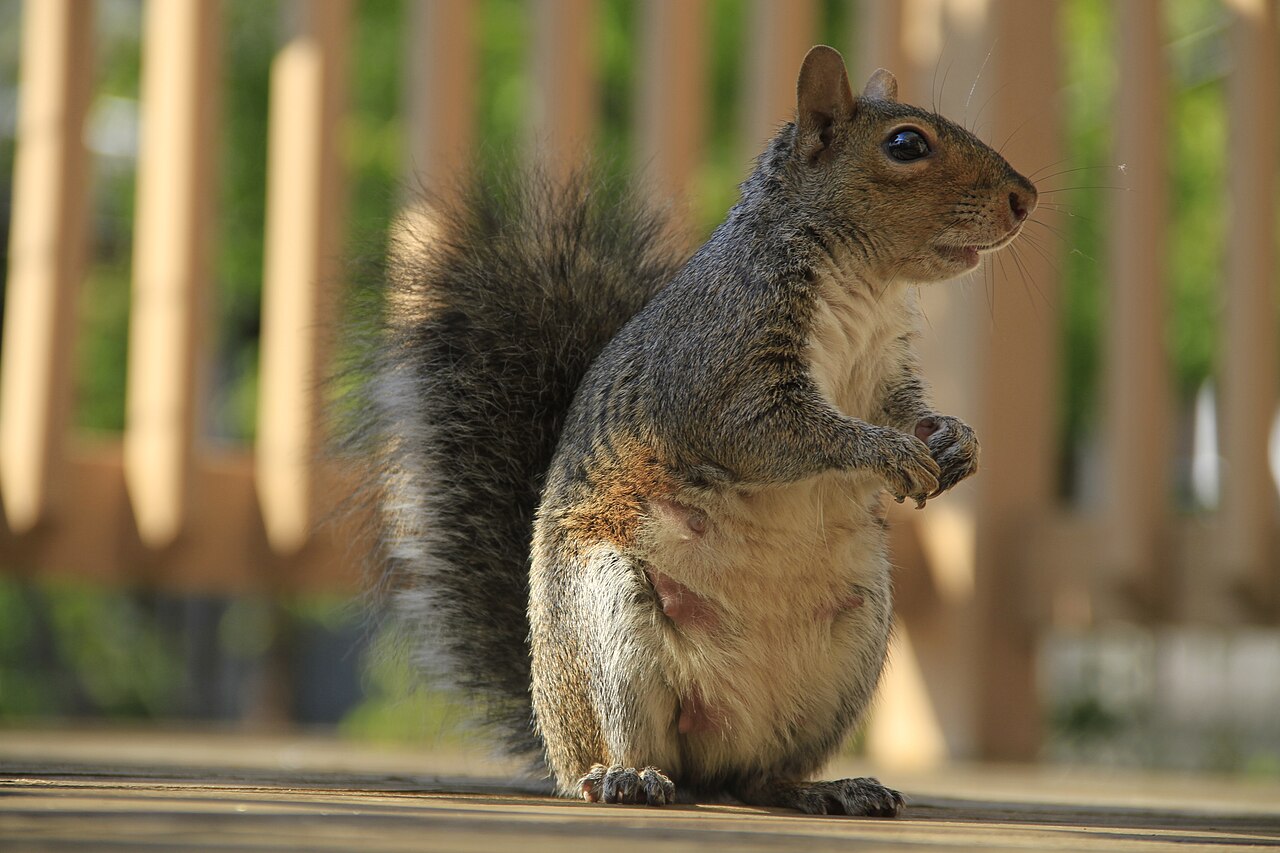
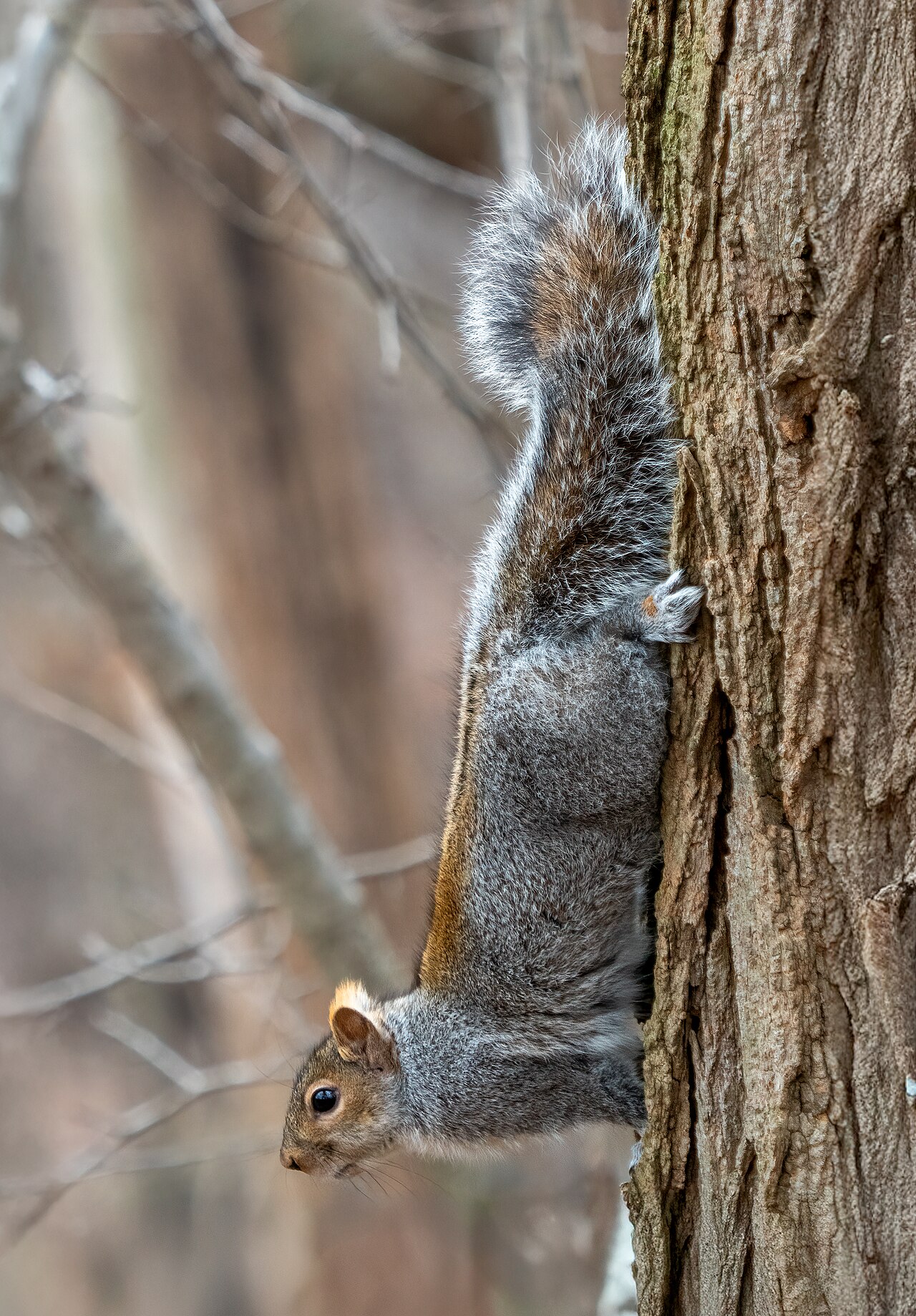
Squirrels are careless about where they go. Their droppings fall randomly as they travel, so you find single pellets or loose handfuls scattered under oak and walnut trees, along fence tops, on deck railings, around bird feeders, and occasionally in an attic corner directly below an entry hole. There is no pattern, because squirrels do not use latrines or fixed runways the way rodents indoors do. Our full guide to squirrel poop identification covers the outdoor picture in detail.
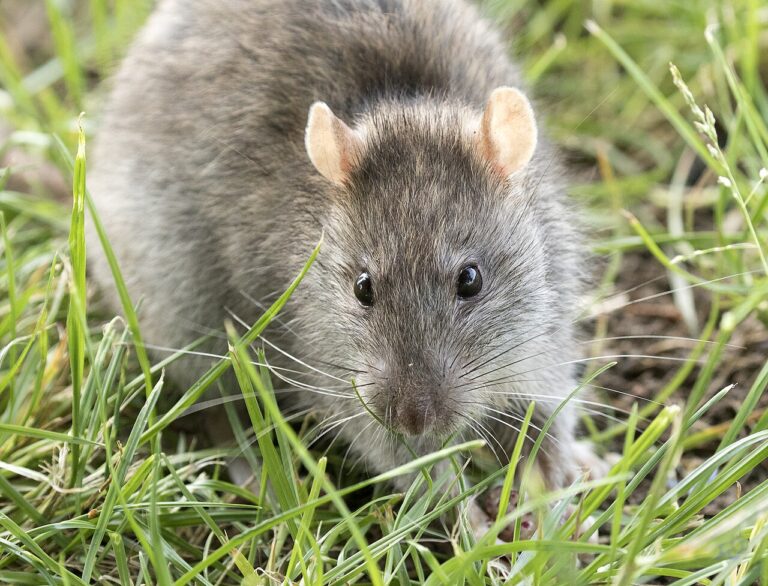
Rats are the opposite: creatures of strict habit. They travel the same protected routes night after night, hugging walls and edges, and their droppings pile up along those runways: behind appliances, along garage walls, inside pantries, under sinks, and in attic insulation. Thirty pellets in a two-foot stretch behind the water heater is a rat calling card no squirrel ever leaves.
Supporting evidence usually sits right beside the droppings. Rats leave greasy rub marks along baseboards, gnaw marks with two parallel tooth grooves, and a musky ammonia smell in enclosed spaces. Squirrel evidence leans outdoors: chewed nut shells split neatly in half, stripped pine cones, and dug-up caches in flower pots. Comparing droppings across species is a skill worth building, and the differences from coyote poop or skunk scat follow the same logic of diet plus habit.
Quantity: The 40-Pellet Rule
Volume separates the two faster than any measurement. A single rat produces 30 to 40 or more droppings every day, and because rats live in family groups, an active infestation generates hundreds of pellets a week concentrated in a few favored spots. If you are sweeping up piles, think rats.
Squirrels produce far fewer pellets in any one place, both because much of their waste falls outdoors while they travel and because even a squirrel living in your attic ranges outside all day. A squirrel-occupied attic typically shows modest scatterings of droppings near the entry point and nest, not carpet-like accumulations along every wall.
Timing of the noise above your ceiling doubles as a second census tool. Squirrels are diurnal, so scampering at dawn and during daylight points to squirrels; scratching and skittering after dark points to rats or mice. Pair the daily-rhythm clue with the pellet count and you can usually name your tenant before ever seeing it.
Health Risks and Why Rat Droppings Are Worse
Both droppings deserve respect, but rat waste carries the heavier disease load. Rat droppings and urine can transmit leptospirosis, salmonellosis, and rat-bite fever, and in parts of the western United States deer mice droppings in similar settings carry hantavirus. The CDC (cdc.gov) specifically warns against dry-sweeping or vacuuming rodent droppings, because both can aerosolize particles that are then inhaled.
Squirrel droppings are lower risk but not zero. They can carry salmonella and, rarely, leptospirosis, and any wildlife waste in an enclosed attic can foster insect activity and contaminate insulation. The practical difference is urgency: rat droppings indoors mean a live infestation multiplying weekly, while squirrel droppings usually mean one or two animals using a single entry point.
Either way, skip the shop vacuum. Ventilate the space for 30 minutes, wear gloves and ideally an N95 mask, wet the droppings thoroughly with a disinfectant or a 10 percent bleach solution, let it sit for five minutes, then wipe everything into a sealed bag. Wash hands and launder clothing afterward; the wet-wipe method exists precisely to keep particles out of the air.
What It Means for Your Bird Feeders and Yard
Bird feeding stations are the number one meeting point for both animals, because spilled seed is a free buffet. Squirrel droppings under a feeder are near-universal and mostly a cleanup chore, but rat droppings under a feeder are a warning: seed on the ground is actively recruiting rats to your yard, and the next stop is your house.
The fix is managing spill, not quitting feeding. Use no-mess seed blends or hulled sunflower, add a large seed tray under the feeder, clean the ground weekly, and bring feeders in at night during a rat problem, since rats forage after dark while your birds sleep. Physical defenses help too; a properly installed squirrel baffle keeps squirrels off the feeder itself, which cuts the frantic spill that feeds everything else.
Around the wider yard, deny both animals easy shelter. Stack firewood off the ground and away from walls, trim branches that overhang the roof by 6 to 8 feet to cut the squirrel highway, and seal gaps larger than a quarter inch around the foundation, since a rat can squeeze through a hole the size of a quarter and a mouse through a dime-sized gap.
Droppings in the Attic: Naming Your Tenant
Attics are where the identification stakes get real, because eviction tactics differ by species. Run the checklist: pellet shape (pointed ends mean rats), placement (wall-hugging trails mean rats, entry-point scatter means squirrels), sound schedule (daytime means squirrels), and entry size (squirrels need a baseball-sized gap or chew one; rats slip through much smaller openings).
A squirrel attic usually also shows daylight at a chewed gable vent or roofline gap, shredded insulation pulled into one bulky nest, and cached nuts. From late winter through spring, assume babies before sealing anything; a baby squirrel season closure that traps a litter inside creates a far worse problem, so evict with a one-way door and only after confirming the nest is empty.
A rat attic shows droppings along the perimeter, gnawed wiring or ducts, grease trails at entry gaps, and nighttime noise. That calls for snap traps placed along runways, sealing every entry after the catch, and correcting the outdoor attractants above. If droppings are abundant or you find damage to wiring, bringing in a licensed pest professional is money well spent, since chewed wires are a documented fire hazard.
Lookalikes: Mouse, Chipmunk, and Rabbit Droppings
Mouse droppings are the most common false positive for both animals. They match rat pellets in shape, pointed ends included, but at half the size or less, about 1/8 to 1/4 inch, the size of a grain of rice rather than a stretched one. Huge numbers of tiny pointed pellets mean mice, and the good news is that mouse control is a smaller project.
Chipmunk droppings mirror squirrel pellets at a smaller scale, and since chipmunks rarely den in attics, location usually rules them out indoors. Rabbit droppings fool nobody who looks twice: they are round, pea-sized spheres of packed plant fiber, deposited in loose piles on lawns, and completely unlike the elongated pellets of squirrels or rats. Our bird poop identification guide rounds out the backyard picture for droppings that splatter rather than pellet.
When a pellet still defies naming, photograph it beside a coin for scale before cleanup. Shape, size against the coin, color, count, and location together identify nearly every backyard dropping, and the photo lets you compare calmly against references instead of guessing over an open trash bag.
Related reading: Rat Poop vs Mouse Poop.
Related reading: Squirrel Poop vs Mouse Poop.
Frequently Asked Questions
How can I tell squirrel poop from rat poop at a glance?
Check the ends and the arrangement. Squirrel pellets are barrel shaped with rounded ends and scattered randomly; rat pellets are spindle shaped with at least one pointed end and clustered along walls and runways.
Is squirrel poop dangerous to humans?
It is lower risk than rat waste but can carry salmonella and, rarely, leptospirosis. Wear gloves, wet the droppings with disinfectant before wiping, and never dry-sweep or vacuum any rodent droppings.
What does it mean if I find droppings but hear noise only at night?
Nighttime scratching points to rats or mice, which are nocturnal. Squirrels are active in daylight, especially around dawn, so the sound schedule is one of the most reliable identification clues.
How many droppings does a rat leave per day?
A single rat can leave 30 to 40 or more pellets daily, concentrated along its travel routes. Large accumulations in one protected spot almost always mean rats rather than squirrels.
Are there squirrel droppings in my attic or rat droppings?
Squirrel droppings scatter near the entry hole and nest, with daytime noise and a visible chewed opening. Rat droppings line the walls in trails, with nighttime noise, grease marks, and gnawing on wires or ducts.
How do I clean up rodent droppings safely?
Ventilate for 30 minutes, wear gloves and an N95 mask, soak the droppings with disinfectant or 10 percent bleach solution for five minutes, wipe into a sealed bag, and wash up afterward. Wetting first keeps particles out of the air.
Do droppings under my bird feeder mean I have a rat problem?
Only if the pellets are dark, pointed, and appearing overnight in quantity. Spilled seed attracts rats after dark, so switch to no-mess seed, clean the ground weekly, and bring feeders in at night until the droppings stop.