Rat vs Possum Droppings: 5 Differences You Can See
Size settles it. In the rat vs possum droppings question, rat pellets are 1/4 to 3/4 in (6 to 19 mm) long, dark, and scattered in dozens along a wall or behind a food source, while possum droppings are 1 to 2 in (2.5 to 5 cm) long, thick, often curled, and dropped in one small pile that most people mistake for dog waste.
In the United States “possum” means the Virginia opossum (Didelphis virginiana). Australian guides describe the brushtail possum, a different animal with smaller fibrous pellets, so check which country a photo guide comes from before matching it against what is on your deck.
Rat droppings are small dark pellets, 1/4 to 3/4 in long, with tapered or blunt ends, left in scattered trails of 20 to 50 or more. Possum droppings are much larger, 1 to 2 in long and about 3/4 in thick, smooth and often curled, dropped in a single pile, and usually contain visible fur, seeds, insect shells or bone fragments.
| Feature | Rat droppings | Possum droppings |
|---|---|---|
| Length | 1/4 to 3/4 in (6 to 19 mm) | 1 to 2 in (2.5 to 5 cm) |
| Thickness | 1/8 to 1/4 in | 1/2 to 3/4 in |
| Shape | Spindle or capsule, ends tapered or blunt | Thick tube, often curled |
| Color | Dark brown to black fresh, gray when old | Brown, sometimes with a white crust |
| Contents | Smooth, no visible debris | Fur, seeds, insect parts, small bones |
| Pattern | Scattered trails, many at once | One pile, sometimes reused spot |
| Typical site | Along walls, under sinks, in insulation | Under decks, crawl spaces, by pet bowls |
How to Tell If It’s a Possum or a Rat
Count first, then measure. A rat leaves 20 to 50 droppings a night along the route it travels, so rat sign comes as many small pieces spread out. A possum leaves a handful of large droppings in one spot, so possum sign comes as a single mass with little else nearby.
Break one open with a stick, never a bare hand. Possum droppings fall apart into fur, seed hulls, beetle wings and the odd bone chip; rat droppings are dense and uniform throughout. Location narrows it further: rats get into cupboards, attics and insulation, while possums den under decks and feed at ground level on pet food and fallen fruit. The animal’s sign on its own is covered in our guide to possum poop.
Rat Droppings: Size, Shape and Where You Find Them
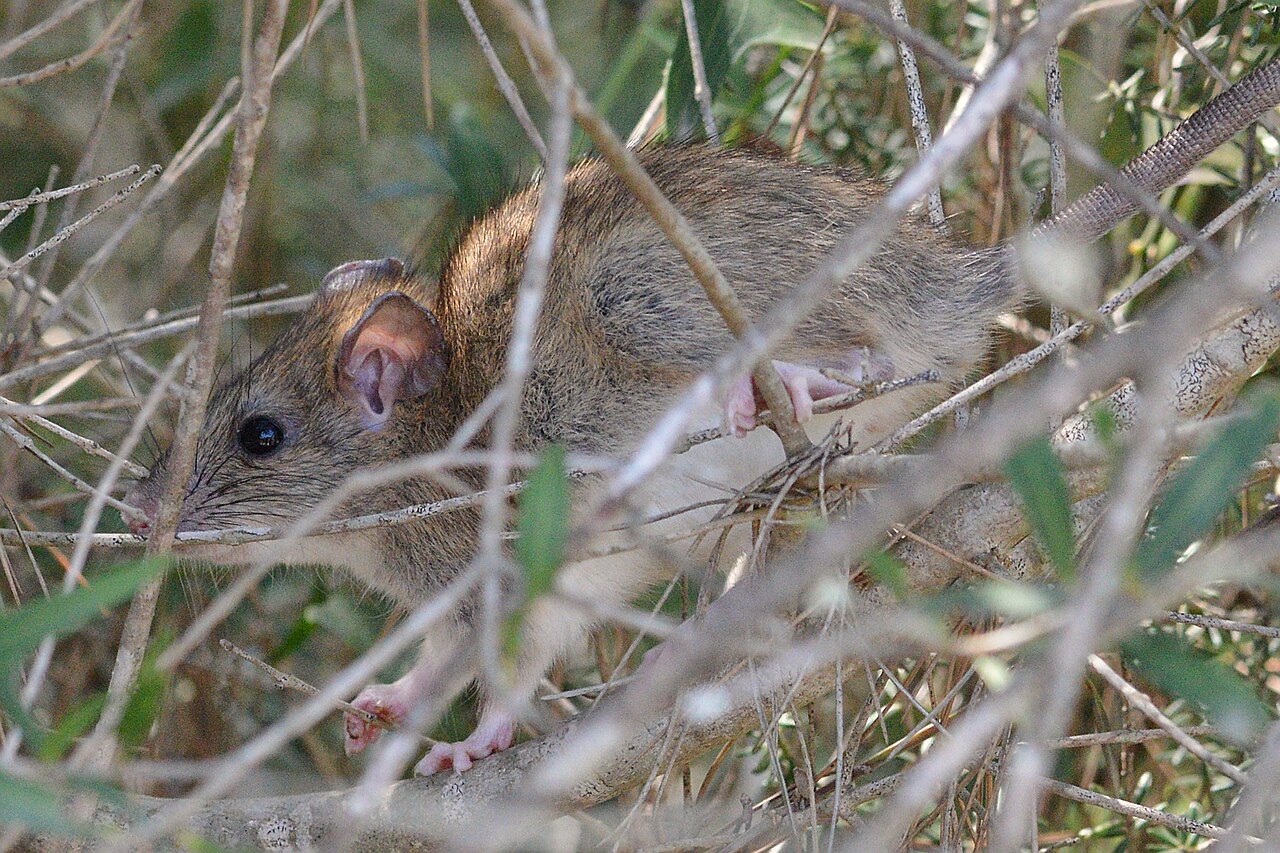
Norway rat (Rattus norvegicus) droppings are the larger type, 1/2 to 3/4 in (12 to 19 mm) long and capsule shaped with blunt ends. Roof rat (Rattus rattus) droppings run 1/4 to 1/2 in (6 to 12 mm) and curve slightly with pointed ends, which is why they get called banana shaped.
Fresh droppings are dark, soft and shiny, then dull and harden toward gray within days, so gray crumbly pellets mean old activity. Rats deposit while moving, which lines the droppings along runways against walls and pipes, with heavier piles at the nest and the food. For the sizing step most people actually need, compare rat poop and mouse poop: mouse droppings are only 1/8 to 1/4 in with sharply pointed ends.
Possum Droppings: Size, Shape and Where You Find Them
An opossum dropping is 1 to 2 in long and as thick as a pencil to a finger, smooth sided, often curled into a C or tapered at one end. Fresh ones are soft and dark; after a day or two a white or yellowish surface mold often develops.
Diet shows in the dropping. Opossums eat insects, carrion, fruit, eggs and pet food, so fur, seeds, shell fragments and bone grit stay visible. Sheltered spots get reused: under a deck, on a beam in a crawl space, beside a cat bowl. The confusion that matters most here is raccoon versus possum poop, since both animals work the same yards.
Three Droppings That Get Mistaken for These Two
Squirrel droppings are the most common false rat alarm: the same length as a Norway rat’s but rounder, fatter and lighter brown, and found on deck rails and in attics rather than in wall trails. The side by side is in squirrel poop vs rat poop.
Reptile and amphibian droppings fool people indoors across the southern states. A lizard dropping carries a chalky white urate cap at one end, which no mammal dropping has; see lizard poop vs rat poop and frog poop vs rat poop for the larger, wetter version near water features. Cat and small dog waste accounts for most possum misidentifications, and it lacks the fur and seed mix.
How to Safely Clean Up Rat and Possum Droppings
Do not sweep or vacuum dry droppings, because both throw contaminated dust into the air. Rodent droppings and urine are linked to leptospirosis, salmonellosis, rat bite fever and Seoul virus, a hantavirus carried by Norway rats. Opossum droppings can carry Salmonella, leptospirosis and Sarcocystis neurona, the parasite behind equine protozoal myeloencephalitis in horses.
Ventilate the space 30 minutes, wear disposable gloves, and add an N95 respirator in an attic or crawl space. Spray the droppings and the surface with disinfectant or 1 part bleach to 10 parts water, wait 5 minutes, lift everything with paper towels into a sealed bag, then disinfect again and wash your hands. Current rodent borne disease guidance is published by the CDC. Follow up with exclusion or the sign returns: seal gaps over 1/2 in, screen vents, and take in pet bowls and fallen fruit.
Frequently Asked Questions
Can you show me pictures of possum poop and rat poop?
Clear photos of both are scarce because droppings are rarely documented in free image libraries. Use measurements instead, with a coin in the frame. Rat pellets sit well under the width of a penny; possum droppings run one to two penny widths long and nearly as thick.
How can I tell the difference between possum poo and rat poo?
Judge size, quantity and contents. Possum poo is 1 to 2 in long, thick, dropped in a small pile, and visibly full of fur, seeds or insect shells. Rat poo is a quarter of that length, smooth throughout, and left as dozens of scattered pellets along a travel route.
What are three signs that you have a rat infestation?
Droppings in trails along walls, gnaw marks with fresh pale wood or shredded packaging, and greasy smudge rubs where rats pass the same spot nightly. Scratching overhead after dark and a strong ammonia smell confirm it. Sightings in daylight suggest a large population.
Will possums keep rats away?
Partly, and not reliably. Opossums do eat rodents, insects and carrion, but they are opportunists rather than rat hunters. A yard that supports a possum through pet food, fruit and open trash supports rats for the same reasons, so removing the food source does more than either animal will.
Explore more: Animal Poop Identification: A Field Guide by Species