Raccoon Sounds: Chittering, Screams, and Attic Noises Decoded
Raccoon sounds cover one of the widest vocal ranges of any backyard animal: over 200 distinct vocalizations by some counts, from the churring purr of a content family to chittering trills, growls, hisses, snarls, whistles, and the shrieking brawl audio that makes a 2 am raccoon fight sound like a murder in the shrubbery. Add the non-vocal soundtrack, heavy thumping on decks and roofs, trash can percussion, and determined scratching in chimneys and attics, and raccoons are usually heard long before they are seen.
Decoding those sounds answers the questions that actually matter: whether the chittering in your chimney is a mother with kits (it almost always is, in spring), whether the scream outside was a fight or a fox, and what the nightly thump schedule says about who is commuting across your roof. This guide breaks down every common raccoon sound, the seasonal calendar behind them, and the wall-and-attic diagnosis that separates raccoons from every other night noise.
| Sound | What It Means |
|---|---|
| Chittering, trilling | Kits calling, mother-family contact |
| Churring purr | Contentment, nursing family |
| Growl, hiss, snarl | Warning at close range |
| Screeches and screams | Fights over food, mates, territory |
| Whistling whinny | Adult long-distance contact |
| Thumps, dragging, scratching | Movement in attics, chimneys, on roofs |
Chittering and Trilling: The Family Channel
The most commonly reported raccoon sound is a rapid, bird-like chittering or trilling, and it is overwhelmingly family communication: kits chitter almost constantly to their mother from their first weeks, and mothers trill back to reassure and gather them. The sound sits high and fast, often compared to squabbling birds, chattering monkeys, or a stuttering whistle, and it carries surprisingly well through walls and chimney flues.
Newborn kits add their own unmistakable signature: a cry that genuinely resembles a human infant, plus mewing and whining when hungry or cold. This baby-cry effect, coming from a chimney or attic in April and May, produces some of the most alarmed homeowner calls of the year, and the explanation is almost always the same: a mother raccoon has chosen your structure as a den, and the babies are announcing themselves, the family situation covered from the kit side in our baby raccoon guide.
Volume tracks family life. Chittering surges when the mother leaves to forage (kits protest), when she returns (kits celebrate), and during the June-July weeks when kits start climbing, so a chimney that erupts twice nightly on a schedule is broadcasting the mother’s commute. The practical takeaway sits below in the eviction section: that sound means babies, and babies change everything about timing.
Growls, Hisses, and the Warning Ladder
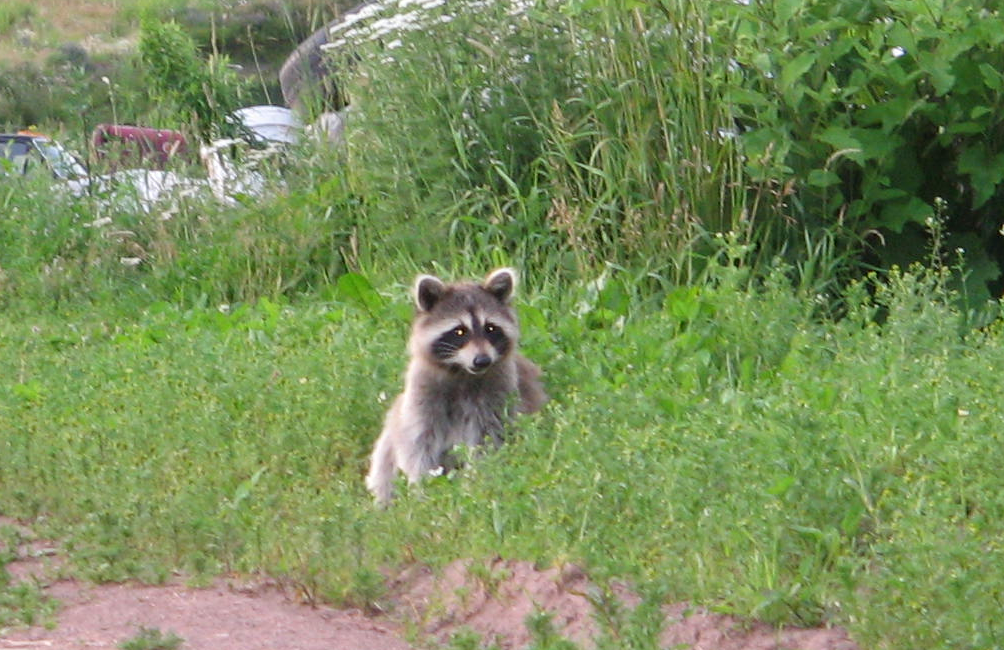
Raccoons escalate conflict through a clear audio ladder, and knowing the rungs helps you read intent. It starts with a low growl, unmistakably mammalian and continuous, then adds a snake-like hiss with bared teeth, then a snarl that combines both, each stage saying back off with increasing urgency. A raccoon giving these sounds while retreating is managing distance; one giving them without retreating is defending something, food, kits, or a cornered position.
Context turns the warning sounds into information. Growling from under a deck in spring means a den, likely with kits, and the correct response is withdrawal and planning rather than investigation. Hissing at a pet door or trash station means a raccoon defending a food claim from your dog or cat, an interaction worth engineering away, since raccoon-pet scuffles are the main real injury risk raccoons pose.
What the ladder is not: evidence of rabies. Healthy raccoons growl and hiss routinely, and defensive noise at night from a normal-moving animal is standard equipment. The genuine concern flags are behavioral and visual, daytime staggering, circling, wet matted face, indifference to noise, and any raccoon showing those warrants distance and a call to animal control, per the guidance public health agencies like the CDC (cdc.gov) give for rabies-vector species.
Screams and Screeches: The 2 AM Brawl
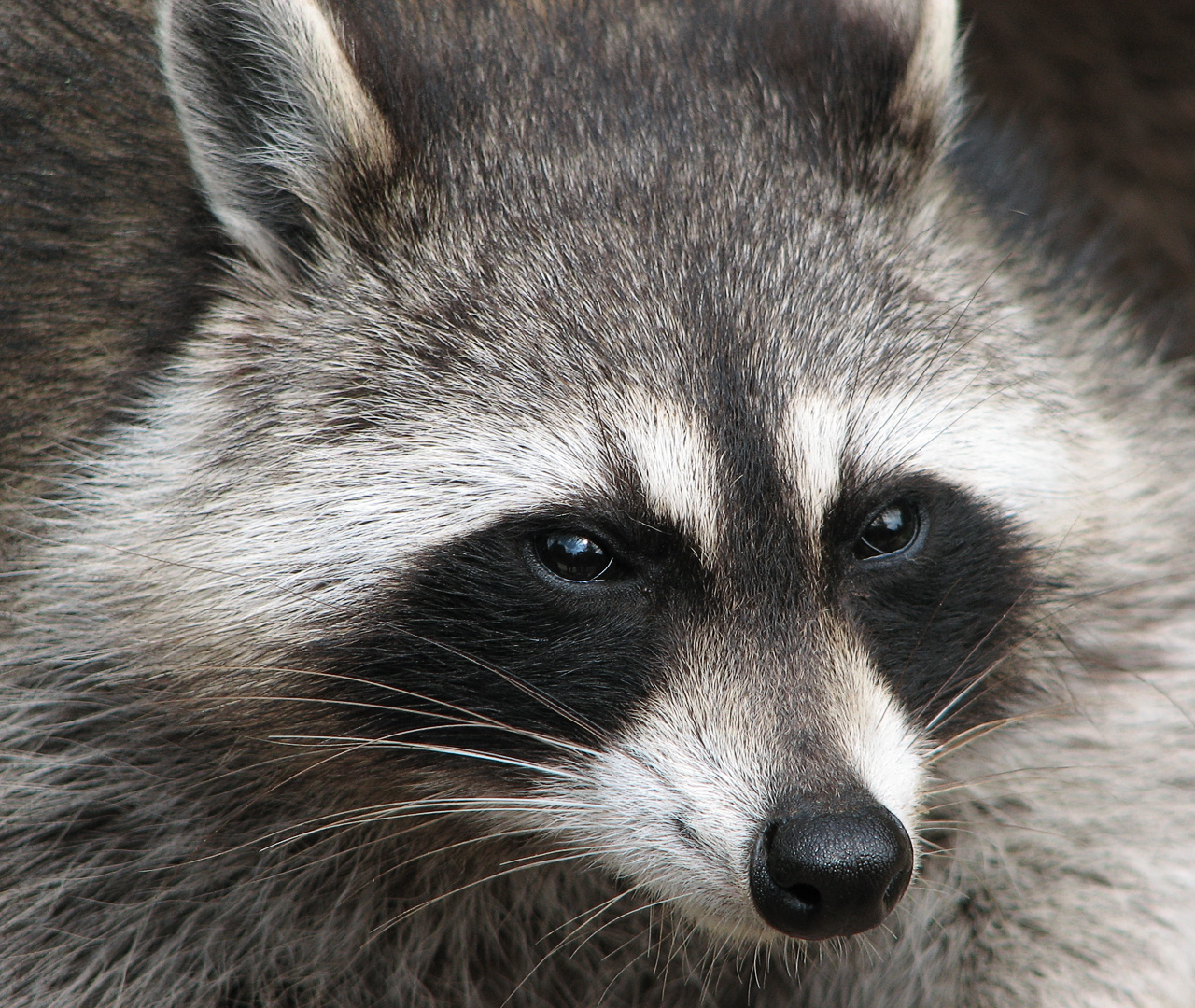
Raccoon fights produce the most dramatic sound in the suburban night: high, ragged screeches and screams tangled with growls, chittering, and squalling, usually 20 seconds to 2 minutes of overlapping chaos that ends as abruptly as it starts. Fights break out over food concentrations (a knocked-over trash can is a common arena), over females during the January-to-March mating season, and between males disputing rank.
The multi-voice texture is the identification key. A raccoon brawl is unmistakably several animals interrupting each other, screech answered by squall answered by growl, where the night’s other famous screamers are soloists: the fox scream repeats one flat shriek on a metronome, and the Barn Owl delivers a single hissing scream in flight. Chaotic and layered means raccoons; rhythmic and lone means fox; one smooth pass overhead means owl, with the full owl repertoire in our owl sounds guide.
Mating season adds a second scream context: female raccoons scream during mating itself, and males squall at rivals, so late-winter screaming without the food-fight setup is usually romance rather than war. Either way the human playbook is identical: nothing needs doing, the noise is self-limiting, and the only actionable item is whatever food source assembled the crowd.
The Whinny, Purr, and Quiet Repertoire
Between the family channel and the brawls sits a quieter adult vocabulary. The long-distance contact call is a soft, rising whistle-whinny, horse-like enough that people blame phantom ponies, used between adults locating each other across territory. At close range, content raccoons churr, a rolling purr-growl hybrid, most often heard from nursing mothers and relaxed kits, and one of the few raccoon sounds that means everything is fine.
Foraging adds incidental audio: snuffling and low grunting as a raccoon works a lawn for grubs, soft chirps between family members moving together, and the splash-and-dabble of the famous food-washing at ponds and pet-water bowls. These quiet sounds at ground level are the background hum of a normal raccoon economy and rarely register unless you are listening for them.
Age changes the voice. Kits run high and constant (chitter, mew, cry), juveniles crack between registers as they roam in late summer, and adults default to economy, mostly silent travel punctuated by purposeful calls. A structure that produces constant high chittering holds kits; occasional deep grunts and heavy movement mean adults, and the difference drives the timing rules below.
Raccoons in the Attic and Chimney: The Sound Diagnosis
Raccoon building-noise has a weight class of its own. Where mice patter and bats rustle, raccoons thump: slow, heavy footfalls a human can track across a ceiling, dragging sounds as nesting material moves, forceful ripping of ductwork or insulation, and vocal chittering layered on top. If the animal overhead sounds like it has actual mass, it is raccoon (or occasionally opossum), not any rodent.
Schedule and location complete the diagnosis. Raccoon noise peaks in the first hours after dark (exit) and before dawn (return), with daytime silence broken mainly by kit chittering in spring; chimneys are a signature den site, with the sound of claws on flue tile, that distinctive scratchy climbing, being near-diagnostic. Compare the sunset-only high scratching of a bat colony in our bat sounds guide and the daytime scampering of squirrels, and the big three attic tenants separate cleanly by clock and mass.
Confirmation without ladders: a dusk watch of the roofline catches the exit silhouette, and entry points advertise themselves, raccoons need a gap of about 4 inches and often simply tear one, leaving bent flashing, torn soffit, or a popped vent cap with smudge marks. An uncapped chimney requires no damage at all; to a raccoon it is a ready-made hollow tree with better weatherproofing.
The Seasonal Sound Calendar
Raccoon audio follows a reliable annual script. January to March is mating season: males travel widely, scream-squall matches spike, and late-night fight audio peaks even in cold weather. April and May bring den season and the baby-cry weeks, chittering and infant wails from chimneys, attics, and deck voids as litters of 2 to 5 kits arrive.
June through August is family traffic: kits become mobile, first clumsily (thumps, scrabbling, occasional panicked crying when one is stuck or falls, a chimney-specific emergency worth checking), then confidently, as mothers lead nightly foraging parades across roofs and fence lines. September and October shift to bulk-up mode, quieter vocally but heavier physically, with lawn-grubbing snuffles and trash exploration peaking as raccoons build winter fat.
Winter mutes but never silences the track: raccoons do not hibernate, instead denning up through cold snaps and emerging on mild nights, so a January thaw routinely brings a night or two of roof thumps from an animal checking its territory. Year-round presence is normal; what changes is which sounds dominate, and the calendar tells you which chapter you are hearing.
Raccoon Sounds vs the Other Night Noises
The confusion set is finite. Opossums are the nearest match in mass and schedule but are nearly mute travelers, occasional hisses and clicks, none of the chittering commentary, so heavy movement with rich vocals means raccoon, heavy movement in silence leans opossum. Skunks scuffle and stamp at ground level but rarely climb, and their tell is olfactory anyway.
Cats deserve their line: fighting cats yowl and wail in long, sustained vowels, where raccoon brawls are percussive, chittering, and multi-textured, and cat fights lack the growl-under-screech layering. Squirrels own daylight, birds own the dawn chorus and vents, and rodents own the all-night gnaw; the full rodent-vs-heavyweight separation, droppings included, lives in our droppings comparison guide.
When the ear cannot decide, the ground votes: raccoon presence leaves hand-like five-fingered tracks in mud and dust, dumped and opened trash with the lid worked rather than chewed, rolled sod from grubbing, and latrine sites on horizontal surfaces. Sound plus one physical sign settles essentially every case without a single camera, though a 30-dollar trail cam ends all debate for the data-inclined.
What to Do About the Noise (and When)
The cardinal timing rule mirrors every denning species: never seal a raccoon entry between March and August without confirming no kits remain inside. A mother separated from her litter will tear roofs apart to return, and sealed-in kits die in walls, so spring noise means the calendar method: harassment now, exclusion after the family leaves. Eviction pressure that works: bright light in the den space, a radio on talk, and ammonia-soaked rags or used cat litter at (not blocking) the entry, sustained for several days; mothers with kits usually relocate to a backup den.
Once sound stops, verify and seal like you mean it: the paper test over the entry for 3 to 5 nights, then repairs in raccoon-grade materials, heavy-gauge hardware cloth, screwed metal flashing, and above all a proper chimney cap, since caps prevent the single most common raccoon denning scenario for the cost of a dinner out. Foam, plastic, and staples are suggestions a raccoon overrules in one night.
Then defund the route: secure trash lids with straps or bungees, bring pet food and water in overnight, treat lawn grubs if rolling sod is the draw, and harvest fallen fruit. Raccoons audit properties nightly and drop unrewarding stops from the route within a week or two; the sounds do not have to be fought, only starved. What remains, the occasional roof commute and distant winter squall, is the standard soundtrack of a functioning night shift.
Related reading: Raccoon Lifespan.
Frequently Asked Questions
What sounds do raccoons make?
A huge range: chittering and trilling (family contact), purring churrs, growls and hisses (warnings), screeching fight squalls, a whistling contact whinny, plus heavy thumping, dragging, and scratching in structures.
What does it mean when raccoons are chittering in my chimney?
Almost always a mother with kits, especially in April through July. Do not seal anything; use light, sound, and smell harassment so she relocates the litter, then cap the chimney after the paper test confirms vacancy.
Why do raccoons scream at night?
Fights over food or rank and, in late winter, mating. The multi-voice chaos of overlapping screeches and growls separates a raccoon brawl from the lone, rhythmic fox scream.
Do raccoon sounds mean rabies?
No; growling, hissing, and screaming are normal healthy behavior. Rabies flags are daytime staggering, circling, a wet matted face, and indifference to threats, which warrant distance and a call to animal control.
What raccoon sound is like a baby crying?
Newborn kits, whose cries genuinely resemble a human infant, typically from a chimney, attic, or deck void in April and May. It is the strongest possible signal of an active den.
How do I tell raccoons from squirrels or rats in the attic?
Mass and clock: raccoons are heavy, trackable footfalls at night with chittering; squirrels are light daytime scampering; rats are light all-night scratching and gnawing. Gnawed wood always means rodent.
How do I make raccoons stop making noise around my house?
Remove the paycheck: strap trash lids, bring in pet food, cap the chimney, seal entries outside of kit season, and treat grub-infested turf. Raccoons drop unrewarding properties from their route within a couple of weeks.