Do Raccoons Hibernate? No, Here Is What They Do Instead
Raccoons do not hibernate. They stay in their dens for days or weeks during cold snaps, but they never enter the deep, months long dormancy that true hibernators such as ground squirrels and woodchucks do, and a mild night in January will bring them right back out to your trash cans.
The confusion is fair, because a raccoon in winter behaves very differently from a raccoon in June. Understanding the difference matters if you are trying to decide whether the animal in your attic has moved out for the season.
No, raccoons (Procyon lotor) do not hibernate. In cold regions they enter torpor, a state of reduced activity in which they sleep in a den for days or weeks, living off fat reserves. Their body temperature drops only slightly, they wake easily, and they emerge to forage whenever temperatures rise above roughly 20 to 30 degrees F.
| True hibernation | Raccoon torpor | |
|---|---|---|
| Duration | Weeks to months, continuous | Days to a few weeks at a time |
| Body temperature | Drops near ambient | Drops only a few degrees |
| Heart rate | Falls by 90 percent or more | Modest decrease |
| Waking | Slow, takes hours | Immediate |
| Winter feeding | None | Yes, on mild nights |
| Fat loss | Gradual | Up to half of body weight by spring |
Do Raccoons Hibernate in the Winter?
No. Hibernation is a specific physiological state in which body temperature, heart rate and metabolism collapse for an extended period, and raccoons never reach it. Their temperature drops only slightly, and they can be fully alert within seconds of a disturbance.
What they do instead is called torpor or winter lethargy. Northern raccoons may stay denned for up to a month during a severe stretch, and studies in Minnesota have recorded animals inactive for several weeks straight, but the sleep is shallow and easily broken.
In the southern United States the behavior barely registers. Raccoons in Florida, Texas and the Gulf states stay active nearly every night of the year, because food never becomes hard enough to find to make sitting still worthwhile.
Where Do Raccoons Go During the Winter?
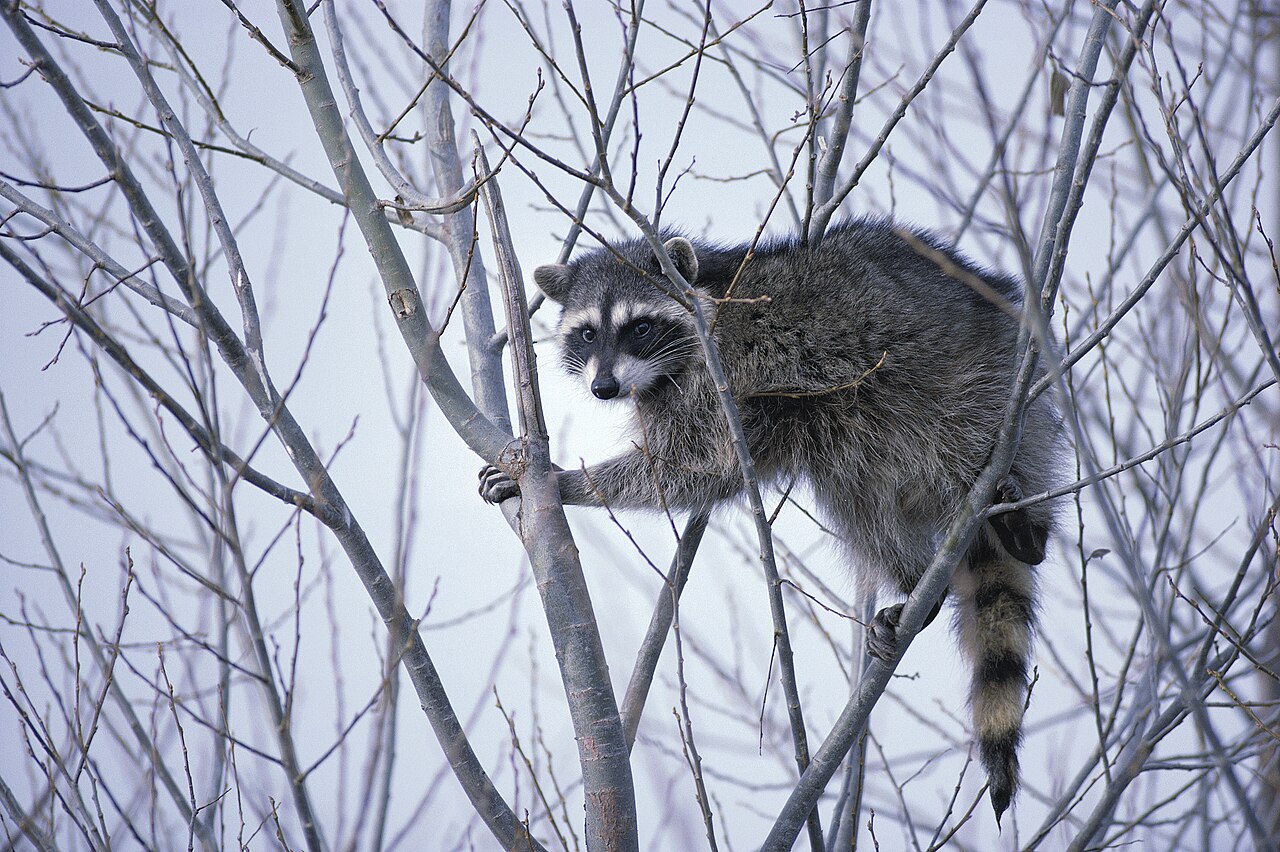
Winter dens are almost always enclosed, dry and elevated. Hollow trees are the classic choice, followed by abandoned burrows dug by groundhogs or foxes, rock crevices, brush piles, culverts, and, in towns, attics, chimneys, crawl spaces and sheds.
Raccoons that are normally solitary will share a den in cold weather. Communal groups of a few animals, often a female with her grown young from the previous spring, pile together to cut heat loss, and a single hollow tree can hold several raccoons.
They also rotate. A raccoon may use a dozen or more dens across a winter, moving every few days when conditions allow, which is why scratching and thumping noises in an attic can stop for a week and then start again.
Why Do Raccoons Suddenly Disappear?
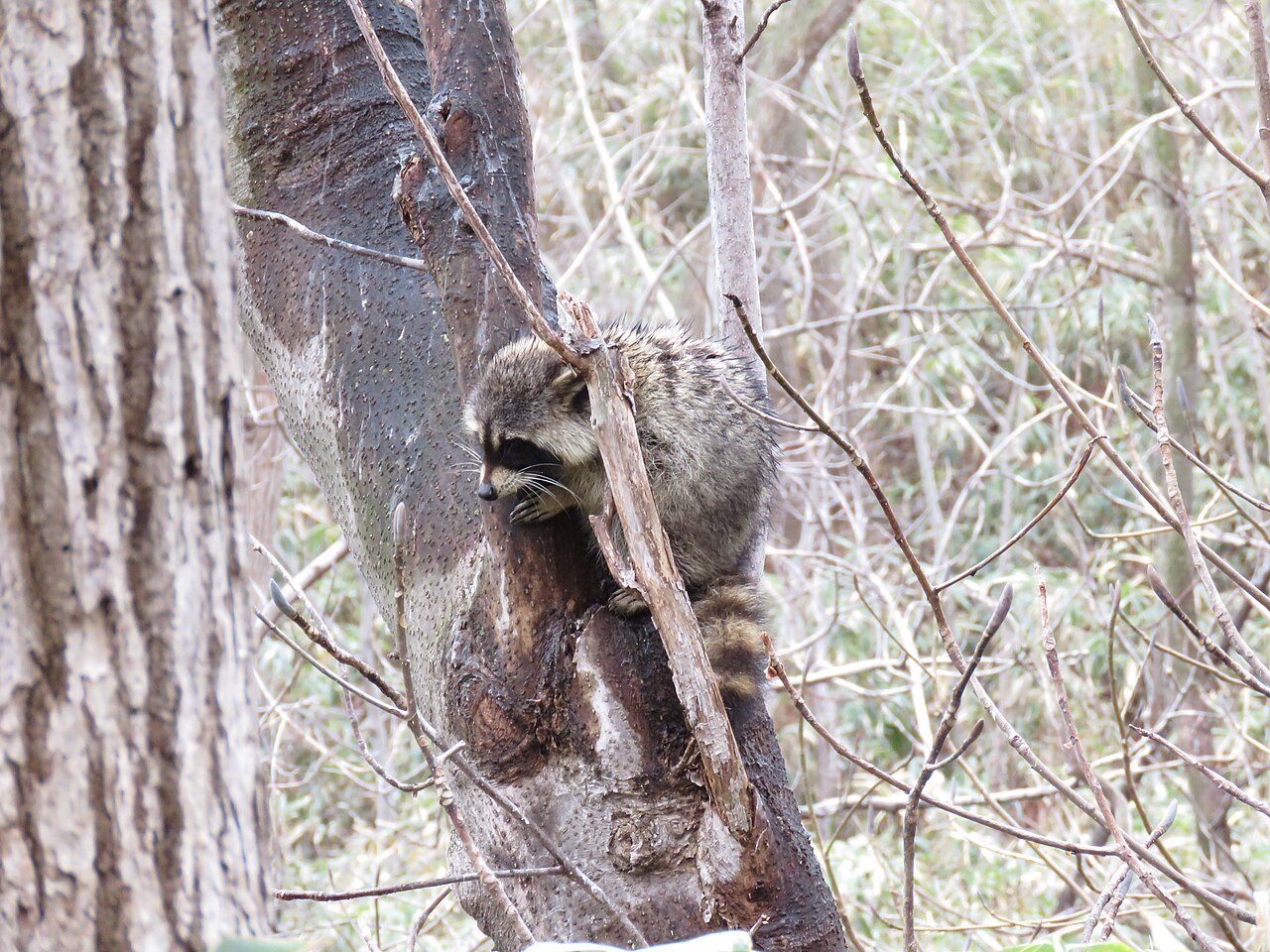
Sustained cold is the usual reason. Once temperatures stay near or below freezing, foraging costs more energy than a night of searching returns, so the animal shuts down and waits. Most raccoons in northern states den up somewhere between late November and early January.
Body condition sets the schedule. Raccoons put on heavy fat through autumn, sometimes doubling their weight, and they burn through as much as half of it by spring. A thin animal cannot afford long torpor and keeps hunting through weather a fat one sleeps through.
Winter mortality is real. Young of the year that entered the season underweight are the ones that do freeze or starve, and survival through a hard first winter is one of the main factors shaping how long raccoons live in the wild.
When Raccoons Come Back Out
Activity picks up on any night above roughly 20 to 30 degrees F (minus 7 to minus 1 C), even in midwinter. Fresh tracks in snow after a warm spell are the most common sign that the local animals never went anywhere.
The bigger return happens in late January and February, when mating season begins and males travel widely to find females. That is also when attic complaints spike, because a female looking for a nest site is searching for exactly the kind of dry cavity a house provides, and a litter of kits arrives about 65 days later.
The National Park Service and state wildlife agencies both note this seasonal pattern in their raccoon guidance, and it is the reason exclusion work is recommended before February. Details on den biology are collected by the National Park Service for parks across the raccoon range.
Related reading: do chipmunks hibernate.
Related reading: do polar bears hibernate.
Related reading: do turtles hibernate.
Related reading: do snakes hibernate.
Related reading: do groundhogs hibernate.
Frequently Asked Questions
At what temperature do raccoons stop coming out?
Most raccoons stay denned once nighttime temperatures hold below about 20 to 30 degrees F (minus 7 to minus 1 C), especially with wind or deep snow. Above that threshold they resume foraging, which is why tracks often appear after a single mild night in midwinter.
Do raccoons freeze to death?
Some do, mainly first year animals that entered winter underweight. Healthy adults with full fat reserves and a dry, insulated den survive severe cold routinely. Starvation, not cold alone, is usually the direct cause when a raccoon dies during a long hard winter.
How can I tell if a raccoon is denning on my property?
Look for a greasy rub mark at an entry hole, tracks in snow or mud, and latrine sites on flat surfaces such as decks, woodpiles and roof edges. Learning the difference between raccoon and opossum droppings tells you which animal you actually have.
Should I remove a raccoon that denned in my attic for the winter?
Yes, but do it correctly and early. Sealing an entry while an animal is inside creates a trapped raccoon and, after February, an abandoned litter. Standard humane exclusion methods and the cleanup steps for raccoon latrines both apply.