What Is a Group of Deer Called? Herd, Bevy, and Rangale
A group of deer is called a herd, and that is the correct answer in everyday English, in wildlife biology, and in nearly every dictionary. Older English also gives a bevy of deer, a rangale of deer for a large mixed group, and a parcel or leash for smaller numbers, all from the medieval hunting vocabulary. A group of deer is never called a flock, which belongs to birds and sheep. What is a group of deer called therefore has one plain answer, herd, and several archaic ones that survive mainly in crossword puzzles and terms of venery lists.
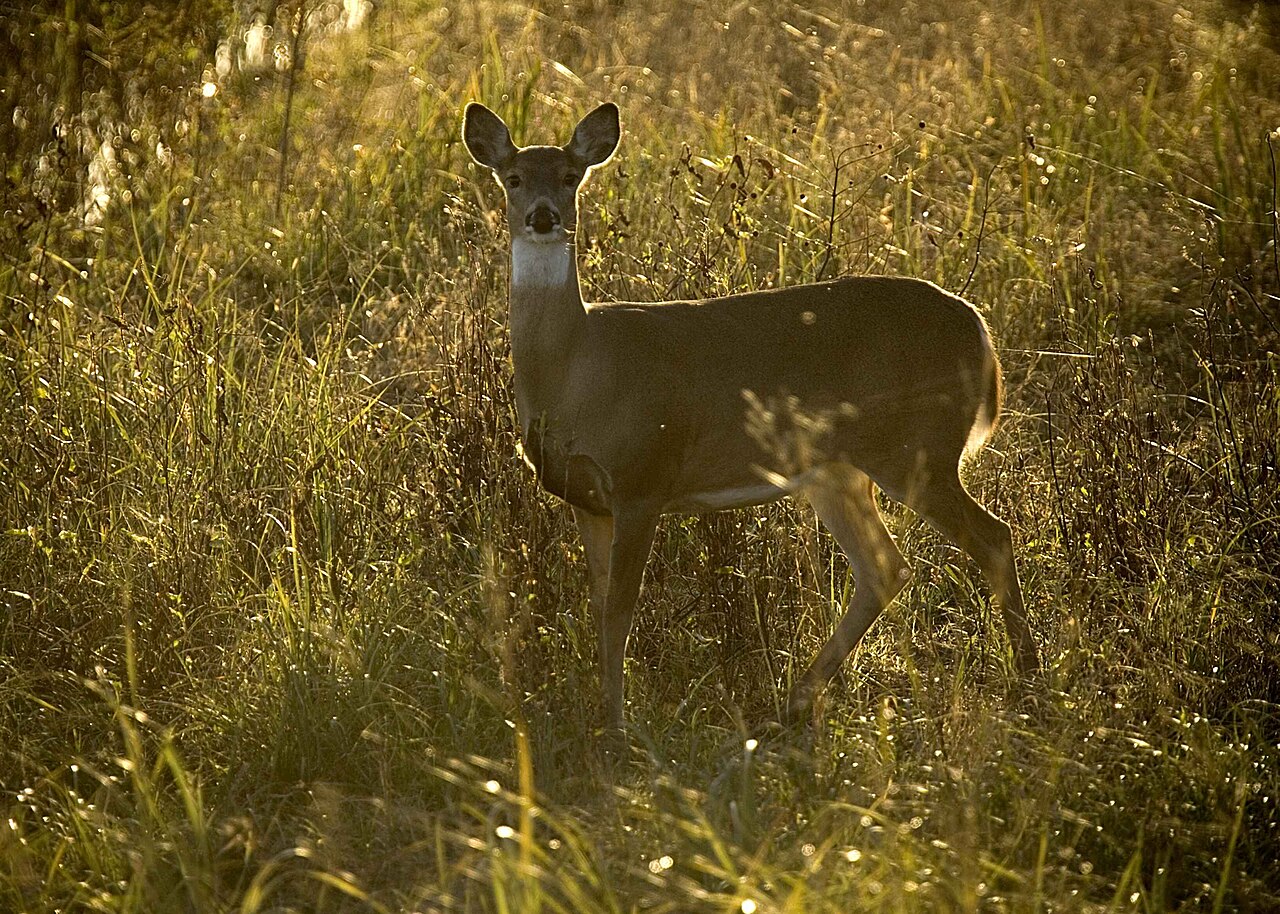
The more useful question for anyone watching deer is what kind of herd they are looking at, because deer do not live in one undifferentiated group. White-tailed deer, the most widespread species in the United States, spend most of the year in two separate social systems: matriarchal family groups of related females and their young, and loose bachelor groups of bucks that dissolve when the rut begins. This guide covers the collective nouns, the correct plural of deer, what males, females, and young are called, and how real deer herds form and break apart through the year.
A group of deer is called a herd. Archaic English also offers a bevy of deer, a rangale for a large mixed group, and a parcel or leash for small numbers. A group of deer is never a flock. A male deer is a buck or stag, a female is a doe or hind, and a baby deer is a fawn.
| Question | Answer |
|---|---|
| Standard collective noun | Herd of deer |
| Archaic alternatives | Bevy, rangale, parcel, leash |
| Plural of deer | Deer (never deers) |
| Male | Buck (or stag in larger species) |
| Female | Doe (or hind in larger species) |
| Young | Fawn (calf in elk and moose) |
| Typical herd size | 3 to 8 in family groups; up to 100 in winter yards |
Why Is a Group of Deer Called a Herd?
A group of deer is called a herd because herd is the standard English collective noun for grazing and browsing hoofed mammals, applied identically to cattle, horses, elk, bison, and antelope. The word comes from Old English heord, meaning a company or a flock of domestic animals, and it has been used for deer for well over a thousand years. Unlike the ornate terms invented for birds in the medieval terms of venery, herd is genuine working vocabulary that never fell out of use.
Herd fits deer because it describes what they actually do: move, feed, and rest as a coordinated group with shared vigilance. In a feeding herd, individual animals alternate between browsing and lifting their heads to scan for danger, and the alarm response of any one animal, a stamped foot, a snort, or a raised white tail, triggers the entire group. This is exactly the behavior herd implies, which is why the word never needed replacing.
The related verb is also relevant. To herd means to gather or drive animals together, and the noun and verb share the sense of animals treated as a moving unit. Nothing in the term suggests anything about how deer are organized internally, which is where the more specific biological terms come in. A herd of deer might be a matriarch with two generations of daughters or a temporary winter aggregation of animals that will never associate again once the snow melts.
What Is a Bevy of Deer?
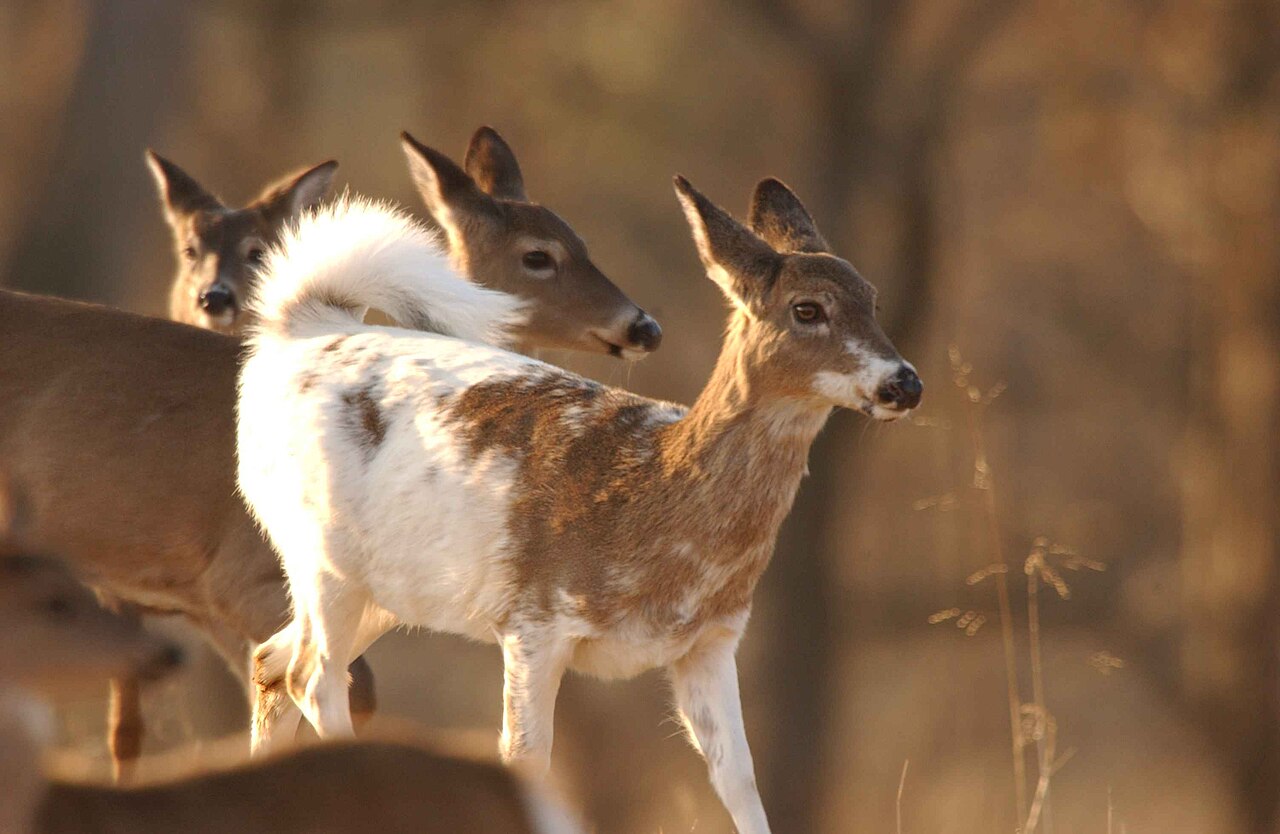
A bevy of deer is an archaic collective noun found in medieval English lists of hunting terms, where bevy was applied to roe deer specifically as well as to quail and larks. The word appears in the Book of Saint Albans, printed in 1486, alongside dozens of other terms of venery that the English gentry memorized as a mark of education. Bevy for deer is grammatically correct in the sense that a dictionary will confirm it, but nobody has used it in ordinary speech for centuries.
A rangale of deer is a second archaic term, and it referred to a large mixed group rather than any group. Some sources define it as a herd containing both males and females, others as a group of at least twenty animals. Parcel and leash also appear: a leash of deer traditionally meant exactly three, borrowing from the hunting term for three hounds coupled together. These distinctions were meaningful to medieval hunters who needed a precise vocabulary for game.
The practical status of all these words today is the same as an unkindness of ravens or a rafter of turkeys: technically valid, useful in trivia, and never heard from anyone who works with the animals. If a quiz asks for an unusual collective noun for deer, bevy is the answer most often expected. If someone asks what to call the eight animals in a field, the answer is a herd. The deer sounds guide uses the standard vocabulary throughout, as does every state wildlife agency publication.
Is It Deer or Deers? The Plural Explained
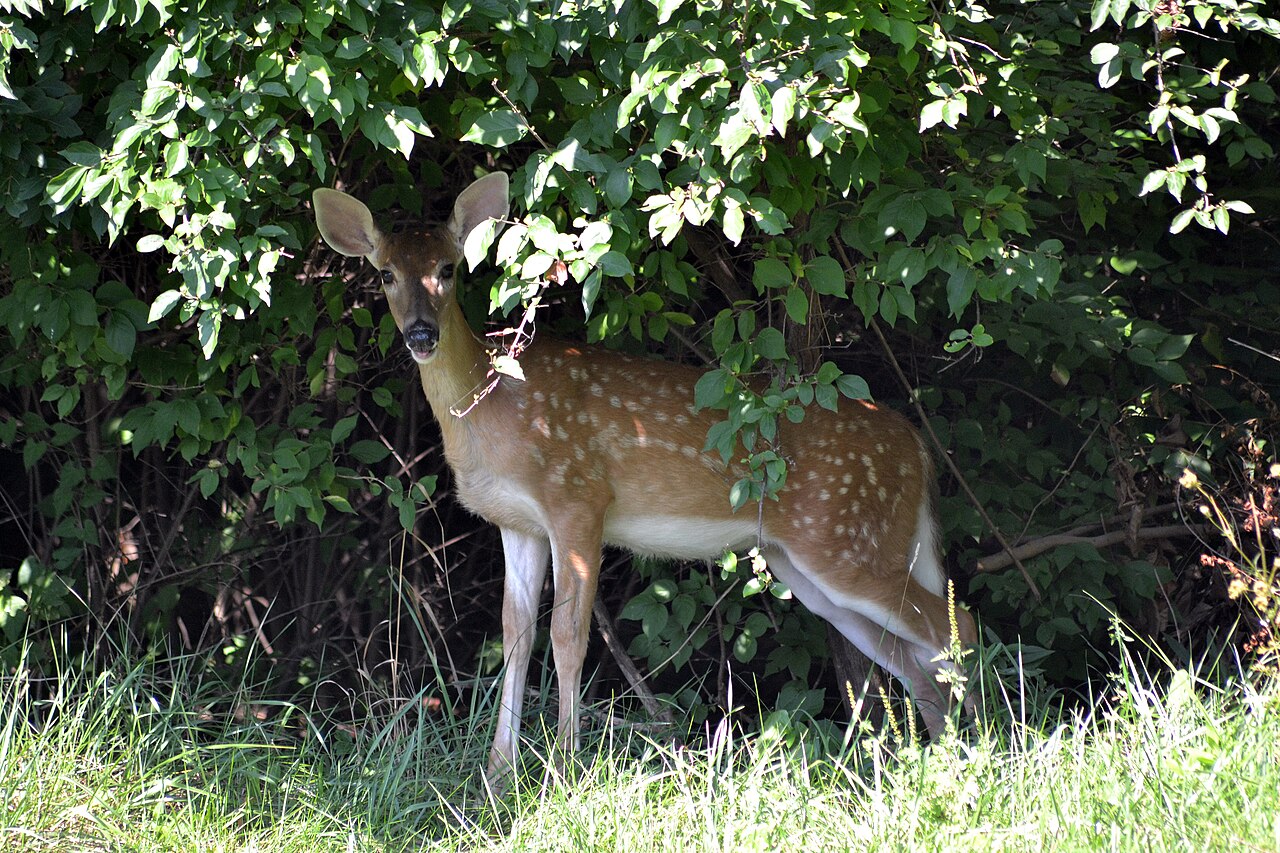
The plural of deer is deer, not deers. Deer is an unchanging plural, part of a small group of English nouns including sheep, fish, moose, and swine that keep the same form in singular and plural. You would say one deer, three deer, and a hundred deer. The form deers appears occasionally in informal speech and in non-native English, and while it will be understood, it is not standard and will be marked wrong in any edited writing.
The reason is historical. Old English had a class of neuter nouns that took no ending in the plural, and deer, then spelled deor and meaning any wild animal, belonged to it. Most such nouns eventually acquired the regular -s plural as English simplified, but a handful that referred to animals hunted or herded in groups kept the old form, probably because the plural was used so constantly that it resisted change. Sheep and swine survived the same way.
The word’s original meaning is worth knowing. Deor in Old English meant a wild animal of any kind, which is why the Shakespeare line about “small deer” in King Lear refers to small creatures generally rather than young deer. The narrowing to the family Cervidae happened over the medieval period as deer became the principal game animal of the English aristocracy. The same root survives in the German Tier, still meaning animal in general.
What Are Male, Female, and Baby Deer Called?
A male deer is called a buck and a female is called a doe in white-tailed deer, mule deer, and most smaller species. In larger species such as red deer and elk, the male is a stag or a bull and the female is a hind or a cow. A baby deer is a fawn in white-tailed and mule deer, while the young of elk and moose are calves. These terms are used consistently by hunters, biologists, and state agencies, and getting them right immediately signals that you know what you are looking at.
Age adds further vocabulary. A yearling buck with its first small antlers is often called a spike or a button buck depending on antler development, and hunters describe mature bucks by antler point count, as in an eight-pointer. A doe that has not yet bred is sometimes called a doe fawn or yearling doe. Male deer grow and shed antlers annually, dropping them in winter and regrowing them over summer under a covering of velvet, which is one of the fastest tissue growth rates known in mammals.
Fawns are born in late spring after a gestation of about 200 days, usually one for a first-time mother and twins for an experienced doe, with triplets occurring in high-quality habitat. Newborn fawns are spotted and nearly odorless and spend their first weeks lying motionless in cover while the doe feeds elsewhere, returning only to nurse. A fawn found alone is almost never abandoned, which is why wildlife agencies urge people to leave them undisturbed. The baby deer guide covers the first months in detail.
How Big Is a Typical Deer Herd?
A typical white-tailed deer herd is small, usually 3 to 8 animals, and consists of a mature doe, her daughters from previous years, and the current year’s fawns. This matriarchal family group is the basic social unit of the species and can span three generations of related females. Groups of this size are what most people see crossing a road at dusk or feeding along a field edge. Bucks form separate bachelor groups of 2 to 5 animals through spring and summer.
Winter changes the picture in northern regions. Where deep snow limits movement, deer concentrate in yards, which are stands of conifers that offer shelter and reduced snow depth, and these aggregations can hold dozens to well over a hundred animals from many separate family groups. Deer yards in Maine, Michigan, Minnesota, and eastern Canada are traditional sites used generation after generation, and the concentration makes the animals vulnerable to both starvation and predation. Mule deer in the West undertake long migrations to winter range and can form similarly large temporary groups.
Open-country species behave differently from forest species. Mule deer and pronghorn on western rangelands form larger and more visible groups than white-tailed deer in eastern woodlands, because open habitat rewards group vigilance more and offers fewer places to hide alone. The mule deer vs whitetail comparison covers these behavioral differences alongside the physical field marks. Herd size in any given place is ultimately set by food, cover, and how much hunting pressure the population experiences.
How Deer Herds Change Through the Year
Deer social structure follows a strict annual cycle driven by breeding and birth. From spring through late summer, does separate even from their own family groups to give birth, and a doe will aggressively drive off her yearling offspring in the weeks before fawning. Bucks in this period are in bachelor groups, growing antlers in velvet and behaving peaceably toward each other. This is the most segregated phase of the year, with males and females occupying largely separate ranges.
Autumn brings the rut. Bachelor groups break up in September and October as antlers harden and testosterone rises, and bucks become solitary and intolerant, sparring and then fighting seriously for access to does. A buck in rut may travel several miles a day and lose 20 to 25 percent of his body weight over the season. Family groups of does continue as normal, but they are constantly trailed and disrupted by searching bucks. The peak of the rut in most of the United States falls in November.
After the rut, bucks shed their antlers between December and March and gradually re-form bachelor groups, and in northern areas everyone converges on winter cover. Spring disperses the winter concentrations, yearling bucks leave their mothers permanently and often travel several miles to establish their own range, and the cycle begins again. This is why the same field can hold 40 deer in February and two in June without any change in the actual population.
What Is the Leader of a Deer Herd Called?
The leader of a deer family group is the matriarch, the oldest and most experienced doe, and she is sometimes called the lead doe or alpha doe by hunters. She is not a leader in the sense of a dominant male controlling a harem, which is how deer are often imagined. Her role is navigational and informational: she knows the location of food, water, escape routes, and bedding cover, and the group follows her because doing so has worked. Younger does and fawns learn the home range by following her through it.
Dominance among does is real but low-key, expressed through ear position, head-high threats, and occasional striking with the front hooves rather than through the spectacular fighting seen in bucks. The matriarch gets first access to the best food and bedding. Her importance to the group is why wildlife managers pay attention to the age structure of the female population; removing older does can disrupt the transmission of range knowledge in local herds.
Bucks do not lead herds. Even during the rut, a dominant buck tending a doe is following her rather than directing a group, and bachelor groups outside the rut have a loose dominance order without any real leadership function. The image of a big antlered stag leading a herd comes from art and film rather than from deer behavior, and in most sightings the animal in front of a moving group is an adult female. Interestingly, deer crossing a road tend to follow the same leader in the same order, which the deer crossing your path guide touches on from the folklore side.
Collective Nouns for Deer and Related Animals
Deer share the herd label with almost every other hoofed mammal, but their relatives have picked up some specific terms worth knowing. A group of elk is a herd or, in older usage, a gang. A group of reindeer or caribou is a herd, and a group of caribou on migration is sometimes called a band. Moose are largely solitary and have no meaningful collective noun, though a group is technically a herd. A group of pronghorn is a herd, and a group of wild boar is a sounder, one of the few genuinely distinctive terms in this group.
Compared with the bird world, mammal collective nouns are notably plain. There is no equivalent of a murder of crows or a parliament of owls for deer, and the medieval term lists that produced those bird names gave deer only bevy, rangale, and leash, none of which caught on. The likely reason is that deer were hunted seriously and constantly, and hunters need vocabulary that is unambiguous rather than clever. Herd, buck, doe, and fawn all remain in daily use for exactly that reason.
White-tailed deer are the most abundant large mammal in North America, with a United States population estimated by state wildlife agencies at roughly 30 million, up from perhaps 300,000 at the low point around 1900. That recovery, driven by regulated hunting, habitat change, and predator loss, means that most Americans see herds regularly, in fields, in suburbs, and along highways. The plain vocabulary suits an animal that has become part of everyday life rather than an exotic subject for wordplay. For evidence they have been through your yard, the deer poop guide shows what to look for.
Related reading: what is a group of rabbits called.
Related reading: what is a group of bats called.
Related reading: what is a group of foxes called.
Related reading: what is a group of frogs called.
Related reading: what is a group of squirrels called.
Related reading: what is a group of bears called.
Related reading: what is a group of snakes called.
Related reading: what is a female deer called.
Frequently Asked Questions
What is a group of deer called?
A group of deer is called a herd. This is the standard term in everyday English, in wildlife biology, and in dictionaries. Archaic alternatives include a bevy, a rangale for a large mixed group, and a leash for exactly three deer.
Is it a flock or a herd of deer?
A herd. Flock applies to birds and to sheep and goats, never to deer. Using flock for deer is a common error but is not correct in any register of English.
Is it correct to say three deer or three deers?
Three deer. Deer is an unchanging plural like sheep and fish, a survival from Old English. Deers is nonstandard and will be marked as an error in edited writing, though it is generally understood.
What is a bevy of deer?
A bevy is an archaic collective noun for deer, particularly roe deer, recorded in the 1486 Book of Saint Albans. It is technically valid and appears in dictionaries, but it has not been in ordinary use for centuries.
What is a group of baby deer called?
There is no special term. Baby deer are fawns, and a doe with her fawns is simply part of a herd or family group. A doe usually has one fawn her first year and twins afterward.
What is the leader of a deer herd called?
The matriarch, or lead doe, the oldest and most experienced female. She guides the family group to food, water, and cover, and the group follows her because of her knowledge of the range. Bucks do not lead herds.
How many deer are in a herd?
Family groups typically hold 3 to 8 animals, made up of a mature doe, her daughters, and the year’s fawns. In northern winters, deer concentrate in sheltered yards where aggregations can exceed 100 animals from many separate family groups.