What Is a Group of Bears Called? Sloth, Sleuth, and Family
A group of bears is called a sloth or a sleuth, the two traditional collective nouns, and a mother bear with her cubs is called a family or a litter. Biologists use group or aggregation, because bears are solitary animals and true groups occur only under specific conditions. The odd pair of names comes from a single medieval word: sloth meaning slowness was applied to bears in the fifteenth century lists, and sleuth is a later misreading or respelling of the same term that stuck alongside it.
The names describe an animal that does not gather, which puts bears in the same category as owls and foxes among collective nouns. What bears do form is a temporary aggregation at concentrated food, and those can be spectacular: dozens of brown bears line the falls at Brooks River in Alaska during the salmon run, standing within feet of each other in a tolerance that would be unthinkable at any other time. This guide covers every term for a group of bears and the conditions under which bears actually assemble.
A group of bears is called a sloth or a sleuth, both from a medieval word meaning slowness. A mother with her cubs is a family or a litter. Bears are solitary and true groups are rare, but they aggregate in large numbers at concentrated food such as salmon runs, where dozens may feed within feet of each other.
| Question | Answer |
|---|---|
| Traditional collective nouns | Sloth or sleuth of bears |
| Mother with young | Family or litter |
| Scientific term | Group or aggregation |
| Origin of sloth | Medieval word for slowness, 15th century |
| Do bears live in groups? | No; solitary except mothers with cubs |
| Largest gatherings | Dozens at salmon runs and garbage sites |
| Baby bear | Cub; a group is a litter, usually 2 to 3 |
Why Is a Group of Bears Called a Sloth?
A group of bears is called a sloth because of the medieval English word sloth, meaning slowness or laziness, from the same root as slow. The term appears in the fifteenth century lists of collective nouns compiled for the English gentry, and it reflects the perception of bears as ponderous, heavy animals that move without urgency. Anyone who has watched a bear amble across a meadow understands the impression.
The impression is badly wrong. A black bear can run at 30 miles per hour and a grizzly at about 35, which is faster than any human has ever sprinted, and both climb, swim, and turn with startling agility for their mass. The advice occasionally given to outrun a bear is dangerous nonsense. The apparent slowness is efficiency: a bear conserving energy between meals moves no faster than it needs to, and it can drop that economy instantly.
The animal we now call a sloth, the tree-dwelling mammal of Central and South America, got its name from the same English word centuries later, when European naturalists encountered it and named it for its slowness. So the collective noun for bears and the name of the sloth are cousins rather than a confusion, both descending from a term for one of the seven deadly sins.
What Is a Sleuth of Bears?
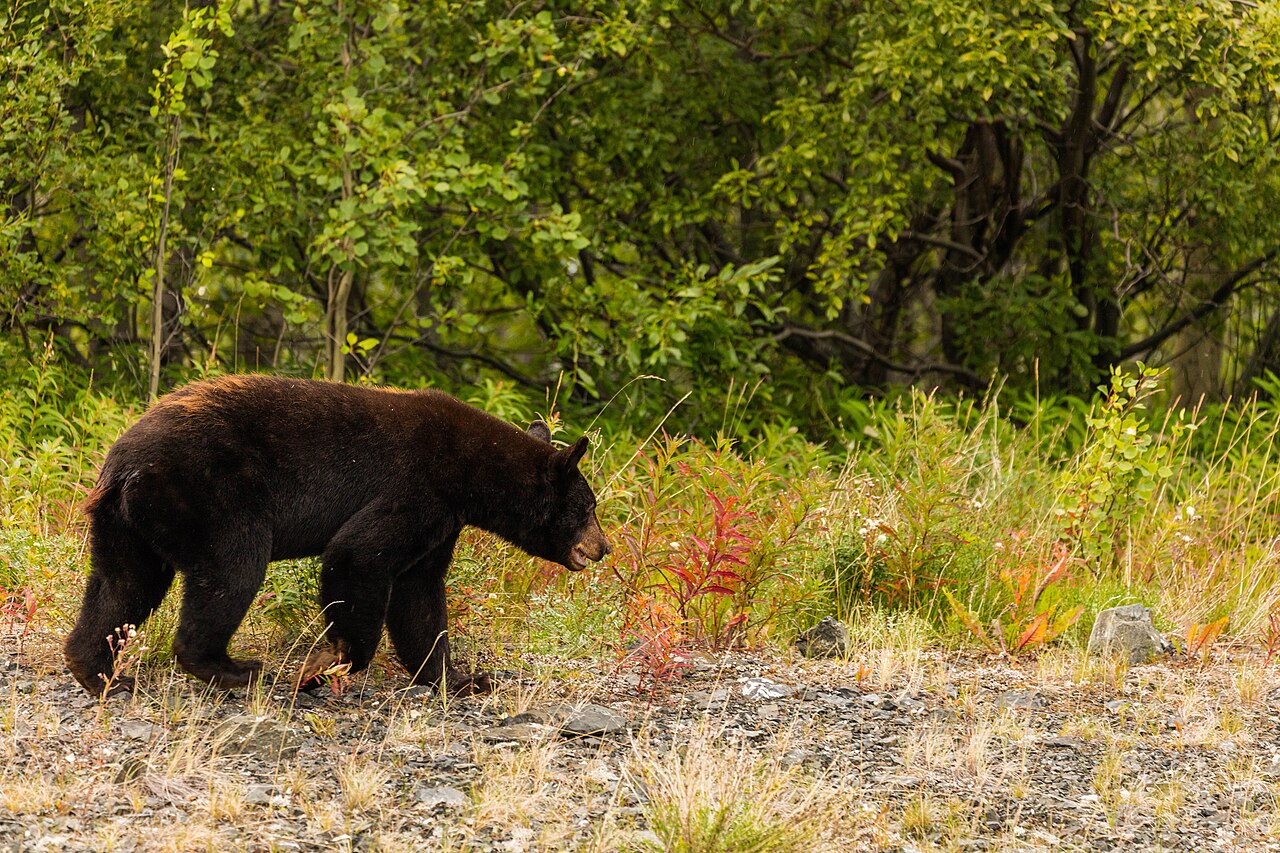
A sleuth of bears is the second traditional term, and it is almost certainly a variant spelling of sloth rather than an independent word. Early collective noun lists were copied by hand and then set in type by printers who did not always know what they were reading, and sloth and sleuth are close enough that a transcription error is the most likely explanation. Both spellings then appeared in later lists as if they were separate terms.
The confusion is compounded by a genuine but unrelated word. Sleuth in the sense of a detective comes from the Old Norse sloth, meaning a track or a trail, which gave English sleuth-hound for a bloodhound that follows a scent, later shortened to sleuth for anyone who follows a trail. That word has nothing to do with bears, but the coincidence has generated a persistent folk explanation that a sleuth of bears refers to bears tracking prey.
Both spellings are recorded in dictionaries and both are accepted answers. Sleuth is somewhat more common in modern usage, possibly because it sounds more interesting than a word associated with laziness. If a quiz asks what a group of bears is called, either will be accepted, and a good quiz will list both.
Do Bears Live in Groups?
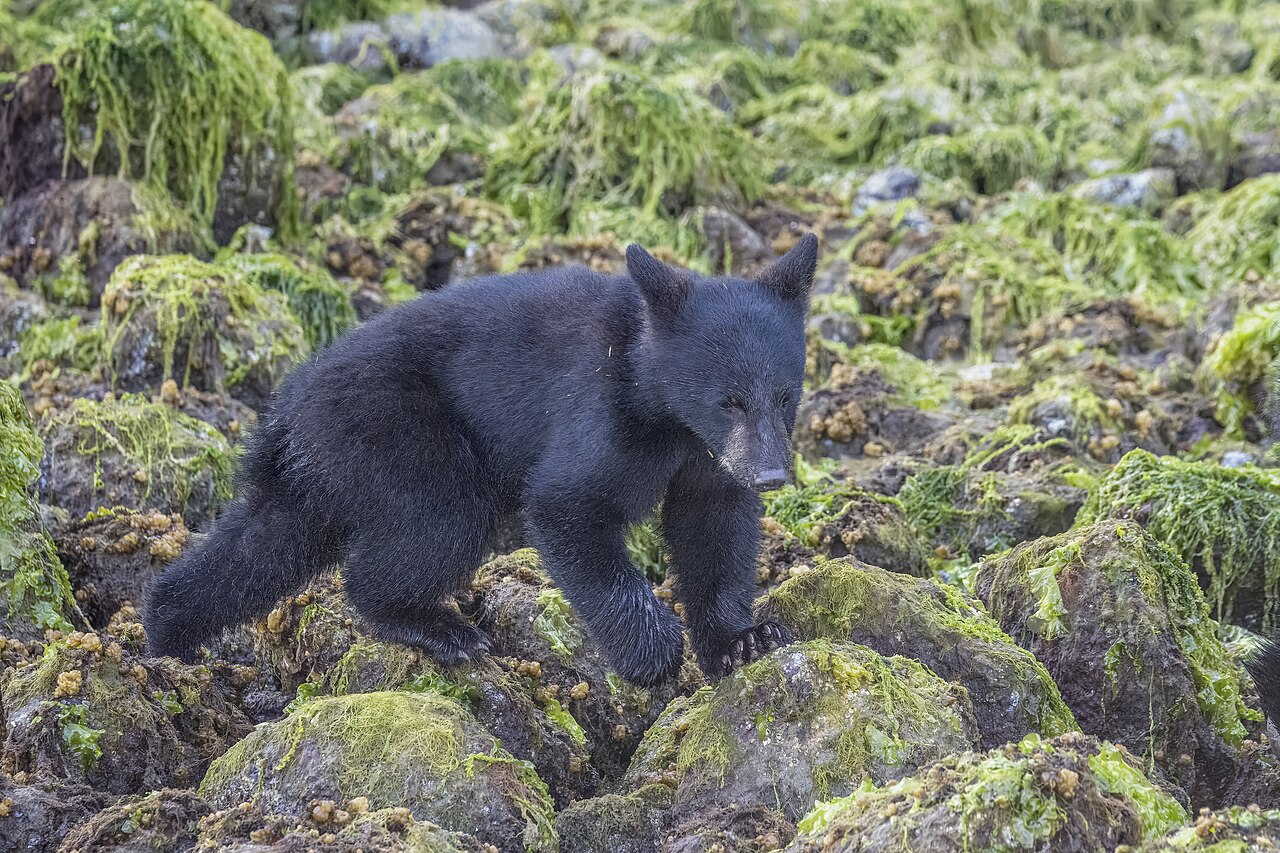
No, bears are solitary animals. Adult bears live and forage alone, and the only stable social unit is a mother with her cubs, which lasts about a year and a half in black bears and two to three years in brown bears and polar bears. Adult males are intolerant of each other and will fight over territory and mates, and adult males will kill cubs, which is why females with young actively avoid them.
The reason is food. Bears are omnivores that spend most of their waking hours foraging for widely scattered, low-value food: berries, nuts, roots, grasses, insects, and carrion. A patch of blueberries feeds one bear better than three, and there is nothing to be gained by cooperation when nothing needs to be hunted down. This is the same logic that keeps foxes and most cats solitary while wolves live in packs.
Home ranges are large and overlapping rather than defended as exclusive territories, much as they are for the tree squirrels that share the same woods on a far smaller scale. A male black bear may range over 10 to 50 square miles or more, a female over a smaller area, and ranges overlap considerably without conflict as long as the animals avoid each other. Bears maintain that avoidance through scent marking on trees, which is what the rubbed, clawed, and bitten trunks along bear trails record. The guide to what bears eat covers the diet that shapes this whole system.
When Do Bears Gather in Numbers?
Bears aggregate wherever food is concentrated enough to override their intolerance of each other, and salmon runs produce the most famous examples. At Brooks Falls in Katmai National Park, Alaska, dozens of brown bears fish within a few yards of each other through July and September, and researchers have counted more than 60 individual bears using the falls in a season. The same happens at McNeil River, where gatherings of over 70 bears have been recorded.
These aggregations are not social groups but tolerated crowding, and they have a strict structure. Large dominant males claim the best fishing spots, subordinate males and females with cubs take the margins, and position is negotiated through posturing, vocalization, and occasional fights. Individual bears learn where they stand and mostly avoid conflict, which is exactly what allows the aggregation to function at all.
Other concentrations occur at whale carcasses, at sedge flats in spring, at berry patches in a good year, and, unfortunately, at garbage dumps. Landfill bears were a common sight in North American parks before waste management changed, and those aggregations demonstrated the same principle: bears will tolerate each other for enough calories. Polar bears also gather in numbers along the Hudson Bay coast near Churchill, Manitoba, in the same opportunistic way vultures converge on a carcass, waiting for the ice to form, which is what makes the town’s bear tourism possible.
What Is a Group of Baby Bears Called?
A group of baby bears is called a litter, and individual young are cubs. Black bears typically produce two or three cubs, occasionally up to five, and brown bears usually two. Cubs are born in the winter den in January or February, and they are startlingly small: a newborn black bear cub weighs about half a pound, roughly the size of a chipmunk, against a mother that may weigh 200 pounds or more.
The small birth size is a consequence of how bear reproduction works. Bears use delayed implantation, mating in spring or early summer but not implanting the fertilized embryo until autumn, and only if the female has built enough fat reserves. If she has not, the pregnancy simply does not proceed. Actual gestation after implantation is then only six to eight weeks, taking place while the mother is denning and not eating, drinking, or eliminating.
Cubs emerge from the den in spring weighing several pounds and stay with the mother through the following winter, denning with her a second time. Black bear cubs separate in their second summer at around 17 months. During that time the mother teaches feeding sites, denning locations, and avoidance behavior, and cubs that lose their mother early rarely survive. A female bear reproduces only every two to three years as a result, which is why bear populations recover slowly from losses.
What Is a Family of Bears Called?
A mother bear with her cubs is called a family group, and this is the term biologists and wildlife agencies use. In field reports and population surveys you will see the phrase sow with cubs, using sow for an adult female bear, which matches the term for a female pig and is standard bear vocabulary in North America. An adult male bear is a boar, again borrowing the pig term.
The family group is the only bear social unit with real structure. The sow leads, forages, and defends, and cubs follow closely, climbing trees on command when she detects a threat. Black bear cubs are excellent climbers from a young age and treeing is their primary defense, which is why black bear mothers are less likely to charge a person than grizzly mothers, whose cubs cannot climb as effectively and who therefore defend on the ground.
That difference matters practically. The standard guidance is that a defensive grizzly encounter calls for bear spray and playing dead if contact occurs, while a black bear should be fought back against, since black bear attacks are more often predatory than defensive. Both cases are rare, and the great majority of bear encounters end with the bear leaving. Recognizing a family group and giving it a wide berth prevents nearly all of the defensive scenarios.
Are Grizzly and Polar Bear Groups Different?
All bear species are solitary, but the details vary. Grizzly and coastal brown bears form the largest and best-known food aggregations because of salmon, and coastal populations reach far higher densities than interior grizzlies, whose scattered diet keeps them widely spread. A group of grizzlies uses the same collective nouns, sloth or sleuth, and there is no grizzly-specific term.
Polar bears are the most solitary of all through most of the year, hunting seals alone across the sea ice over enormous ranges. They aggregate in two situations: when ice retreat forces them ashore to wait, producing the seasonal concentrations around Churchill and along the Alaskan coast, and at large carcasses such as beached whales, where dozens may feed together. Young male polar bears also engage in prolonged play-fighting during these waiting periods, which is unusual behavior for a solitary predator.
Panda bears follow the general pattern of solitude despite their diet of bamboo, which is abundant and concentrated. They hold individual ranges and communicate through scent marking, coming together only to breed. Sun bears, sloth bears, and spectacled bears are similarly solitary. Across the eight bear species, the rule holds: no bear is social, and every gathering is a response to food or geography.
Collective Nouns for Bears and Other Large Carnivores
Large carnivore collective nouns split neatly between accurate and invented. Wolves get a pack, which describes a real family-based hunting unit. Lions get a pride, also real, since lions are the only truly social cat. Hyenas get a clan, again accurate, as spotted hyenas live in matriarchal clans of up to 80 animals. These terms survived because they name something that exists.
Bears, foxes, tigers, and leopards got fanciful names instead. A sloth of bears, a skulk of foxes, an ambush or streak of tigers, and a leap of leopards all attach group names to animals that live alone. The medieval and later compilers were producing complete lists, not field guides, and they assigned terms based on reputation and wordplay. Otters get a romp or a raft, both of which happen to be accurate, largely by luck.
The reliable test is whether the term is used by people who study the animals. Pack, pride, and clan appear constantly in research literature. Sloth of bears appears nowhere except in trivia. When someone asks what a group of bears is called, the honest complete answer is sloth or sleuth for the quiz, family group for the reality, and aggregation for what happens at a salmon run. The group of foxes guide covers the closest parallel among solitary carnivores, and for the sign a bear leaves behind, the bear poop guide covers scat identification across the seasons.
Frequently Asked Questions
What is a group of bears called?
A group of bears is called a sloth or a sleuth. Both come from a medieval word meaning slowness. A mother with her cubs is called a family group, and biologists use aggregation for the crowds that form at salmon runs.
Why is a group of bears called a sleuth?
Sleuth is almost certainly a variant spelling of sloth, introduced by copyists or printers and then preserved as if it were a separate word. The detective sense of sleuth comes from an unrelated Old Norse word meaning a trail.
What do you call a family of bears?
A family group, or in field reports a sow with cubs. Sow is the standard term for an adult female bear and boar for an adult male. The family stays together about 17 months in black bears.
Do bears live in groups?
No. Bears are solitary, and adult males are intolerant of each other and dangerous to cubs. The only stable unit is a mother with her young. Gatherings occur only where food is concentrated enough to override that intolerance.
What is a group of grizzly bears called?
The same as any bear: a sloth or a sleuth. There is no grizzly-specific term. Coastal brown bears form the largest food aggregations, with more than 60 individuals recorded using Brooks Falls in a single season.
What is a group of baby bears called?
A litter. Individual young are cubs. Black bears usually have two or three per litter, born in the winter den weighing about half a pound each, and they stay with the mother through the following winter.
How many bears are in a sloth?
Any number, since collective nouns carry no minimum. In practice, real bear groups are a mother with two or three cubs, or a temporary aggregation of dozens at a salmon run or a large carcass.