What Is a Female Horse Called? Mare, Filly, and Broodmare
A female horse is called a mare once she is four years old or older, and a filly before that. A female horse used for breeding is called a broodmare, and a pregnant mare is said to be in foal. The male equivalents are stallion for an intact adult male, colt for a young male, and gelding for a castrated male of any age. A baby horse of either sex is a foal, and specifically a filly foal or a colt foal in its first year.
The age cutoff is the part that confuses people, because it is not intuitive and it varies slightly by discipline. In most of the horse world the switch from filly to mare happens at four, though the Jockey Club and Thoroughbred racing use five as the boundary in some contexts and the terms are applied loosely in casual speech. This guide covers the full vocabulary for female horses by age and role, the male terms alongside them, the equivalents for ponies and donkeys, and where words like dam, maiden mare, and hinny fit.
A female horse is called a mare from age four onward and a filly before that. A breeding female is a broodmare, and a pregnant one is in foal. A baby horse of either sex is a foal, called a filly foal or colt foal in its first year. Males are stallions when intact and adult, colts when young, and geldings once castrated.
| Term | Meaning |
|---|---|
| Mare | Female horse, age 4 and older |
| Filly | Female horse under 4 |
| Foal | Baby horse of either sex, under 1 year |
| Yearling | Either sex, between 1 and 2 |
| Broodmare | Mare kept for breeding |
| Stallion / colt / gelding | Adult male / young male / castrated male |
| Dam / sire | Mother / father in pedigree terms |
What Is a Female Horse Called by Age?
A female horse moves through three names over her life. From birth to one year she is a foal, and more precisely a filly foal to distinguish her from a colt foal. Between one and two she is a yearling, a term that applies to both sexes and is used constantly in the sale ring, since yearling sales are a major fixture of the Thoroughbred and Quarter Horse industries. From weaning until four she is a filly. From four onward she is a mare.
The four-year boundary reflects physical and reproductive maturity rather than an arbitrary count. A horse’s growth plates finish closing between four and six depending on the individual and the breed, and although mares can conceive as early as eighteen months, responsible breeders wait until three or four. Racing complicates the picture, since Thoroughbred racing classifies fillies up to four and mares from five, and different registries and disciplines apply slightly different lines.
There is a second vocabulary layer for age at the young end. A suckling is a foal still nursing, and a weanling is a foal that has been separated from its dam, usually at four to six months. Both terms apply to either sex. In practice, a horse person will say filly, mare, colt, or gelding in ordinary conversation and reach for the finer terms only when the precision matters, such as in sales catalogs and breed registry paperwork.
What Is a Male Horse Called?
A male horse is called a stallion if he is an intact adult, a colt if he is under four, and a gelding if he has been castrated. Gelding is the important one numerically, because the great majority of male horses in ordinary ownership are geldings. Castration removes the hormonal drive that makes stallions difficult to handle around other horses, and a gelded horse is typically calmer, safer, and far easier to keep in a mixed barn.
Stallions are kept intact only when there is a breeding reason, and managing one requires secure fencing, separate turnout, and experienced handling. A stallion in a herd setting will fight other males and pursue mares, which is why boarding stables often will not accept them. Colts are usually gelded between six months and two years, and the operation is routine.
Two other male terms appear in specific contexts. A rig or cryptorchid is a male in which one or both testicles failed to descend, which can leave stallion-like behavior after an incomplete gelding. Sire is the pedigree term for the father of a specific horse, matching dam for the mother, and it is used in breeding records rather than as a description of the animal. A stud is a stallion used for breeding, and by extension the farm where breeding takes place.
What Is a Baby Horse Called?
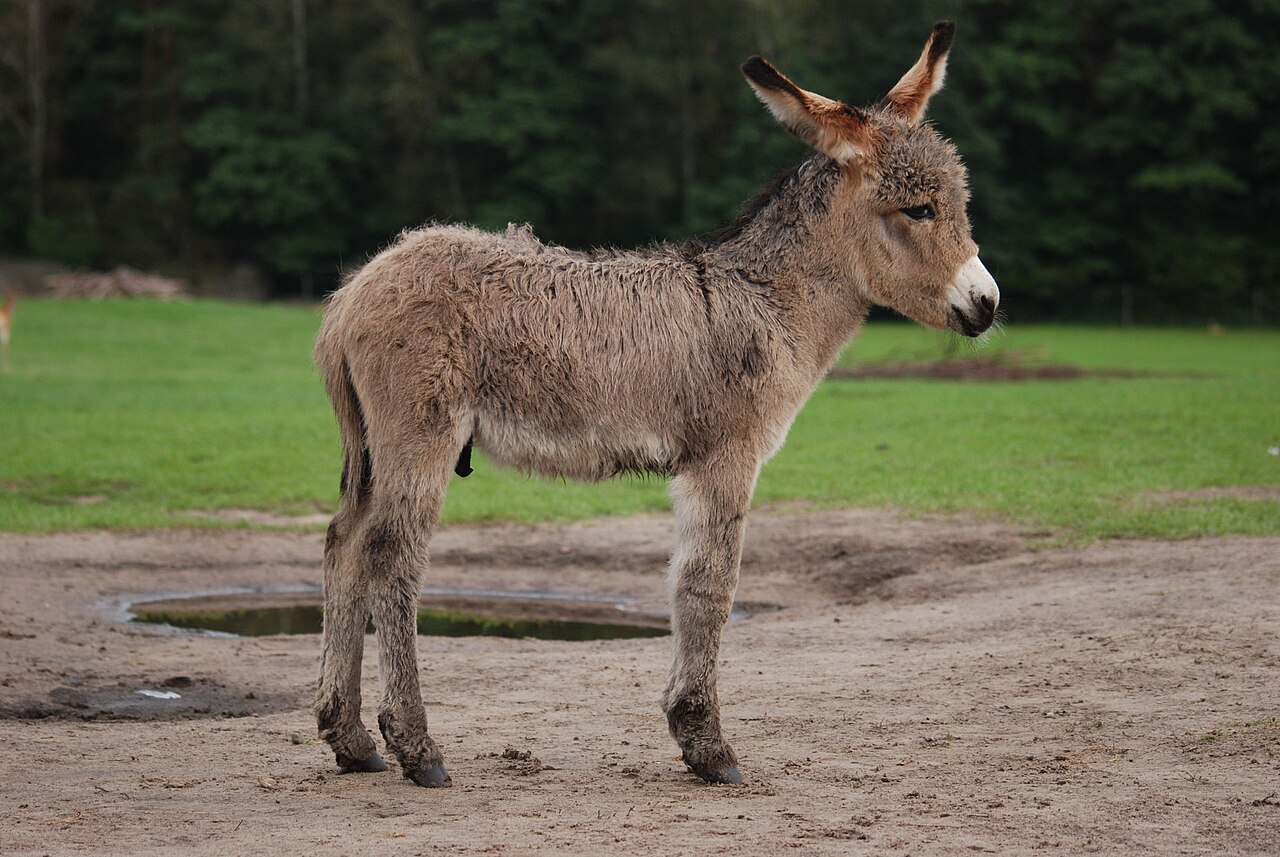
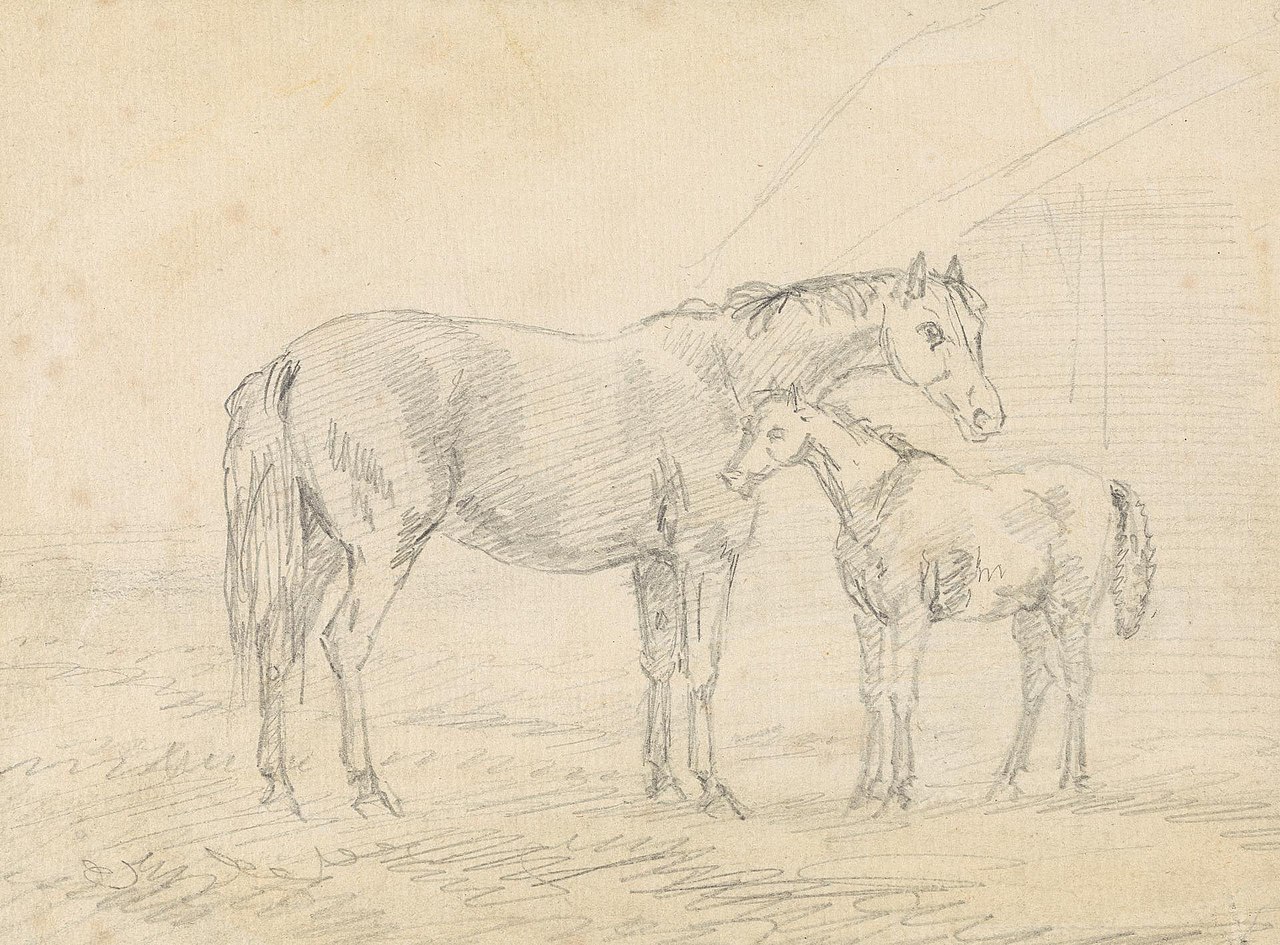
A baby horse is called a foal, regardless of sex, from birth until it turns one. The verb for a mare giving birth is to foal, and a mare expecting a baby is in foal. Gestation runs about eleven months, averaging 340 days with a normal range of 320 to 370, and mares almost always deliver a single foal; twins occur rarely and are usually managed by veterinary intervention because carrying both to term endangers the mare and rarely produces two healthy foals.
Foals are strikingly precocial. A newborn foal stands within an hour of birth and is nursing within two, and it can run well enough to keep up with the herd within a day. This is a prey animal adaptation: a foal that cannot move with the herd is a foal that gets eaten. Newborn legs are already close to their adult length, which is why foals look so gangly, and a foal at birth stands roughly 60 percent of its eventual adult height.
Weaning happens at four to six months in managed settings, though a foal left with its dam would nurse considerably longer. In the wild and in feral herds such as the mustangs of the American West and the Chincoteague ponies of Virginia, foals stay with their mothers well into their second year and often longer, and young horses leave or are driven from the natal band around two to three years old, a dispersal pattern shared with the deer herds that follow a similar matriarchal structure.
What Is a Pregnant Horse Called?
A pregnant horse is called a mare in foal, and there is no separate single-word term for her. In breeding paperwork she may be listed as in foal to a specific stallion, which is the standard way of recording the mating. A mare that has produced at least one foal is a proven mare or a producer; one that has never been bred is a maiden mare.
Breeding vocabulary is precise because the industry depends on it. A mare in season or in heat is receptive to breeding, which happens in cycles of roughly 21 days through spring and summer, since horses are seasonally polyestrous and respond to increasing daylight. Covering is the term for the actual mating, and a mare booked to a stallion has a contracted breeding slot. Barren means a mare who was bred but did not conceive that season.
Thoroughbreds have a peculiar wrinkle: every Thoroughbred in the Northern Hemisphere shares an official birthday of January 1 regardless of actual foaling date, so breeders push to foal as early in the year as possible. A foal born in December would be classed as a yearling the following month, putting it at a crushing disadvantage against horses eleven months younger on paper. This is why the breeding season is artificially advanced with lighting programs.
What Is a Female Pony Called?
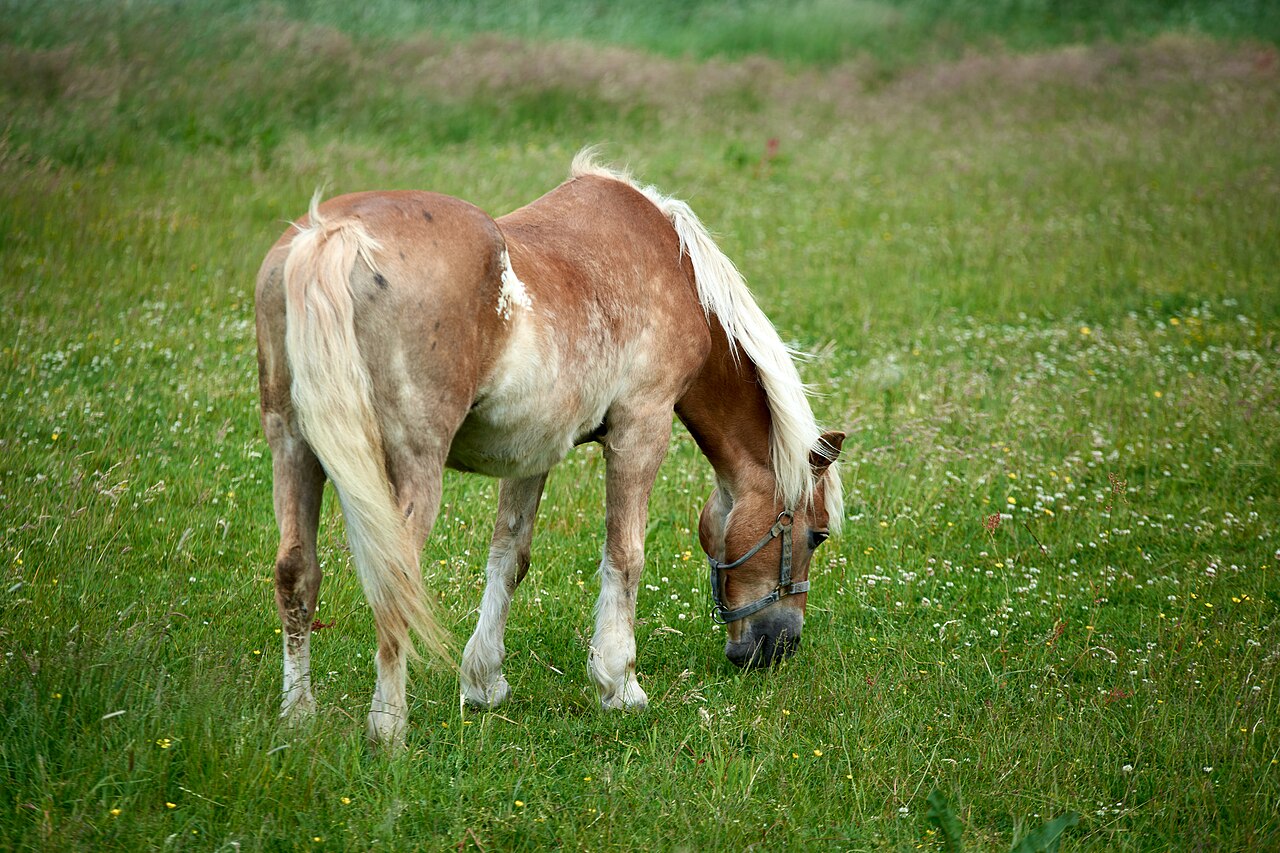
A female pony is also called a mare, and a young female pony is a filly. Ponies use exactly the same vocabulary as horses because a pony is not a different species; it is a horse under a certain height. The standard cutoff is 14.2 hands, or 58 inches at the withers, though some breed registries and disciplines set slightly different lines and a few small horse breeds are classed as horses despite falling under the mark.
Height in horses is measured in hands, with one hand equal to four inches, measured to the withers, the ridge between the shoulder blades. A horse described as 15.2 hands is 15 hands and 2 inches, meaning 62 inches, not 15.2 hands as a decimal. This notation trips up newcomers constantly.
Ponies differ from horses in more than height. They tend to be stockier with proportionally shorter legs, thicker manes and tails, heavier coats, and greater hardiness, and they are notably efficient feeders, which is why laminitis from overfeeding is a common pony problem. Temperament stereotypes about ponies being stubborn largely reflect the fact that they are strong for their size and are usually ridden by inexperienced children.
Female Terms for Donkeys, Mules, and Zebras
A female donkey is called a jenny or a jennet, and a male donkey is a jack. This differs from horse vocabulary and is worth knowing because donkey and horse terms are frequently mixed up. A baby donkey is a foal, matching horses. Donkeys are a separate species, Equus asinus, descended from the African wild ass rather than from the wild horses that gave rise to Equus caballus.
Crossing the two produces the mule and the hinny, and the direction matters. A mule is the offspring of a male donkey and a female horse, and it is the common and generally preferred cross, combining donkey hardiness and sure-footedness with horse size. A hinny is the reverse, a male horse crossed with a female donkey, and hinnies are rarer, smaller, and harder to produce. A female mule is a molly and a male is a john or a horse mule.
Mules and hinnies are almost always sterile, because horses have 64 chromosomes and donkeys 62, leaving the hybrid with an odd 63 that cannot pair properly during meiosis. A handful of fertile molly mules have been documented worldwide, which is remarkable enough to make news each time. Zebras use their own terms, with a female called a mare and a male a stallion, matching horses, and zebra crosses go by names like zorse and zonkey.
Are Mares or Geldings Better to Ride?
Neither is inherently better, and the choice depends far more on the individual animal and its training than on sex. Geldings are often recommended for beginners because they tend to be more consistent day to day, having no hormonal cycle, and they are generally easy to keep with other horses. This consistency is genuinely valuable for someone still learning to read a horse’s mood.
Mares are frequently described as more opinionated and as forming stronger bonds with a particular handler, and some show behavioral changes during their cycle in spring and summer, ranging from barely noticeable to significantly distracting. The stereotype that mares are difficult is overstated: plenty of top-level competition horses across every discipline are mares, and a well-trained mare is as reliable as any gelding. The word mare has picked up a negative connotation in English that the animals do not deserve.
The practical advice from most instructors is to judge the horse rather than the category. Temperament, training, age, and soundness matter enormously more than sex, and an experienced, well-schooled mare is a far better first horse than a green, poorly handled gelding. Stallions are the genuine exception and are not appropriate for inexperienced riders under any circumstances.
Terminology for Other Livestock Females
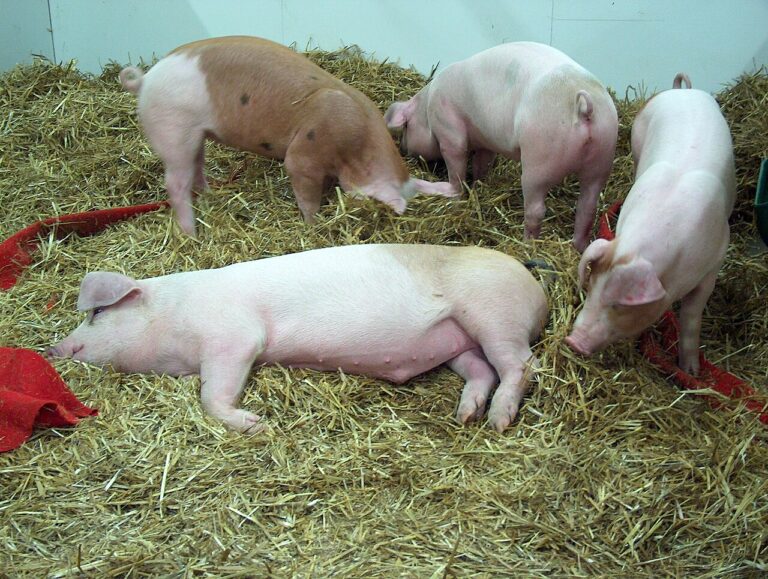
Horse vocabulary sits within a wider set of livestock terms that follow no consistent pattern, which is why they have to be learned individually. A female cow is a cow if she has calved and a heifer if she has not, with a male being a bull or a steer if castrated, and a baby a calf. A female pig is a sow, or a gilt before her first litter, with a boar as the male and a piglet as the young.
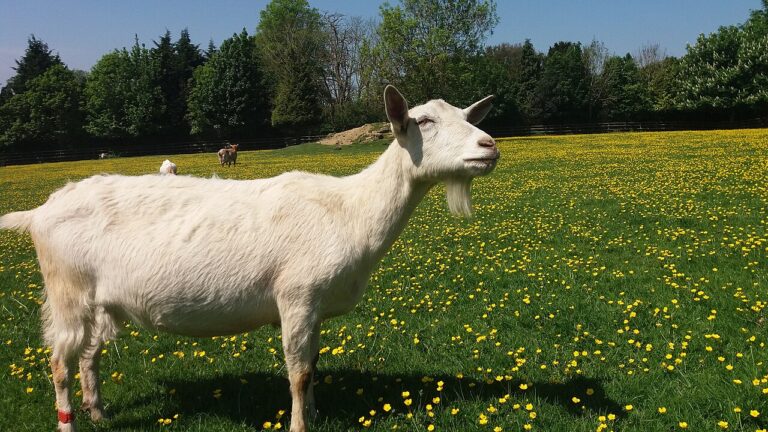
Sheep and goats have their own sets. A female sheep is a ewe, a male is a ram or a wether if castrated, and a lamb is the young. A female goat is a doe or a nanny, a male is a buck or a billy, and the young are kids. The Saanen goat guide uses these terms throughout, as does most dairy goat literature.
Poultry follows yet another pattern. A female chicken is a hen, or a pullet in her first year, and a male is a rooster or cockerel. A female turkey is a hen and a male a tom or gobbler, with young called poults. A female duck is a hen or duck and a male is a drake. The female turkey guide and the female duck guide cover those, and the group of turkeys guide handles the collective terms that go with them.
Related reading: what is a female deer called.
Frequently Asked Questions
What is a female horse called?
A female horse is called a mare from age four onward and a filly before that. A breeding female is a broodmare, and a mare that has never been bred is a maiden mare.
What is the difference between a mare and a filly?
Age. A filly is a female horse under four years old and a mare is four or older. Thoroughbred racing sometimes uses five as the boundary, and casual usage is looser.
What are female and male horses called?
Females are mares as adults and fillies when young. Males are stallions when intact adults, colts when young, and geldings once castrated. Most male horses in ordinary ownership are geldings.
What is a pregnant horse called?
A mare in foal. There is no separate single word. Gestation lasts about eleven months, averaging 340 days, and mares almost always deliver a single foal.
What is a female pony called?
A mare, the same as a horse, and a young one is a filly. Ponies are horses under 14.2 hands, or 58 inches at the withers, so they use identical vocabulary.
What is a baby female horse called?
A filly foal in her first year, then a yearling between one and two, then a filly until four. Foal applies to either sex, so filly foal specifies the female.
What is a female donkey called?
A jenny or jennet, with the male being a jack. This differs from horse terminology. A female mule is a molly, and mules are almost always sterile because of the chromosome mismatch between horses and donkeys.