Monarch Butterfly Life Span: Weeks or Months?
A monarch butterfly lives two to six weeks as an adult in summer, but the generation that emerges in late summer lives eight to nine months. That single split is the most important fact about monarch lifespan, and it exists because the autumn generation enters reproductive diapause, shuts down egg and sperm production, and redirects that energy into surviving the migration and the winter.
The full cycle from egg to adult takes about a month, and a monarch spends most of that time as a caterpillar. Across a whole year, four or five generations follow each other north and then one long-lived generation carries the population back south. This guide covers each stage’s duration, why the migratory generation lives so much longer, what shortens a monarch’s life, and the record claims.
Summer monarchs live two to six weeks as adults; the generation emerging in late summer lives eight to nine months because it enters reproductive diapause and does not breed. Egg to adult takes about a month: three to five days as an egg, ten to fourteen as a caterpillar, and eight to fifteen in the chrysalis.
| Stage | Duration |
|---|---|
| Egg | 3 to 5 days |
| Caterpillar (5 instars) | 10 to 14 days |
| Chrysalis | 8 to 15 days |
| Summer adult | 2 to 6 weeks |
| Migratory adult | 8 to 9 months |
| Egg to adult total | About 1 month |
| Survival egg to adult | Under 10 percent in the wild |
How Long Does a Monarch Butterfly Live?
It depends entirely on which generation it belongs to. A monarch that emerges in June and breeds lives roughly two to six weeks as an adult, with four weeks a reasonable average in good conditions. Males typically live slightly shorter lives than females.
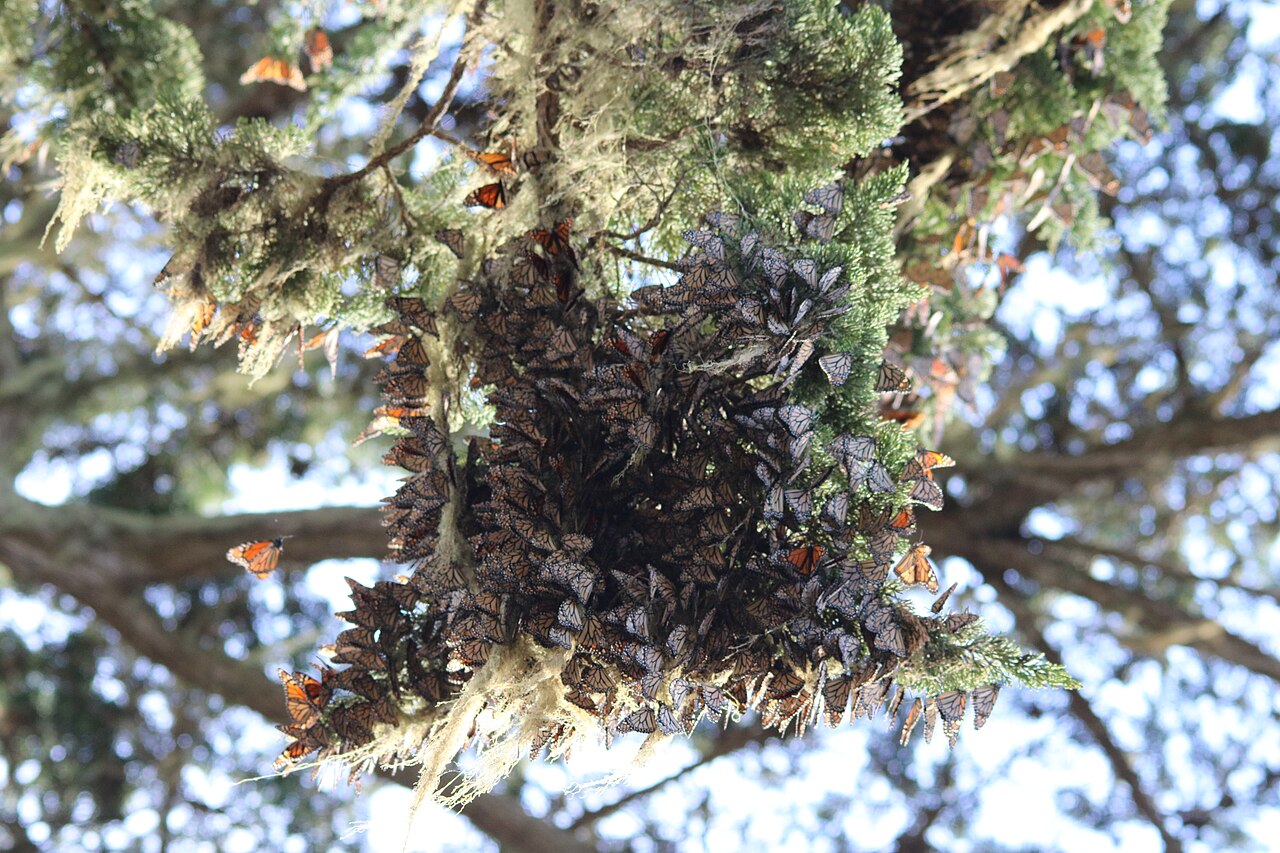
A monarch that emerges from late August into September in the northern range lives eight to nine months. It flies to central Mexico or coastal California, spends the winter in a dense cluster in near-dormancy, and starts north again in February or March, breeding for the first time in Texas or the Gulf states before dying.
Both are the same species, the same genetics, and physically almost the same butterfly. The difference is a developmental switch, not a different kind of monarch, and it is triggered during the larval stage rather than in the adult. The monarch butterfly guide covers the species and the migration in full.
Why Does the Migratory Generation Live So Long?
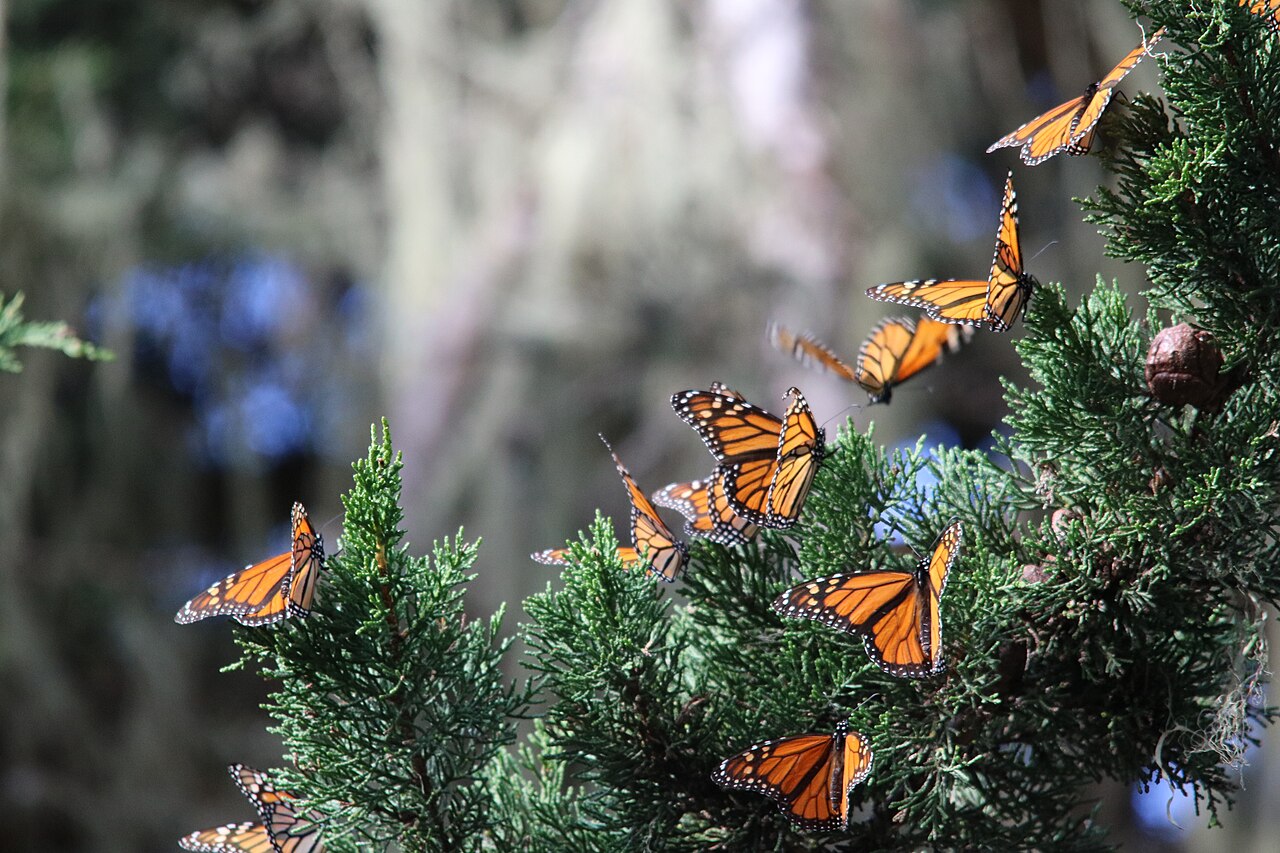
Because it does not breed. Reproductive diapause shuts down the development of eggs and sperm, and the energy and physiological cost of reproduction is the single largest drain on a summer monarch’s lifespan. Removing it extends life dramatically, which is a pattern seen across many insects.
The trigger is environmental and acts on the caterpillar and pupa rather than the adult. Shortening day length, cooler temperatures, and declining milkweed quality together signal the approaching end of the season, and larvae developing under those conditions produce adults in diapause. Juvenile hormone levels drop, which is the proximate mechanism.
Diapause also changes behaviour and physiology. Migratory monarchs build up large fat reserves, feed heavily on nectar during the flight south, cluster communally rather than defending territory, and remain in a low-metabolism state through winter. They break diapause in late winter as day length increases and temperatures rise, and only then do they mate.
How Long Is Each Life Stage?
The egg takes three to five days to hatch in typical summer weather, faster in heat and slower in cool. The tip darkens a day before hatching as the caterpillar’s black head capsule becomes visible through the shell.
The caterpillar stage runs ten to fourteen days through five instars, and the growth is extraordinary: a monarch caterpillar increases its mass roughly two thousand times over that period, which is why the last instar accounts for the overwhelming majority of milkweed consumed. Each moult leaves a shed skin the caterpillar usually eats.
The chrysalis takes eight to fifteen days, most often around ten. The jade-green case turns transparent in the final day, revealing the folded orange and black wings, and emergence takes a few minutes followed by two to three hours of wing expansion and hardening before first flight. The monarch caterpillar guide covers the larval stages in detail.
Do Monarchs Only Live Two Weeks?
No, and the two-week figure is one of the most persistent errors about the species. It probably comes from generic butterfly lifespan figures applied to monarchs, since many smaller butterflies genuinely do live around two weeks, but summer monarchs average closer to four and migratory ones live months.
The confusion matters for anyone trying to make sense of the migration. If monarchs only lived two weeks, the multi-generational journey north would still work, but the single-generation flight to Mexico would be impossible. The long-lived autumn generation is what makes the whole system function.
Records support the longer figures. Tagged monarchs recovered at Mexican overwintering sites are routinely eight months or more past emergence, and the tagging programmes run by Monarch Watch and others have produced thousands of such recoveries over decades. The University of Kansas hosts that programme (monarchwatch.org).
What Is the Longest a Monarch Has Lived?
Around nine months is the reliable upper end in the wild, covering a butterfly that emerged in late August, overwintered in Mexico, and was still alive laying eggs in Texas the following spring. Tagging recoveries establish this directly rather than by inference.
Captive monarchs kept cool and unmated have reportedly lived longer still, since the two things that shorten adult life most are reproduction and the metabolic cost of warm conditions. Those figures are not comparable to wild lifespan and are not usually cited as records.
Claims of monarchs living a year or more circulate but are not supported by tagging data. Nine months is remarkable enough: it means a single insect that weighs about half a gram survives a 3,000 mile flight, a winter at altitude in mountain forest, and a return flight of several hundred miles.
What Shortens a Monarch’s Life?
Predation dominates, and it takes most individuals long before adulthood. Fewer than one in ten monarch eggs is thought to reach the adult stage, with ants, spiders, lacewing and ladybird larvae, stink bugs, and wasps taking eggs and small caterpillars, and parasitoid tachinid flies and wasps killing larger ones from inside.
Disease is the second major factor. Ophryocystis elektroscirrha, a protozoan parasite, spreads through spores on adult scales that transfer to eggs and milkweed, and heavily infected butterflies emerge weak, deformed, or unable to expand their wings, and live shorter lives if they survive at all. Infection rates are far higher in non-migratory populations and where tropical milkweed allows year-round breeding.
Adult wear is the quiet limiting factor for the migratory generation. Wing scales are shed steadily through months of flight, the wings themselves fray and tear, and a monarch arriving in Texas in March is usually visibly worn, pale, and ragged compared with the butterfly that left Canada. Those individuals still lay viable eggs, which is what matters, but they are running on reserves built up the previous autumn.
Weather and human factors fill in the rest. Severe storms at the Mexican colonies have killed millions in single events, drought reduces nectar along the migration route, and pesticides, road mortality, and habitat loss all take a toll. For a migratory monarch, the winter itself is the main test, and colony mortality over a season is substantial even in a good year. The monarch butterfly eggs guide covers the stage where mortality is highest.
How Many Generations Are There a Year?
Four or five in the eastern population, depending on latitude and season length. The overwintering generation flies north in spring and lays in Texas and the Gulf states; that first summer generation moves further north and lays; the second and third continue the push into the northern states and Canada.
Each of those summer generations lives two to six weeks, breeds, and dies, so the butterfly reaching Ontario in July is the great-grandchild of the one that left Mexico in March. None of them has ever been to Mexico, and none of them navigates by memory.
The fourth or fifth generation, emerging in late summer, is the one that enters diapause and makes the whole southward flight. Its offspring the following spring restart the cycle. Non-migratory monarch populations exist in Florida, the Caribbean, Central and South America, Hawaii, and Australia, and those breed continuously without any diapause generation at all, which also means they never show the extended lifespan. The viceroy butterfly guide covers a resident species that overwinters as a caterpillar instead.
Should You Raise Monarchs to Extend Their Lives?
Small-scale rearing raises survival for the individuals reared, and that is genuinely true: taking eggs indoors removes almost all the predation and parasitism that kills over ninety percent of them outside. The question is whether it helps the population, and there the evidence is mixed.
The concerns are real. Crowded rearing spreads Ophryocystis, and some studies have found that heavily reared monarchs show weaker migratory orientation than wild ones, though the findings are debated. Commercially reared butterflies moved between regions risk mixing populations and spreading disease.
The consensus guidance from monarch conservation organisations is to rear small numbers, keep containers scrupulously clean, use fresh local milkweed daily, release near where the eggs were found, and not to buy or ship butterflies. Planting more milkweed and late-season nectar helps far more monarchs than any rearing effort, because it works on the population rather than on individuals. The monarch butterfly meaning guide covers why so many people want to do something for them in the first place.
Related reading: Monarch Butterfly Life Cycle.
Frequently Asked Questions
How long does a monarch butterfly live?
Two to six weeks as a summer adult, or eight to nine months for the generation emerging in late summer, which enters reproductive diapause and makes the migration to Mexico or coastal California.
Do monarchs only live for two weeks?
No. That figure comes from generic butterfly lifespans. Summer monarchs average around four weeks, and the migratory generation lives months, which is what makes the single-generation flight south possible.
Why does the migratory generation live so long?
Because it does not breed. Reproductive diapause shuts down egg and sperm production, removing the largest drain on lifespan, and it is triggered by short days and cool temperatures during larval development.
How long is each life stage?
Three to five days as an egg, ten to fourteen days as a caterpillar through five instars, and eight to fifteen days in the chrysalis. The whole cycle from egg to adult takes about a month.
What is the longest a monarch butterfly has lived?
Around nine months in the wild, confirmed by tagging recoveries of butterflies that emerged in late August and were alive the following spring. Claims of over a year are not supported by tagging data.
How many generations of monarchs are there a year?
Four or five in the eastern population. Each summer generation lives weeks and moves further north, so the butterfly reaching Canada in July is the great-grandchild of the one that left Mexico in March.
Why should you not raise monarchs?
Crowded rearing spreads the Ophryocystis parasite, and some studies suggest heavily reared monarchs orient less well for migration. Small clean batches released locally are the accepted compromise.

Similar Posts
What Is a Group of Snakes Called? Den, Nest, and Pit
A group of snakes is called a den, nest, pit or bed. What a hibernaculum really is, what a breeding ball means, and why finding one snake does not mean there is a nest.
What Do Moose Eat? Twigs, Water Plants, and Winter
Moose eat 40 to 60 pounds of twigs and water plants a day, and dive 20 feet for sodium. Here is the seasonal diet and why feeding them kills.
Carpet Beetle vs Bed Bug: How to Tell Them Apart
Carpet beetles feed on fabric and don’t bite; bed bugs feed on blood and do. How to identify each, what attracts them, and why the treatment differs completely.
Deer Sounds: Snorts, Grunts, Bleats, and What Each Means
Deer sounds decoded: the alarm blow, social grunts, fawn bleats, rut grunting and the snort-wheeze, plus the distress bawl that actually warrants a look.
Red Butterfly: Which Species Are Actually Red
Most red butterflies are really orange. The red admiral comes closest in North America. Which species qualify, why true red is rare, and what a sighting means.
Earwig Bite
What’s called an ‘earwig bite’ is really a mild pinch from its pincers, not a bite at all. Here’s what it actually feels like and the ear myth debunked.