Pacman Frog Size: 6.5 Inches for Females, Half That for Males
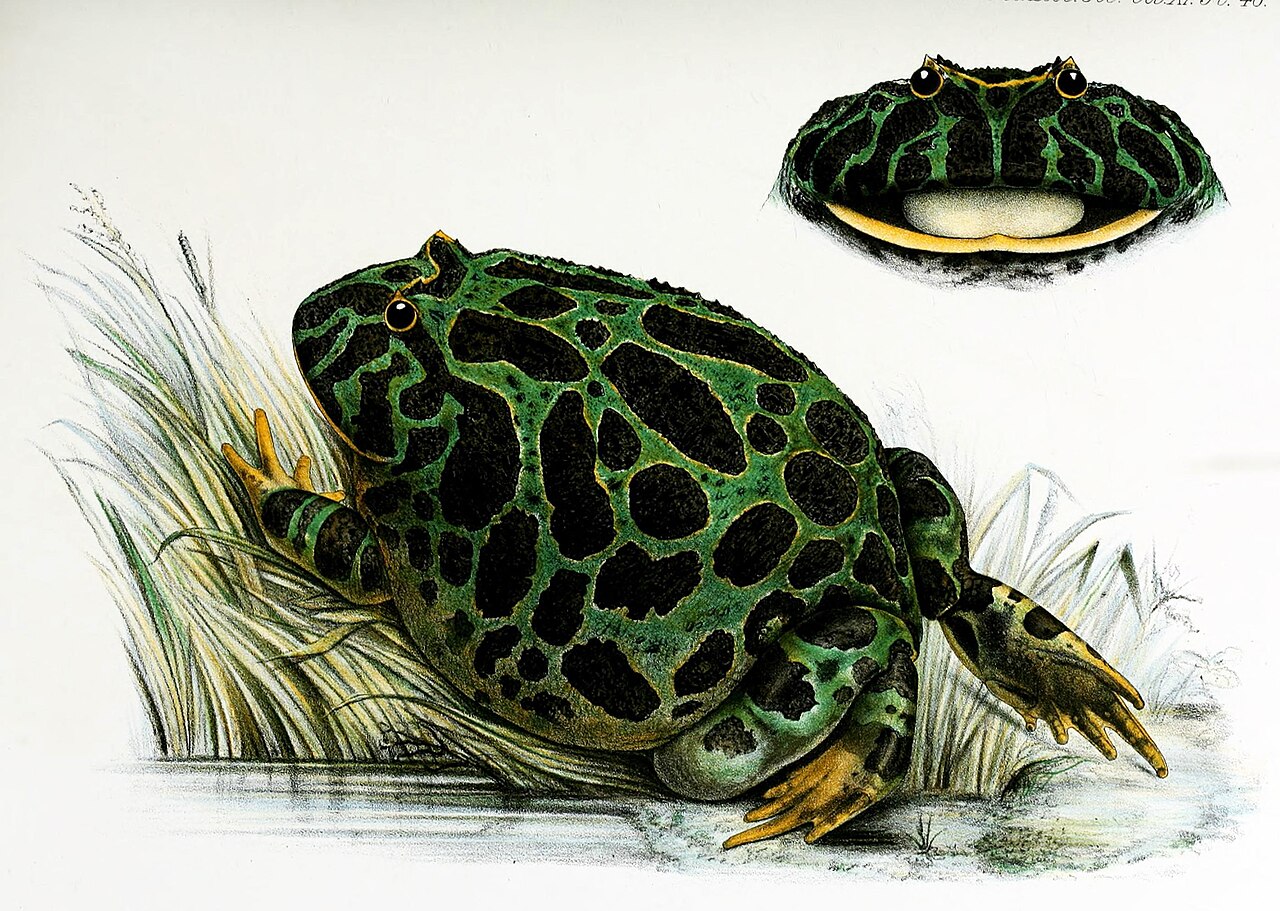
A full grown Pacman frog size depends almost entirely on sex: females of the ornate horned frog (Ceratophrys ornata) reach 4.5 to 6.5 inches (11 to 16.5 cm), while males stop at roughly 2.5 to 4 inches (6.5 to 10 cm). That is measured snout to vent on a sitting frog, which is how keepers quote it, because a Pacman frog is nearly as wide as it is long.
Those numbers surprise anyone who bought a hatchling the size of a thumbnail. Growth is fast for the first year, then slows to almost nothing, and the final measurement is set by sex, species and feeding rather than by tank size.
Female Pacman frogs grow to 4.5 to 6.5 inches (11 to 16.5 cm) and can weigh close to 1 pound (450 g). Males stay smaller at 2.5 to 4 inches (6.5 to 10 cm) and rarely pass half a pound. Most of that growth happens in the first 12 months, with full adult size reached at 12 to 18 months.
| Species or stage | Adult length | Typical weight |
|---|---|---|
| Ornate horned frog, female | 4.5 to 6.5 in (11 to 16.5 cm) | 10 to 16 oz (280 to 450 g) |
| Ornate horned frog, male | 2.5 to 4 in (6.5 to 10 cm) | 3 to 7 oz (85 to 200 g) |
| Cranwell’s horned frog, female | 4 to 5.5 in (10 to 14 cm) | 8 to 14 oz (225 to 400 g) |
| Surinam horned frog, female | 5 to 8 in (13 to 20 cm) | up to 18 oz (510 g) |
| Freshly morphed froglet | 0.5 to 0.75 in (1.3 to 2 cm) | under 0.2 oz (5 g) |
| Six month old juvenile | 2 to 3 in (5 to 7.5 cm) | 2 to 5 oz (55 to 140 g) |
How Big Do Pacman Frogs Get by Species?
The three species sold in the US do not reach the same size, so the label on the deli cup matters. Ornate horned frogs (Ceratophrys ornata) are the classic Pacman frog and the benchmark for the 6 inch female. Cranwell’s horned frog (Ceratophrys cranwelli), sold as albino and apricot morphs, runs about half an inch shorter.
The Surinam horned frog (Ceratophrys cornuta) is the outlier, with wild females recorded at 8 inches (20 cm). Colour morph changes nothing: a strawberry Pacman frog is a pigment variant of Cranwell’s and tops out exactly where a normal Cranwell’s does.
Why Are Female Pacman Frogs So Much Bigger?
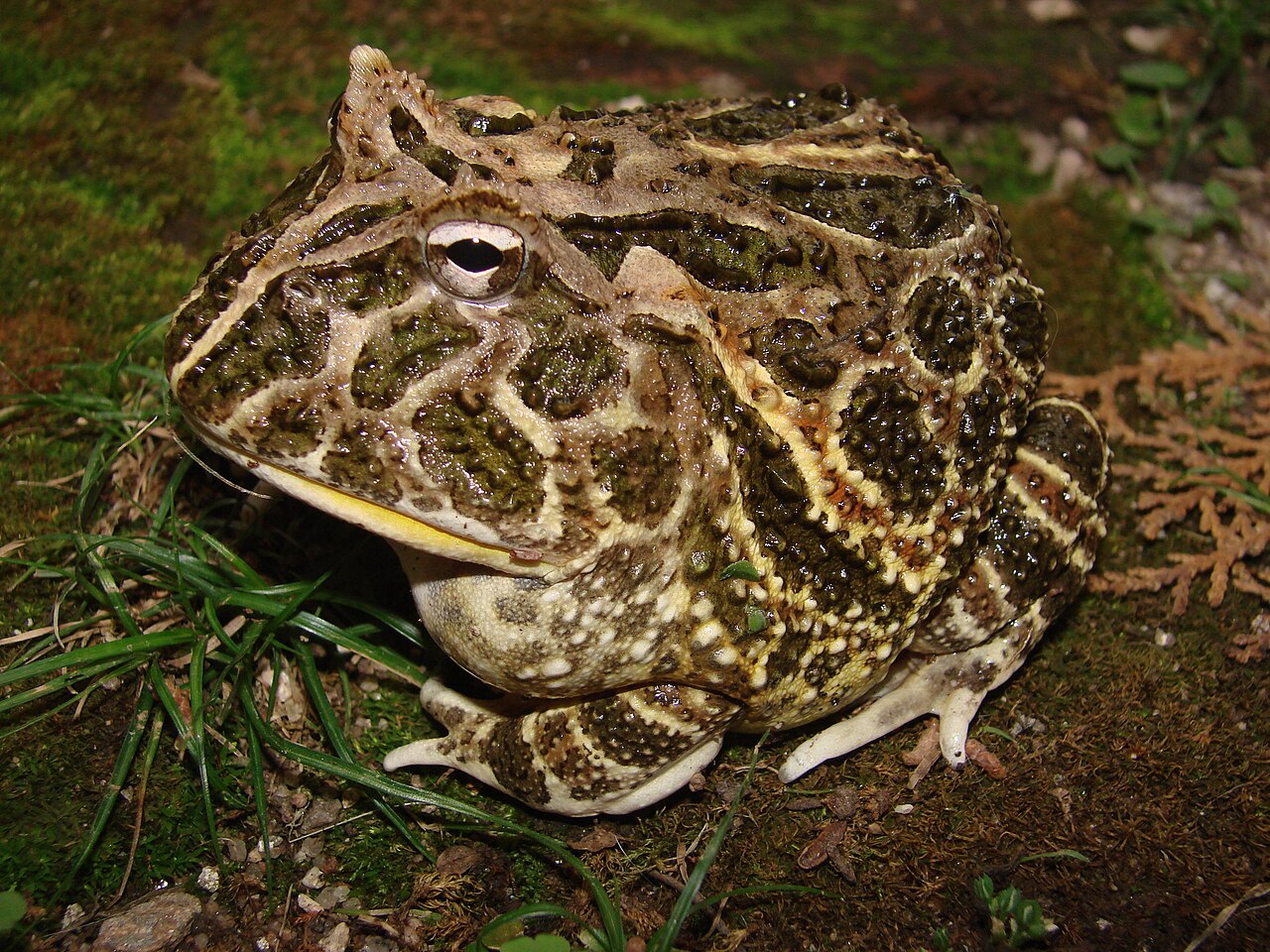
Females are roughly twice the mass of males at maturity across the whole genus. The reason is reproductive: a female carries clutches of 1,000 or more eggs, and body volume sets how many she can produce. Males invest in calling instead of bulk.
Sexing by size alone is unreliable before about 8 months. The clearer signal is sound and skin: males develop a dark grey throat patch and start calling at around 3 inches, while females stay pale throated and keep growing. A frog that stalls at 3.5 inches is almost certainly a male, not a stunted animal, and needs no change to the care routine.
Baby Pacman Frog Size and Growth Timeline

A freshly morphed froglet leaves the water at about 0.5 inches (1.3 cm). Under steady feeding it doubles in length within 6 to 8 weeks, reaches 2 to 3 inches by month six, and is at or near adult length by 12 to 18 months. Weight keeps creeping up for another year after length stalls.
Growth is driven by food volume and temperature, not enclosure size. Frogs kept at 78 to 82 F (25 to 28 C) with appropriate prey every other day hit adult size early in that window. Their odontoid teeth and huge gape mean they will swallow prey that looks far too large, but pushing growth does not build a bigger adult, only an obese one with fat pads behind the eyes.
How Big of a Tank Does a Pacman Frog Need?
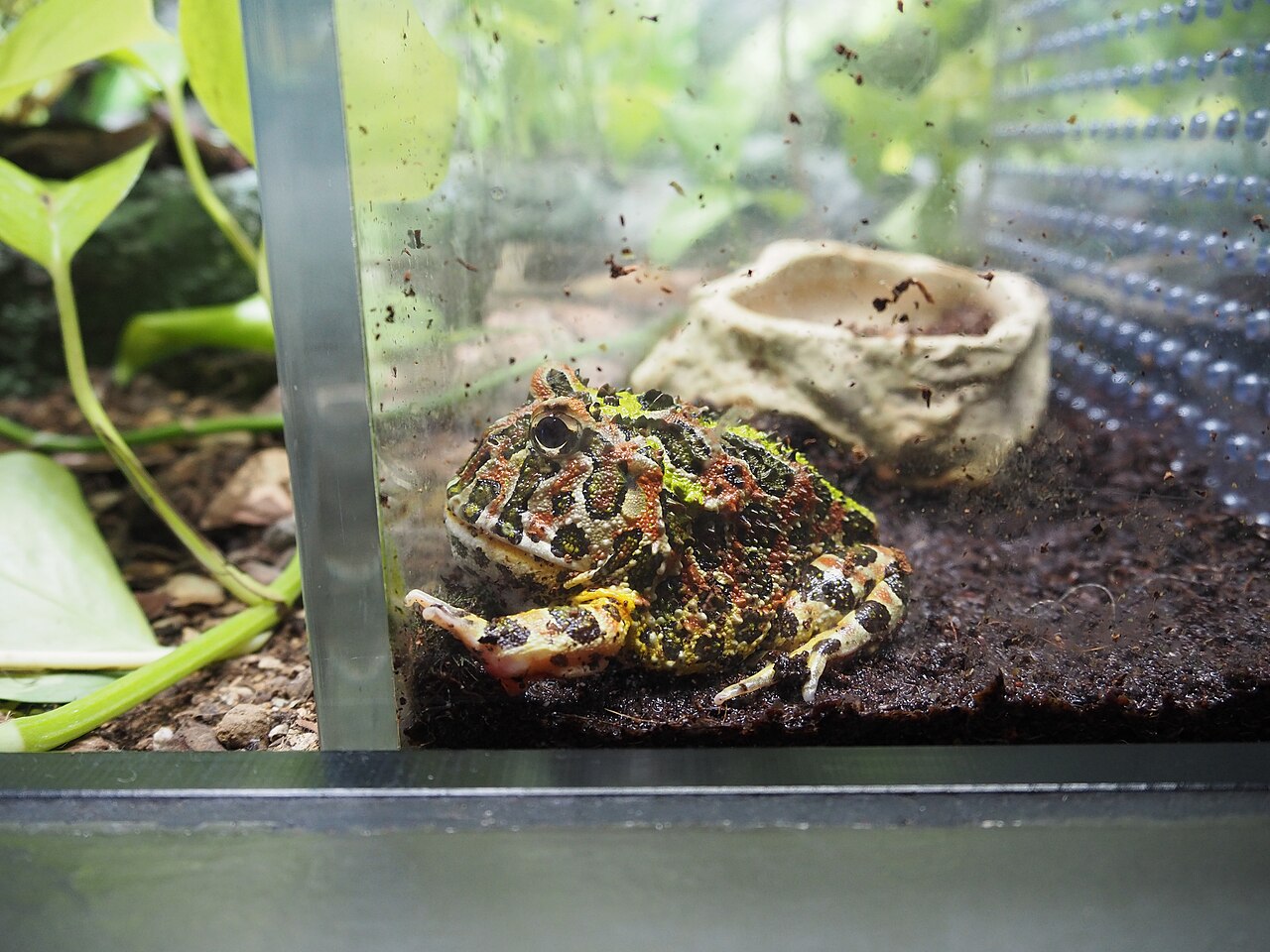
An adult female needs a footprint of at least 12 by 12 inches, which means a 10 gallon tank as the floor and a 20 gallon long as the sensible target. These are ambush predators that sit buried in one spot for days, so floor area matters far more than height and a tall terrarium wastes the space that counts.
Juveniles under 2 inches do better in small containers because they strike at close range. Substrate depth should always exceed the frog’s body height so it can bury completely. Contrast that with an arboreal species such as the American green tree frog, where vertical space is the priority.
Can I Put Two Pacman Frogs in One Tank?
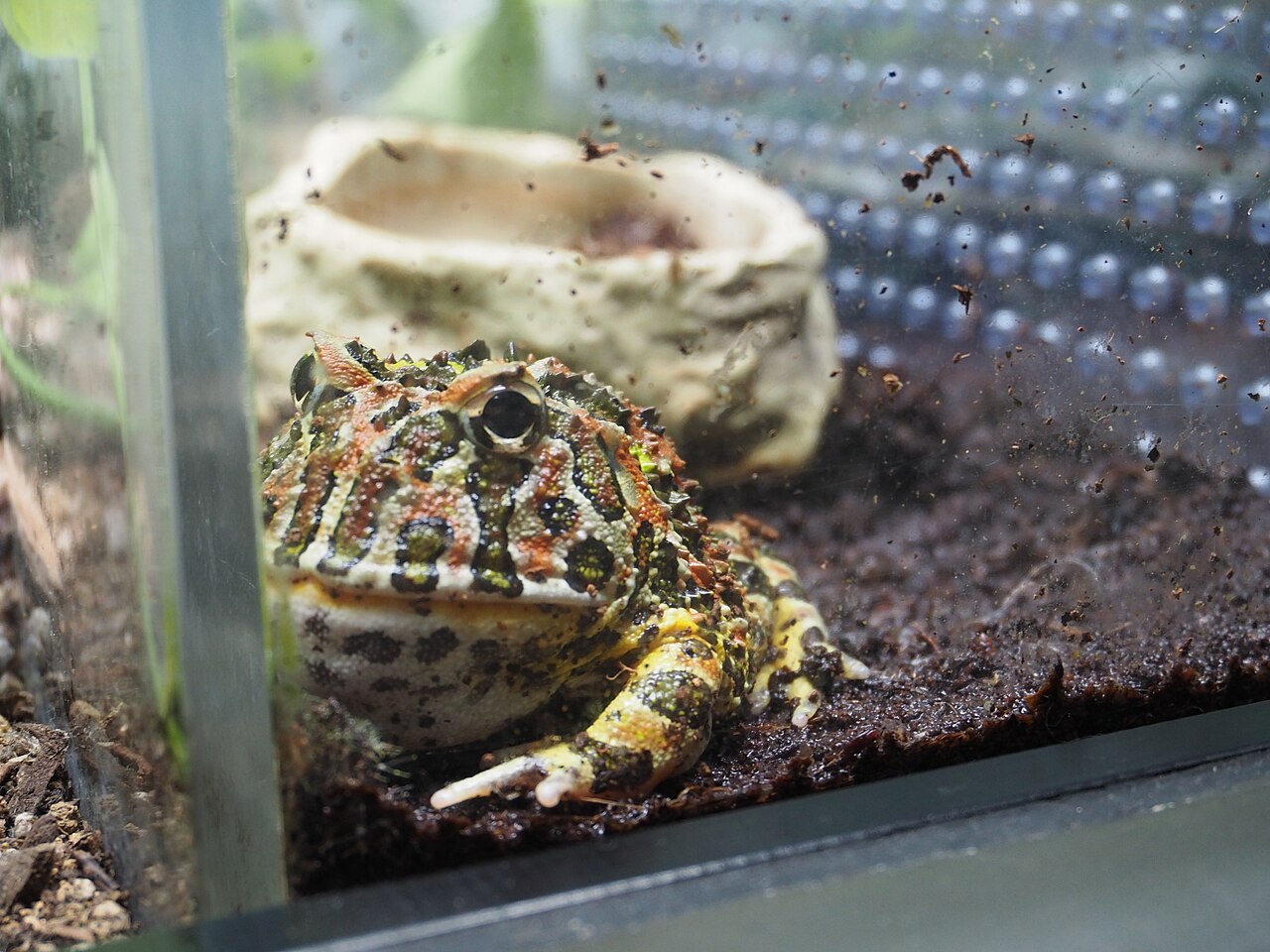
No. Pacman frogs are cannibalistic at every size, and a difference of half an inch is enough for the larger animal to swallow the smaller one. This is the default feeding response to anything that moves and fits, not stress behaviour, which is why breeders separate froglets within days of metamorphosis.
No tank size makes cohabitation safe, because the frogs do not spread out to use it. The same applies to other species: a fish, a gecko or a smaller frog in the enclosure is food. Keepers who want a community setup should look at the species in our guide to the main types of frogs.
For range and conservation background on horned frogs and other amphibians, the United States Geological Survey runs the national amphibian monitoring programme. Seasonal biology, including whether frogs hibernate, follows the same temperature logic that drives growth rate in captivity.
Frequently Asked Questions
Are Pacman frogs friendly?
No. Pacman frogs tolerate keepers rather than bond with them. They do not seek contact, they bite defensively when startled, and a large female can break skin. They are display animals, best judged by how confidently they sit out and feed rather than by handling tolerance.
Can I put a Pacman frog in a 5 gallon tank?
Only temporarily, and only for a juvenile under about 2.5 inches. A 5 gallon tank gives an adult female too little floor area and too little substrate depth to bury properly, and it makes a stable temperature gradient nearly impossible. Move up to at least 10 gallons before the frog hits 3 inches.
What is the lifespan of a Pacman frog?
Six to ten years is typical in captivity, with well kept females occasionally passing 15. Wild lifespans are shorter and poorly documented. The two biggest factors are diet quality and humidity, because chronic obesity and repeated dehydration account for most early deaths in home collections.
Can you touch a Pacman frog with your hands?
Handle only when necessary, with clean wet hands or damp nitrile gloves. Amphibian skin absorbs soap residue, lotion and salt directly into the bloodstream. Keep contact under a minute, support the whole body, and wash afterwards, since horned frogs can carry Salmonella.