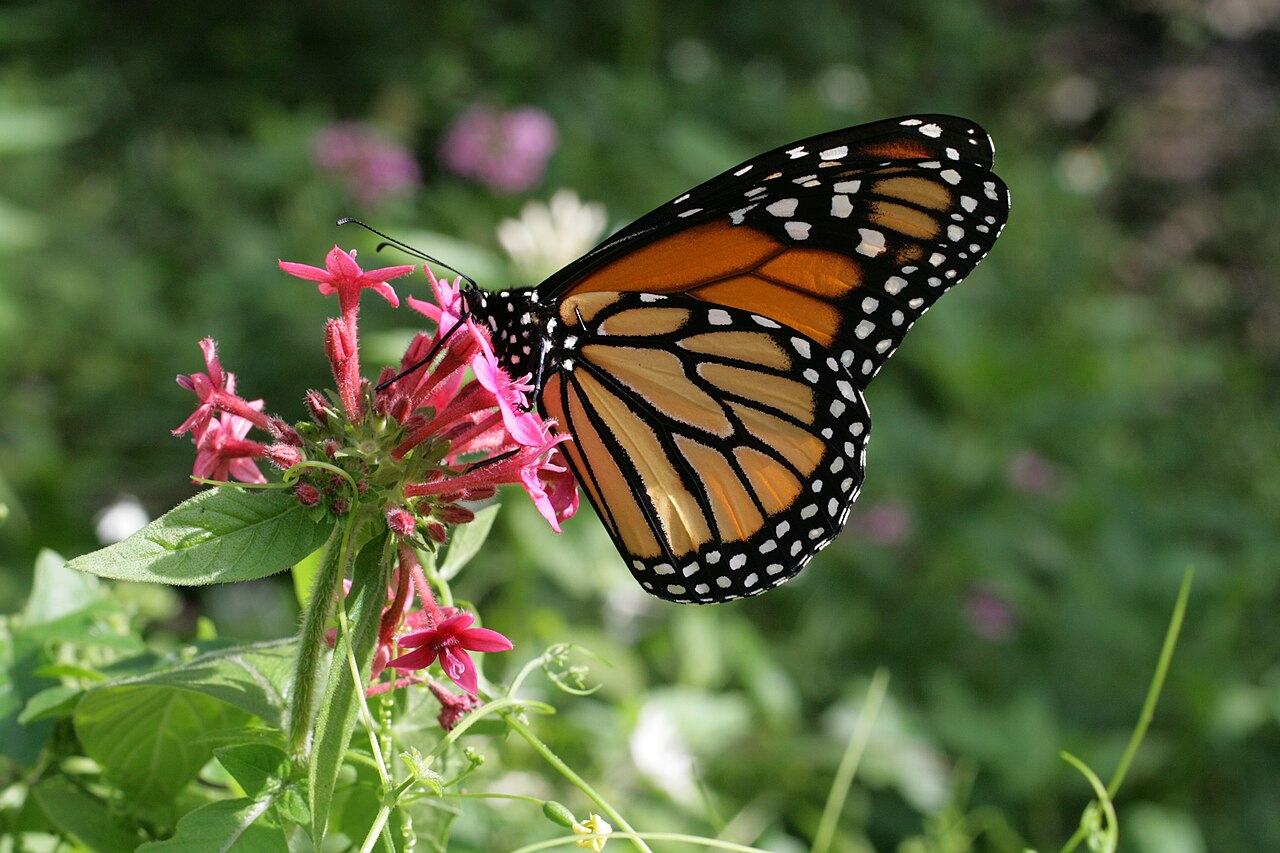
Monarch Butterfly Meaning: Symbolism and Spiritual Signs
A monarch butterfly is traditionally read as a sign of transformation, hope, and the return of a departed loved one, and in Mexican tradition the arrival of the monarchs is understood as the souls of ancestors coming home. It is one of the few butterfly symbols with a specific, documented cultural basis rather than a purely modern reading, because the timing of the migration coincides almost exactly with Día de los Muertos.
Monarchs carry a heavier symbolic load than other butterflies for two reasons. The metamorphosis is dramatic enough that the caterpillar is essentially dissolved and rebuilt inside the chrysalis, and the migration is a journey no single individual completes, spanning several generations. Transformation and inherited purpose are not projections onto this species; they are descriptions of what it actually does. This guide covers the readings, where they come from, and what a monarch sighting is likely to mean in practice.
A monarch butterfly means transformation, hope, endurance, and in Mexican tradition the return of ancestors, since the butterflies reach their overwintering forests around Día de los Muertos. Many people read a monarch visit as a message from someone who has died. It is regarded as good luck, not a warning, and carries no negative traditional meaning.
| Sighting | Traditional Reading |
|---|---|
| Monarch lands on you | A message from a departed loved one |
| Monarch crosses your path | A change already underway |
| Monarch in the house | News, or a visitor arriving |
| Pair of monarchs | Partnership, reconciliation |
| Monarch in autumn | Souls returning; Día de los Muertos |
| Chrysalis found | A change not yet visible to others |
| Dead monarch | An ending accepted rather than a bad omen |
What Does a Monarch Butterfly Symbolize?
The monarch symbolizes transformation above everything else, and the reading comes directly from the life cycle rather than from any invented association. A caterpillar that does nothing but eat enters a chrysalis, and inside it most of the larval body breaks down into a fluid of cells before being rebuilt as a butterfly with wings, compound eyes, and a completely different diet. Very little of the original animal survives the process intact.
Endurance is the second major reading and belongs to the migration. Monarchs east of the Rockies fly up to 3,000 miles to a small area of fir forest in central Mexico, and no butterfly makes the round trip. The generation that flies south lives eight or nine months; the return north happens across three or four generations, so the butterfly that reaches Canada in summer is the great-grandchild of the one that left it.
Hope and resilience attach to the species for a more recent reason. The monarch’s decline made it a public symbol of what is being lost and of what deliberate action can still recover, and milkweed planting became one of the most visible conservation efforts anyone can undertake in a garden. The monarch butterfly guide covers the biology behind all three readings.
What Does It Mean If a Monarch Butterfly Visits You?
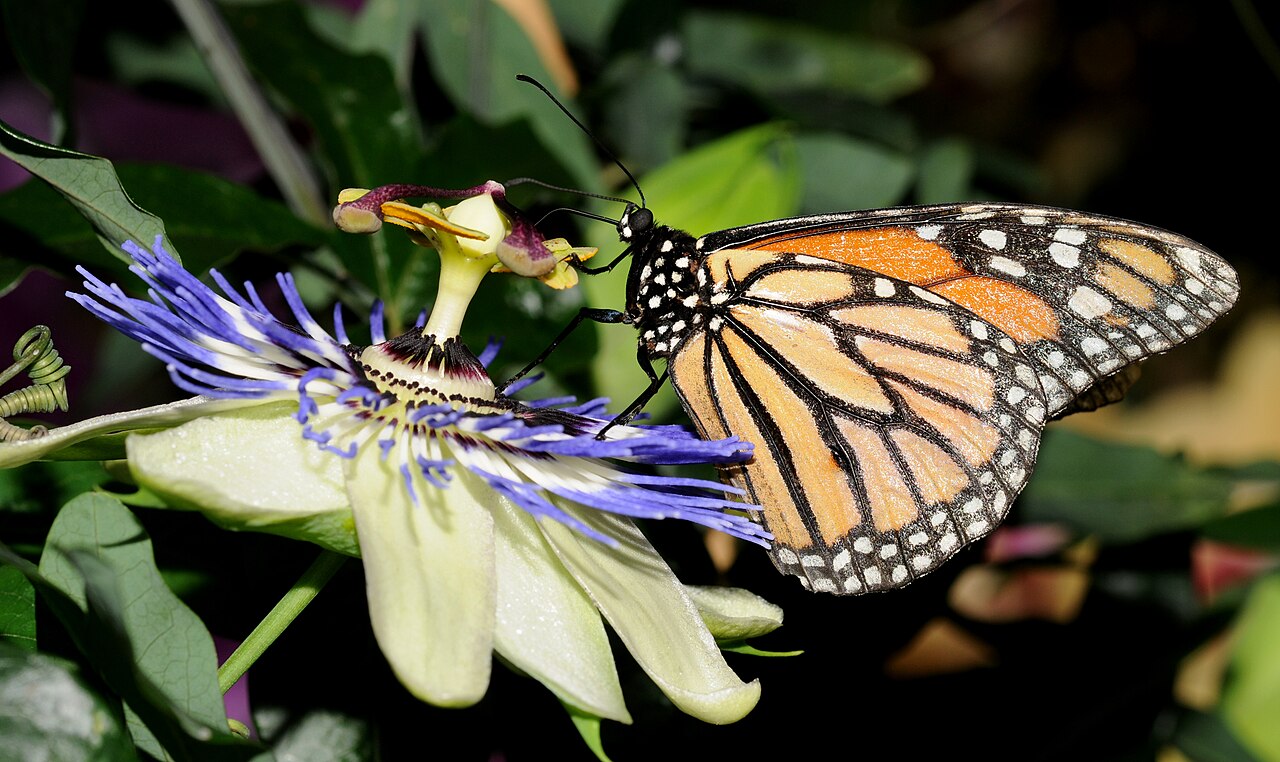
A monarch that lands on you or lingers nearby is most commonly read as contact from someone who has died, and this is by a wide margin the interpretation people report. The appeal is straightforward: a large, striking, deliberate-seeming visitor arriving at a moment when someone is grieving or thinking of a particular person reads as intentional rather than accidental.
A monarch crossing your path is traditionally read as confirmation of a change already in motion rather than an instruction to start one, and a monarch appearing repeatedly over days is taken as encouragement to continue. A pair of monarchs is read as partnership, reconciliation, or a relationship entering a better phase. None of these carry warnings.
The practical explanation is worth holding alongside the symbolic one. Monarchs land on people for salt and moisture in sweat, are attracted to bright clothing that reads as flowers, and are simply more visible than most insects because of their size and slow gliding flight. Both things can be true at once, and the guide to a butterfly landing on you covers the wider pattern across species.
Why Are Monarchs Linked to Día de los Muertos?
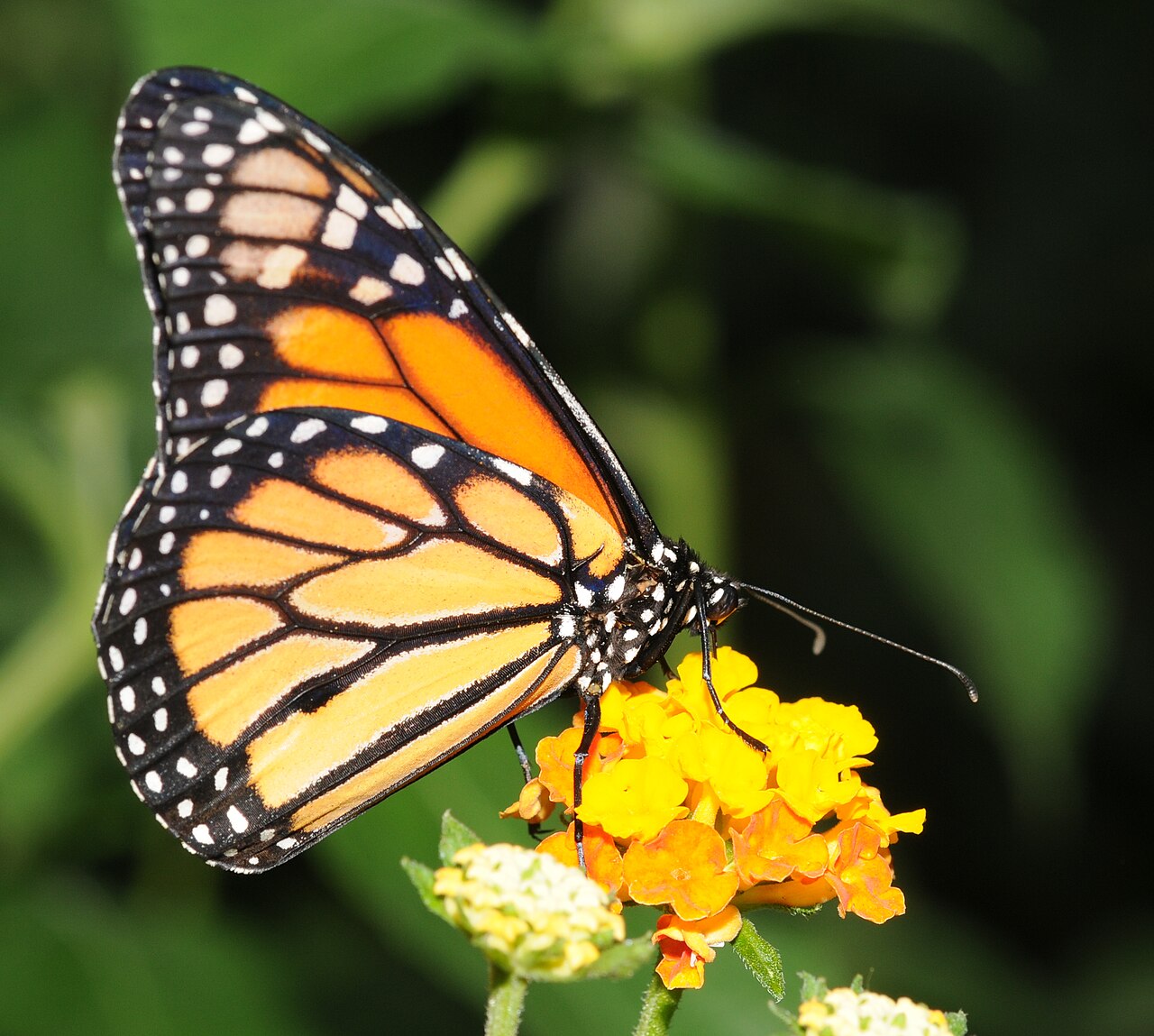
Because the timing is exact. Monarchs arrive at their overwintering colonies in the mountains of Michoacán and the State of Mexico at the end of October and the start of November, the same days as Día de los Muertos, and they arrive in enormous numbers into forests near communities that have observed the festival for centuries.
In Purépecha tradition, the people indigenous to the region where the butterflies overwinter, the monarchs are understood as the returning souls of the dead. The Purépecha name for the butterfly relates to harvest, and the arrival marks both the corn harvest and the return of ancestors. This is not a symbolic reading applied after the fact; the observation and the festival grew up together.
The association has since spread far beyond Mexico and now appears throughout North American grief symbolism, in memorial imagery, funeral programmes, and butterfly release ceremonies. It is one of the clearer cases where a modern symbol can be traced to a specific ecological event and a specific culture rather than to vague folklore. The bird symbolism guide covers how similar readings form around other species.
Is Seeing a Monarch Good Luck?
Yes, in every tradition that addresses it. The monarch has no negative folklore, no association with warning or misfortune, and no equivalent of the ominous readings attached to some moths and to certain birds. Sightings are read as favourable, as confirmation, or as comfort, and that consistency is unusual.
Specific good-luck readings attach to specific circumstances. A monarch appearing at a wedding, a graduation, a funeral, or on the anniversary of a death is read as blessing or presence. A monarch landing on the hand is taken as a good omen for something being decided. A monarch appearing during a difficult stretch is read as the assurance that the stretch is temporary.
What no tradition treats as bad luck is a dead monarch. Unlike a dead bird, which carries genuinely ominous readings in several traditions, a dead butterfly is generally read as an ending that has completed rather than a warning of one to come, consistent with the species’ association with cycles. The dead bird symbolism guide covers the contrast.
What Does the Monarch Butterfly Symbolize in Christianity?
In Christian symbolism the butterfly represents resurrection, and the monarch is the species most often used for it in North American practice. The three stages map onto a narrative directly: the caterpillar as earthly life, the chrysalis as the tomb, and the emerging butterfly as resurrection and the soul released. Butterfly imagery appears on gravestones, in Easter iconography, and in memorial art for exactly this reason.
The symbolism predates Christianity. In ancient Greece the word psyche meant both butterfly and soul, and the goddess Psyche was depicted with butterfly wings, so the association between the insect and the departing soul was already ancient when Christian writers adopted it. That continuity is part of why the image feels so settled.
The monarch specifically carries the resurrection reading more strongly than other butterflies because of the migration, which adds a journey and a return rather than a single transformation. Churches and hospices in the United States frequently use monarch imagery in bereavement material, and butterfly releases at memorial services usually use this species.
What Does a Monarch Chrysalis Mean?
Finding a chrysalis is read as a change in progress that is not yet visible to anyone else, which is a distinct meaning from the butterfly itself. The traditional emphasis is on patience and on resisting the urge to intervene, drawn from the well-known and biologically accurate warning that helping a butterfly out of its chrysalis kills it.
The monarch chrysalis is worth seeing for its own sake. It is a smooth jade-green case with a band of metallic gold dots near the top, and it looks manufactured rather than grown. In the last day before emergence it turns transparent, and the folded orange and black wings become visible through the wall, which is the source of the common reading about a change becoming apparent shortly before it arrives.
Practically, a chrysalis in a garden means milkweed is nearby and that caterpillars completed their development, which is worth knowing because most do not. The monarch caterpillar guide covers the stages and the mortality rate that makes each chrysalis a small achievement.
What Do Butterfly Colours Mean?
Orange butterflies, monarchs included, are traditionally associated with joy, creativity, passion, and encouragement to act, which fits the monarch’s readings and reinforces them. Orange in butterfly symbolism generally points outward, toward energy and expression, rather than inward toward reflection.
Other colours carry different readings that are worth knowing because people often see several species and assign one meaning to all of them. White butterflies are associated with spirits and departed souls in many traditions and are the species most often read as a direct message from the dead in European folklore. Black butterflies carry endings and transitions, yellow ones hope and new beginnings, blue ones luck and rare good fortune.
None of these readings are universal, and they contradict each other across cultures freely: black butterflies are ominous in parts of Europe and auspicious in parts of Asia. The monarch’s orange-and-black combination is read in modern usage as balance between energy and endings, though this is a recent construction. The orange butterfly guide covers the species that share the colour.
Is a Monarch Butterfly a Warning?
Not to people. There is no traditional reading in which a monarch signals danger, misfortune, or a bad outcome, and the question usually arises from confusion with the biological warning the butterfly does carry, which is directed at birds rather than humans. Bright orange and black is aposematic colouration: an advertisement of toxicity.
That toxicity is real. Monarch caterpillars feed only on milkweed and store its cardiac glycosides in their tissues, carrying them through to adulthood, and a bird that eats a monarch usually vomits and avoids the pattern permanently. The butterfly is not dangerous to handle and is harmless to touch; the poison matters only if eaten.
There is a genuine warning in a different sense, which is what falling monarch numbers indicate about milkweed loss, habitat fragmentation, and pesticide use. The migratory monarch was assessed as endangered by the IUCN in 2022, and the U.S. Fish and Wildlife Service (fws.gov) proposed listing it as threatened in 2024. Read that way, a monarch sighting is a reminder rather than an omen.
Related reading: Monarch Butterfly Eggs.
Related reading: Monarch Butterfly Life Span.
Frequently Asked Questions
What does a monarch butterfly symbolize?
Transformation, endurance, hope, and the return of departed loved ones. The transformation reading comes from the metamorphosis and the endurance reading from a migration that takes several generations to complete.
Is seeing a monarch good luck?
Yes. The monarch carries no negative folklore in any tradition that addresses it. Sightings are read as blessing, confirmation, or comfort, particularly at weddings, funerals, and death anniversaries.
What does it mean if a monarch butterfly visits you?
Most commonly a message from someone who has died. A monarch crossing your path is read as confirmation of a change already underway, and a pair is read as partnership or reconciliation.
Why are monarchs linked to Día de los Muertos?
Because they arrive at their Mexican overwintering forests at the end of October and start of November, the exact days of the festival. Purépecha tradition understands them as the returning souls of ancestors.
What does the monarch symbolize in Christianity?
Resurrection, with the caterpillar as earthly life, the chrysalis as the tomb, and the emerging butterfly as the soul released. The association predates Christianity: the Greek word psyche meant both butterfly and soul.
Is a monarch butterfly a warning?
Not to people. Its orange and black colouring is a warning to birds that it is toxic from the milkweed its caterpillars eat. It is harmless to handle and carries no ominous meaning in folklore.
What does finding a monarch chrysalis mean?
A change in progress that is not yet visible to others, with an emphasis on patience. The jade-green case turns transparent a day before emergence, revealing the folded wings inside.