Gecko Poop: Identification and How to Clean It Up
Gecko poop is a small dark pellet about a quarter inch long with a distinctive white or cream cap at one end, and that white tip is the single feature that identifies it instantly. The dark portion is digested insect matter and the white portion is urate, the semi-solid nitrogen waste reptiles excrete instead of liquid urine. No mammal dropping has that two-tone structure, which is why the white cap settles the most common question people have when they find droppings on a wall or windowsill.
House geckos are the usual source. The Mediterranean house gecko and the tropical house gecko have spread across Florida, Texas, the Gulf Coast, southern California, Hawaii, and much of the warm South, and they live almost exclusively on and inside buildings, hunting insects drawn to outdoor lights. Their droppings accumulate on walls, door frames, patio furniture, and windowsills. This guide covers identification, the mouse poop comparison, the real health risk, cleanup, and whether a gecko in the house is worth removing.
Gecko poop is a dark pellet roughly a quarter inch long with a white or cream cap at one end. The white tip is urate, the reptile equivalent of urine, and it is the fastest way to distinguish gecko droppings from mouse droppings, which are uniformly dark and pointed at both ends. Geckos can carry Salmonella, so wear gloves and wash hands after cleanup.
| Feature | Gecko Poop |
|---|---|
| Size | About 0.25 in, larger in big species |
| Shape | Short cylinder, rounded ends |
| Key feature | White or cream urate cap at one end |
| Contents | Shiny insect fragments when broken open |
| Where found | Walls, door frames, windowsills, near lights |
| Vs mouse poop | Mouse droppings lack the white cap |
| Health risk | Salmonella possible; gloves and handwashing |
What Does Gecko Poop Look Like?
Gecko poop is a short dark cylinder with rounded ends, roughly a quarter inch long and about the thickness of a pencil lead for common house geckos, topped at one end by a white or cream-colored cap. The dark section is compacted insect remains and the pale section is urate. The two parts are usually clearly separated, giving the dropping a two-tone appearance that is unmistakable once you know to look for it.
Fresh droppings are soft and slightly moist and dry within hours into a hard pellet that sticks firmly to whatever it landed on. Color in the dark section runs from brown to black depending on diet. Broken apart, a dried dropping reveals a glitter of insect fragments: moth wing scales, ant heads, small beetle parts, and the legs of flies and crickets.
Size scales with the animal. A Mediterranean house gecko at four to five inches total length leaves droppings around a quarter inch. A large tokay gecko, which reaches a foot or more and is kept as a pet and established in parts of Florida and Hawaii, leaves droppings closer to an inch. Pet leopard geckos and crested geckos produce similar two-tone droppings in their enclosures, which is why keepers use the urate color as a health indicator.
Gecko Poop vs Mouse Poop
The white cap is the decisive test. Gecko droppings have a distinct white or cream urate section at one end; mouse droppings are uniformly dark brown or black throughout with no pale portion whatsoever. If you can see a white tip, you have a reptile, not a rodent, and that single observation resolves the great majority of these questions.
Shape is the second check. Mouse droppings taper to points at both ends, shaped like a grain of rice, and they are smooth and grainy inside because mice eat seeds and processed food. Gecko droppings are blunt at both ends and contain visible insect parts. Both are roughly a quarter inch long, so size alone will not separate them.
Quantity and location differ enormously. A single mouse produces 50 to 75 droppings a day, so a rodent problem means dozens of pellets appearing along walls, in drawers, under sinks, and near food within days. Geckos leave a few droppings in one spot, typically on a vertical wall, a door frame, or a windowsill near a light, and they accumulate slowly. The mouse poop guide covers rodent identification and the hantavirus precautions that make correct identification worth doing carefully.
Gecko Poop vs Other Lizard and Insect Droppings
All lizards produce the same two-tone dropping, so gecko poop cannot be distinguished from anole, skink, or fence lizard droppings by appearance alone; only size varies with the animal. What separates them in practice is location. Geckos are nocturnal and climb vertical surfaces, so their droppings appear high on walls, on ceilings, and around light fixtures. Anoles and fence lizards are diurnal and ground or fence dwellers, so their droppings turn up on patios, railings, and rocks.
Cockroach droppings are the trickiest lookalike indoors. Small roach species leave dark specks that resemble the dark portion of a gecko dropping, but roach droppings are uniformly dark with no white cap, are cylindrical with ridges running along the sides, and are found in kitchens, behind appliances, and inside cabinets. A roach infestation also produces a distinctive musty odor that geckos do not.
Spider droppings are flat splatters rather than solid pellets and cannot be picked up, and bat guano is larger, crumbles to a glittering powder of insect parts, and accumulates in piles below a roost. The lizard poop guide covers the whole reptile group in detail, and the spider poop guide and bat poop guide cover the other household droppings people most often misidentify.
Are Gecko Droppings Harmful?
Gecko droppings carry a real but modest health risk, primarily from Salmonella. Reptiles commonly carry Salmonella in their digestive tracts without showing any illness, and the bacteria are shed in their feces. The Centers for Disease Control and Prevention (cdc.gov) documents regular outbreaks linked to reptile contact and advises thorough handwashing after touching reptiles, their enclosures, or anything they have contaminated.
Transmission requires hand to mouth contact, not proximity, so the precautions are straightforward: do not handle droppings bare-handed, keep them away from food preparation surfaces and children’s play areas, and wash hands after cleanup. Children under five, adults over 65, pregnant women, and immunocompromised people are at higher risk of serious illness and should not handle reptiles or their waste.
Unlike rodent droppings, gecko poop poses no airborne disease risk, so there is no equivalent of the hantavirus protocol that requires wetting rodent waste before removal and never sweeping it dry. Geckos do not carry rabies, they cannot transmit parasites to humans through casual contact, and the persistent belief that house geckos are venomous or that their skin is toxic is false. Common house geckos are entirely harmless to people.
How to Clean Up Gecko Poop
To clean gecko droppings, put on disposable gloves, dampen the dried pellet with water or a household cleaner and let it sit for a minute to soften, then wipe it away with paper towels. Fresh droppings come off easily; dried ones bond firmly to paint, glass, and vinyl and will smear if scrubbed dry. Bag the waste, disinfect the surface, and wash your hands with soap for at least 20 seconds.
The urate portion is the part that stains. It is mildly acidic and can leave a pale mark on flat paint, unsealed wood, and fabric even after the deposit is removed, so prompt removal matters more than with most household droppings. On glass, tile, gloss paint, and metal, the whole thing releases cleanly once softened. On textured stucco or brick, a soft brush with soapy water works better than wiping.
For pet gecko enclosures, spot clean daily, since droppings dry hard and become difficult within a day. Keepers should also pay attention to the urate color: it should be white or cream, and yellow or orange urates typically indicate dehydration, which is one of the most common husbandry problems in captive geckos. The crested gecko guide and the leopard gecko guide cover enclosure care for the two most commonly kept species.
What Does Gecko Poop in Your House Mean?
Gecko droppings in a house mean a gecko has found a reliable insect supply, and in warm regions that usually traces to an outdoor light. House geckos position themselves near porch fixtures, window lights, and security lamps to intercept the moths, mosquitoes, flies, and small beetles those lights attract, and the droppings land on whatever is below or on the wall where the animal rests.
Whether that is a problem is largely a matter of preference. House geckos eat mosquitoes, roaches, ants, moths, and other pest insects in significant quantities, they do not bite, damage property, chew wiring, or carry disease beyond the Salmonella that all reptiles carry, and in much of the tropics they are regarded as welcome guests. The main complaints are the droppings and the chirping call, which the Mediterranean and tropical house geckos both produce at night.
If you want fewer of them, address the insects rather than the geckos. Switch outdoor fixtures to yellow bug bulbs or motion sensors, turn lights off when not needed, repair torn screens, and seal gaps around doors, windows, vents, and utility entries. Sticky traps catch geckos but cause prolonged suffering and frequently catch other animals, and commercial reptile repellents have no demonstrated effectiveness.
Which Geckos Live in American Houses?
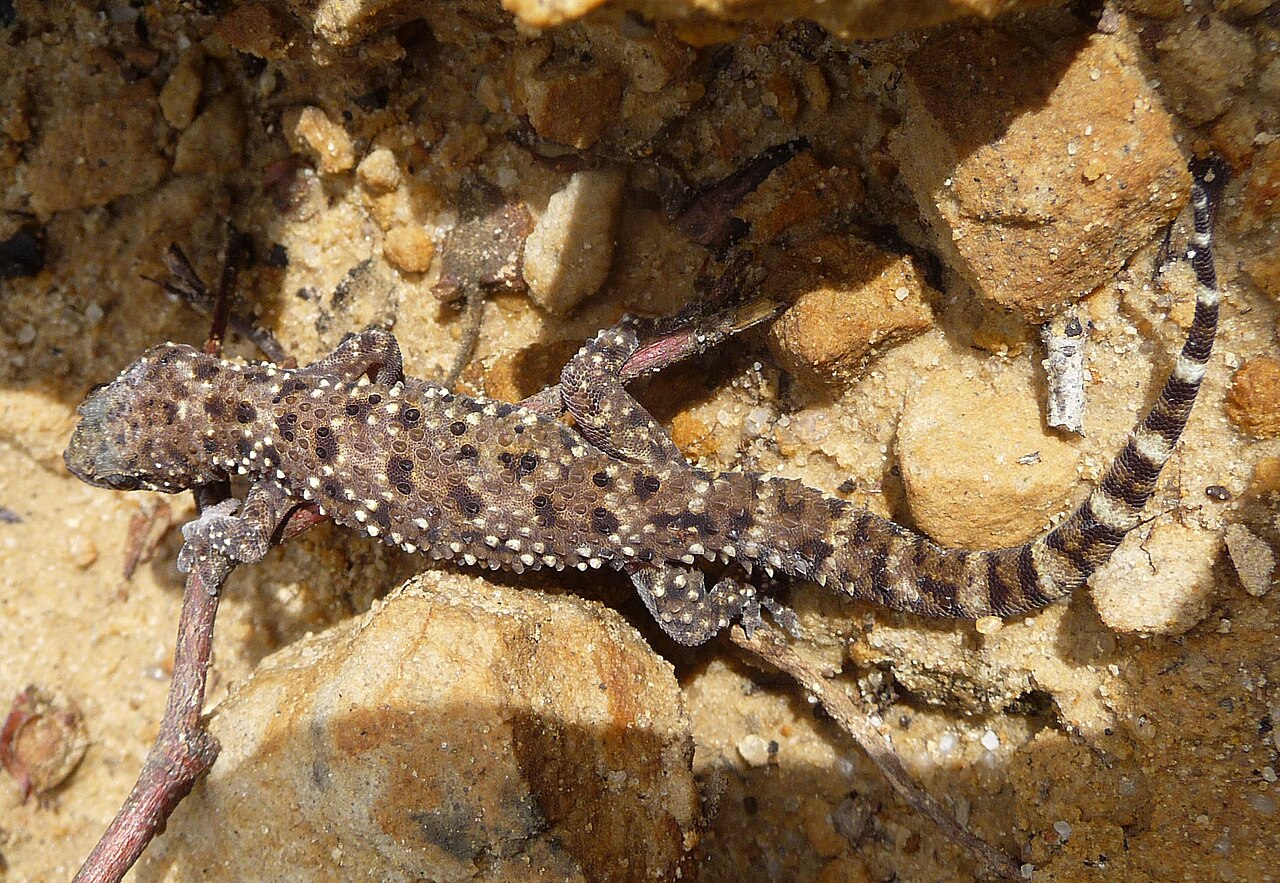
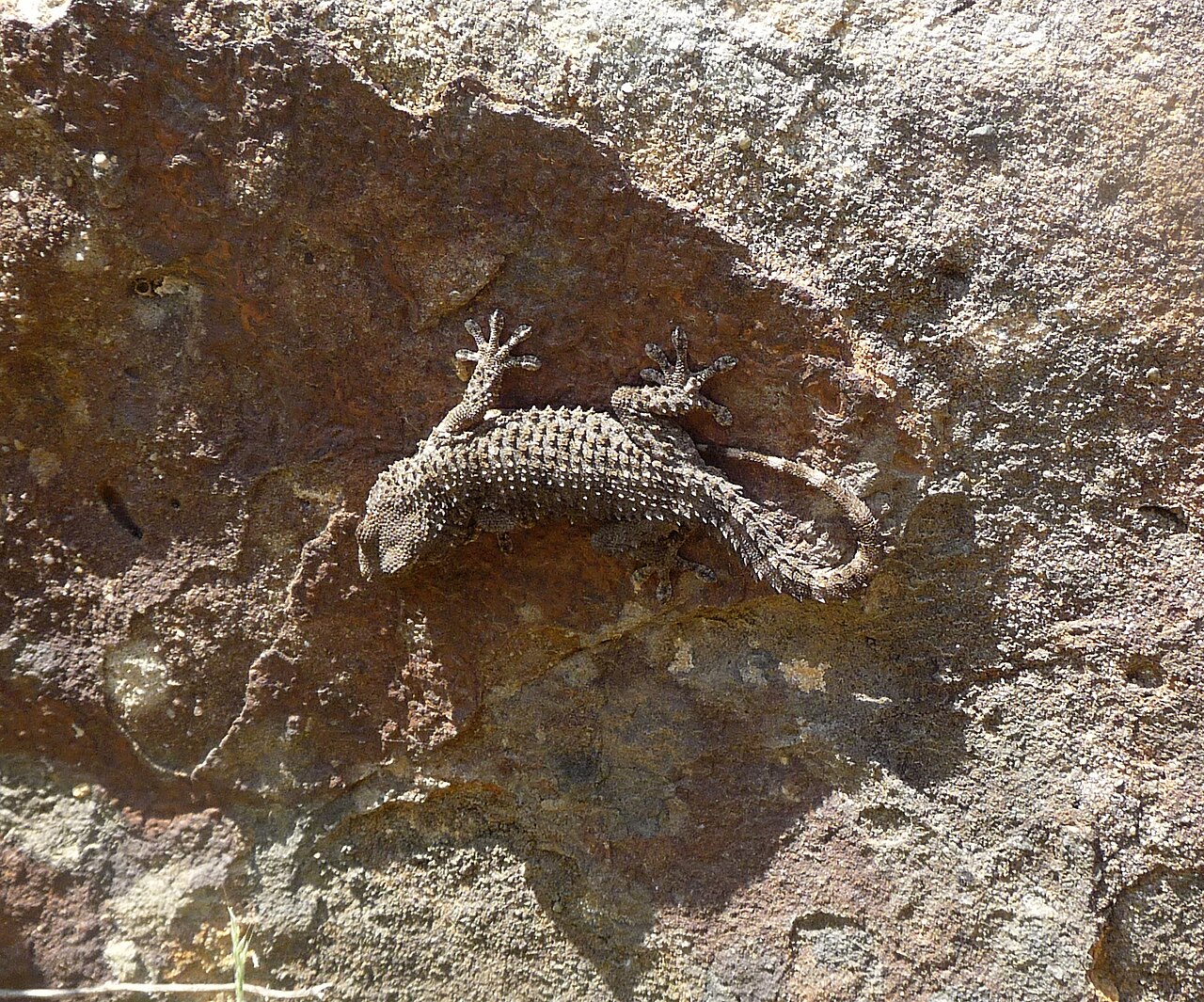
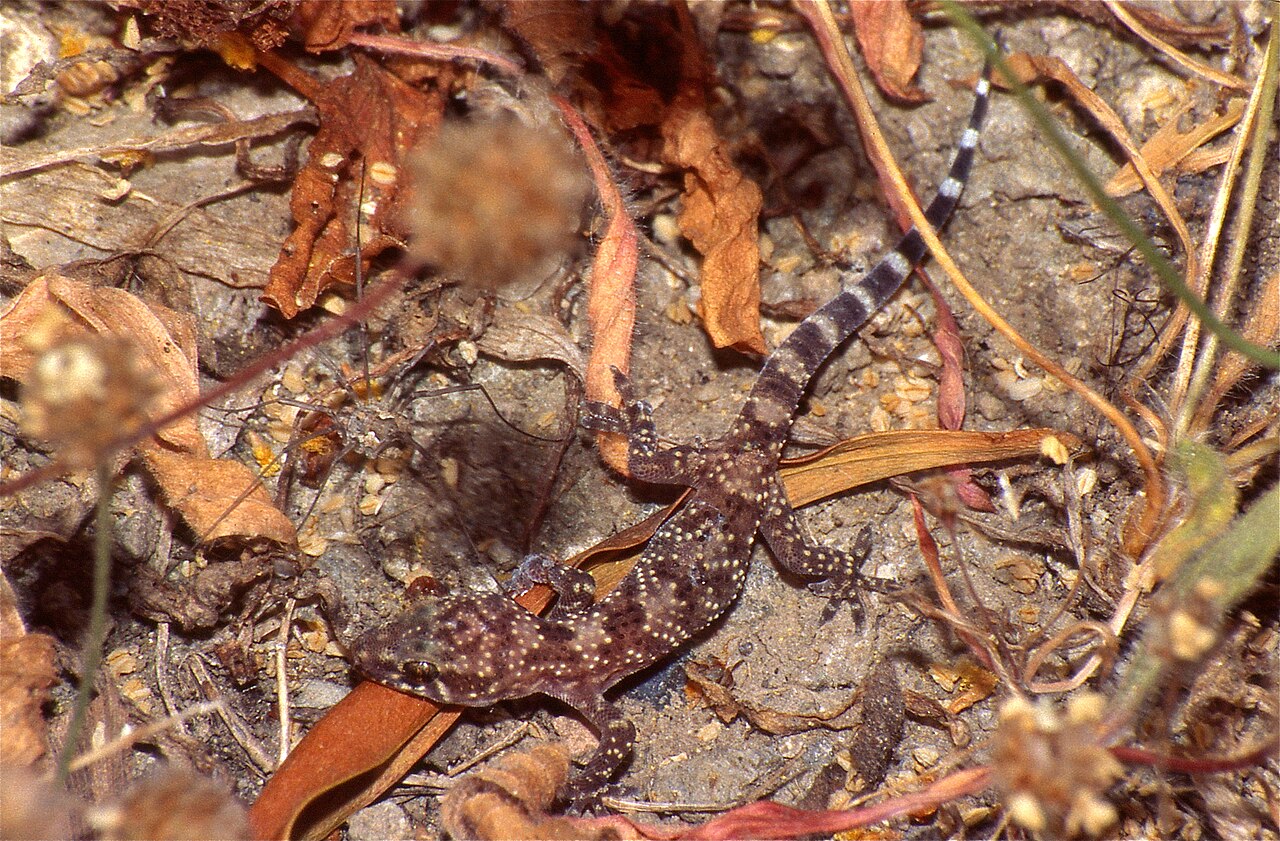
The Mediterranean house gecko is the most widespread in the United States, introduced from around the Mediterranean basin and now established across Florida, Texas, Louisiana, Arizona, southern California, and scattered warm pockets further north. It is pale tan to gray, semi-translucent, about four to five inches long, with prominent bumps on the back and large lidless eyes, and it is almost entirely nocturnal.
The tropical house gecko, introduced from Africa, is common in Florida and along the Gulf Coast and looks similar. The common house gecko from Southeast Asia is established in Florida and Hawaii, and the tokay gecko, a large, boldly spotted, and famously bad-tempered species, has established populations in south Florida and Hawaii after escaping the pet trade. Hawaii also hosts several introduced day geckos, which are bright green and active in daylight.
All of these climb glass and ceilings using microscopic hairs called setae on their toe pads, which generate adhesion through van der Waals forces rather than suction or glue. They also drop their tails when grabbed, a defense called caudal autotomy, and regrow a shorter, differently textured replacement. The Mediterranean house gecko guide covers the most likely occupant of an American wall.
Do You Have to Clean Up Gecko Poop?
On indoor surfaces, walls, furniture, food preparation areas, and anywhere children play, yes, both because of the Salmonella risk and because the urate stains permanently on porous surfaces. Prompt removal is easier and more effective than dealing with a dried, stained deposit weeks later.
On exterior walls, patios, and outdoor fixtures, cleanup is cosmetic. Rain removes droppings from most surfaces eventually, though the urate can leave marks on painted siding and light-colored stucco. Many people in gecko country simply wash the affected areas periodically as part of general exterior cleaning rather than chasing individual droppings.
Removing the droppings does have one practical benefit: geckos and other reptiles use scent to navigate and return to familiar perches, so cleaning a favored spot reduces the likelihood of it being used again. Combining cleanup with a change of lighting is far more effective than either alone, and it is the only approach that addresses why the gecko chose that spot in the first place.
Frequently Asked Questions
What does gecko poop look like?
Gecko poop is a dark pellet about a quarter inch long with a white or cream cap at one end. The white portion is urate, the reptile equivalent of urine, and it is the fastest way to identify the droppings.
How can I tell gecko poop from mouse poop?
The white cap. Gecko droppings have a distinct pale section at one end; mouse droppings are uniformly dark and taper to points at both ends. Mice also produce dozens of droppings daily against a gecko’s few.
Are gecko droppings harmful?
They can carry Salmonella, as all reptile feces can, so wear gloves, keep them away from food areas, and wash your hands afterward. There is no airborne risk like that from rodent or bat droppings.
Do you have to clean gecko poop?
Indoors, yes, because of the Salmonella risk and because the urate stains porous surfaces permanently. Outdoors it is cosmetic, though it can mark painted siding, and cleaning a favored perch discourages the gecko from returning.
Can a gecko make you sick?
Only through Salmonella from contact with the animal or its droppings, and only via hand to mouth transfer. House geckos are not venomous, do not bite people, and carry no other disease of human concern.
Why is gecko poop white on one end?
Because reptiles excrete nitrogen waste as uric acid rather than urea dissolved in water. The white urate is passed together with the feces from the same opening, which is why the dropping has two distinct sections.
What does gecko poop in my house mean?
A gecko has found a reliable insect supply, almost always around an outdoor light. Switching to yellow bug bulbs or motion sensors and sealing entry gaps addresses the cause, while the gecko itself eats mosquitoes and roaches.