Baby Skunk: Kits, Spraying, and What to Do If You Find One
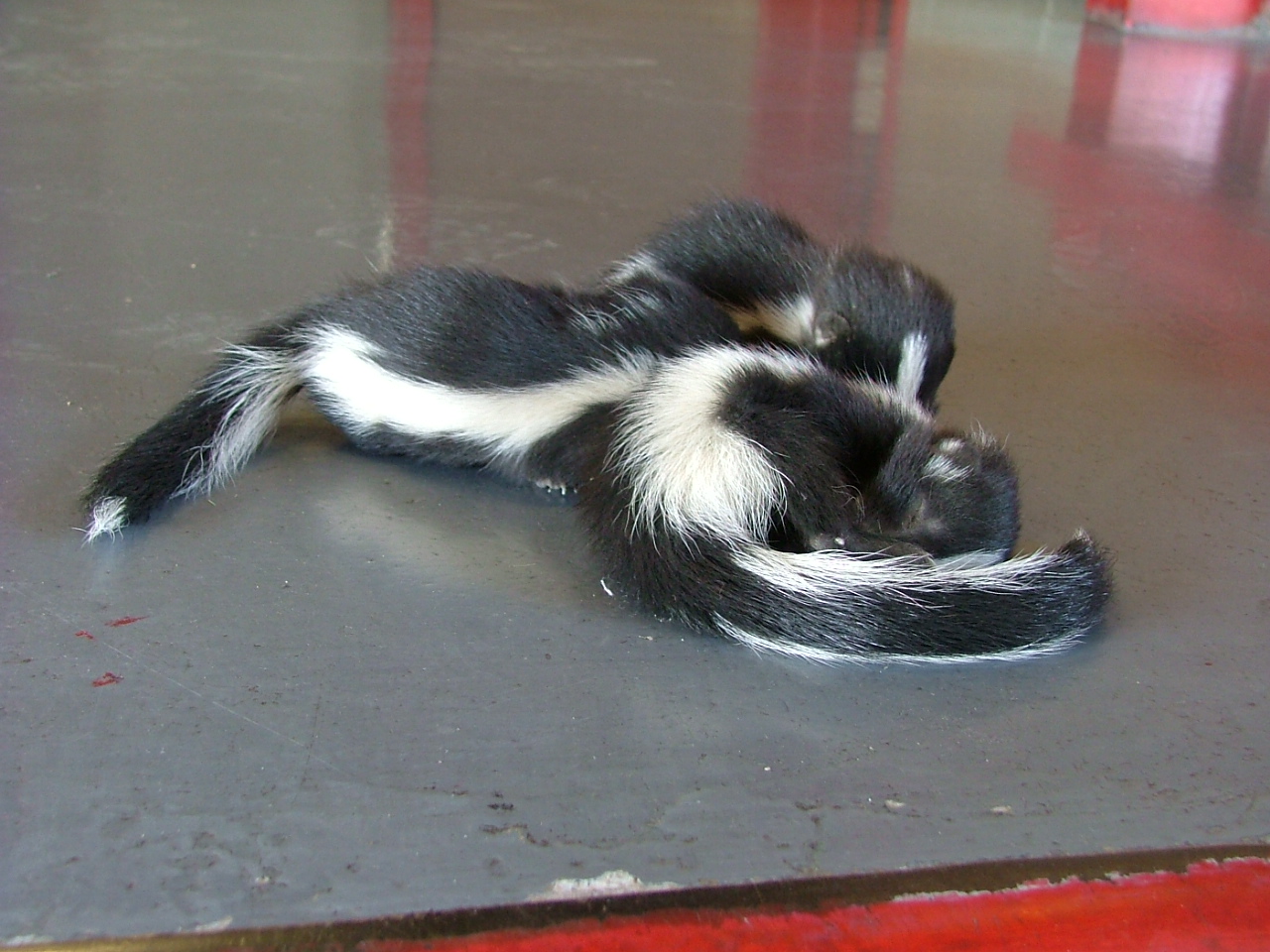
Baby skunks are called kits, born in litters of four to seven in May after about two months of gestation. They arrive blind, deaf, and nearly naked, but the black and white pattern is already visible in the skin, and they can spray from roughly eight days old, well before their eyes open.
That last fact catches people out. A kit found alone in a garden looks helpless and is armed, and the spray from a young animal is just as potent as an adult’s even if the aim is worse. This guide covers development, the spray, what to do if you find kits, the rabies question, and how to keep skunks from denning under your deck in the first place.
| Quick Facts | Skunk Kits |
|---|---|
| Called | Kits |
| Litter size | 4 to 7, occasionally up to 10 |
| Born | Early May in most of the range |
| Can spray from | Roughly 8 days old |
| Eyes open | Around 3 weeks |
| Independent | 2 to 3 months |
Birth and Early Development
Striped skunks mate in late winter, and after a gestation of around 59 to 77 days the female gives birth in a den, typically an abandoned burrow, a hollow log, a rock crevice, or the space under a shed, deck, or porch.
Kits weigh roughly 1 oz at birth, are blind and deaf, and have only a thin covering of fine hair, though the future black and white pattern is already visible as pigmentation in the skin. The mother raises them alone, since males take no part and may kill kits if they encounter them.
Development moves quickly through spring. Eyes and ears open at around three weeks, kits begin walking and exploring the den soon after, and by six to eight weeks they follow the mother on foraging trips in a distinctive single-file line. Weaning completes at around two months, and by late summer the young disperse.
They Can Spray Before They Can See
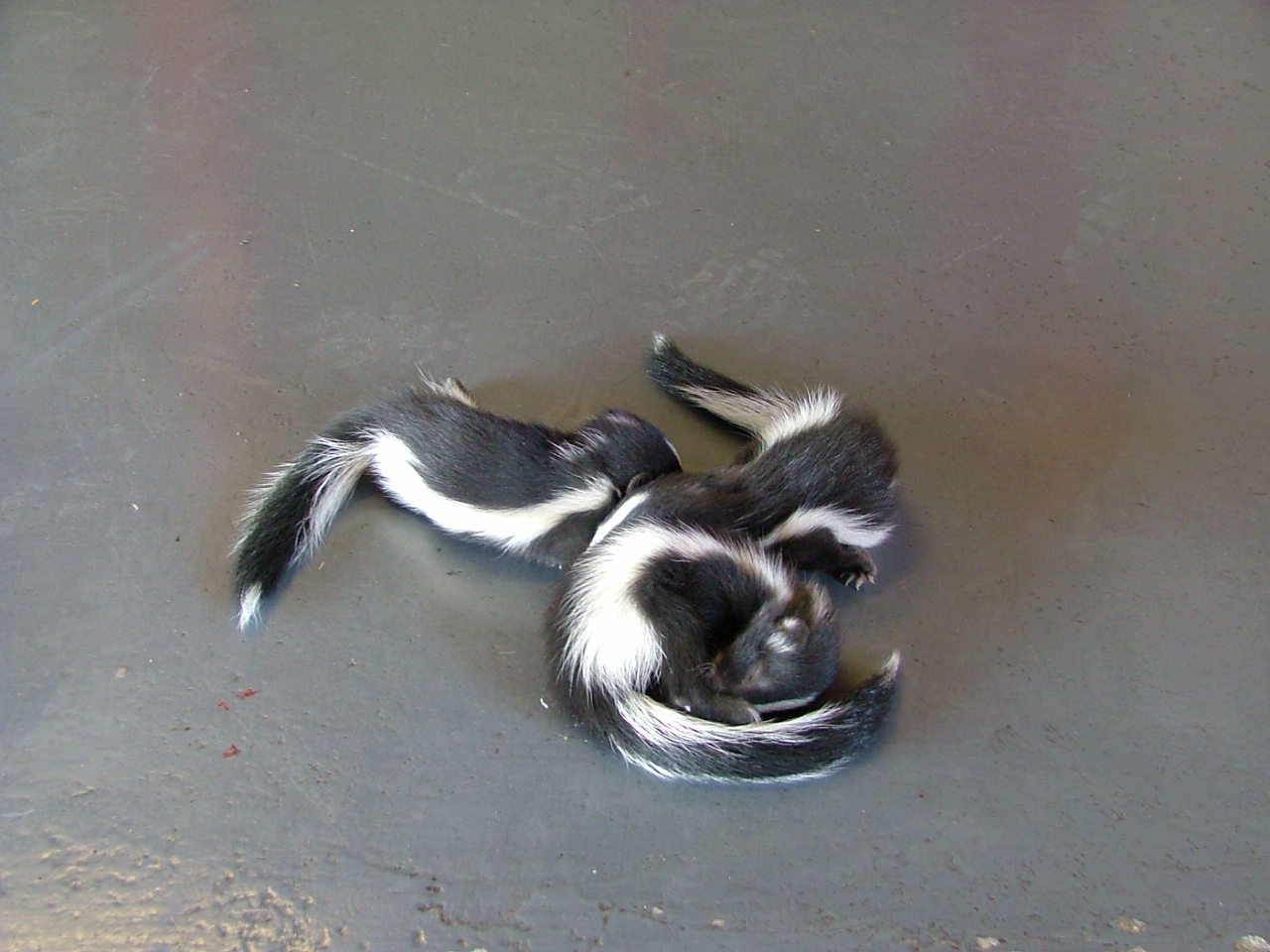
Kits develop functional scent glands very early, and reports place the first ability to spray at around eight days old, before the eyes open. The chemistry is the same as in adults: sulphur compounds called thiols produced by two glands beside the anus and delivered through nipples that can be aimed.
What young kits lack is accuracy and restraint. Adult skunks are notably reluctant to spray, since the supply takes about ten days to replenish and leaves them defenceless meanwhile, so they run through a long warning sequence first. Kits are quicker to discharge and less precise about direction.
The warning sequence is worth knowing at any age. A skunk that is alarmed will stamp its front feet, hiss, raise its tail, and in spotted skunks perform a handstand, before turning to spray. Backing away slowly at the foot-stamping stage almost always ends the encounter without incident.
If You Find a Kit
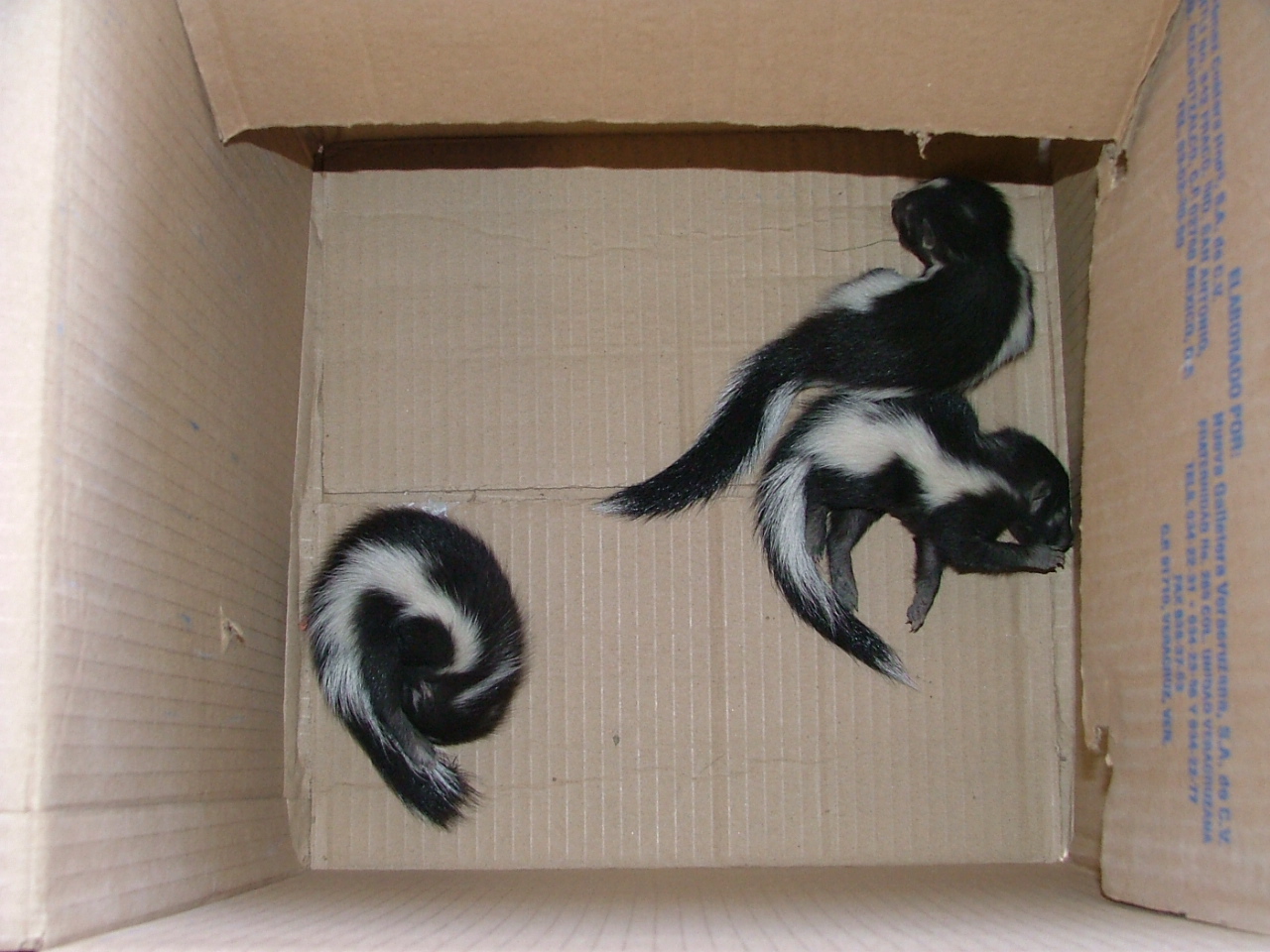
Watch before acting, because most apparently orphaned kits are not. Females leave kits in the den while foraging, and a kit that has wandered out is usually within reach of a mother who will not return while a person is standing nearby.
Genuine trouble has specific signs: visible injury, flies or maggots on the animal, obvious emaciation, continuous crying over several hours, cold to the touch, or a confirmed dead mother nearby. A line of kits wandering in daylight with no adult for many hours is also worth acting on.
Call a licensed wildlife rehabilitator rather than intervening. Keeping wildlife without permits is illegal in most states, skunks are a primary rabies vector species in North America and many states prohibit rehabilitators from handling them at all, and a kit raised by people cannot be released successfully. If you must contain one temporarily on a rehabilitator’s advice, use a covered box with air holes, gloves, and no food or water unless instructed.
The Rabies Question
Skunks are one of the main rabies reservoir species in North America alongside raccoons, bats, and foxes, and this is the reason the advice around them is stricter than for most wildlife.
Signs of rabies are behavioral rather than schedule-based. Daytime activity alone is not a symptom, since skunks with kits forage in daylight regularly, and a skunk crossing a lawn at noon in June is usually a mother provisioning young. The genuine warning signs are disorientation, stumbling, apparent partial paralysis, unprovoked aggression, approaching people directly, circling, and unusual vocalization.
Any direct contact warrants medical advice. A bite or scratch from a skunk, or saliva contact with broken skin or mucous membranes, should prompt immediate washing and a call to a doctor or health department, since post-exposure treatment is highly effective but time-sensitive. The CDC (cdc.gov) publishes current guidance. Never handle a skunk of any age bare-handed.
Skunks Under Your Deck
Denning under decks, sheds, and porches is common in spring, and the timing of any response matters enormously. A den in April or May almost certainly contains kits, and sealing the entrance traps them inside to die.
Waiting is usually the right answer. Skunk families leave den sites on their own by late summer once the kits are mobile and dispersing, so a den in May will be empty by August without any intervention.
If waiting is impossible, harassment before exclusion is the approach. Bright light aimed at the entrance, a radio playing nearby, and ammonia-soaked rags placed at the opening make the site unpleasant and encourage the female to move the kits to an alternative den, which skunks do readily. Only after confirming the family has left, using a one-way door or a loose barrier of newspaper across the entrance to check for tracks, should the space be permanently sealed.
What Kits Eat
Milk for the first two months, then whatever the mother is eating, which is an unusually broad menu. Skunks are omnivores and their diet shifts seasonally with what is available.
Insects dominate in summer. Beetles, beetle larvae including white grubs, crickets, grasshoppers, and wasp and bee larvae make up a large share, and skunks dig for grubs in lawns, which is the source of the small conical holes people find in turf.
The rest is opportunistic. Earthworms, small rodents, eggs, amphibians, fruit, nuts, and carrion all feature, along with pet food and rubbish where available. That grub-digging habit means skunks are genuinely useful in a garden, and the lawn damage they cause is usually a symptom of a grub population rather than the primary problem, as our guides to getting rid of Japanese beetles and to the crane fly both explain, since the grubs skunks dig for are frequently the larvae of one or the other.
Kits and Pets
Dogs are the usual victims, and the encounter almost always follows the same pattern. A dog investigates a skunk, ignores the warning display, and gets sprayed at close range, frequently in the face.
Eye exposure needs prompt attention. Skunk spray causes intense irritation and temporary blindness, and flushing the eyes with clean water is the immediate response, followed by a veterinary check if irritation persists. Rarely, heavy exposure causes a form of anemia in dogs, which is another reason to have a vet look at a badly sprayed animal.
The tomato juice remedy does not work and simply makes a red dog. The effective treatment is a mixture of hydrogen peroxide, baking soda, and dish soap, made fresh and used immediately since it cannot be stored, applied avoiding the eyes and rinsed thoroughly. Prevention is better: keep dogs leashed at dusk and dawn in spring and summer, secure bins and pet food, and check the yard before letting a dog out at night.
Spotted Skunks and Other Species
The striped skunk is the species behind nearly all North American encounters, but it is not the only one. Spotted skunks are smaller, more agile, and patterned in broken white stripes and spots rather than the familiar two bands, and they climb readily, which striped skunks do not.
Their warning display is more theatrical. A threatened spotted skunk performs a handstand, walking forward on its front legs with the tail raised and the hindquarters aimed at the threat, which is one of the more remarkable defensive displays among North American mammals.
Hooded and hog-nosed skunks occur in the southwest, the latter with a distinctive bare snout used for rooting out insects. Populations of eastern spotted skunks have declined substantially across their range, and several state agencies now list them as a species of concern, which is one reason indiscriminate skunk control is a poor idea.
Keeping Skunks Out of Your Yard
Remove the attractions first, since skunks come for food and shelter rather than for the yard itself. Secure rubbish bins with tight lids, bring pet food indoors overnight, clean up fallen fruit, and secure compost.
Then close the shelter. Screen gaps under decks, sheds, and porches with hardware cloth buried at least 12 in deep and bent outward in an L shape, since skunks dig, and do this outside the spring denning season so nothing is trapped inside.
Grub control reduces the digging damage, though it should be justified on its own terms rather than as skunk control, since the skunks will simply forage elsewhere in the yard. Motion-activated lights and sprinklers have some deterrent effect, while ultrasonic devices do not. Trapping and relocating is illegal in many states, spreads disease, and usually kills the relocated animal, and our guides to baby raccoons, baby coyotes, and whether possums are dangerous reach the same conclusion for other suburban wildlife.
Related reading: Skunk Sounds.
Frequently Asked Questions
What is a baby skunk called?
A kit. Litters of four to seven are born in early May after about two months of gestation, weighing roughly 1 oz, blind and deaf but already showing the black and white pattern as pigmentation in the skin.
Can baby skunks spray?
Yes, from around eight days old, before their eyes open. The spray is chemically identical to an adult’s, though kits are less accurate and quicker to discharge, since adults are reluctant to use a supply that takes about ten days to replenish.
I found a baby skunk alone, what should I do?
Watch from a distance first, since females leave kits while foraging and will not return with a person nearby. Call a licensed wildlife rehabilitator if you see injury, maggots, emaciation, or continuous crying over hours. Never handle one bare-handed.
Is a skunk out in daylight rabid?
Not on its own. Mothers with kits forage in daylight regularly in spring and summer. Genuine rabies signs are disorientation, stumbling, partial paralysis, unprovoked aggression, approaching people, and circling. Any bite or saliva contact needs immediate medical advice.
There are skunks under my deck, what do I do?
In spring, wait, since the den almost certainly contains kits and sealing it traps them. Families leave on their own by late summer. If you must act, use light, noise, and ammonia rags to encourage relocation, and seal only after confirming they have gone.
Does tomato juice remove skunk spray?
No. Use a fresh mixture of hydrogen peroxide, baking soda, and dish soap, applied immediately and rinsed thoroughly while avoiding the eyes. It cannot be stored and must be made when needed. Flush a sprayed dog’s eyes with clean water first.
Why is a skunk digging holes in my lawn?
It is hunting grubs, particularly beetle larvae, and the small conical holes are foraging pits. The digging is a symptom of a grub population rather than the primary problem, and skunks are genuinely useful predators of lawn pests.