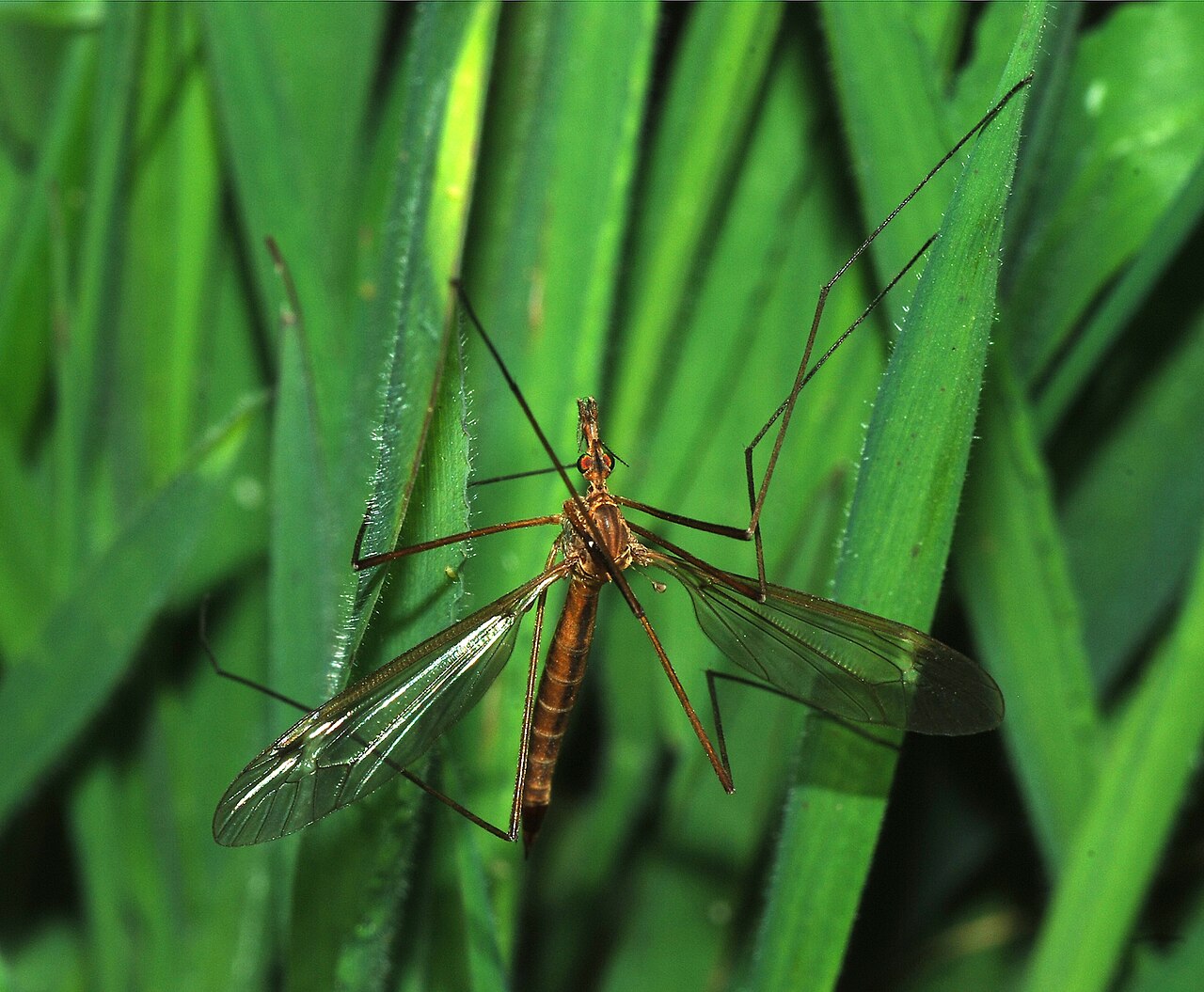
Crane Fly: Why It Does Not Eat Mosquitoes
Crane flies do not eat mosquitoes, despite being called mosquito hawks and mosquito eaters across much of North America. Adult crane flies have mouthparts that in most species cannot handle solid food at all, and many adults never feed during their brief lives, living only long enough to mate and lay eggs.
They also cannot bite or sting. The long-legged insect bouncing off your porch light in spring is entirely harmless, and the only genuine crane fly problem happens underground, where the larvae of certain species feed on grass roots and can damage lawns. This guide covers what crane flies actually are, why the mosquito myth persists, the larvae that do cause trouble, and when to act on them.
| Quick Facts | Crane Fly |
|---|---|
| Family | Tipulidae, true flies |
| Adult lifespan | Days to about two weeks |
| Adult diet | Nectar or nothing at all |
| Do they eat mosquitoes? | No |
| Bite or sting | Neither, they cannot |
| Larvae | Leatherjackets, some feed on grass roots |
What a Crane Fly Is
Crane flies belong to the family Tipulidae and are true flies, related to mosquitoes, houseflies, and midges, with a single pair of functional wings and a pair of small club-shaped balance organs called halteres where the hind wings would be.
The family is enormous, with more than 15,000 described species worldwide, and North American species range from a few millimetres to giants with legspans exceeding 3 in. The body is slender, the legs extremely long and fragile, and the whole animal looks assembled from spare parts.
Those legs break off readily, which is a defense rather than a flaw. A crane fly caught by a predator or a spider web frequently escapes leaving a leg behind, and adults with several missing legs are entirely normal. Our guide to the baby dragonfly covers another long-bodied insect that gets confused with them at a distance.
The Mosquito Myth
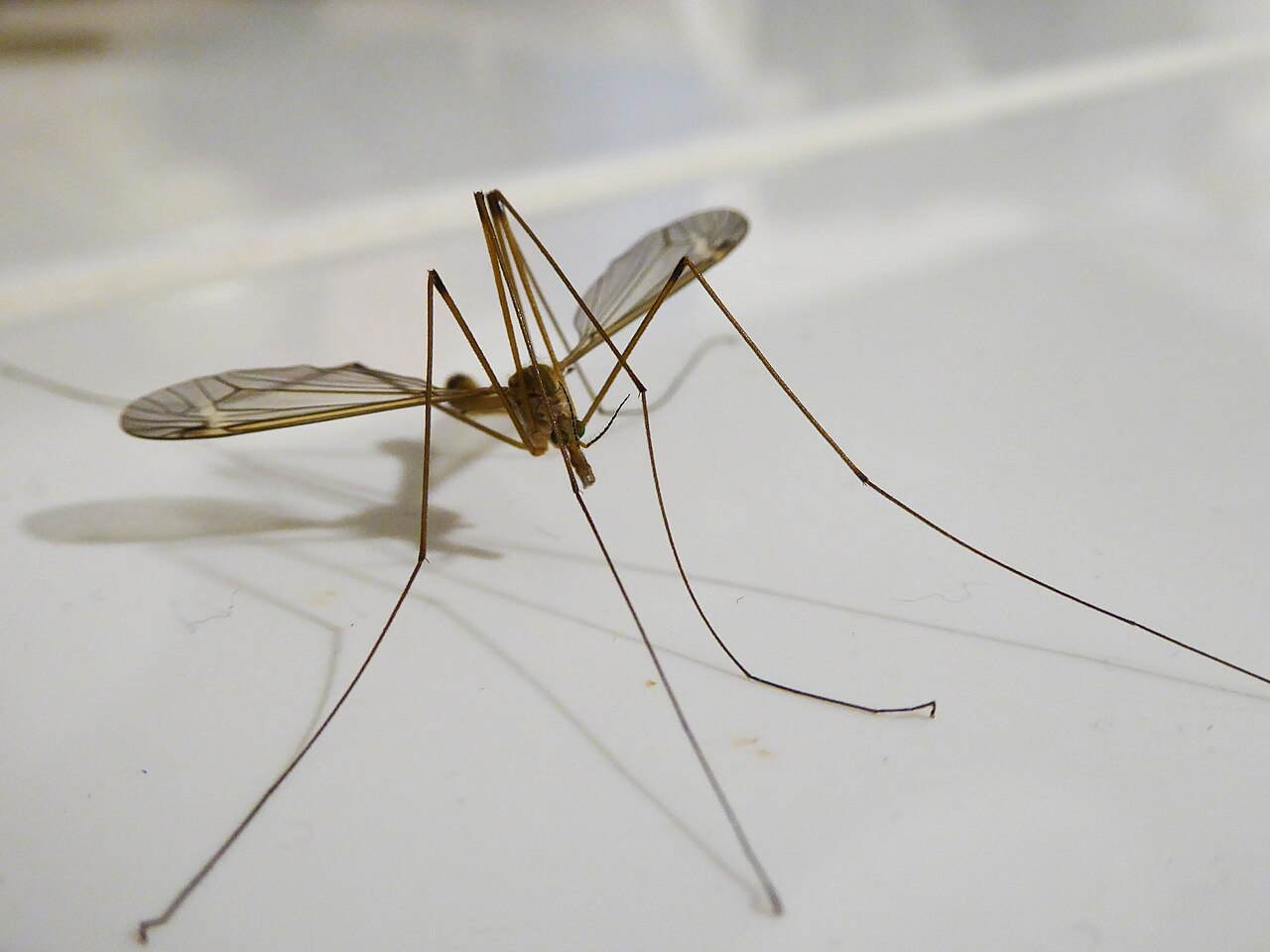
Mosquito hawk, mosquito eater, and skeeter eater are all common names for crane flies and all of them are wrong. Adult crane flies do not hunt, do not catch other insects, and in most species cannot consume anything solid.
The mouthparts settle it. Species that feed at all take nectar or water using a soft snout, and a great many species have mouthparts too reduced to feed at all, living entirely on reserves accumulated during the larval stage. There is no biting apparatus and no predatory capability.
The name presumably comes from the resemblance to an oversized mosquito, plus wishful thinking. Actual mosquito predators include dragonflies, damselflies, bats, swallows, and the aquatic insect larvae that do eat mosquito larvae in quantity, along with the animals in our guide to getting rid of bats, each of which takes thousands of insects nightly. If you want mosquito control, those are the animals to encourage.
Crane Fly or Mosquito?
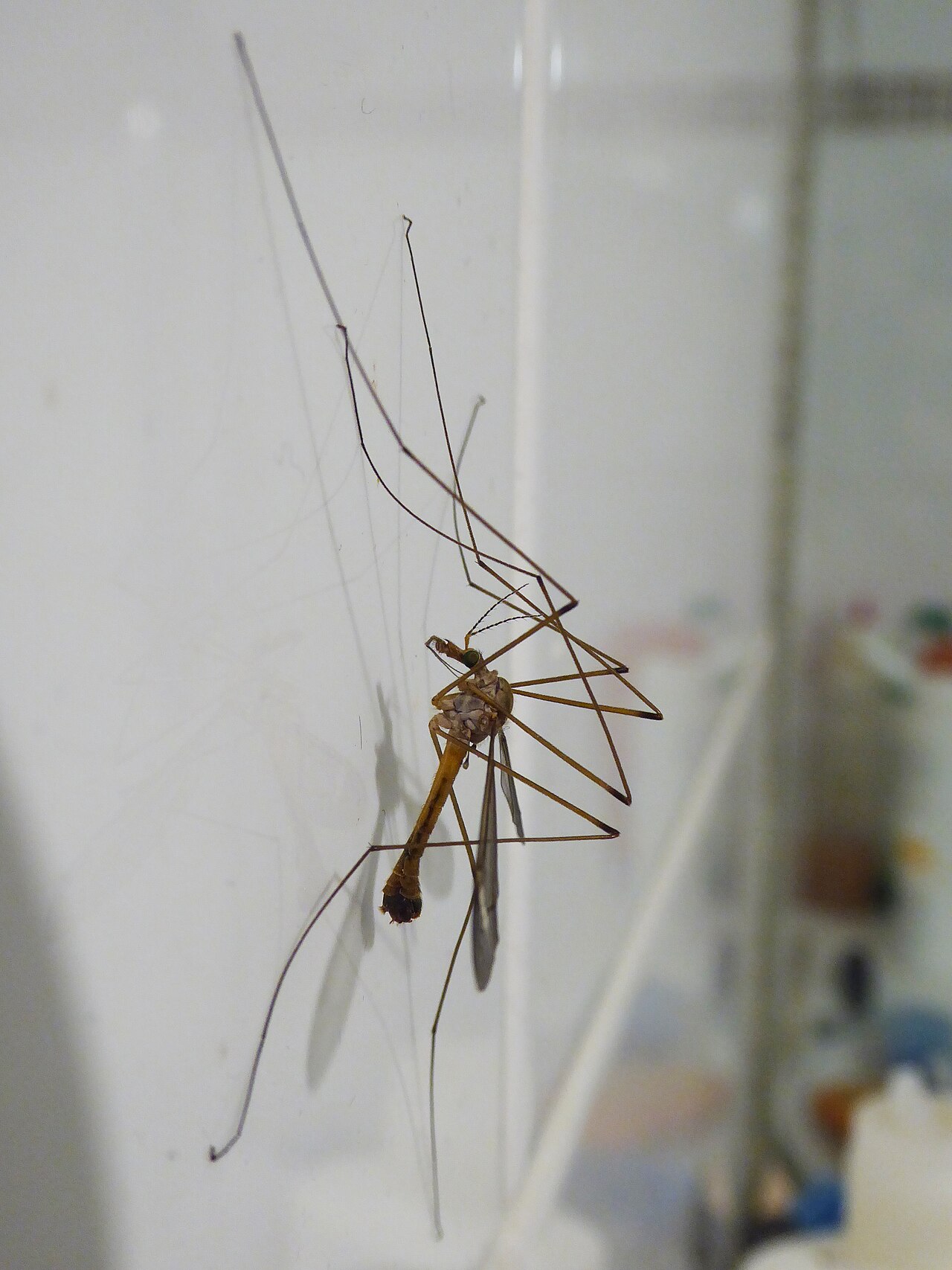
Size resolves most cases instantly. Crane flies are far larger than mosquitoes, with even modest species dwarfing them, and the largest have legspans several times a mosquito’s total length.
Structure confirms it. Mosquitoes have a rigid needle-like proboscis for piercing skin, scales on the wings and body, and a hunched resting posture. Crane flies have no piercing mouthparts, unscaled wings, and rest with legs sprawled widely.
Behavior is the clearest difference of all. Mosquitoes fly directly and purposefully toward a host, whining audibly, and land to feed. Crane flies fly erratically, bump into things, gather at lights, and show no interest in people whatsoever except as obstacles.
Leatherjackets: The Larvae
The larvae are where the genuine issue lies, and they are called leatherjackets after their tough grey-brown skin. They are legless, cylindrical, up to about 1.5 in long, and live in soil, leaf litter, decaying wood, or aquatic sediment depending on species.
Most are harmless decomposers. The majority of crane fly species have larvae that feed on decaying plant matter, fungi, and organic material in soil or water, and they perform useful decomposition work while serving as an important food source for birds, moles, and beetles.
A minority feed on living plant roots and these are the lawn pests. The European crane fly and the marsh crane fly, both introduced to North America and now widespread in the Pacific Northwest, northeastern states, and parts of Canada, have larvae that feed on grass roots and crowns, and heavy populations thin turf and produce yellowing patches.
Recognizing Lawn Damage
The symptoms are unspecific on their own, which is why misdiagnosis is common. Yellowing or thinning patches appear in spring, grass pulls up easily because the roots have been severed, and bare areas expand through the season.
Secondary damage is often the first thing noticed. Birds, particularly starlings and crows, tear at turf to reach the larvae, and skunks and raccoons dig for them, so a lawn suddenly being excavated at night frequently indicates a grub population of some kind.
Confirm before treating. Cut a square of turf about 6 in on a side and 2 in deep and count the leatherjackets in it, then multiply. Thresholds vary with turf health, but published extension guidance generally puts the action threshold at roughly 25 to 50 larvae per square foot, and healthy vigorous lawns tolerate more than stressed ones. Below that, the population is not what is damaging your grass.
Managing Leatherjackets
Cultural measures come first and often suffice. Well-drained, healthy, appropriately watered turf tolerates leatherjacket populations that would damage stressed grass, and crane flies prefer laying in moist soil, so avoiding overwatering in late summer reduces egg-laying directly.
Beneficial nematodes are the most useful targeted option. Steinernema feltiae applied to moist soil in autumn when larvae are small parasitizes them effectively, and it is specific enough not to harm other soil life. Timing matters, since large overwintered larvae in spring are far harder to control than small autumn ones.
Chemical insecticide is rarely justified and often counterproductive. It kills the beetles, earthworms, and predatory insects that keep populations in check, several products are restricted, and repeat problems follow. Encouraging birds is genuinely useful, since starlings alone consume large numbers, and the same logic in our guide to getting rid of Japanese beetles applies here.
Crane Flies in the House
Indoor crane flies are lost, not infesting. Adults are attracted to light and blunder in through open doors and windows, and they cannot reproduce indoors, damage anything, or bite.
They also die quickly. Adult crane flies live days to about two weeks and frequently much less indoors without moisture, so an indoor individual will be gone within a day or two regardless of what you do.
Catching and releasing is easy given how slowly they fly, using a glass and a card. Reducing outdoor lighting near doors, switching to warm amber bulbs, and fitting screens all cut the numbers getting in, which is the same approach our guide to getting rid of gnats recommends for a genuinely indoor problem.
Why Adults Have Such Short Lives
The proportions of the life cycle explain everything about crane fly behavior. Larvae live for months and in some species over a year, feeding and growing underground or underwater, while adults live days to a couple of weeks and frequently cannot feed at all.
The adult stage exists to disperse and reproduce, nothing else. Males form loose swarms or search for females, mating happens quickly, and females lay eggs into soil or water, often within hours of emerging. Many species emerge synchronously, which is why crane flies appear suddenly in large numbers for a week or two and then vanish.
This is the same pattern seen in mayflies and in the giant silk moths, where the feeding stage is the larva and the adult is a brief reproductive phase. Our guide to the imperial moth describes an insect that takes the strategy further still, with adults that have no functional mouthparts whatsoever.
Where and When You Find Them
Habitat follows the larvae rather than the adults. Species with soil-dwelling larvae produce adults around lawns, pasture, and field margins, while species with aquatic larvae emerge near ponds, streams, and wet ditches, which is why crane flies cluster near water in some places and near turf in others.
Emergence timing varies by species and region. The introduced European crane fly produces its main flight in late summer and early autumn across the Pacific Northwest and northeastern states, while native species emerge at various points from spring through autumn.
Moisture drives everything. Wet springs and mild autumns produce larger populations because eggs and small larvae survive better in damp soil, and a run of wet years in a region reliably produces a noticeable increase in adult numbers a season later.
What Eats Crane Flies
Almost everything, at every stage. Adults are taken by swallows, swifts, flycatchers, bats, spiders, and dragonflies, and their slow erratic flight makes them easy prey, which is part of why they produce so many offspring.
Larvae feed a different set. Birds including starlings, crows, and robins probe for them, moles and shrews eat them in quantity, and ground beetles, rove beetles, and predatory soil invertebrates take large numbers.
That position near the base of the food web is the argument for tolerance in a garden. A lawn with a modest leatherjacket population feeds birds through spring and supports soil predators, and only when densities become extreme does the balance tip toward damage. Our guides to ladybug larvae and crickets versus grasshoppers cover other insects whose value in a yard exceeds their nuisance.
Frequently Asked Questions
Do crane flies eat mosquitoes?
No. Adult crane flies do not hunt and in most species cannot consume solid food at all, taking only nectar or water if they feed. Many never feed, living on reserves from the larval stage. The names mosquito hawk and mosquito eater are simply wrong.
Do crane flies bite or sting?
Neither. They have no piercing mouthparts and no stinger, and they are completely harmless to people and pets. A crane fly that lands on you will simply sit there, which is the fastest way to distinguish one from a mosquito.
How do I tell a crane fly from a mosquito?
Size first, since crane flies are far larger. Mosquitoes also have a rigid needle-like proboscis, scaled wings, and fly directly toward hosts, while crane flies have no piercing mouthparts, unscaled wings, and fly erratically with no interest in people.
What are leatherjackets?
Crane fly larvae, legless grey-brown grubs up to about 1.5 in living in soil, leaf litter, or water. Most species are harmless decomposers, but a minority including the introduced European crane fly feed on grass roots and can damage lawns.
How do I know if leatherjackets are damaging my lawn?
Cut a square of turf 6 in on a side and 2 in deep and count the larvae. Published extension thresholds are generally around 25 to 50 per square foot before treatment is justified. Birds tearing at turf and skunks digging at night are often the first signs.
How do I control leatherjackets?
Improve drainage and turf health first, and avoid overwatering in late summer when females lay eggs. Beneficial nematodes applied in autumn when larvae are small are the most effective targeted option. Chemical insecticide is rarely justified and kills beneficial soil life.
Why are there suddenly so many crane flies?
Many species emerge synchronously, so adults appear in large numbers for a week or two and then disappear. Adults live only days to about two weeks, and their entire purpose is to mate and lay eggs before dying.