Gecko Sounds: What Each Chirp, Bark and Squeak Means
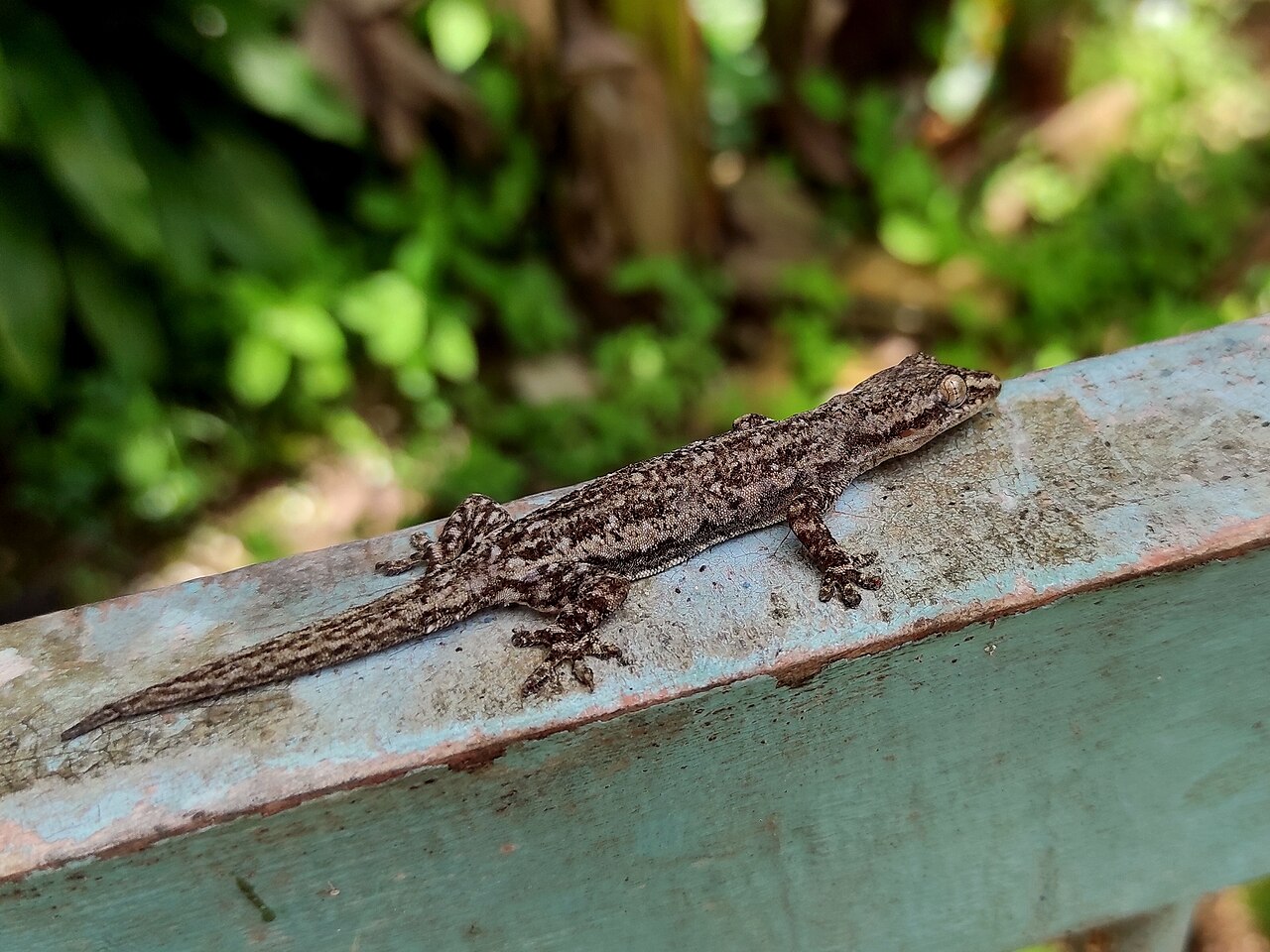
Gecko noises are mostly chirps, barks, squeaks, and clicks, and each one carries a different message. A chirp is usually a territorial announcement, a bark is a male holding ground, a squeak or a scream means the animal is frightened, and soft clicking belongs to courtship. Almost everything people hear after dark near a porch light or a ceiling corner comes from house geckos hunting insects.
Geckos are one of the few lizard groups with real vocal ability, which is why a pet keeper and a homeowner can hear the same species and reach opposite conclusions about it. What follows goes call by call, names the species behind each sound, gives the time of night and the season when it peaks, and lists the noises that get blamed on geckos by mistake.
Geckos make four main sounds: a rapid chirp that marks territory, a loud bark used mainly by male tokay geckos, a sharp squeak or scream that signals fear or pain, and quiet clicking during courtship. Hatchlings peep thinly. Nighttime chirping around lights is nearly always a house gecko.
| Sound | What it sounds like | Most likely species | What it means |
|---|---|---|---|
| Chirp | Short, dry “chit chit chit” | Mediterranean house gecko | Territory, contact between neighbors |
| Bark | Loud, two-note “to kay” | Tokay gecko | Male advertising and defending space |
| Squeak or scream | Sharp, thin, sudden | Leopard gecko, crested gecko | Fear, pain, rough handling |
| Click or chatter | Soft, rhythmic, close range | Tokay and house geckos | Courtship, pair contact |
| Peep | Faint, high, repeated | Hatchlings of most species | Begging, mild alarm |
| Hiss | Dry rush of air | Tokay, gargoyle gecko | Final warning before a bite |
What sounds do geckos make?
Geckos produce six recognizable sound types: chirps, barks, squeaks, clicks, peeps, and hisses. The range is unusual among lizards. Most reptiles are limited to hissing, and loud ones like the bull alligator rely on a very different anatomy, as the deep calls covered in our guide to alligator sounds show. Geckos instead use a flexible larynx and a mobile tongue to shape short pulses of air into distinct notes.
Which sounds you hear depends on the species. The Mediterranean house gecko (Hemidactylus turcicus) chirps and almost never barks. The tokay gecko (Gekko gecko) barks loudly enough to carry 100 ft (30 m) through open windows. Leopard geckos (Eublepharis macularius) are quiet until stressed, then squeak.
Chirping: the most common gecko sound

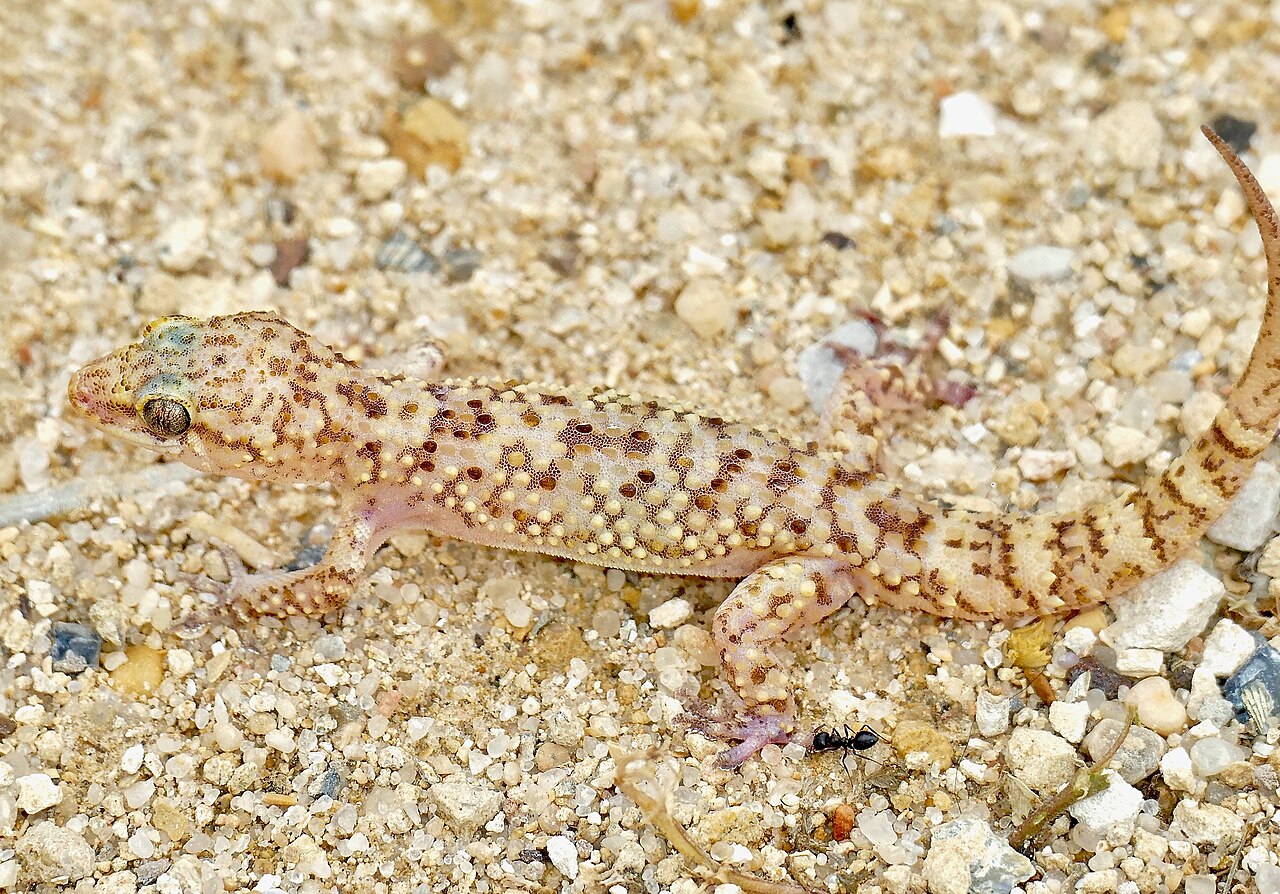
A gecko chirp is a short, dry click repeated three to seven times, often described as “chit chit chit” or a stifled hiccup. In the southern United States it is the signature night sound of the Mediterranean house gecko, an introduced species now established from Florida to southern California. Males chirp most, usually from a wall, a window frame, or the edge of a light fixture.
The message is spacing. A chirping gecko is telling a neighbor how close it may come, and the rate speeds up when another gecko approaches the same hunting patch. Chirping peaks from April through September, in the first three hours after dark, and drops off almost completely on cool nights below 60 F (16 C).
Barking: the tokay gecko’s territorial call
The bark is the loudest sound any gecko makes, and in the wild it belongs almost entirely to the male tokay gecko. It is a two-part call that gave the animal its name: a rising “to” followed by a hard “kay,” repeated 3 to 10 times with a short pause between each pair. Heard through a wall it sounds more like a small dog than a lizard.
Tokays are native to Southeast Asia but are kept widely as pets and have free-living populations in south Florida and Hawaii. Males call to advertise a hollow, a roof space, or a tree cavity, and they call hardest in the breeding season from spring into midsummer. A barking gecko is a confident gecko, not a frightened one.
Squeaks and screams: the distress call

A squeak or a short scream is the one gecko sound that should change what you are doing. It means the animal is frightened or in pain, and it is the usual reaction to being grabbed, cornered by a cat, or lifted by the tail. Leopard geckos and crested geckos (Correlophus ciliatus) scream rarely enough that a keeper may hear it twice in a decade.
The note is thin, lasts under a second, and often comes with a wide open mouth, a lunge, or a shed tail. Stress vocalizing in a captive lizard is a husbandry signal rather than a personality trait, the same way the hisses and puffs described in our bearded dragon sounds guide point to temperature or handling problems rather than temperament.
Clicking and chattering: courtship sounds
Courtship clicking is quiet, rhythmic, and easy to miss unless you are within a few feet of the animal. Males approach a female with a series of soft clicks or a low chatter, sometimes mixed with slow tail waving, and the sequence can run for a minute or more. Tokay geckos click this way before mating, and house geckos use a shorter version.
The clicks are not aggression. They are close-range contact signals, and a female may answer with one or two notes of her own or simply stay put, which is the acceptance signal. Clicking concentrates in the breeding season and is strongest in the hours before midnight, when both sexes are already out and feeding.
Baby gecko noises
Baby gecko noises are thin, faint peeps, higher in pitch than anything an adult produces and audible only within a few feet. Hatchlings of most house gecko species begin peeping within days of emerging, usually when disturbed, handled, or crowded by a sibling in an incubator or a wall void. The sound carries almost no distance outdoors.
Juvenile tokays are the exception. They produce a scaled down bark that is recognizable as the adult call by about four months of age, which is often the first clue that a pet shop hatchling is a tokay rather than a quieter species. Frequent peeping in a hatchling usually means the enclosure is too small, too bright, or too crowded.
What stresses geckos out and makes them vocal
Four things reliably turn a silent gecko into a noisy one: handling, a cage mate that will not leave it alone, the wrong temperature, and no place to hide. Vocalizing in a captive gecko is almost always one of those. A leopard gecko that squeaks every time a hand enters the tank is not aggressive, it is out of options and has learned that the hand means being lifted.
Signs that travel with the sound matter more than the sound itself: a thin tail, refused food, pale color before a shed, hiding for days, or glass surfing at the front of the enclosure. Fix the enclosure first, then handle less for two weeks, then reassess.
When you hear gecko sounds: time of night and season
Gecko calling is sharply concentrated. The busiest window runs from 30 minutes after sunset to about three hours later, which is when nocturnal species leave their cracks, warm up on a sunlit wall, and start hunting moths. A second, quieter burst comes shortly before dawn. Midday calling is rare and usually means a disturbed animal rather than a territorial one.
Seasonally, the peak is the breeding period from spring through late summer, roughly April to September across the Gulf states. Calling falls off as nights cool and nearly stops below 60 F (16 C), which is why a house that was noisy in July goes silent in November without anything having changed indoors.
Gecko noises in the house: walls, ceilings, and attics
Indoor gecko noises come from the same few places: the gap behind a wall switch, the space above a drop ceiling, a soffit, or the frame of an exterior door. Geckos follow insects, insects follow light, and both end up at the warmest sheltered crack near a fixture. The sound is a dry chirp from one fixed spot, repeated for a few seconds and then nothing.
That pattern is the useful part, because heavier intruders announce themselves differently. Scratching, dragging, and gnawing in a crawl space point to a mammal, and the digging and shuffling in our armadillo sounds guide is a good comparison. Geckos leave no droppings larger than a grain of rice and chew nothing.
Sounds mistaken for geckos
Four nighttime sounds account for most false alarms. Tree crickets and field crickets produce a continuous trill rather than a short burst, and the rhythm never stops for minutes at a time. Bats clicking and squabbling at a roost entrance are faster and more metallic, and our bat sounds guide covers how to separate them from reptiles in the same soffit.
Birds cause the rest. A screech or a thin whistle from a roof space is far more likely to be an owl than a lizard, and both barn owl calls and the hooted series in our barred owl sound guide get reported as geckos every summer. Tree frogs round out the list, with longer, wetter notes and a clear preference for humid nights.
Are geckos scared of loud noises?
Yes. Geckos have good hearing across the range that matters to them, and sudden loud noise is treated as a threat: the animal freezes, flattens against the surface, and then bolts for the nearest crack. Vacuum cleaners, slammed doors, bass from a speaker, and a barking dog all produce the same freeze and run response in both wild and captive animals.
What they do not do is leave a building because of it. Ultrasonic repellers and noise devices have no demonstrated effect on geckos, and the US Fish and Wildlife Service and state extension offices treat exclusion and light management as the only reliable approach. Sealing gaps and turning off unnecessary outdoor lights moves geckos along; noise does not.
Frequently Asked Questions
Is it safe to sleep with a gecko in your room?
Yes. Wild and pet geckos are not aggressive, carry no risk of a serious bite, and ignore sleeping people. The only real concern is salmonella from surfaces a free-roaming gecko has crossed, so wash your hands after contact and keep food off those surfaces. Noise, not safety, is the usual reason people want them out.
Will a gecko crawl on me while I sleep?
It almost never happens. Geckos stay on vertical surfaces and ceilings where they can hunt insects and escape quickly, and a bed in the middle of a room is an exposed, dead end place for them. An escaped pet gecko is more likely to end up behind a dresser or under a warm appliance.
Do leopard geckos make a sound?
Yes, but rarely. Leopard geckos squeak, chirp, and bark faintly, mostly as juveniles and mostly when frightened or crowded. A scream from an adult leopard gecko is a genuine distress signal, usually triggered by being grabbed or by a cage mate. A regularly vocal leopard gecko needs an enclosure review, not training.
How to tell if a gargoyle gecko is stressed?
Watch for hissing or barking when you open the enclosure, a dark or blotchy color shift, refused food for more than a week, constant hiding, and glass surfing at night. Gargoyle geckos (Rhacodactylus auriculatus) also drop their tails under stress. Check temperature, humidity, and cage mates first, then cut handling back for two weeks.
Why can’t you touch day geckos?
Day geckos (Phelsuma species) have unusually thin, delicate skin that tears when they struggle, leaving a permanent scar or an open wound. They are also fast and will bolt rather than tolerate a hand. They are display animals, not handling animals, and most keepers move them with a cup rather than fingers.
Do geckos get attached to humans?
Not in the way a dog or a parrot is. Geckos learn routines and can stop treating a specific person as a threat, which looks like tameness, but there is no evidence of affection or bonding. Calm behavior during feeding is habituation. It is still worth building, because a habituated gecko is a quieter and healthier one.
Sources: U.S. Geological Survey maintains the national database of nonindigenous reptiles, including the house and tokay gecko populations now established in the southern United States.