Armadillo Sounds: 7 Noises They Make and What Each One Means
Armadillo sounds are mostly low, wet, piglike grunts and snuffles made while the animal roots through leaf litter, plus a sharp squeal when it is frightened. Most people never hear a real call at all. What reaches the porch at night is the side effect of feeding: a steady huffing and scratching that moves slowly across the yard in a straight line.
The nine-banded armadillo (Dasypus novemcinctus) is the only species in the United States, and it is a quiet animal by design. It has poor eyesight, hunts by smell, and spends the night with its nose pushed into soil. The noise it makes is the noise of that search. Knowing which sound belongs to which situation tells you whether an armadillo is simply passing through, digging under a slab, or cornered by a dog.
Armadillos make low grunts and snuffling huffs while foraging, sharp squeals and squeaks when frightened or handled, a soft hissing wheeze at close range, and high chirps from pups in the burrow. Most yard noise blamed on armadillos is digging and scratching, not vocalization. Calls are quiet and carry only a few feet.
| Sound | What it sounds like | When you hear it | What it means |
|---|---|---|---|
| Grunt and snuffle | Wet piglike huffing, rhythmic | Night, while feeding | Normal foraging, animal is relaxed |
| Squeal or scream | High, sharp, short burst | When grabbed, trapped or chased | Distress, often with a vertical jump |
| Hiss or wheeze | Breathy air release | Close encounters, within a few feet | Warning, animal wants space |
| Chirp and squeak | Thin, birdlike, repeated | Burrow entrances, spring and summer | Pups calling, contact between young |
| Chuckling buzz | Low stuttering purr | Late winter to early summer | Courtship, male following female |
| Scratching and thumping | Claws on soil, wood or metal | Dusk to dawn | Digging, not a call at all |
Do Armadillos Make Sounds?
Yes, armadillos make sounds, but they are soft and short compared with most yard mammals. The vocal range is narrow: grunts, squeals, hisses, chirps and a courtship buzz. None of it carries far. Stand 30 ft away from a feeding armadillo on damp ground and you may hear nothing at all.
That quietness is why armadillos get a reputation for being silent. They are not. They simply do most of their communicating with scent and body position, and reserve voice for close contact: mother to pup, male to female, or animal to threat.
Grunting and Snuffling: The Everyday Foraging Sound
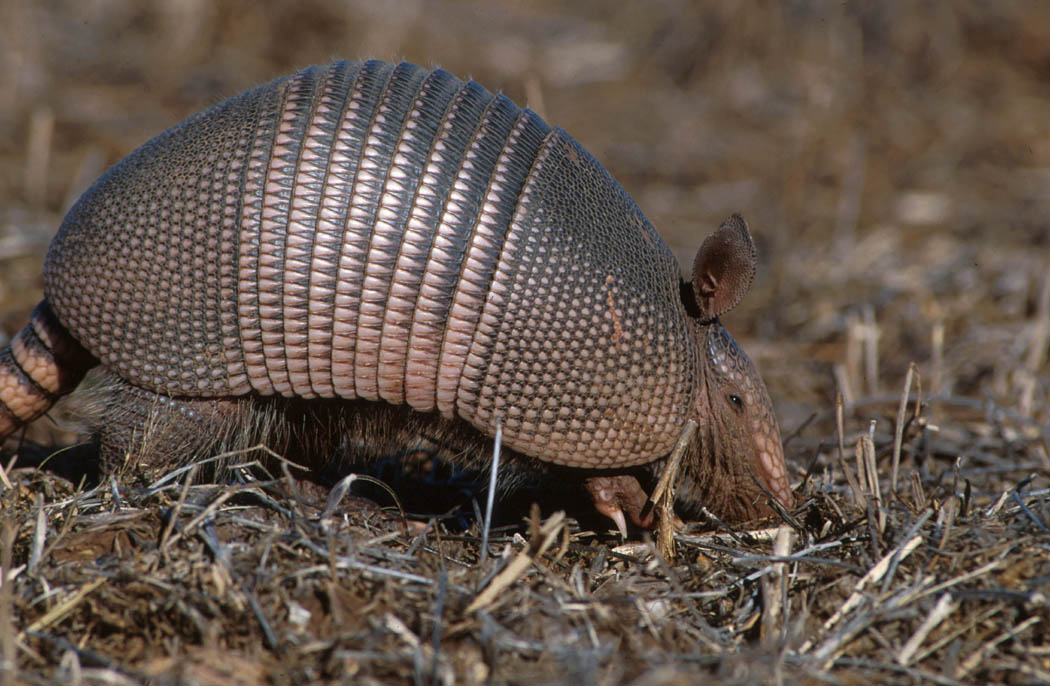
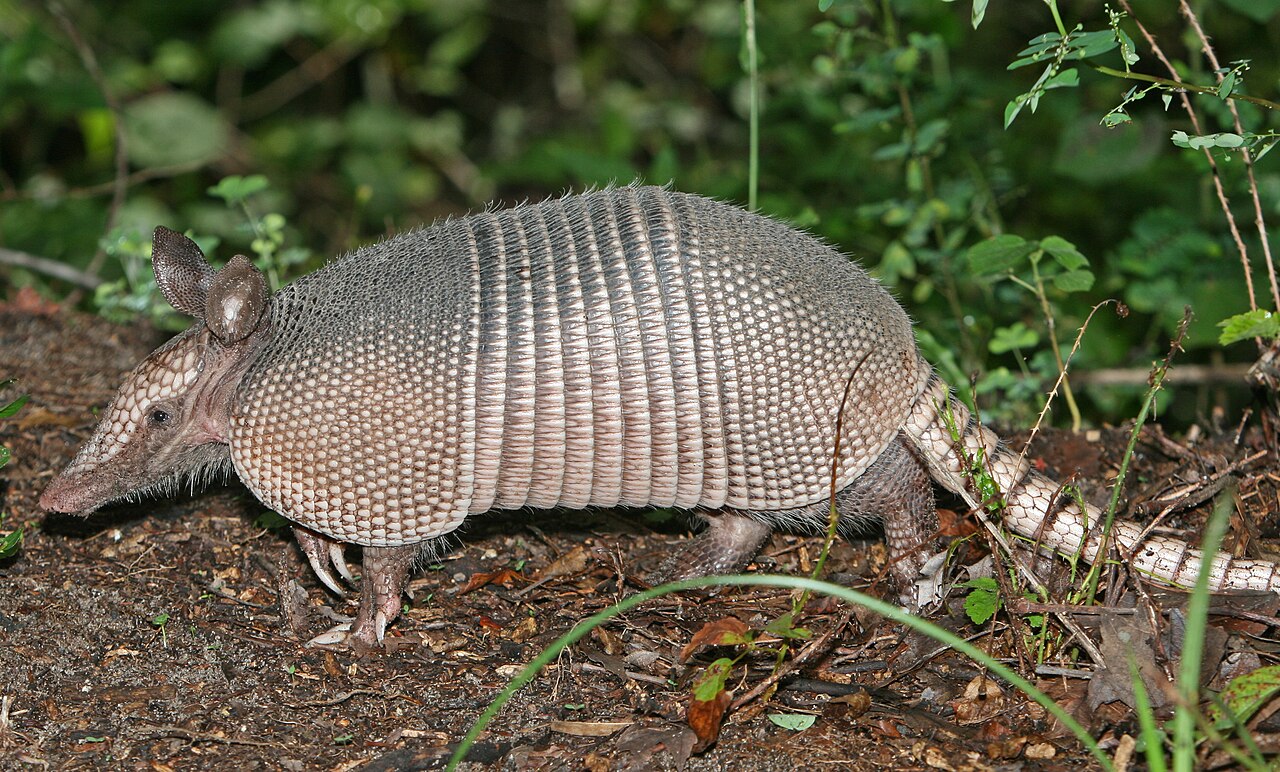
The sound you are most likely to hear is a rhythmic grunting huff, almost identical to a small pig working a trough. It comes from the animal breathing hard through soil while it sniffs out beetle larvae, ants, termites and earthworms. The grunt repeats every second or two and moves as the animal moves.
This sound is a good identifier because of its pace. Armadillos forage in an unhurried zigzag and rarely stop for long. If the huffing stays in one spot for several minutes, you are probably listening to a skunk or an opossum working a single patch instead.
Do Armadillos Squeak?
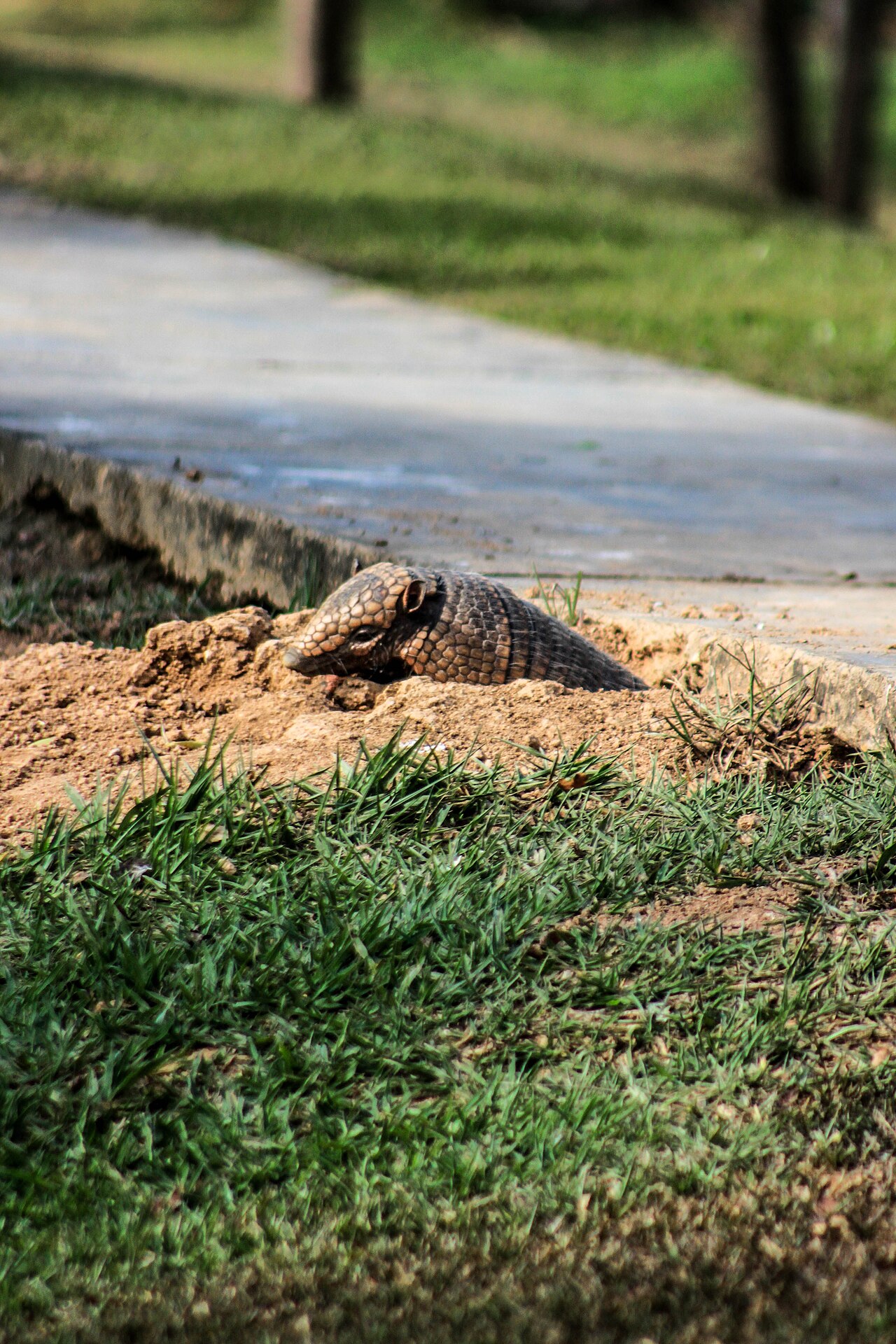
Armadillos squeak in two situations: when they are young, and when they are startled at close range. The adult squeak is a short, high note that sounds too small for the animal, often described as a toy squeeze or a piglet in a hurry. It usually fires once or twice, then stops.
Young armadillos squeak far more. A litter of four identical pups kept in a burrow keeps contact with thin repeated squeaks, especially when the mother returns or leaves. The sound is closer to a bird than a mammal and is easy to mistake for nestlings in the ground.
Do Armadillos Make a Hissing Sound?
Armadillos do make a hissing sound, though it is more of a breathy wheeze than the sustained hiss of a snake or cat. It is a close-quarters warning, released when the animal is pinned, blocked or sniffed by a dog. The hiss is often the last sound before the animal either freezes or bolts.
Because it is so quiet, the hiss is almost never heard from a window. If you hear it, the armadillo is within a few feet of you and feeling trapped. Step back and give it an exit rather than cornering it further. Reptile keepers know a similar warning wheeze from their animals, described in bearded dragon sounds.
The Armadillo Scream: Distress and the Jump Reflex
The viral armadillo scream is real but rare. It is a loud, grating squeal produced when the animal is seized, caught in a trap or struck. The same shock that triggers the squeal also triggers the famous vertical leap: a nine-banded armadillo can launch 3 to 4 ft straight up when startled, which is why so many are killed by vehicles they technically cleared.
A healthy armadillo in a yard should never scream. If one does, something has it. Check for dogs, a leg caught in fencing, or a trap set earlier and forgotten.
Baby Armadillo Sounds: What Pups Say in the Burrow
Nine-banded armadillos give birth to identical quadruplets from a single egg, so burrow noise usually comes from four pups at once. Their calls are thin chirps and squeaks, delivered in bursts when the mother arrives to nurse. Nursing itself adds soft smacking and shuffling against the burrow wall.
Pup sounds peak from March through July across the southern states. Homeowners who hear faint cheeping under a shed in spring often assume birds or rodents. The giveaway is the entrance: a smooth, dirt-rimmed hole 7 to 10 in wide with a fresh fan of soil in front of it.
Courtship Sounds: The Chuckling Buzz of Breeding Season
During courtship a male follows a female closely for days, matching her steps and keeping his snout near her tail. Through this he produces a low stuttering buzz, sometimes written as a chuckle or purr. It is soft, continuous and very different from the sharp alarm squeal.
In the United States courtship runs mainly from late winter into early summer, though implantation is delayed and births cluster later. Hearing two armadillos moving together with a steady low burr is one of the few times you can tell the sex behavior of the pair by ear.
Are Armadillos Loud at Night?
Armadillos are not loud at night in the sense of calling, but they are noisy in the sense of activity. The rustling, scraping and knocking they produce while digging travels through decking, crawl spaces and metal skirting far better than their voices do. Many complaints about noisy armadillos are complaints about percussion, not vocalization.
Compared with the yard animals people actually lose sleep over, an armadillo is modest. A bear working a trash can or a colony of bats chattering in an attic will be heard from inside the house; an armadillo usually will not, unless it is against a wall.
What Time of Night Are Armadillos Active?
Armadillos are most active from about two hours after sunset until shortly before dawn, with a strong peak between midnight and 4 a.m. in hot weather. In cold months the pattern flips and they feed during the warm part of the afternoon, because they carry little fat and lose heat quickly.
Soil moisture moves the schedule more than the clock does. The night after rain, when invertebrates sit close to the surface, is when digging noise is heaviest and when an armadillo will work the same lawn for hours.
Digging and Scratching: The Noises That Are Not Calls
Three mechanical sounds get mistaken for armadillo vocalizations. The first is claw work in soil, a dull repeated scrape. The second is the hollow thump of a shell bumping a joist, duct or skirting panel in a crawl space. The third is the snort and sneeze of a nose clearing dirt, which sounds startlingly like a person.
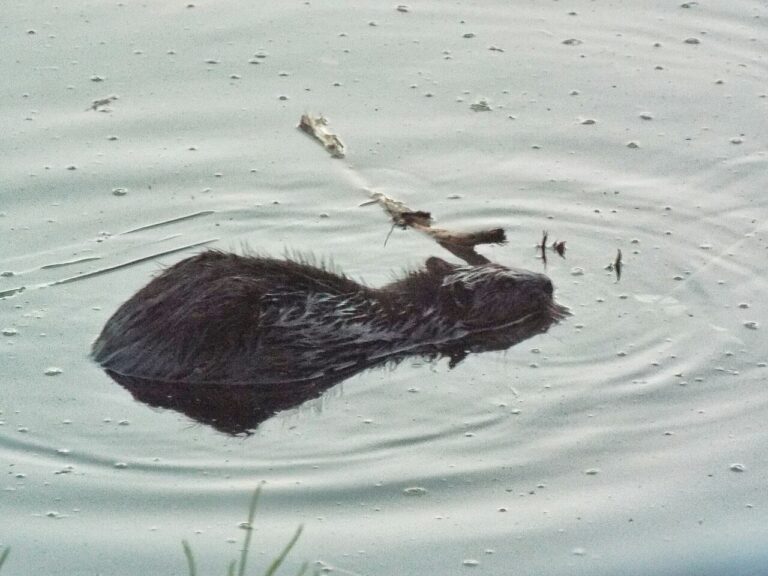
These noises matter more than the calls do, because they indicate damage. Cone-shaped holes 3 to 5 in across in the lawn, uprooted mulch and tunnels under a slab are armadillo signatures. Other diggers leave different signs; the pattern of mounds and runs separates beavers, moles and armadillos quickly.
Armadillo Under the House or in the Wall
An armadillo in a crawl space is a burrowing problem, not a climbing one. They cannot scale walls, so noise from an upper wall cavity or ceiling is almost never an armadillo. Ground-level scraping along a foundation, scratching under a shed floor, or a thump against the underside of the house at 1 a.m. fits.
The fix is exclusion, not sound. Wait until after dark when the animal has left to feed, then close the entry with hardware cloth buried 12 to 18 in deep and bent outward. Trapping and relocating is restricted in several states, and handling carries a real health caution: nine-banded armadillos are one of the few animals that naturally carry the bacterium behind leprosy, as the CDC documents. Wear gloves and do not handle one bare-handed.
Sounds People Confuse With Armadillos
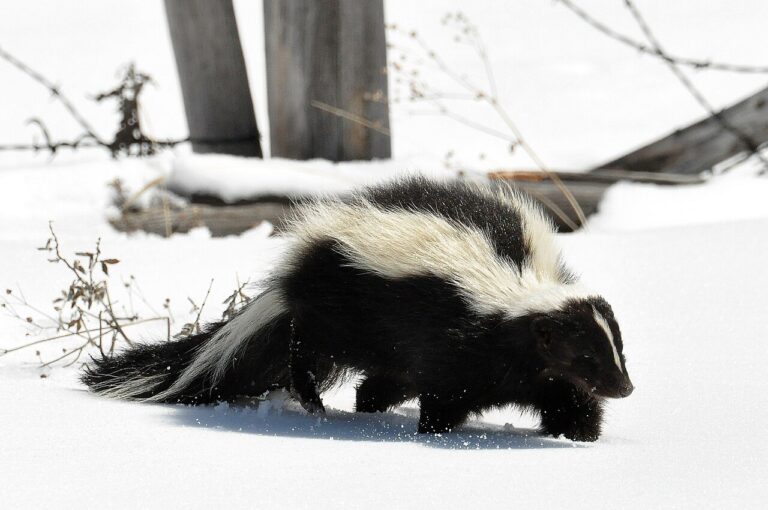
Opossums hiss and click and will stand their ground, which armadillos never do. Raccoons chitter, churr and growl with far more range. Rats produce fast, light scratching high in a wall. Skunks grunt and stamp. In the Gulf states, deep night bellowing from a pond margin belongs to alligators, not to anything on four short legs.
Owls cause the most confused reports, because a screech near a burrow at the moment an armadillo moves ties the two together in the listener’s memory. The calls described in barn owl sounds account for a good share of what gets filed as an armadillo scream online.
Frequently Asked Questions
Do armadillos squeak?
Yes. Adults squeak briefly when startled or handled, producing a short, high note that sounds too small for the animal. Pups squeak far more often, using thin repeated chirps to keep contact in the burrow. Squeaking is close-range communication and rarely audible from more than about 20 ft away.
What smell do armadillos hate the most?
Strong ammonia-based odors, pine cleaner, vinegar and castor oil are the repellents most often reported to move armadillos along. Results are inconsistent and short-lived, especially after rain. Smell deters an animal that is already comfortable somewhere else; it rarely beats a lawn full of grubs, which is the real draw.
What gets rid of armadillos in your yard?
Removing the food supply works best. Treat the lawn for grubs, stop overwatering, and clear deep mulch and brush piles that hold invertebrates. Follow with exclusion: fencing buried 12 to 18 in and angled outward, and hardware cloth over crawl space and deck openings. Check state rules before trapping.
What time of night are armadillos active?
Most activity falls between two hours after sunset and dawn, peaking from midnight to 4 a.m. in summer. In winter armadillos often shift to afternoon feeding because they tolerate cold poorly. Humid nights after rain bring the longest and loudest foraging sessions, since prey sits near the surface.
What is an armadillo’s enemy?
Coyotes, bobcats, cougars, black bears, large dogs and alligators all take armadillos, and raptors and raccoons take pups. The armor helps against small predators but not large ones, since armadillos cannot roll into a ball the way three-banded species can. Vehicles kill far more than predators do.
What US state has the most armadillos?
Texas holds the largest population and named the nine-banded armadillo its official small state mammal. Florida, Louisiana, Oklahoma, Arkansas, Mississippi, Alabama and Georgia all have dense populations, and the range keeps pushing north and east into Missouri, Tennessee and the Carolinas as winters soften.