Are Crows Bad Luck? No, and Here Is Where the Myth Began
Crows are not bad luck. The belief is a European folk tradition roughly 600 years old, it contradicts the meaning crows carry in Japanese, Hindu, Greek, and many Native American traditions, and it has no basis in the bird’s actual behavior. A crow on your fence is there because something near your house is edible.
That said, the superstition is worth understanding rather than dismissing, because it explains why a highly intelligent, highly social bird ended up with the worst public image of any common American species. The association runs through battlefields, plague carts, counting rhymes, and a single mistranslated scripture, and it still shapes how people react to a crow landing on a windowsill.
Crows are not bad luck. The omen tradition comes from medieval Europe, where crows scavenged battlefields and plague sites, and from the counting rhyme that assigns a single crow to sorrow. In Japan the crow is a divine messenger, in Hindu tradition it carries offerings to ancestors, and in several Native American traditions it is a creator figure. A crow near your home signals food, not misfortune.
| Tradition | What the Crow Means |
|---|---|
| Medieval Europe | Omen of death, plague, and battlefield loss |
| Japan (Shinto) | Yatagarasu, divine guide sent by the sun goddess |
| Hindu tradition | Carrier of offerings to ancestors during Shraddha |
| Greek myth | Messenger of Apollo, turned black for bad news |
| Pacific Northwest peoples | Trickster and creator, bringer of light |
| Norse tradition | Thought and memory, the eyes of Odin |
| Modern ornithology | Opportunistic omnivore with tool use and face recognition |
Are Crows Bad Luck? The Short Answer
No. There is no tradition of crow omens that is not matched by an equally old tradition reading the same bird as a protector, a guide, or an ancestor. Pick either reading and you are following a human story, not an observation about the bird.
The superstition survives in English-speaking countries for a specific reason: crows are black, loud, carrion-eating, and visible in towns, which makes them an easy symbol for anything unwelcome. Ravens inherited the same reputation for the same reasons, which is partly why people confuse the two species. The practical differences are covered in our comparison of ravens and crows.
If a crow is behaving in a way that feels pointed, the explanation is almost always territorial. Crows mob, scold, and follow anything they read as a threat, including people who walk near a nest in late spring.
Where the Bad Luck Belief Came From

The omen tradition is medieval and it is about corpses. Crows and ravens fed on the dead after battles and during plague years, so flocks appeared exactly where and when large numbers of people were dying. Cause and effect got reversed, and the bird that showed up after the catastrophe became the bird that announced it.
Written European augury reinforced it. Roman divination read bird flight for favorable and unfavorable signs, and corvids on the left side counted against the asker. Christian-era bestiaries then recast the crow as a bird of greed and neglect, which hardened the association.
Industrial-era farming added the last layer. Crows pull sprouting corn, so they became vermin to be shot and hung on fences, and a bird you are permitted to kill rarely keeps a good reputation. The broader history is laid out in our article on crow symbolism.
One for Sorrow: How the Counting Rhyme Works
Most of the modern bad luck idea traces to a single counting rhyme recorded in England in 1780, usually applied to magpies but very often to crows. In its common form, one is for sorrow, two for joy, three for a girl, four for a boy, five for silver, six for gold, and seven for a secret never to be told.
The rhyme is the reason a lone crow feels ominous and a group does not. There is no older source treating a single crow as worse than several, and regional versions reverse the lines entirely, with some counting one for bad news and others one for a wish.
Birders will note the rhyme runs against the biology. A single crow in spring usually means a mate is on a nest nearby, which is the opposite of a bad sign for the birds involved.
Is It Bad Luck to Look at a Crow?
It is not bad luck to look at a crow, and no major folk tradition claims otherwise. The versions of this belief that do exist are about a crow looking at you, or about meeting its eye while it calls, both of which come from the same medieval augury that read any direct animal attention as a message.
What is true is that crows notice being watched. They track human gaze direction, change their behavior when a person is facing them, and will cache food only when they believe they are unobserved. A crow that seems to stare back is assessing whether you are a threat to a nest or a source of food.
Research at the University of Washington showed that American crows recognize and remember individual human faces for years, and pass that recognition to other crows. Staring at a crow that is nesting is therefore worth avoiding, but for practical reasons rather than superstitious ones.
What Does It Mean When One Single Crow Visits You?
A single crow visiting you usually means it has found a reliable food source and is checking it, or that it is the mate of a bird sitting on a nest within a few hundred feet. Crows pair for life and hold territories, so the same individual will return to the same yard daily for years.
In folk readings, a lone crow is given opposite meanings depending on the tradition: sorrow in the English rhyme, an ancestor’s visit in Hindu practice, a message to pay attention in several modern spiritual readings. None of these are older or more authoritative than the others.
If the visits are new, look for what changed. New pet food left outside, an uncovered compost bin, a fruiting tree, or roadkill nearby will each produce a daily crow. We cover the reading side in what a crow visit means and the general question in what it means when you see a crow.
Are Crows Good or Evil? Cultures That Say the Opposite
Crows are neither, and the traditions that treat them as sacred are both older and more numerous than the ones that treat them as evil. In Shinto, the three-legged crow Yatagarasu guided the first emperor and still appears on shrine imagery and on the Japan national football crest.
In Hindu tradition, crows receive food offerings during Shraddha because they are understood to carry those offerings to ancestors, which makes a crow at a household meal a welcome guest. Among Pacific Northwest peoples, Crow and Raven appear as creators and tricksters who bring light and fresh water to the world.
Even in Europe the picture is split. Norse tradition gave Odin two corvids named Thought and Memory, and Greek myth made the crow a messenger of Apollo whose black feathers were a punishment for delivering bad news, not for causing it.
What Does God Say About Crows?
The Bible treats crows and ravens as unclean for eating but not as evil, and in two places it puts them in a favorable light. In 1 Kings 17, ravens are commanded to feed the prophet Elijah bread and meat at the brook Cherith, which makes the bird an instrument of provision.
Luke 12:24 uses the raven as an example of divine care: the birds neither sow nor reap, and God feeds them. Genesis 8 has Noah release a raven before the dove, and Job 38 describes God providing for the young ravens when they cry out.
The unclean classification in Leviticus 11 applies to dietary law and groups corvids with eagles, owls, and other birds not to be eaten. That is a food rule, not a moral judgment, and nothing in the text supports reading a crow as an omen.
Do Crows Warn of Danger?
Crows do warn of danger, just not the human kind. They have distinct alarm calls for aerial and ground predators, they mob hawks and owls in groups, and nearby crows respond to a warning they did not witness themselves. A sudden chorus of harsh, evenly spaced caws usually means a raptor, a cat, or a person is near a nest.
The warning system is specific enough to be useful to other species. Squirrels, jays, and small songbirds all react to crow alarm calls, and birders use the sound to locate roosting owls that would otherwise be impossible to spot.
Crows also hold what observers have long called funerals: a group gathers around a dead crow, calls, and then avoids the spot. Experiments suggest this is hazard learning rather than mourning. The call types are broken down in our guide to crow sounds.
What Attracts Black Crows to Your House?
Food attracts crows to your house, and almost nothing else does. The usual sources are open garbage, pet food left on a porch, compost without a lid, fallen fruit, bird feeders with suet or peanuts, roadkill on the street, and lawns with a heavy grub load.
Water and roosting structure matter secondarily. A birdbath, a pond, tall conifers, or a flat roof with a view will keep a pair returning, and a mature tree within sight of an easy food source is close to ideal crow habitat.
Crows are omnivores with one of the widest diets of any North American bird, which is exactly why they thrive in suburbs. Our article on what crows eat covers the full range, including how much of it is insects rather than garbage.
Is It Good to Have Crows Around Your Property?
On balance, yes. Crows eat large numbers of grubs, caterpillars, cutworms, grasshoppers, and the beetle larvae that damage lawns, and they remove carrion and food waste that would otherwise draw rats. A resident pair also mobs hawks, which reduces pressure on small songbirds in the immediate area.
The costs are real but narrow. Crows pull sprouting corn and seedlings, raid songbird nests for eggs and nestlings in spring, tear open unsecured garbage, and a winter roost of several hundred birds is loud and messy. Nest raiding is the complaint with the most substance behind it.
If you want them without the downside, secure the garbage, skip peanut and suet feeders, and accept the birds as a pest patrol. Lethal control is both federally regulated and ineffective, since a cleared territory is refilled within a season.
What Is a Crow’s Worst Enemy?
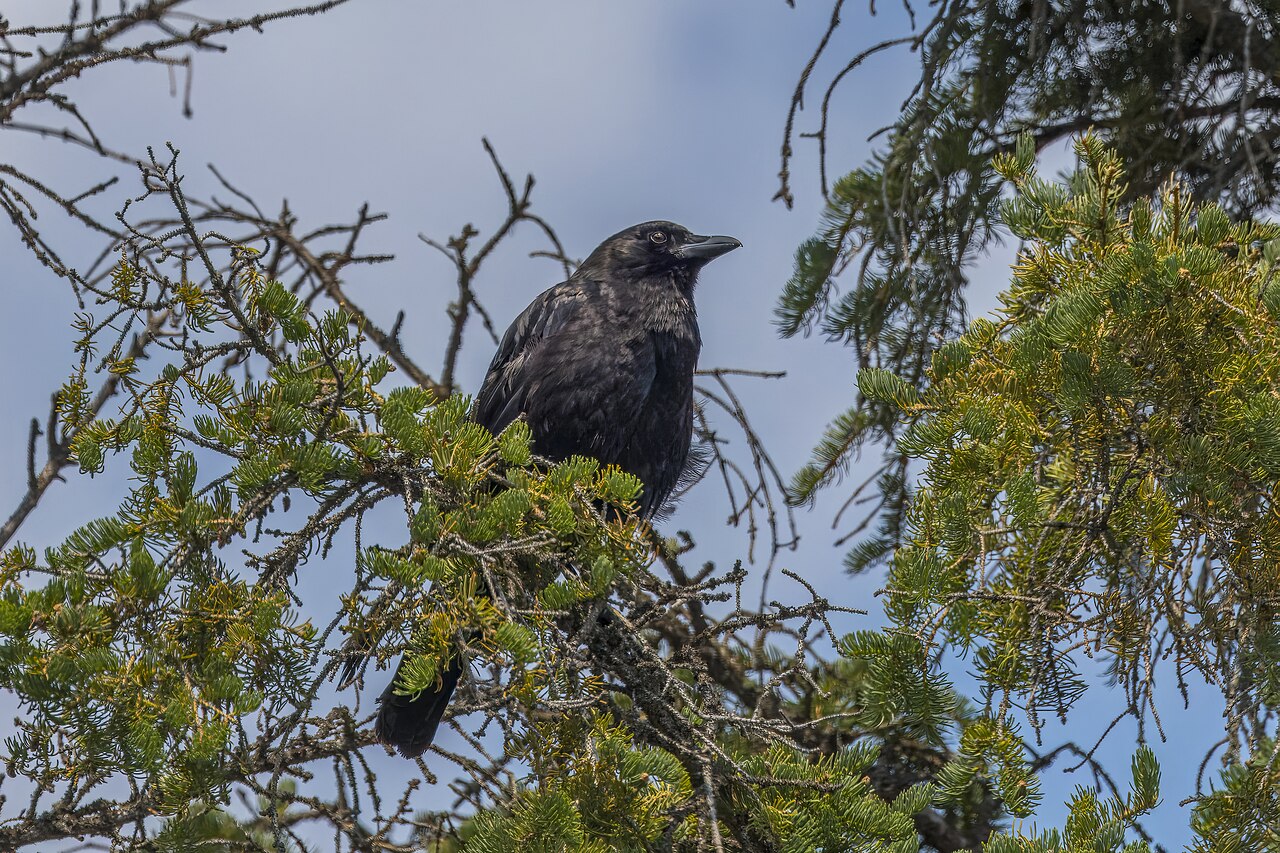
The great horned owl is the American crow’s worst enemy. It hunts adult crows at night on the roost, when crows cannot see well enough to defend themselves, and it takes nestlings during the day. The hostility is why a daytime owl sighting triggers immediate, sustained mobbing by every crow in earshot.
Red-tailed hawks, Cooper’s hawks, and raccoons take eggs and young, and in some regions ravens kill crow nestlings outright. Disease is the other major pressure: West Nile virus killed an estimated 45 percent of the US crow population after it arrived in 1999, and infected crows die within about a week.
Humans remain a significant source of mortality through vehicle strikes, agricultural shooting, and roost dispersal programs. The American crow is nonetheless one of the species most comfortable alongside people, and its numbers have recovered across most of its range. The Cornell Lab’s American Crow species account tracks the population trend.
Why Don’t We See Baby Crows?
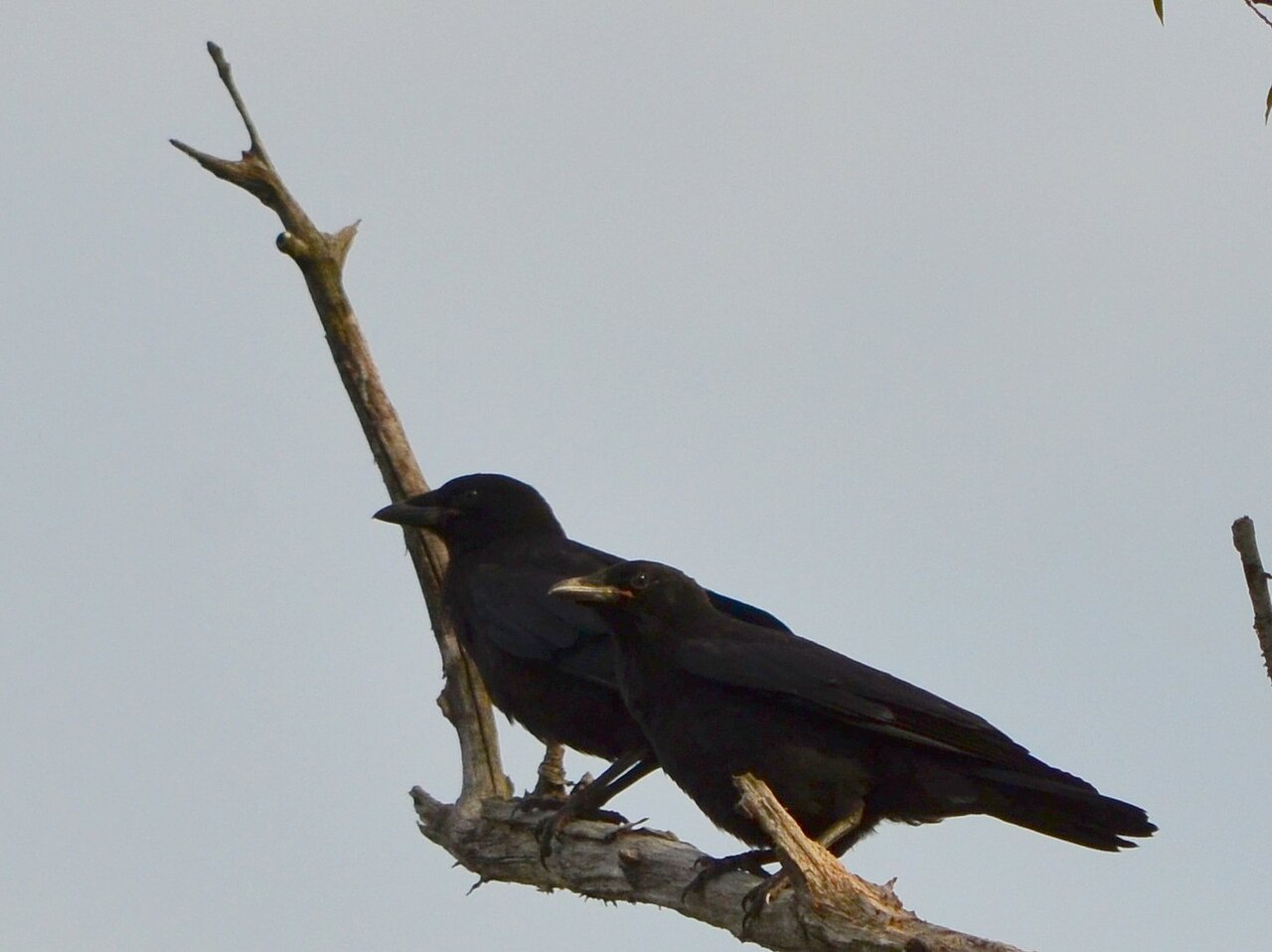
You rarely see baby crows because nestlings stay hidden in a high nest for about 5 weeks, and by the time they leave it they are nearly adult size. A fledgling crow in July looks like a full-grown bird apart from blue-gray eyes, a pink gape at the corners of the beak, and short tail feathers.
Nests sit 18 to 60 ft (5.5 to 18 m) up, usually in a crotch near the trunk of a conifer or a dense hardwood, and both parents plus helper offspring from previous years defend the area aggressively. Crows nest once per year, laying 3 to 6 eggs between March and May.
The begging call is the giveaway in early summer: a hoarse, nasal, repeated note very different from the adult caw. If you hear it, there is a juvenile within about 50 ft, and the noisy adults overhead are its parents.
Related reading: are owls good luck.
Frequently Asked Questions
Is a dead crow bad luck?
A dead crow is not bad luck in any consistent tradition, and several readings treat it as the opposite, a sign that a bad period is ending. Practically, a dead crow found in summer is worth reporting to your state wildlife agency, because crows are the sentinel species for West Nile virus and local health departments track the carcasses. Do not handle it with bare hands.
What does it mean when crows caw at you?
A crow cawing directly at you almost always means you are too close to a nest or a fledgling, and the call is a scolding meant to move you along. Harsh, repeated, evenly spaced caws with the bird facing you are territorial. Crows also remember individuals who have threatened them and will single out the same person for years afterward.
Are crows a sign of death?
No. The association comes from crows scavenging battlefields and plague sites in medieval Europe, which put large flocks at the scene of mass death after the fact. Crows do find carrion quickly, so a gathering may mean something has died nearby, but that is detection rather than prediction. There is no record linking crow sightings to human deaths.
Do crows remember human faces?
Yes, and this is one of the better documented facts about the species. University of Washington researchers wearing a specific mask while trapping crows were scolded by those birds for more than five years, and by crows that had never been trapped, which means the recognition is passed socially. Crows also remember people who feed them reliably.
How many crows is bad luck?
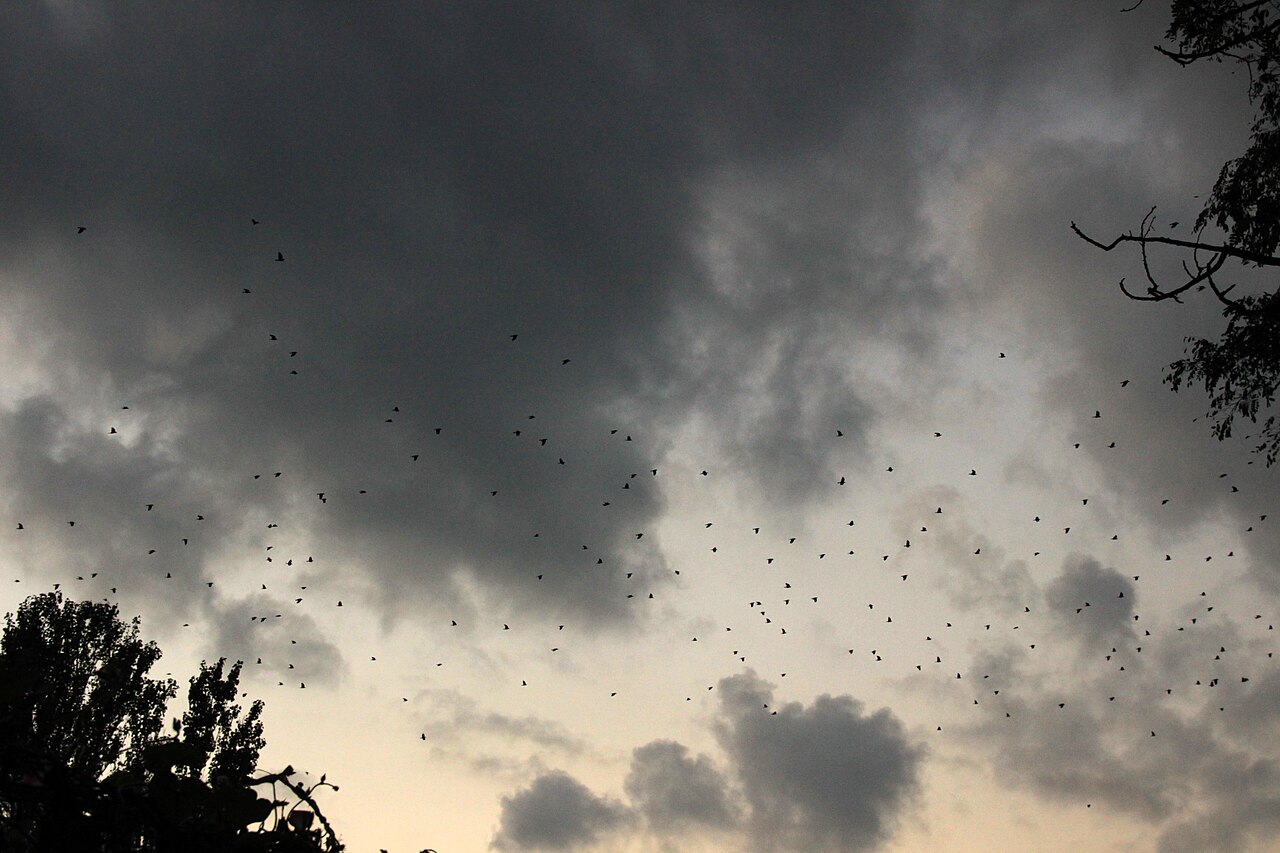
The counting rhyme assigns sorrow to one, joy to two, a girl to three, a boy to four, silver to five, gold to six, and a secret to seven, but the order varies by region and some versions reverse it completely. Biologically the number tells you something useful: one or two means a resident breeding pair, while dozens or hundreds in winter means a communal roost.
Is it bad luck to kill a crow?
Folk tradition says yes, and US federal law agrees in practice. American crows are protected under the Migratory Bird Treaty Act, and killing them outside a regulated hunting season or a depredation permit is illegal. Beyond the legal issue it is pointless, since a vacated territory is reoccupied by a new pair within a season. A term for the collective is explained in what a group of crows is called.