Robin Nest: Building, Mud, and Egg Lifecycle
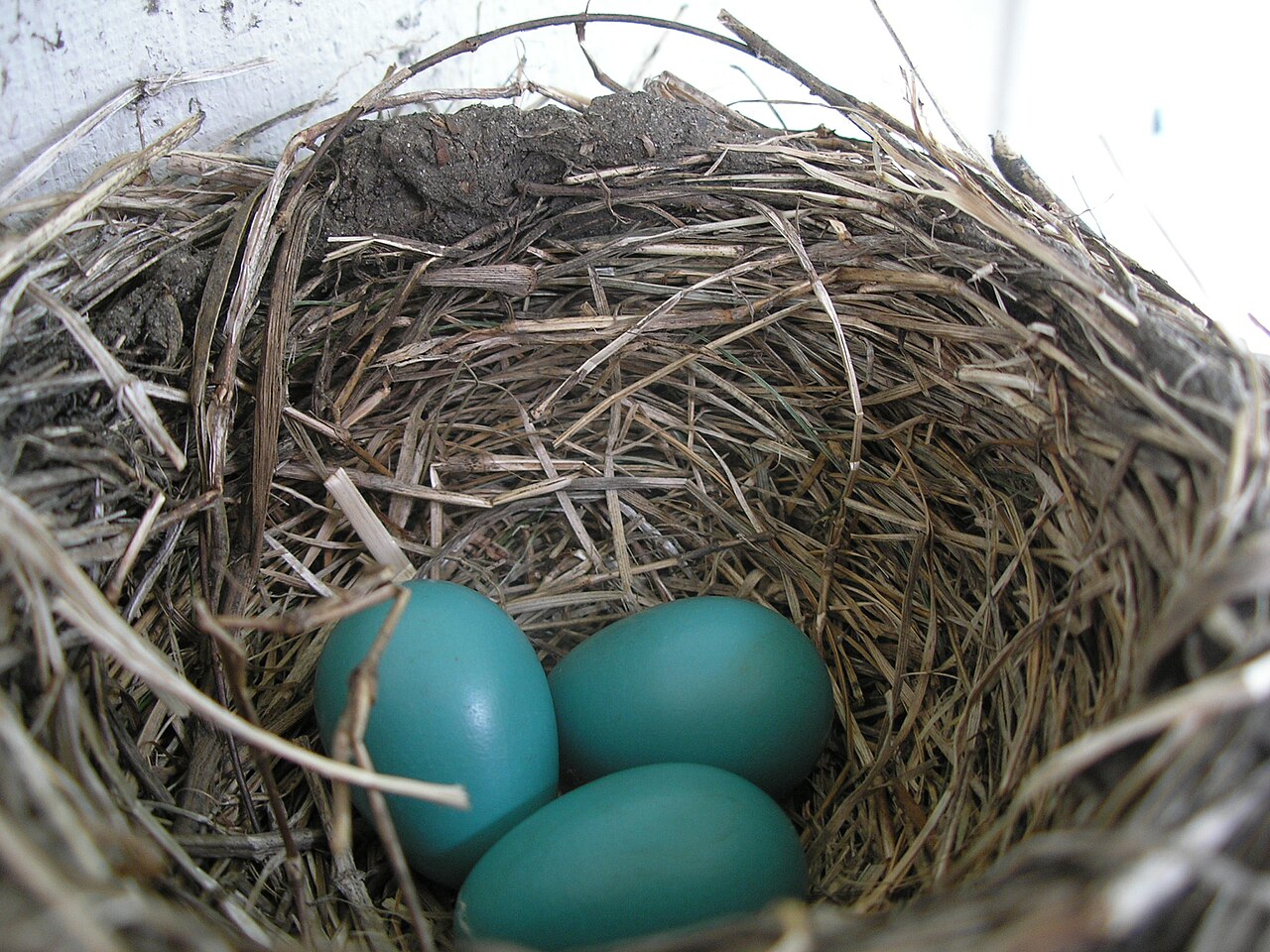
A robin nest is a sturdy open cup of grass and twigs cemented together with mud, usually built on a firm ledge or branch 5 to 25 feet up. The female does the building, molding the mud with her body into a smooth inner bowl, then lines it with fine grass. She lays three to five plain blue eggs that hatch after about 12 to 14 days. Robins famously nest on houses, porch lights, and gutters as readily as in trees. This guide covers what a robin nest looks like, where robins build, the eggs and timeline, and what to do if a pair nests on your home.
| Feature | Detail | |
|---|---|---|
| Nest type | Open cup with a mud base | |
| Materials | Grass, twigs, mud, fine grass lining | |
| Height | Usually 5 to 25 ft up | |
| Eggs per clutch | 3 to 5 | |
| Egg color | Plain sky blue, unspeckled | |
| Incubation | About 12 to 14 days | |
| Broods per year | Often 2, sometimes 3 |
What Does a Robin Nest Look Like?
A robin nest is a solid, cup-shaped structure roughly 6 to 8 inches across on the outside, and its defining feature is mud. The female builds an outer layer of coarse grass and small twigs, then reinforces it with a middle layer of mud that she presses and shapes with her breast into a smooth, hard bowl. Finally she lines the inside with soft, fine grass. The finished nest is heavier and more solid than most backyard cup nests, and the dried mud rim is the surest sign you are looking at a robin’s work. If you are trying to identify a nest by its eggs instead, our guide to bird egg identification can help you compare the plain blue robin egg with other species.
Where Do Robins Build Their Nests?
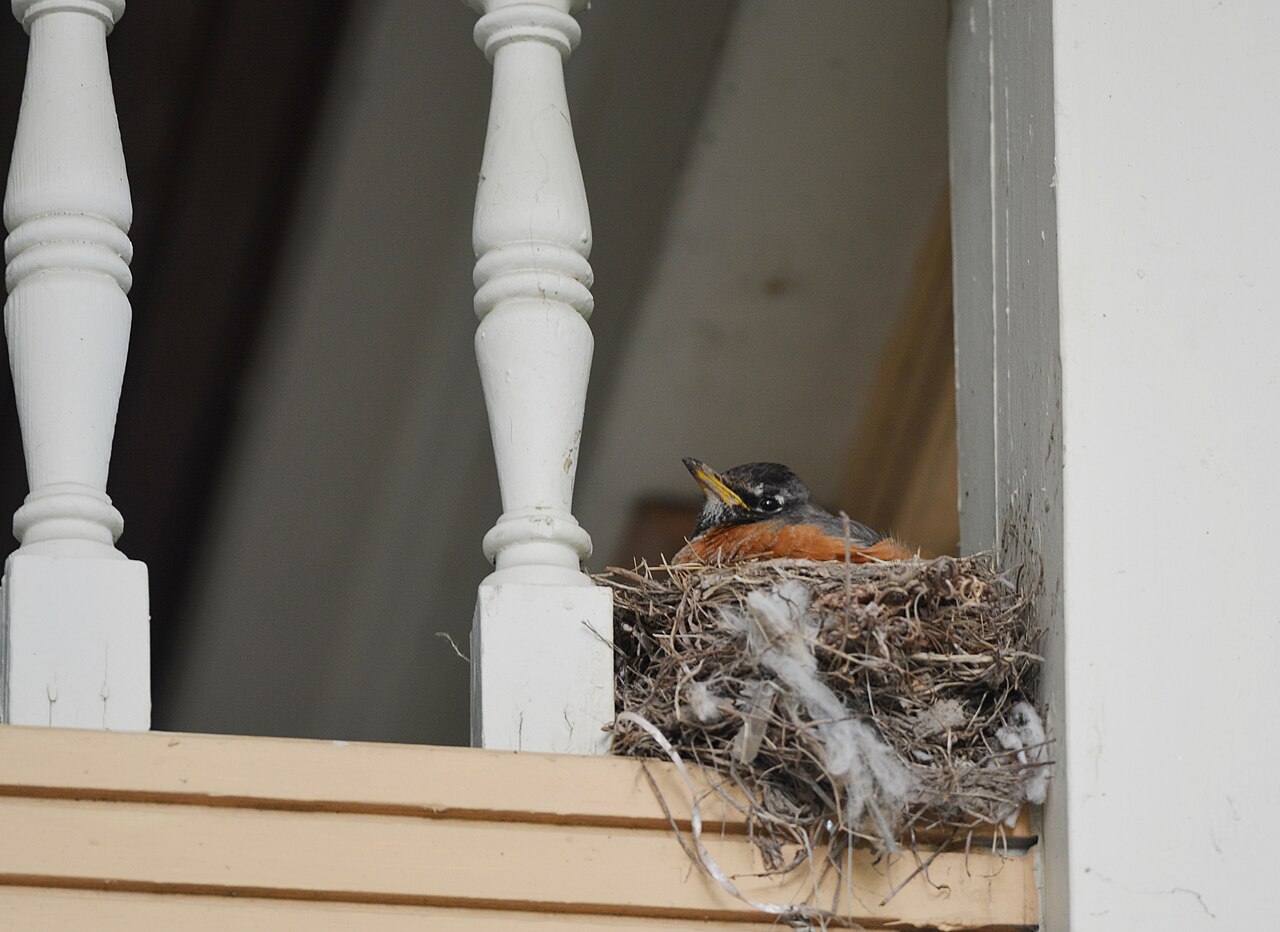
Robins are famously flexible about nest sites. In natural settings they choose the horizontal fork of a tree or a sturdy branch, usually 5 to 25 feet up. Around homes they readily build on any firm, sheltered ledge, which is why robins so often nest on porch lights, window sills, gutters, downspout elbows, wreaths on front doors, and the tops of outdoor light fixtures. They favor a spot with some overhead cover and a solid base to hold the heavy mud cup. This willingness to nest on buildings is one reason robins are among the most familiar dooryard birds in North America. Keeping a yard robin-friendly, with an open lawn and nearby trees, makes nesting more likely, much as the right plants draw them in, as covered in our guide to plants that attract birds.
Robin Eggs: Color, Number, and Timeline
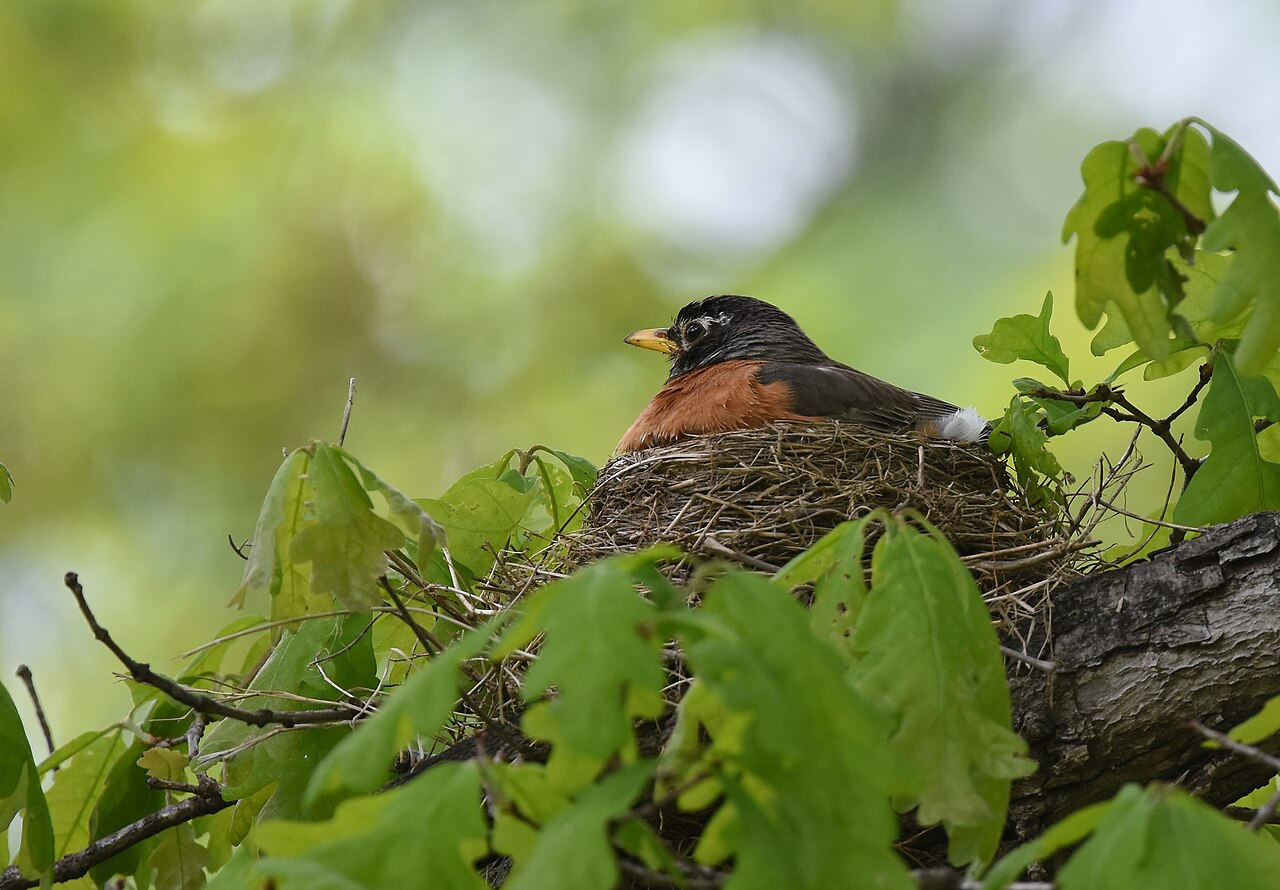
A robin clutch is usually three to four eggs, sometimes up to five, laid one per day. The eggs are a famous plain sky blue with no speckles, the shade so distinctive it gave us the color name robin’s egg blue. This lack of markings is a key way to tell them from the speckled eggs of many other backyard birds. According to the Cornell Lab of Ornithology, the female incubates the eggs for about 12 to 14 days, and the young then stay in the nest for roughly another 13 days before fledging. To learn exactly why the eggs are that vivid blue, see our dedicated guide to why robin eggs are blue.
Robin Nesting Season and Broods
Robins are early and prolific nesters. In much of North America they begin nesting in early spring, sometimes while snow is still on the ground, and they often raise two broods in a season, occasionally three where the warm season is long. The timeline for each brood is quick. After the female builds the nest over several days, she lays a clutch, incubates for about 12 to 14 days, and both parents then feed the nestlings until they leave the nest around 13 days after hatching. Because they cycle through broods so fast, a single pair can fledge many young in one summer. For what happens once the eggs hatch, our guide to the baby robin follows the chicks from hatchling to fledgling.
Do Robins Use Nest Boxes?
Robins do not use enclosed nest boxes the way bluebirds or chickadees do, because they are open-cup nesters that need an exposed platform rather than a cavity with a small hole. However, you can offer them a nesting shelf, which is a small open platform with a roof and open front, mounted under an eave or on a wall. Robins will often adopt these shelves readily, and a shelf can even redirect a pair away from an inconvenient spot like a door frame to a better location nearby. This is a useful distinction from cavity nesters, and it is why the Eastern Bluebird, which does use boxes, needs a completely different kind of housing.
Do Robins Reuse Their Nests?
Robins usually build a fresh nest for each brood rather than reusing an old one, even within the same season, though they often nest again in the same general area or even rebuild on top of an old nest. The old mud cup degrades over winter, so a returning robin typically starts new. Occasionally a robin will refurbish a sturdy old nest, but a brand new build is the norm. Finding an old robin nest on your porch over winter is a good sign that a pair may return to your yard the following spring, since robins show strong site fidelity to good nesting spots.
What to Do If Robins Nest on Your House
If a robin builds on your home, the simplest and kindest choice is to wait it out, since the whole nesting cycle lasts only about four weeks and the young will soon be gone. In the United States, active nests with eggs or young are protected under the Migratory Bird Treaty Act, so removing an occupied robin nest is illegal as well as harmful. If the location is truly unworkable, the time to act is before eggs are laid, by gently discouraging building or offering a nearby nesting shelf as an alternative. Once eggs appear, give the birds space, keep pets away, and enjoy the show. For a comparison with a very different nester, see how the Mourning Dove builds its famously flimsy platform, and how the blue jay nest differs from a robin’s mud cup.
How Robins Build Their Nest
The way a robin builds is worth understanding, because it explains the nest’s unusual strength. The female does nearly all of the work, and she builds in layers over two to six days. First she weaves an outer basket of coarse grass, twigs, and sometimes paper or string. Then comes the signature step: she gathers beakfuls of mud, or soft soil she wets at a puddle or birdbath, and works it into the walls, pressing and turning her body against the inside to mold a smooth, round bowl that dries hard like a cast. Finally she lines the cured mud cup with fine, soft grass to cushion the eggs. This mud reinforcement is what sets a robin nest apart from the looser cup nests of most songbirds, and it is why the nest holds up to wind, rain, and the weight of a growing brood. A ready supply of mud nearby, which a birdbath or a damp patch of soil can provide, makes a yard more appealing to a nest-building robin.
Frequently Asked Questions
What does a robin nest look like?
It is a sturdy open cup about 6 to 8 inches across, built of grass and twigs and reinforced with a smooth inner layer of mud, then lined with fine grass. The dried mud rim is the surest sign of a robin nest.
Where do robins build their nests?
On horizontal tree branches 5 to 25 feet up, and very commonly on firm, sheltered ledges around homes such as porch lights, gutters, window sills, and door wreaths.
What color are robin eggs?
A plain, unspeckled sky blue, the shade known as robin’s egg blue. The lack of markings helps separate them from the speckled eggs of many other birds.
How many eggs do robins lay?
Usually three to four per clutch, sometimes up to five, laid one egg per day. Robins often raise two broods a season, occasionally three.
How long do robin eggs take to hatch?
About 12 to 14 days of incubation by the female. The young then stay in the nest for roughly another 13 days before fledging.
Do robins use bird houses or nest boxes?
No, robins are open-cup nesters and will not use enclosed boxes. They will, however, use an open nesting shelf mounted under an eave or on a wall.
Should I remove a robin nest from my porch?
No, not once it is active. Occupied nests are protected by law, and the cycle lasts only about four weeks. If needed, discourage building before eggs are laid or offer a nesting shelf nearby.