Baby Robin: Identification, Care, and Lifecycle
A baby robin is a spotted, fuzzy chick that hatches naked and helpless, then grows quickly into a speckle-breasted fledgling within about two weeks. Young robins are fed a steady diet of worms and insects by both parents, and they leave the nest around 13 days after hatching, before they can fly well. If you have found a young robin on the ground, the key thing to know is that a feathered, hopping fledgling is usually healthy and does not need rescuing. This guide covers what baby robins look like at each stage, what they eat, and exactly what to do if you find one.
| Stage | Age | Appearance |
|---|---|---|
| Hatchling | 0 to 4 days | Naked, pink, blind, helpless |
| Nestling | 5 to 9 days | Eyes open, gray down, pin feathers |
| Feathered nestling | 10 to 13 days | Spotted feathers in, nearly ready to leave |
| Fledgling | 13 to 16 days | Speckled breast, short tail, hopping |
| Juvenile | 2 to 6 weeks | Spotted breast fading to orange |
A baby robin hatches naked, blind and about the size of a thumb, grows a speckled brown breast within two weeks, and leaves the nest around day 13 before it can fly properly. Both parents feed it earthworms and insects, and keep feeding it for about two weeks after fledging.
What Does a Baby Robin Look Like?
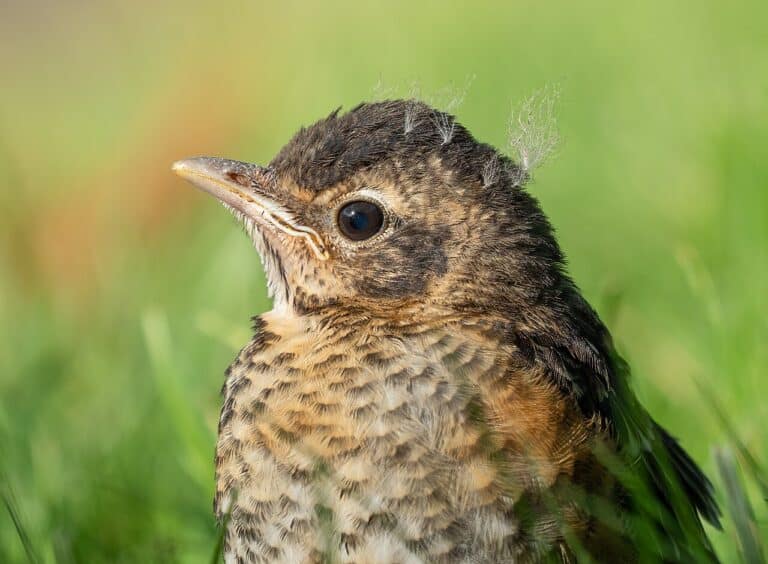
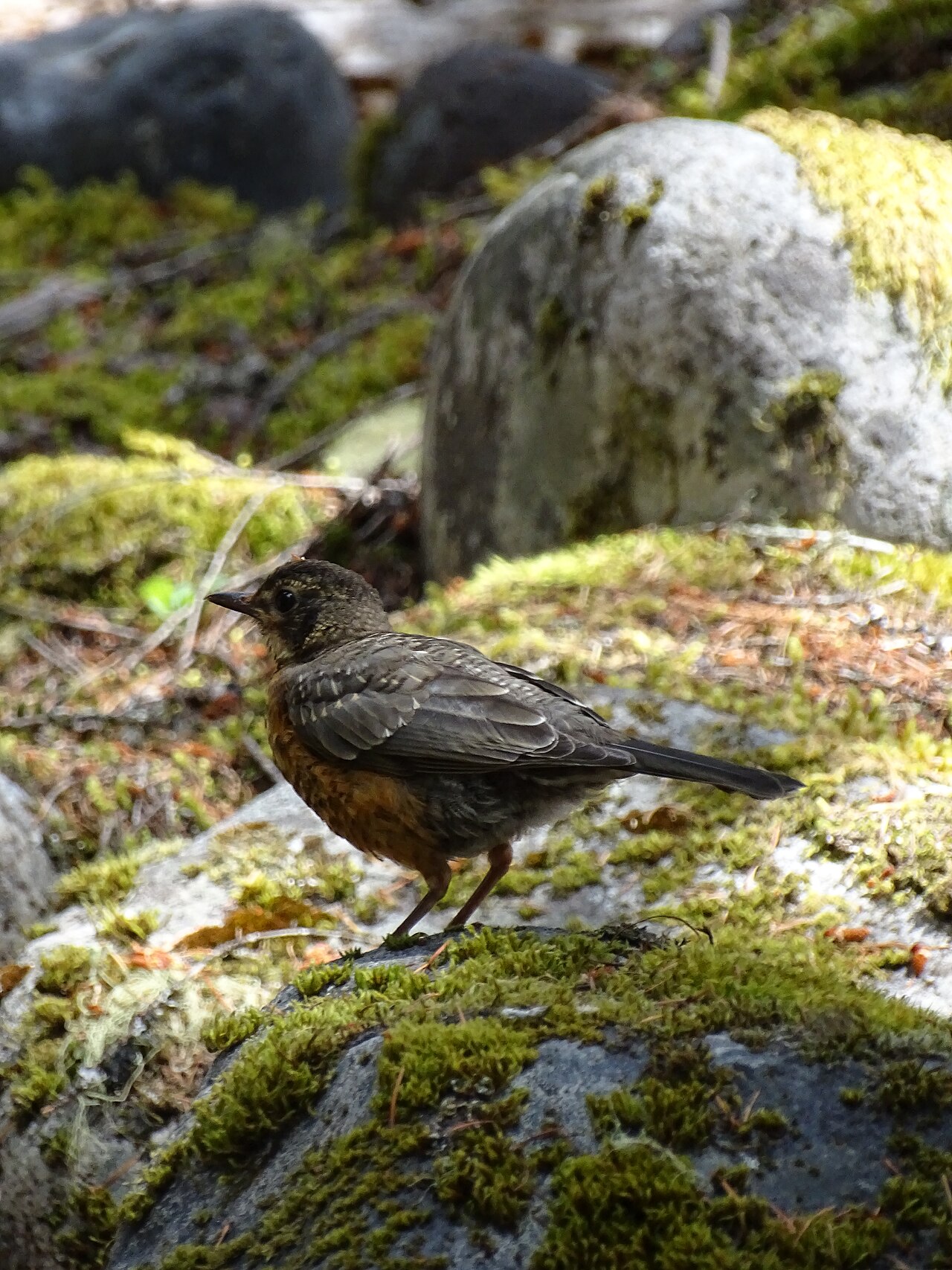
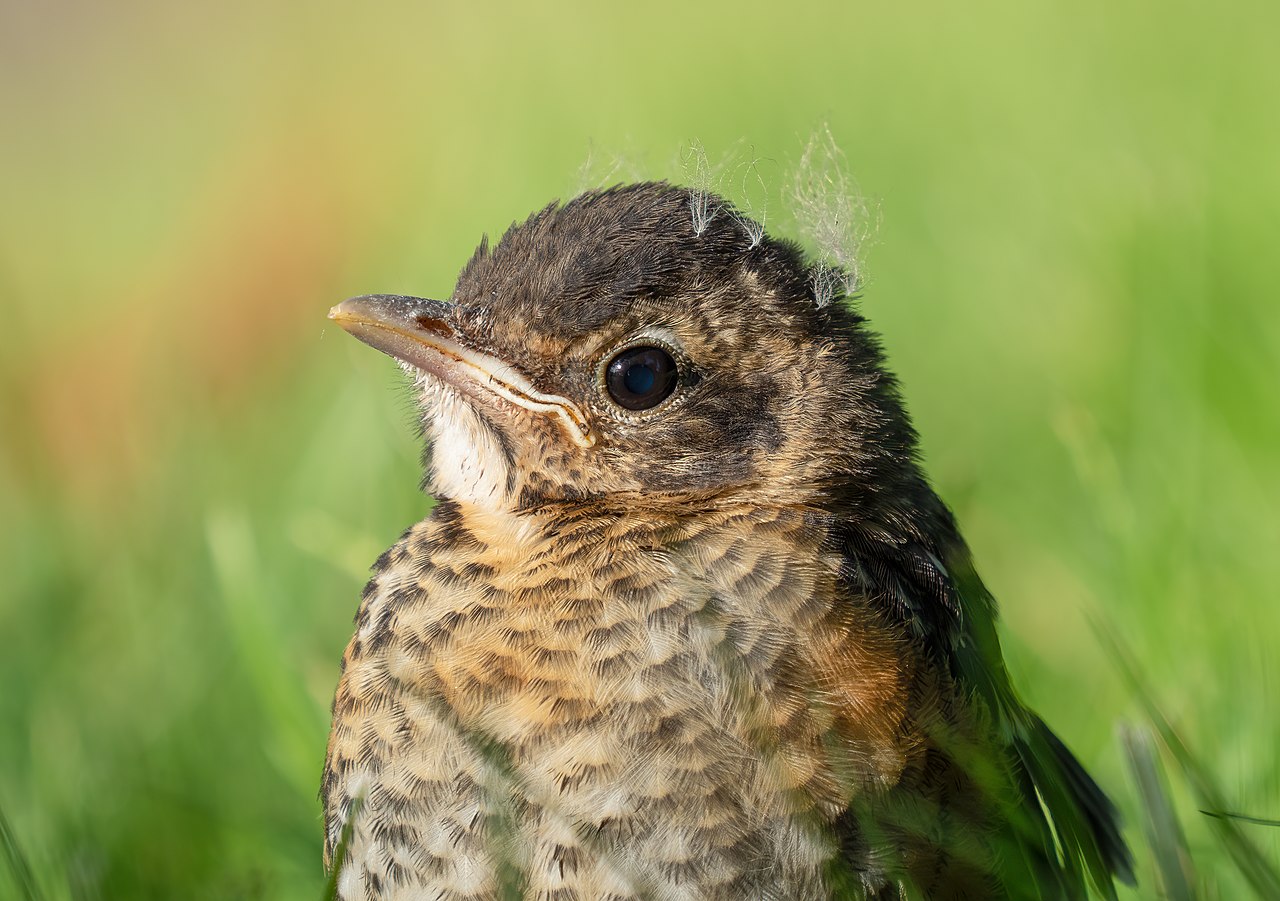
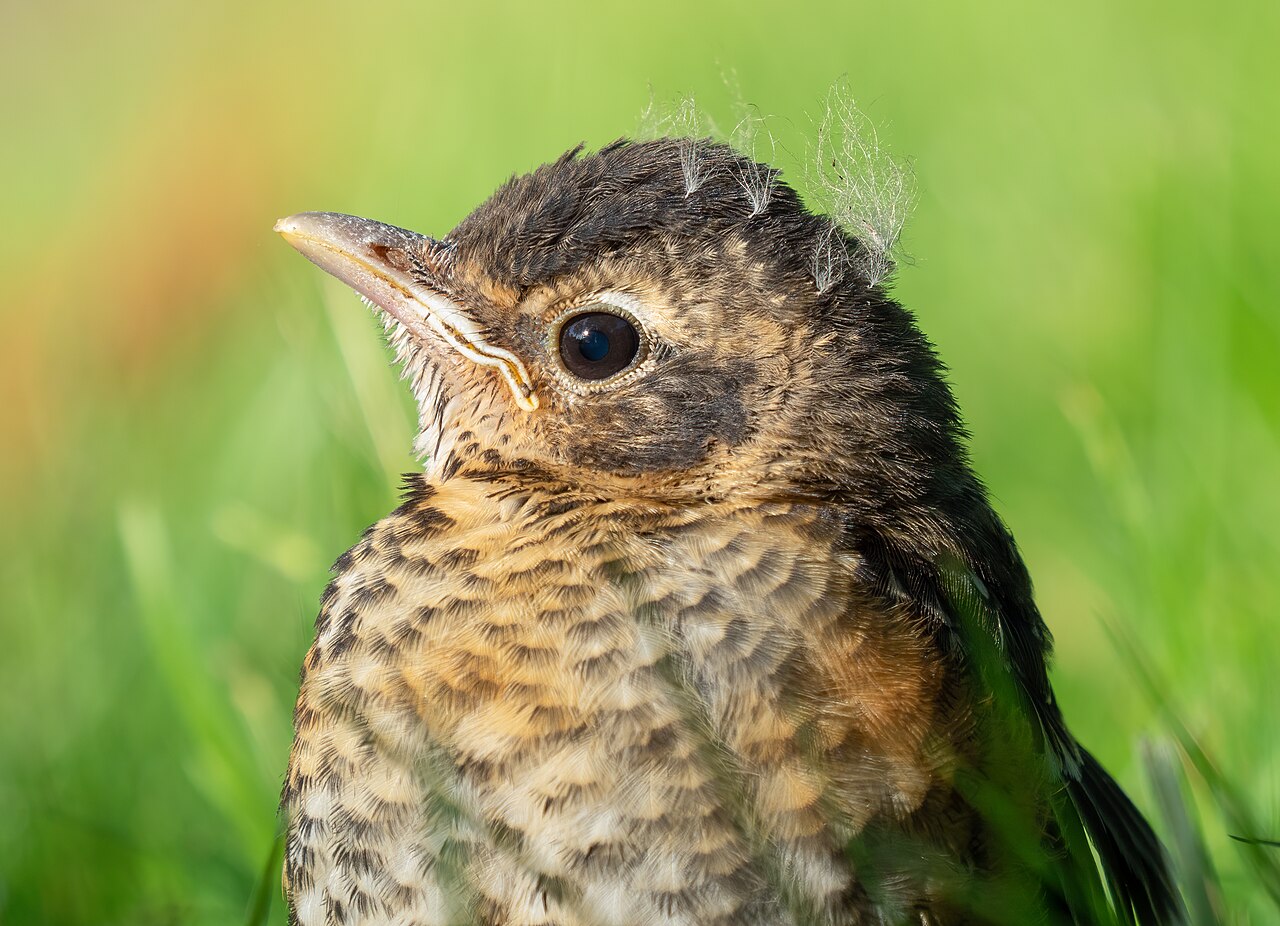
A newly hatched robin looks nothing like the tidy orange-breasted adult. It hatches naked, pink-skinned, and blind, with only sparse wisps of down, completely dependent on its parents. Over the first week its eyes open and gray down fills in, followed by emerging feathers. The most striking feature of a young robin is its breast, which is not orange but heavily spotted with dark markings on a pale background, a classic trait of the thrush family. This spotted breast is the surest way to recognize a juvenile robin, and it slowly fades into the familiar orange over the bird’s first weeks and months. A fledgling robin on the ground, with its speckled chest and short tail, is often mistaken for a different species until you spot the robin shape. If you are unsure what young bird you have found, our guide to baby bird identification can help.
Baby Robin Growth Stages
Robins develop fast. After the female incubates the eggs for about 12 to 14 days, the chicks hatch as helpless hatchlings and are brooded almost constantly at first. As nestlings they open their eyes, grow down, and sprout their first feathers, including the spotted breast plumage. Around 13 days after hatching they leave the nest as fledglings, even though they cannot yet fly well, and spend several days on the ground learning to fly and forage while the parents keep feeding them. Over the following weeks as juveniles, they gradually gain independence and their spotted chests turn orange. For the nest and egg stage that comes before this, see our guide to the robin nest.
What Do Baby Robins Eat?
Baby robins eat an almost entirely animal diet of earthworms and insects. Both parents deliver a near-constant stream of worms, caterpillars, grubs, and beetles to the nest, since this protein fuels the chicks’ rapid growth. This is very different from the fruit-heavy diet adult robins rely on in winter, and it is why feeding a found baby robin the wrong food can be so harmful. A baby robin should never be given bread, milk, or birdseed, and it should not be given water directly either, since young birds can easily inhale liquid. The parents supply all the moisture the chicks need through the insects and worms they deliver, which is another reason a wild robin is best left in its parents care whenever possible. For the full picture of how a robin’s diet changes with age and season, see our guide to what robins eat.
What to Do If You Find a Baby Robin
The right response depends on the bird’s stage. If you find a fully feathered fledgling with a spotted breast hopping on the ground, leave it be, because this is a normal stage and the parents are almost certainly nearby and feeding it. Keep cats and dogs indoors and give the bird space. If you find a naked or downy nestling that has fallen and you can see the nest, gently place it back, since the old myth that parents reject touched chicks is false. If the nest is destroyed or unreachable, or the bird is injured, cold, or truly orphaned, the correct step is to contact a licensed wildlife rehabilitator rather than trying to raise it yourself. The same rescue-versus-leave-alone rules apply to most backyard songbirds, as covered in our guides to the baby blue jay and the baby cardinal.
What to Feed a Baby Robin in an Emergency
In almost every case you should not feed a baby robin and should instead get it to a rehabilitator, because incorrect feeding can kill a chick quickly. Never give bread, milk, or water directly, since birds do not drink like mammals and can inhale liquid and drown. If you genuinely cannot reach help for several hours and the chick is begging, tiny amounts of moistened, high-quality dog or cat food or an insect-based food can keep it alive temporarily, offered on the tip of a small implement. This is only ever an emergency stopgap. Because wild robins need a specialized insect and worm diet fed many times an hour, a licensed rehabilitator with the right food and permits gives a young robin its best chance, which the Cornell Lab of Ornithology and wildlife agencies both emphasize.
When Do Baby Robins Leave the Nest?
Baby robins leave the nest about 13 days after hatching, which is remarkably fast. At that point they are fully feathered but weak fliers, so they spend several days on or near the ground, fluttering, hopping, and building strength while the parents continue to feed them. This is the fledgling stage, and it is the reason so many people find apparently stranded baby robins in late spring and early summer. The young stay dependent on their parents for a couple of weeks after fledging. Meanwhile, the female often begins a second nest, since robins raise two or even three broods a season. A spotted-breasted robin being fed by an adult in June is a perfectly normal, healthy fledgling.
How to Tell a Baby Robin’s Age
You can estimate a young robin’s age from its feathers and behavior. A naked or barely downy chick with closed eyes is only a few days old and still a helpless hatchling. Once the eyes are open and gray down is filling in, with pin feathers pushing through, it is roughly a week old. When the spotted breast feathers have grown in and the bird looks fully feathered but is still in or right at the nest, it is close to fledging at around 12 to 13 days. A fully feathered youngster with a heavily spotted chest and a short, stubby tail that is hopping and fluttering on the ground is a fledgling of about 13 to 16 days. After that, as a juvenile over the following weeks, the spots gradually give way to the adult’s orange breast. The spotted chest and short tail together are the clearest signs that you are looking at a young robin rather than an adult, and they also help distinguish it from the adult American Robin and from unrelated species.
Related reading: Robin Symbolism.
Related reading: Female Robin.
When Do Baby Robins Start Chirping?
Baby robins make sound from the first day, but it is not chirping in the way people mean. Newly hatched nestlings give a thin, almost inaudible call when a parent arrives at the nest, audible only from a few feet away. That is a begging reflex triggered by movement, not communication.
Recognizable begging calls start around day five to seven, once the eyes open and the young can track a parent. From that point the nest gets steadily louder, peaking in the last few days before fledging when four large nestlings are competing for every delivery. This is the stage at which people usually notice a nest they had walked past for two weeks.
Actual song comes much later. Fledglings keep giving a sharp begging call for two to three weeks after leaving the nest, then fall quiet, and young males do not begin practicing the adult carolling song until the following late winter or spring. Audubon’s American Robin account covers the nestling period and the timing of first song.
Frequently Asked Questions
What does a baby robin look like?
A newly hatched robin is naked, pink, and blind. As it grows it develops a heavily spotted breast on a pale background, a thrush-family trait, and only later does the chest turn the familiar orange.
I found a baby robin on the ground. What should I do?
If it is feathered with a spotted breast and hopping, leave it alone, since it is a fledgling and its parents are nearby. If it is naked or downy and fallen, return it to the nest. If it is injured or the nest is gone, call a licensed wildlife rehabilitator.
What do baby robins eat?
An almost entirely animal diet of earthworms and insects delivered by both parents. They should never be given bread, milk, or birdseed.
What can I feed a baby robin in an emergency?
Ideally nothing, and you should get it to a rehabilitator. Never give bread, milk, or water directly. In a true emergency with no help available, tiny amounts of moistened dog or cat food can keep it alive briefly.
Will the parents reject a baby robin I touched?
No. This is a myth. Birds have a poor sense of smell and will not abandon a chick because a human touched it. Returning a fallen nestling to its nest is safe and often best.
When do baby robins leave the nest?
About 13 days after hatching. They leave before they can fly well and spend several days on the ground while their parents keep feeding them.
How long do baby robins stay with their parents?
They depend on their parents for a couple of weeks after fledging. The female often starts a second nest during this time, since robins raise multiple broods a year.
When do baby robins open their eyes?
Baby robins hatch blind, with their eyes sealed shut. The eyes begin to open around day 4 to 5 after hatching and are usually fully open by day 6 to 7. By that point the nestling is also growing its first feathers, and it typically leaves the nest around day 13 as a fledgling that can see well but cannot yet fly strongly.