Female Robin: Identification Guide
The female robin looks similar to the male American robin but is noticeably duller, with a grayer head and a paler, more muted orange breast rather than the male’s deep brick-red. Telling the sexes apart takes a careful eye, since both share the classic robin shape and orange breast, but a few reliable clues make it easier. This guide covers what a female robin looks like, how she differs from the male, how to identify her, her behavior and nesting, and where and when to see her.
| Feature | Female Robin |
|---|---|
| Head | Grayish, not blackish |
| Breast | Paler, muted orange |
| Back | Gray-brown |
| Overall look | Softer, less contrast |
| Size | Same as male |
What Does a Female Robin Look Like?
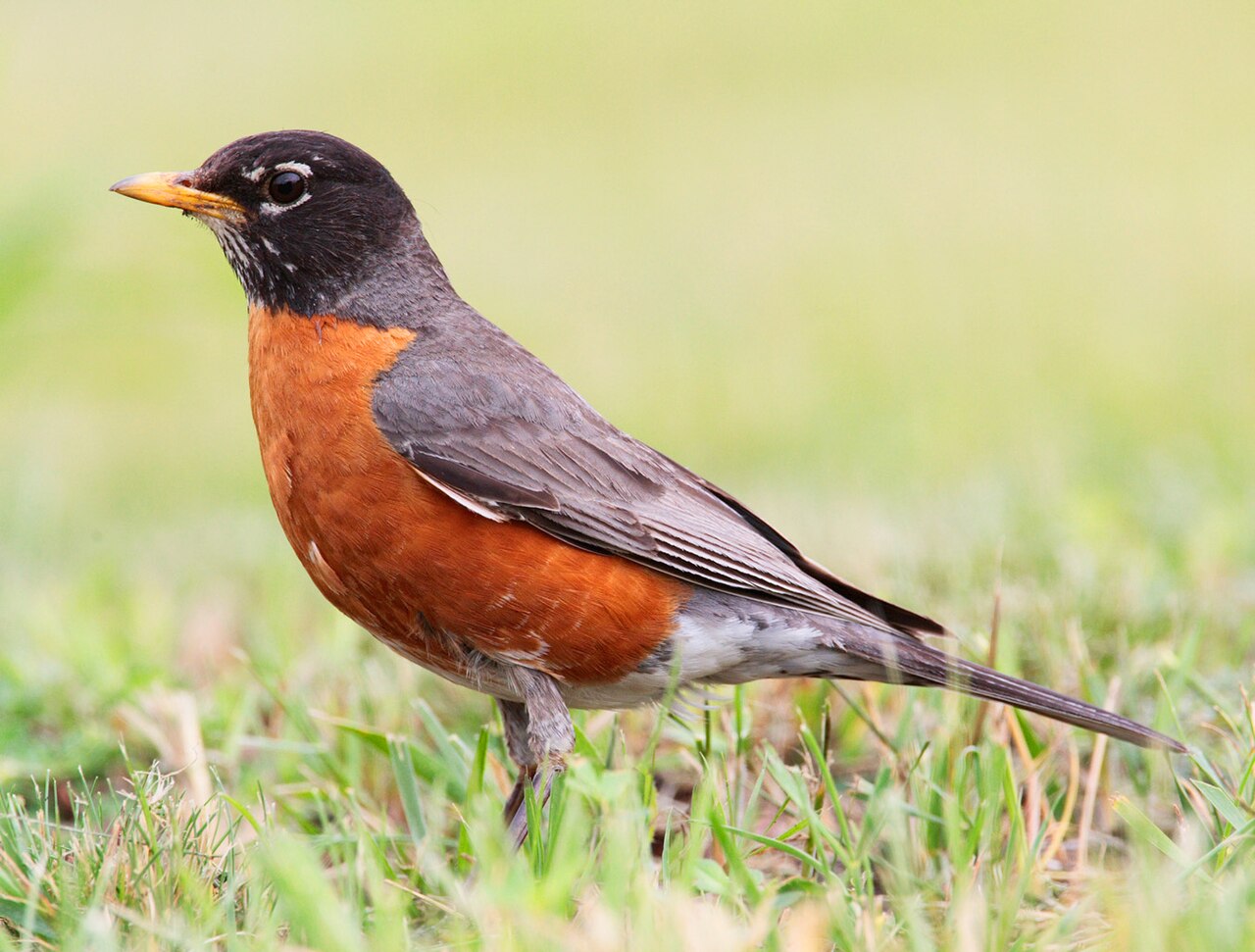
A female robin has the same familiar shape and pattern as the well-known American robin, but in softer, more muted tones. She has a gray-brown back, an orange breast, a white throat streaked with dark marks, a white ring around the eye, and a yellowish bill, just like the male. The key difference is that everything about her is a little less bold, with a grayish rather than blackish head and a paler, more washed-out orange breast instead of the male’s rich, deep red-orange. This gives the female a gentler, lower-contrast appearance overall. From a distance she is unmistakably a robin, but up close her subdued coloring sets her apart. To learn about the species in general, see our guide to the American robin.
Female vs Male Robin
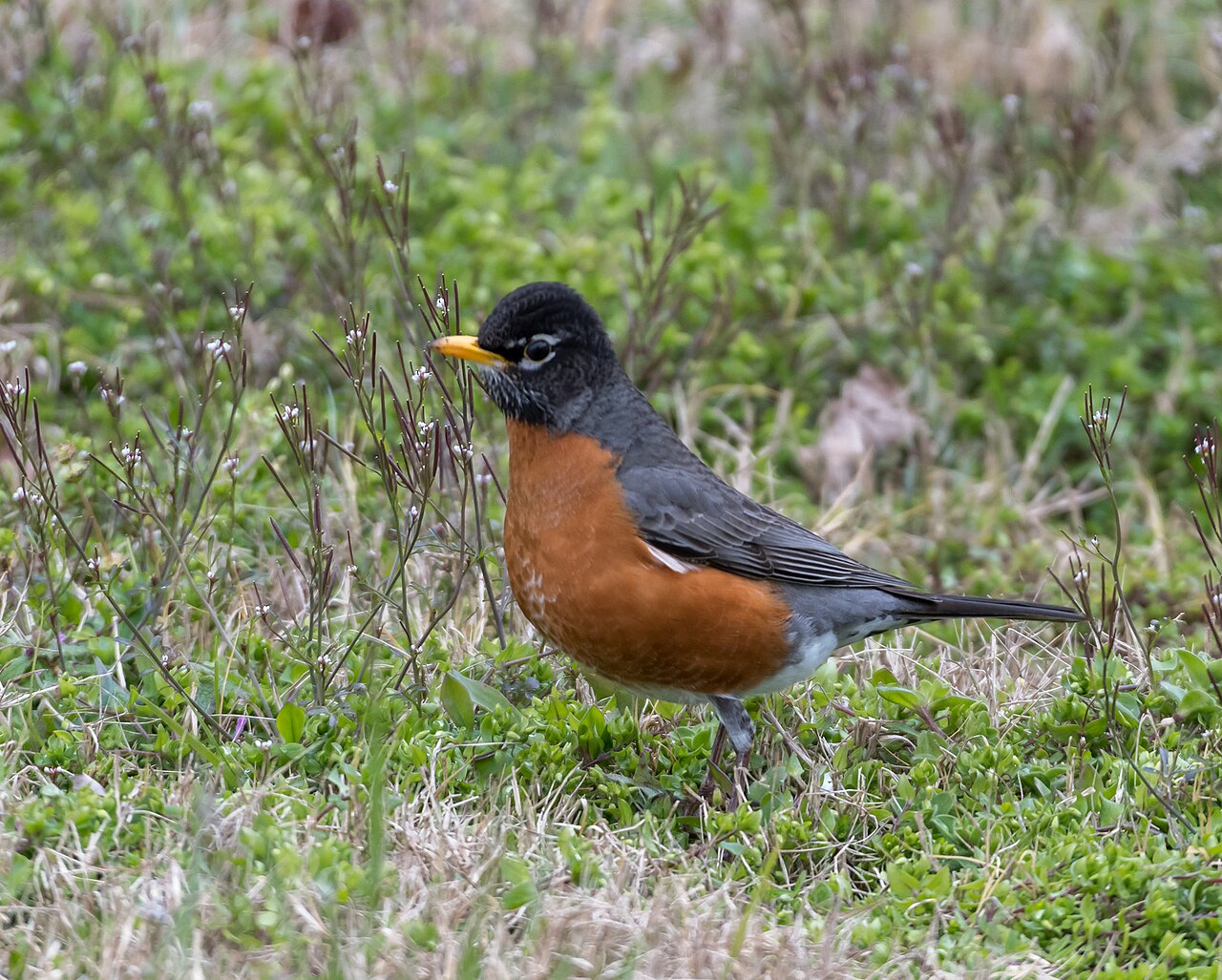
The main differences between female and male robins come down to the intensity of their colors and contrast. The male American robin has a distinctly darker, often nearly blackish head that stands out sharply against his back, along with a deep, vivid brick-red or orange breast. The female, by contrast, has a grayer head that blends more smoothly into her gray-brown back, and her breast is a paler, softer orange with less saturation. As a result, the male looks bolder and more strongly patterned, while the female appears more uniform and understated. The difference can be subtle, especially at a distance or in bright light, so it is easiest to judge by comparing the darkness of the head and the richness of the breast color, ideally when you can see both birds together.
How to Identify a Female Robin
Identifying a female robin is mostly about recognizing the muted version of the classic robin look and ruling out a few sources of confusion. Start by confirming the basic robin features: the orange breast, gray-brown back, white eye ring, and streaked white throat. Then note the softer coloring, a grayish head and paler breast, which point to a female. One common mix-up is with juvenile robins, which have heavily spotted breasts and a scaly appearance, unlike the plain orange breast of an adult female. Another is simply distinguishing dull females from dull first-year males, which can be genuinely difficult. When in doubt, compare the bird with others nearby, since the relative difference in head darkness and breast intensity is often clearer than judging a single bird in isolation, a helpful approach with many species covered in our guide to backyard birds.
Female Robin Behavior and Nesting
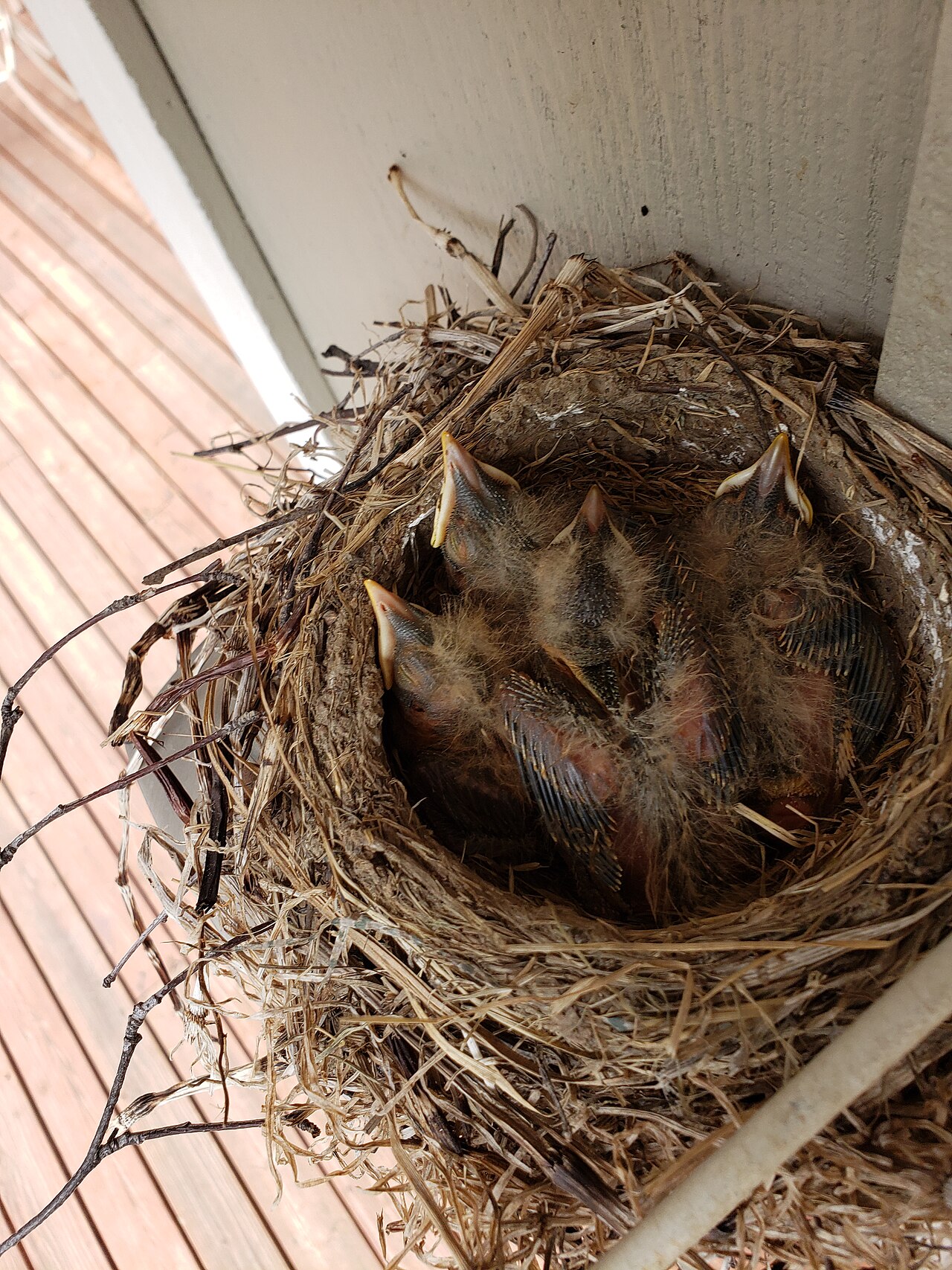
The female robin plays the leading role in nesting, which is one of the most interesting aspects of her behavior. She is the one who builds the robin’s iconic cup-shaped nest, using grasses, twigs, and mud to form a sturdy, smooth-lined bowl, often tucked into a tree, shrub, or ledge. She then lays the famous pale blue eggs, sometimes called robin’s egg blue, and does most of the incubation herself, keeping them warm until they hatch. Once the chicks arrive, both parents work to feed the hungry brood a diet rich in earthworms, insects, and later berries and fruit. This strong maternal role, from nest-building to incubation, makes the female central to raising the next generation of robins, and her behavior around the nest is often a good clue to her presence in a yard or garden.
Where and When to See Female Robins
Female robins are common and widespread, found alongside males throughout much of North America. They frequent lawns, gardens, parks, orchards, and woodland edges, where they are often seen hopping across open grass in search of earthworms, a classic robin behavior. In much of the United States robins are present year round, though their habits shift with the seasons, gathering in flocks and feeding on berries in winter and spreading out to nest in spring. The robin is famously associated with the arrival of spring, and a female busily gathering nesting material or tending eggs is a reassuring seasonal sight. Because robins are so tolerant of human surroundings, a female robin is one of the easier birds to observe up close in a typical backyard, especially during the nesting season, as explored in our guide to robin symbolism.
Female Robin Coloring Explained
The subtle differences in a female robin’s coloring are well documented by ornithologists. According to the Cornell Lab of Ornithology, female American robins typically have paler heads and duller breasts than males, and the female is the one who builds the nest and does most of the incubating. This softer plumage is an advantage rather than a shortcoming, since more muted colors help keep the female less conspicuous while she sits on the nest, offering better camouflage from predators. The male’s bolder head and richer breast, by contrast, help him defend his territory and attract a mate. Understanding this difference makes the female easier to identify and reveals the biology behind why the sexes look the way they do. It is a good reminder that in many birds, duller female plumage serves an important protective purpose, as with the hopeful robin explored in our guide to seeing a red robin.
Female Robins Through the Seasons
A female robin’s habits shift noticeably with the seasons, which can affect where and how you see her. In spring and summer, she is focused on nesting, building her mud-and-grass cup, incubating eggs, and helping feed hungry chicks, and she is often seen hunting worms on lawns. In fall and winter, robins become more social and nomadic, gathering in flocks that roam in search of berries and fruit rather than defending individual territories. During these colder months, the difference between males and females can be harder to notice at a distance within a busy flock. Recognizing these seasonal changes helps you know what to look for, whether it is a lone female tending a nest in spring or a mixed flock feeding on berries in winter, a pattern shared with birds like the bluebird.
Female Robin Size and Shape
Beyond coloring, the female robin shares the same distinctive size and shape as the male, which helps confirm identification. Robins are fairly large, plump-bodied songbirds with round bellies, long legs, and a relatively long tail, standing upright and often running or hopping across open ground. The female matches the male in these proportions, so she has the same familiar robin silhouette even though her colors are softer. Her fairly long, straight, yellowish bill is well suited to plucking earthworms and eating berries. Recognizing this classic robin build, upright posture, rounded body, and long-legged, ground-foraging habit, is useful for spotting a robin at a distance before you can judge the finer plumage details that separate the sexes. Shape and behavior together make robins, including females, easy to recognize.
Related reading: female red-winged blackbird identification.
Related reading: Baby Robin.
Related reading: Robin Nest.
Related reading: what do robins eat.
Related reading: Female Belted Kingfisher.
Frequently Asked Questions
What does a female robin look like?
A female robin looks like a muted version of the male, with a gray-brown back, orange breast, and white eye ring, but with a grayer head and a paler, softer orange breast.
How can you tell a female robin from a male?
The male has a darker, nearly blackish head and a deep red-orange breast, while the female has a grayer head that blends into her back and a paler, more muted breast.
Do female robins have an orange breast?
Yes, female robins have an orange breast, but it is paler and less vivid than the male’s deep brick-red breast. The softer color is a key way to tell the sexes apart.
Do female robins build the nest?
Yes, the female robin builds the cup-shaped nest from grass, twigs, and mud, lays the pale blue eggs, and does most of the incubation, while both parents feed the young.
Are female robins duller than males?
Yes, female robins are duller overall, with a grayer head and paler breast, giving them a softer, lower-contrast look compared to the bolder, more strongly patterned males.
What color eggs do robins lay?
Robins lay distinctive pale blue eggs, often described as robin’s egg blue. The female lays and incubates them in her mud-and-grass cup nest until they hatch.
Where do female robins live?
Female robins live alongside males across much of North America in lawns, gardens, parks, and woodland edges, and are present year round in much of the United States.