Robin Sounds: The Song, the Alarm Calls, and the Dawn Chorus
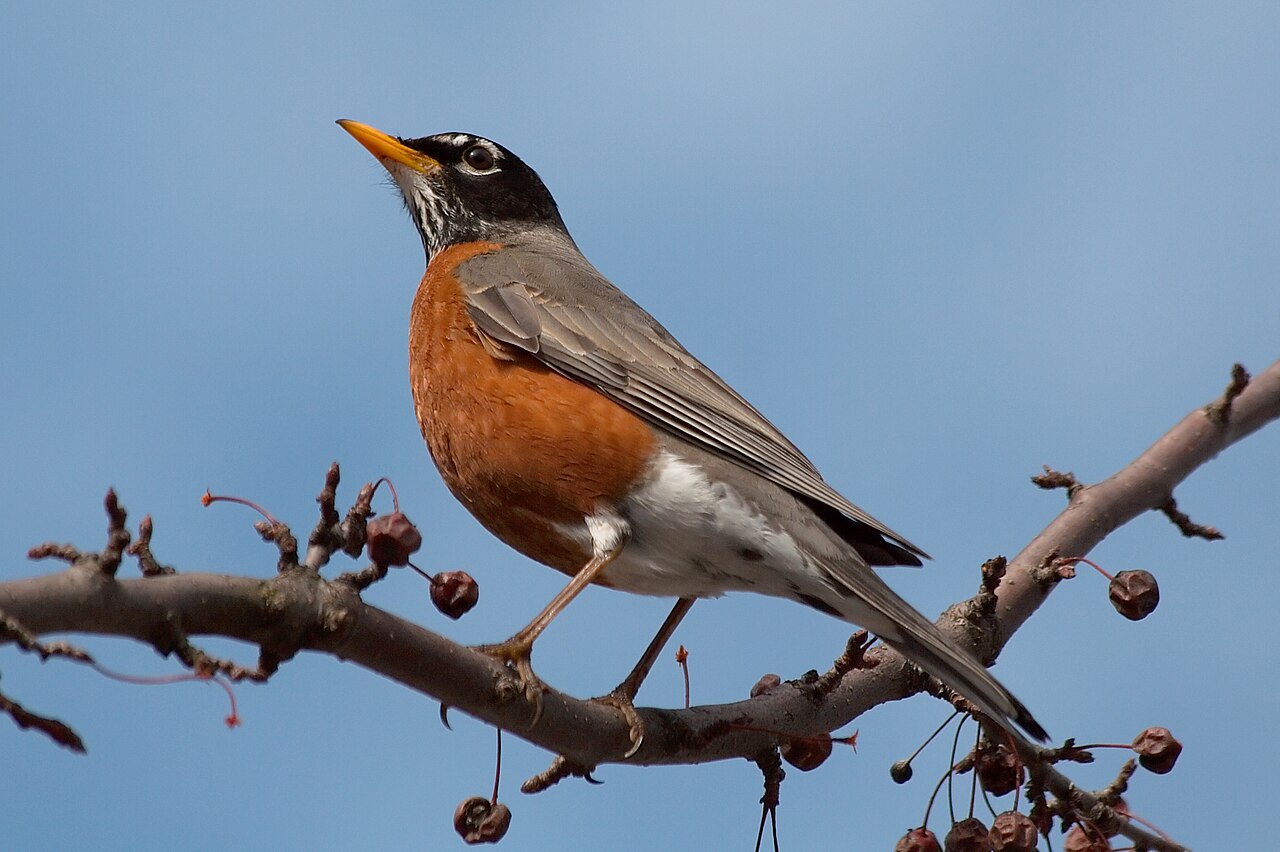
An American robin’s song is a string of clear whistled phrases usually written as cheerily, cheer up, cheer up, cheerily, cheer up, delivered in two and three note groups that rise and fall with short pauses between them. Alongside that song robins use at least six distinct calls, including a sharp tut tut tut when a ground predator appears, a rapid laughing kli-kli-kli during a chase, and a thin high seee reserved for hawks overhead.
Robins are also the bird most people hear first each morning. They begin singing up to an hour before sunrise, earlier than nearly every other backyard species, because their unusually large eyes let them reach the light threshold for activity while it is still dark. If something is singing outside your window at 4 a.m. in May, it is almost certainly a robin.
| Sound | Meaning |
|---|---|
| Cheerily song | Male territory and mate attraction |
| Tut tut tut | Ground predator, cat or person too close |
| Kli-kli-kli laugh | Agitated chase or nest defence |
| High thin seee | Hawk overhead, hard to locate by ear |
| Yeep or peek | General contact and mild alarm |
| Whisper song | Quiet complex song, close range |
| Singing starts | Up to an hour before sunrise |
What a Robin Sounds Like
The American robin, Turdus migratorius, is a thrush, and its song has the clear flute-like quality typical of the family. Individual phrases last about half a second, contain two or three whistled notes, and are strung together into a rolling sequence that can continue for minutes with only short breaks.
What makes the song recognisable is the rhythm rather than any single note. The pattern alternates between higher and lower phrases in a way that sounds conversational, and the traditional cheerily, cheer up transcription captures that alternation better than it captures the actual notes. Once you have the rhythm, you can pick a robin out of a full dawn chorus.
Individual robins have personal repertoires of ten or more phrase types and shuffle the order, so no two sequences are identical. This variation is why the song can sound different from one bird to the next while still being unmistakably a robin. Our species guide to the American robin covers the bird itself.
Song structure also shifts through the morning. The pre-dawn version is faster and more continuous with shorter gaps, and it slows and becomes more spaced as light increases and the bird switches attention to feeding. Recording the same male an hour apart captures the difference clearly.
The Robin’s Song and What It Is For
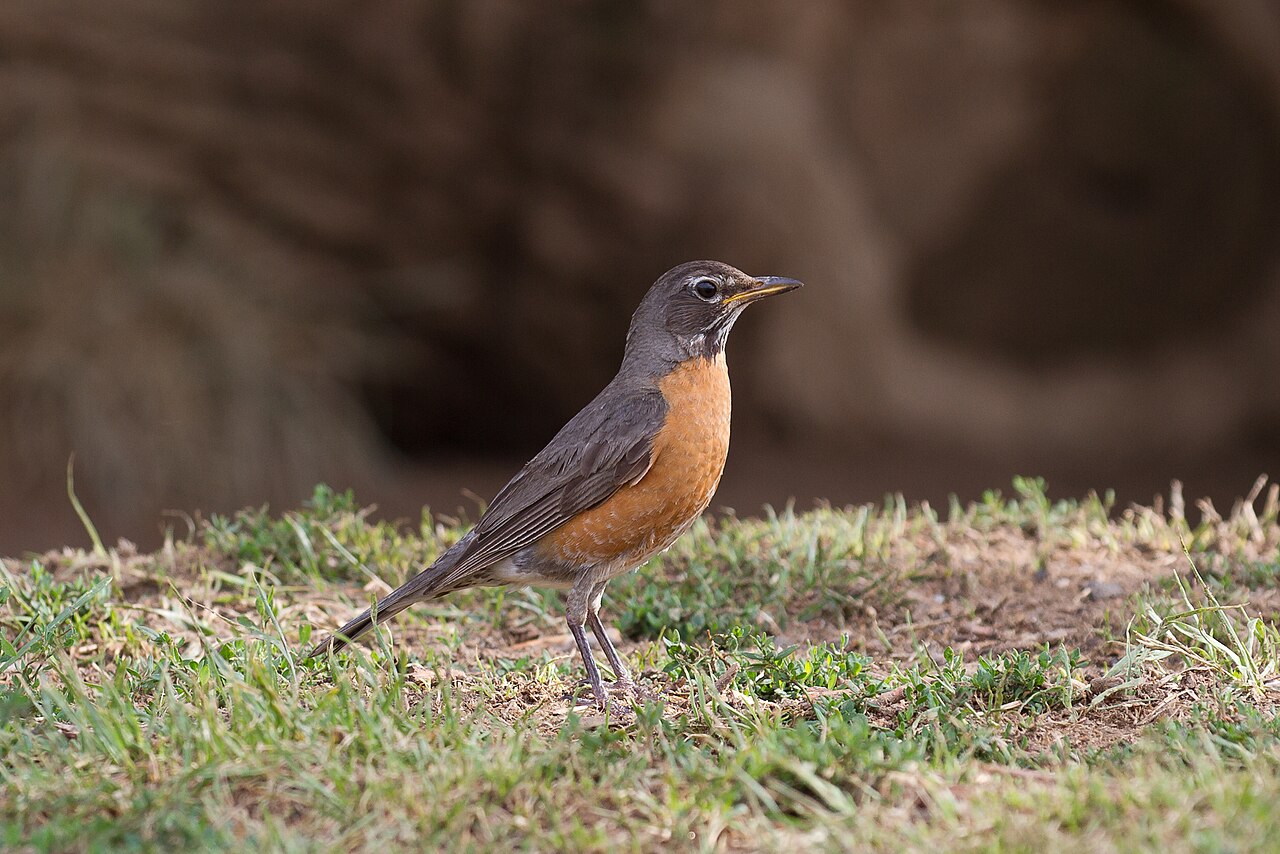
Only males sing the full song, and it does the two jobs song does in most songbirds: it advertises territory occupancy to rival males and it advertises the singer’s quality to females. Singing peaks from March through July across most of the range and drops off sharply once broods are independent.
Song output tracks the breeding cycle closely. A male establishing a territory in early spring sings almost continuously through the morning, and the rate falls once he is paired. It rises again between broods, since robins commonly raise two or three broods in a season and each cycle brings a renewed burst of singing.
Position matters as much as volume. Males sing from exposed perches at height, often the top of a tree, a roof ridge, or a wire, because the song needs to carry across the whole territory. A robin singing from deep cover is unusual and generally means something has displaced it from its usual perch.
Robin Alarm Calls
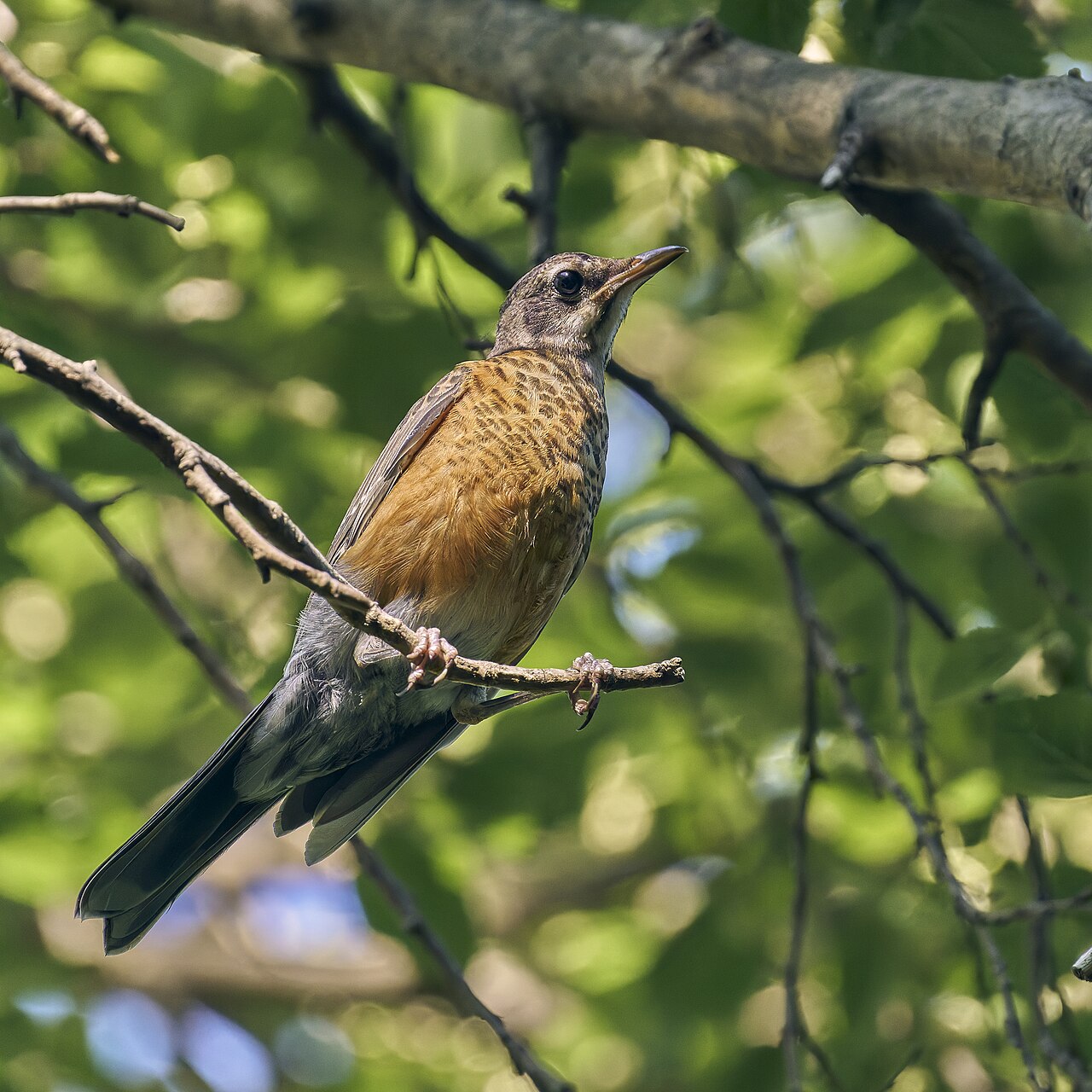
Robins have one of the more informative alarm systems among backyard birds, because the calls encode what kind of threat is present rather than simply signalling danger. Getting to know three of them tells you what is happening in a yard without seeing anything.
The sharp repeated tut tut tut, sometimes written as peek, signals a ground-based threat such as a cat, a person, or a snake near a nest. It is delivered from a perch with the bird facing the threat, and other robins and often other species respond by moving to cover. The faster and more insistent it gets, the closer the threat.
The thin high seee is the interesting one. It is reserved for aerial predators, mostly hawks, and it is pitched and structured in a way that makes it very difficult to locate by ear, which protects the caller. Many unrelated songbirds have converged on nearly identical hawk alarm calls, so hearing it means a hawk is overhead regardless of which species gave it. The rapid kli-kli-kli laughing call accompanies active chases and nest defence.
Why Robins Sing Before Dawn
Robins consistently start the dawn chorus, typically 30 to 60 minutes before sunrise and before almost every other species. The leading explanation is eye size: robins have unusually large eyes for their body size, which lets them gather enough light to be active while it is still too dark for smaller-eyed birds to forage safely.
Acoustics reinforce the timing. Air is cooler, stiller, and less turbulent before sunrise, and sound carries considerably further than it does later in the morning. A song given at 4:30 a.m. reaches more listeners than the same song at 8 a.m., which makes early singing an efficient use of energy.
Foraging economics complete the picture. Earthworms are near the surface in the damp pre-dawn hours and retreat as the ground dries, but light levels are too low for a robin to hunt them visually right away. Singing fills that window productively. Our guide to what robins eat covers the foraging side.
Robins Singing at Night
Night singing is common enough that it generates a steady stream of questions, and artificial light is the main driver. Robins near streetlights, security lights, and floodlit car parks sing at hours when unlit birds are silent, because the light suppresses the darkness cue that would otherwise stop them.
Noise is a second factor. Studies of urban birds have found species shifting song to quieter hours where daytime traffic noise masks their frequencies, and robins are among those documented doing it. A robin singing at 2 a.m. beside a busy road is behaving rationally rather than abnormally.
Weather and the breeding cycle modulate it further. Warm nights during peak breeding produce more night song than cold ones, and unpaired males sing more than paired ones at any hour. The bird is healthy, though the pattern is a reasonable indicator that a location has more light pollution than it should. Our guide to why birds chirp at night covers the wider phenomenon.
The Whisper Song
Robins produce a quiet, rambling, structurally complex song that is audible only within a few metres, often called the whisper song or subsong. It contains hisses, squeaks, and phrase fragments that never appear in the loud territorial song, and it can continue for long stretches.
Its function is not fully settled. Some of it appears to be practice, since young males produce more of it while learning, and some occurs in adults during close-range interactions with a mate. Similar quiet songs occur across many songbird families and are consistently under-recorded because they are so easy to miss.
The practical value is that hearing it means a robin is very close, usually within 5 m, and probably unaware of you. It is one of the more rewarding things to catch while sitting still in a garden, and most people who hear it assume at first that it is a different species entirely.
American Robin vs European Robin
These are two completely unrelated birds that share a name because homesick English colonists applied a familiar name to an unfamiliar red-breasted bird. The European robin, Erithacus rubecula, is a small chat about the size of a chickadee. The American robin is a thrush roughly three times its weight.
The songs are correspondingly different. The European robin sings a wistful, rambling, silvery warble with sudden changes in pace and pitch, quite unlike the steady phrased whistling of the American bird. Both are pleasant, but nobody who has heard both would confuse them.
The European species is also a far more committed night singer, and much of the folklore about robins singing in darkness belongs to it rather than to the American bird. If a source discusses robins singing all night in a churchyard, it is almost certainly describing Erithacus rubecula.
Birds Mistaken for Robins
By sound, the most common confusion is with other thrushes and with the scarlet tanager, whose song is often described as a robin with a sore throat: the same phrasing and rhythm but with a burry, hoarse quality. Black-headed grosbeaks in the West produce a similar but sweeter and more continuous version.
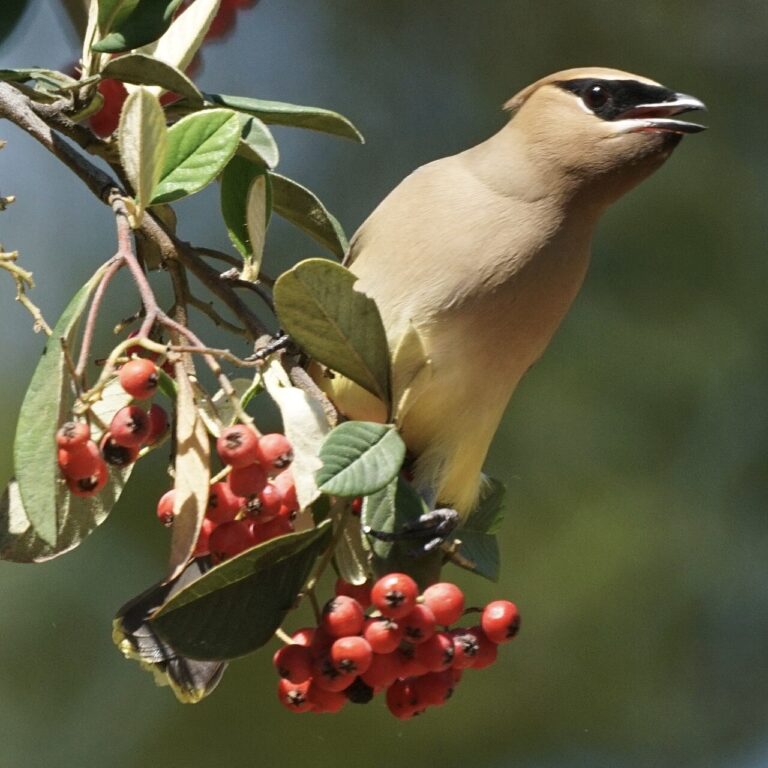
Rose-breasted grosbeaks sing a comparable rolling whistled sequence, and cedar waxwings, though they sound nothing alike, are often reported as robins because they flock in the same fruit trees. Learning the burry quality of the tanager against the clean tone of the robin resolves most of these.
By sight, the eastern towhee, spotted towhee, varied thrush, and orchard oriole all draw robin reports because of orange or rufous underparts. Our guide to birds that look like robins covers the visual look-alikes, and the female robin covers the paler bird that often gets called a different species entirely.
Frequently Asked Questions
What is the sound of a robin?
The song is a series of clear whistled two and three note phrases, traditionally written as cheerily, cheer up, cheer up, cheerily, cheer up, with short pauses between them. Robins also use a sharp tut tut tut alarm, a laughing kli-kli-kli, and a thin high seee for hawks overhead.
What do different robin sounds mean?
The full song is male territory and mate advertisement. The repeated tut means a ground predator such as a cat is near. The rapid laughing call accompanies chases and nest defence. The thin high seee means a hawk is overhead and is deliberately hard to locate by ear.
Why do robins sing at night?
Artificial light is the main cause, suppressing the darkness cue that would normally stop singing. Traffic noise is a second factor, pushing song into quieter hours. Warm nights during peak breeding and unpaired males both increase it. The bird is healthy, but the pattern signals light pollution.
Why do robins start singing before sunrise?
Robins have unusually large eyes for their size, so they reach the light level needed for activity earlier than other species. Cool still pre-dawn air also carries sound much further, and their main food, earthworms, is near the surface but not yet visible, so singing fills the wait productively.
What bird is often mistaken for a robin?
By sound, the scarlet tanager, often described as a robin with a sore throat, plus rose-breasted and black-headed grosbeaks. By sight, eastern and spotted towhees, varied thrushes, and orchard orioles all draw robin reports because of orange or rufous underparts.
What month do robins have their babies?
Nesting typically begins in April, with the first brood hatching from late April into May depending on latitude. Robins commonly raise two or three broods in a season, so young birds appear from May through August. Our nest and egg guides cover the timeline in detail.
What is a flock of robins called?
A round or a worm, both terms from older collective-noun lists rather than from ornithology. In practice birders simply say flock. Robins form large winter flocks that move between fruit sources, which is why they seem to vanish in winter and reappear suddenly in spring.