Biblical Meaning of the Owl: Every Verse and What It Signifies
In the Bible, seeing an owl means desolation. Every passage that names an owl places it in a ruin, a wilderness or an abandoned city, and the law of Moses lists owls among the birds Israel could not eat or sacrifice. The biblical owl is a marker of a place God has emptied, and in one psalm it is an image of a grieving person, alone and awake at night.
That is a narrower meaning than most owl articles suggest. Scripture never calls the owl wise, never makes it a demon, and never treats an owl at your window as a message. Those readings come from Greek myth, medieval bestiaries, modern occult imagery and folk tradition, and they are worth knowing, as long as they are kept separate from the text. This article works through the verses first, then the Hebrew words behind the translations, then the situations people actually ask about.
Biblically, the owl symbolizes desolation, ruin and mourning. Owls appear in the unclean bird lists of Leviticus 11 and Deuteronomy 14, among the creatures inhabiting judged cities in Isaiah 13 and 34, Jeremiah 50 and Zephaniah 2, and as an image of lonely grief in Psalm 102:6. Scripture never links the owl to wisdom or to demons.
What Do Owls Signify Biblically?
Owls appear in roughly a dozen verses, and they signify three things. First, ritual uncleanness: Leviticus 11:16 to 18 and Deuteronomy 14:15 to 17 list the little owl, the great owl and the white owl among birds that must not be eaten. Second, desolation: when a prophet describes a city under judgment, owls move in. Third, mourning: a lament uses the owl as a picture of isolation.
Isaiah 34:11 to 15 is the fullest example. Edom becomes a waste where the owl and the raven nest, where wild goats and night creatures gather, and the imagery is deliberately uninhabitable. Isaiah 13:21, Jeremiah 50:39 and Zephaniah 2:14 do the same work for Babylon and Nineveh, with owls hooting in windows and roosting on broken columns.
What is absent matters as much. No owl appears in the New Testament. No verse presents an owl as a sign to an individual, a guardian or a bearer of knowledge. The bird is scenery in a theology of judgment, and reading personal messages into it goes past what the text does.
Owls as Unclean Birds in the Law of Moses
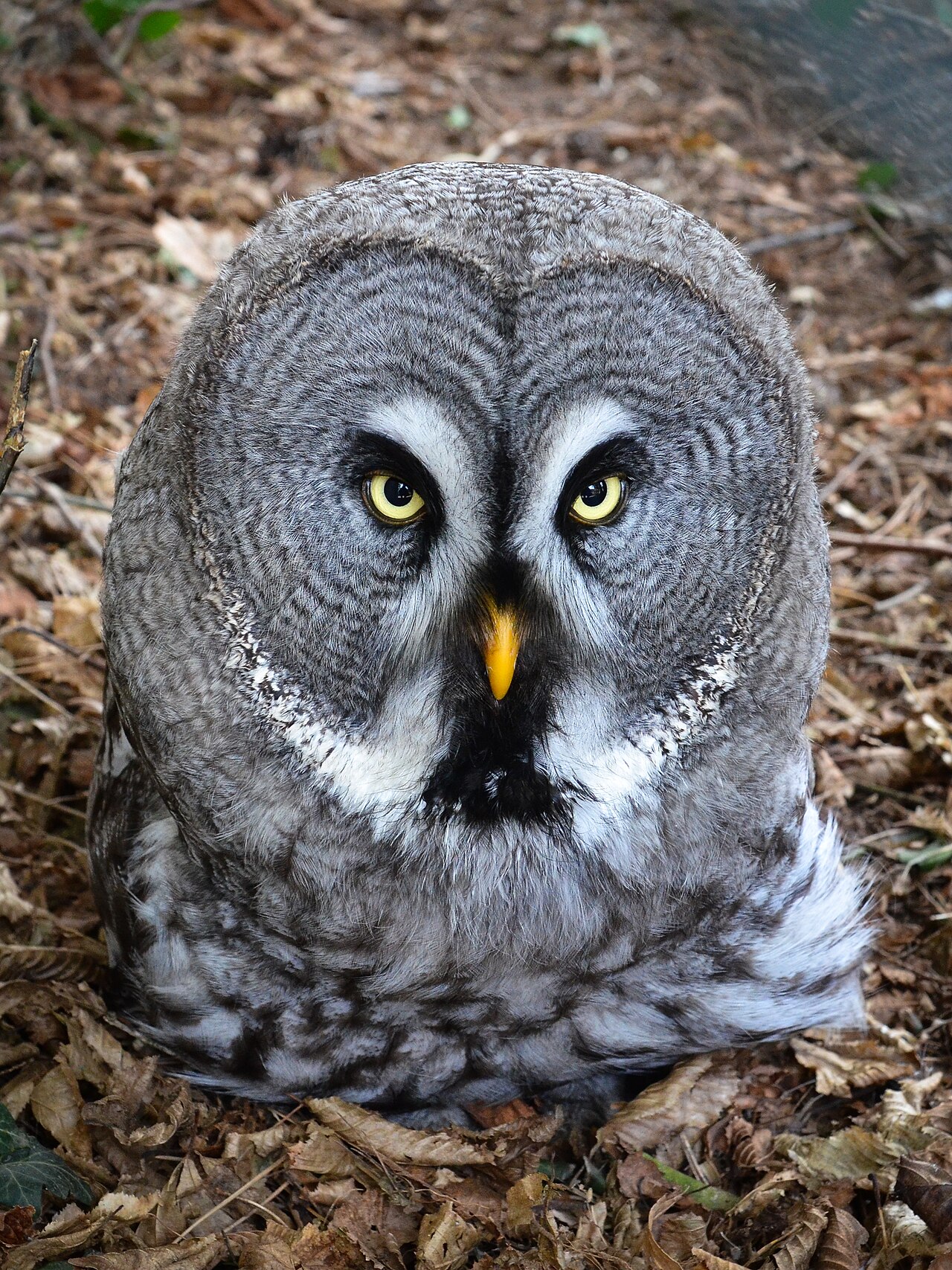
The dietary lists put owls in the same category as the eagle, the vulture, the kite and the raven: birds that take flesh or carrion. Leviticus 11:13 to 19 names about twenty such birds, and the owls in the King James rendering are the little owl, the great owl, the screech owl and the owl, depending on how the Hebrew is matched to species.
Unclean in this context is a ritual status, not a moral verdict. An unclean animal is not evil and not cursed; it is simply outside the boundary of what Israel may eat or offer. Most scholars read the bird list as excluding predators and scavengers, animals that handle blood and death, which fits the broader logic of the purity code.
This is the detail most often distorted online. Being on the Leviticus list makes the owl inedible under the law, which has nothing to do with the bird being demonic or spiritually dangerous. Acts 10 and Mark 7 are the passages the New Testament uses to set the food distinction aside.
Owls as a Sign of Desolation and Judgment
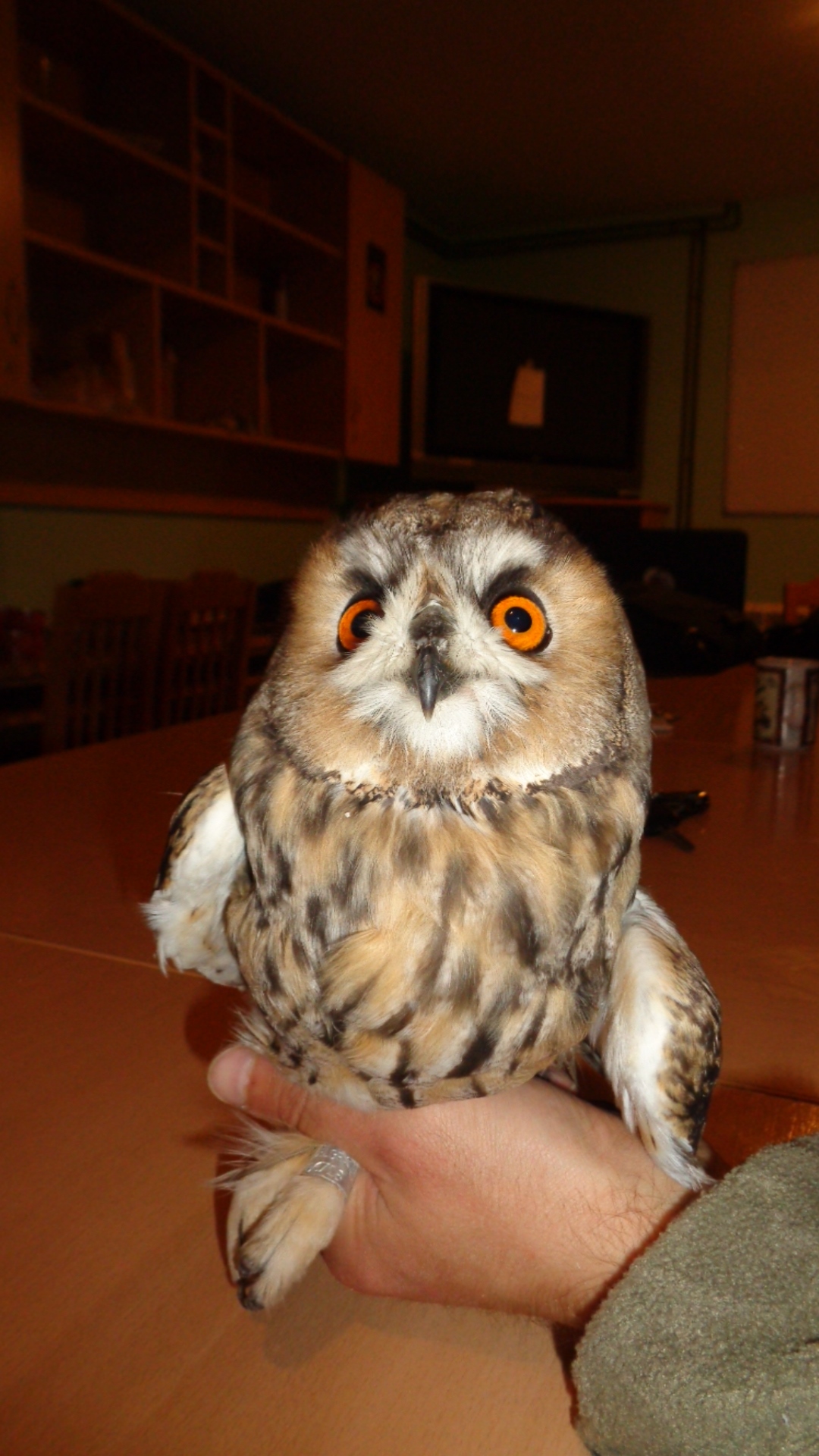
The prophetic use is consistent enough to count as a formula. A proud city falls, people leave, and the animals that follow are desert owls, ravens, jackals, hyenas and wild goats. Zephaniah 2:14 pictures the desert owl and the screech owl roosting on the columns of Nineveh while the cedar beams lie exposed.
Ancient readers heard this as realism, not fantasy. Owls genuinely colonize abandoned masonry, and anyone who has walked past a ruined building at dusk in the Levant has heard the result. Using the bird as shorthand for emptiness worked because it was accurate natural history.
The theological point is the reversal of the creation order: where there should be households, there are nesting birds. That is why the owl in these passages carries dread. The dread belongs to the ruin, and the bird is the evidence, not the cause.
Owls as a Picture of Grief and Loneliness

Psalm 102:6 is the one place the owl becomes personal. The psalmist writes that he is like a desert owl in the wilderness and like an owl among the ruins, in a prayer titled as the plea of an afflicted man. The point is not foreboding but exhaustion: sleepless, solitary, awake while everyone else rests.
Job 30:29 works similarly, where Job calls himself a brother of jackals and a companion of owls, though the Hebrew there probably means ostriches. Micah 1:8 has the prophet wailing like a jackal and mourning like an owl. In each case the owl stands for the sound of grief at night.
For readers looking for a devotional use of the biblical owl, this is where it sits. The bird is not an omen in these verses, it is a mirror, and the lament it belongs to ends in confidence rather than fear.
What Does Owl Mean in Hebrew?

At least five Hebrew words get translated owl, and no translation committee agrees on all of them. The clearest are kos, the little owl of Leviticus 11:17 and Psalm 102:6, and yanshuf, usually the great owl or long eared owl. Tinshemet is rendered white owl or barn owl in bird lists and chameleon elsewhere, which shows how uncertain the identifications are.
Two more are contested. Bath haya’anah, literally daughter of the wilderness or daughter of greed, appears as owl in the King James Version and as ostrich in most modern translations. Oach in Isaiah 13:21 is a hoot or howl word, translated howling creatures, and qippoz in Isaiah 34:15 may be an owl or a snake.
The practical consequence: an argument built on the English word owl in one verse may rest on a word that never meant owl. Checking a Hebrew interlinear or a concordance before building a teaching on a single verse is basic diligence here.
Is the Owl a Satanic or Demonic Symbol?

Not in the Bible. No owl in Scripture is possessed, demonic or associated with a named spirit. The idea traces mainly to one word in Isaiah 34:14, where the Hebrew lilith appears in a list of creatures in ruined Edom. The King James Version renders it screech owl, other versions use night creature or night monster, and later Jewish folklore developed Lilith into a demon figure.
That folklore is post biblical. Isaiah is listing wilderness inhabitants, and whether lilith there means a bird, a desert spirit or a figure borrowed from Mesopotamian lore is genuinely debated. Nothing in the verse makes the owl itself a demon.
The modern claim usually arrives through occult imagery rather than Scripture: the owl of Minerva in Enlightenment symbolism, owl motifs in fraternal lodges, and the owl statue at Bohemian Grove in California. Those are cultural artifacts of the last few centuries. People who want the fuller history of those associations will find it in owl symbolism across cultures.
Owls and Wisdom: Why Scripture Does Not Make That Link
Owls are known for silent flight, night hunting, extraordinary hearing and a head that rotates far past what other birds manage. They are not known for intelligence; corvids and parrots outperform them badly in cognition tests. The reputation for wisdom comes from Athena, whose little owl appeared on Athenian coins, and it entered European culture through Greece and Rome.
Biblical wisdom literature never uses the bird. Proverbs reaches for the ant, the lizard, the locust and the eagle, and Job reaches for the hawk and the ostrich, but the owl stays in the ruins. Where an animal illustrates understanding in Hebrew thought, it is usually one that works in daylight.
This split explains most of the confusion people bring to the topic. The wise owl and the ominous owl are two different inheritances, Greek and Hebrew, and a reader who merges them ends up with a symbol that means everything and therefore nothing. Species facts for the owls behind both traditions are documented at Cornell Lab’s All About Birds.
Seeing an Owl at Your House or Window
The spiritual meaning of an owl at your house is not addressed anywhere in the Bible, so Christian readings of it are inference rather than teaching. The common pastoral response is that an owl on a roof or windowsill is a bird hunting the rodents your yard attracts, and that Matthew 10:29 puts every sparrow under God’s attention without making any bird a message.
Folk traditions are less restrained. In parts of the American South and in Appalachian lore, an owl calling close to a house was read as illness or death approaching, a belief also recorded in Mexico in the saying about the owl’s cry. Those traditions are real and worth understanding as traditions, and people who want them laid out will find them in owl visits meaning.
If the practical question is why the owl chose your house, the answer is usually habitat: a flat roof edge or chimney for a perch, outdoor lighting that concentrates insects and then mice, and an open lawn to hunt over. Removing the food supply moves the bird along within a week or two.
Hearing an Owl at Night: Are Owls Warning Signs?
Biblically, no. The sound of an owl in Scripture is the sound of a place that has emptied out, and in Psalm 102 and Micah 1 it is the sound of human mourning, not a signal aimed at a listener. Nothing in the text supports treating a hoot as a warning or a prediction.
Calling peaks for different reasons entirely. Great horned owls are loudest from December through February while establishing territories and pairing, barred owls call year round and respond to each other across a valley, and screech owls trill most in early spring. A sudden run of owl calls near a house usually means breeding season or a territorial dispute.
Folk readings of night calls vary by region and often contradict each other, which is itself informative. The same hoot is a death omen in one tradition and a protective presence in another, and what it means to see an owl at night collects the main versions.
An Owl in Daylight, or the Same Owl Repeatedly
Seeing an owl during the day is read by many traditions as the strongest sign, on the reasoning that a night bird in daylight is out of order. Biblically there is nothing to that, and ornithologically there is a plain explanation: burrowing owls, short eared owls and northern hawk owls hunt by day, and barred and great horned owls are often visible at dusk, in winter food shortages or when mobbed awake by crows.
Repeated sightings usually mean one territorial bird and one good perch. Owls reuse hunting posts for months, so a person who walks the same path at the same hour will meet the same owl again and again. White or pale birds, which generate the most questions, are typically barn owls rather than snowy owls outside the far North, a distinction covered in seeing a white owl.
For a Christian reader, the honest position is that a recurring owl is a fact about local wildlife that may prompt reflection, gratitude or attention. Treating it as a decoded instruction goes beyond anything Scripture claims.
| Situation | Biblical or Christian reading | Common folk reading |
|---|---|---|
| Owl on the house or roof | No teaching; a hunting bird under God’s providence | Illness or news approaching |
| Owl hooting at night | Sound of desolation and mourning (Psalm 102:6) | Warning or death omen |
| Owl seen in daylight | No teaching; diurnal species or a disturbed roost | Urgent message, strongest sign |
| Same owl repeatedly | No teaching; territory and a reliable perch | A spirit guide or totem asserting itself |
| Owl found dead | No teaching; unclean animal under Leviticus 11 | An ending, or a curse lifted |
| Owl in a dream | Dreams are God’s to interpret (Genesis 40:8) | Hidden knowledge surfacing |
| White owl | No teaching; usually a barn owl | Purity, protection or a departed relative |
Finding a Dead Owl or Dreaming of One
A dead owl has no biblical meaning beyond the purity law: touching the carcass of an unclean bird made an Israelite ritually unclean until evening, which is a procedural rule, not a sign. In the United States, the practical rule matters more, because the Migratory Bird Treaty Act makes it illegal to keep an owl carcass, feathers, skull or talons without a federal permit.
Dreams are handled differently in Scripture than omens are. Joseph and Daniel both insist that interpretation belongs to God rather than to a technique, and the dreams that carry meaning in the text come with their own explanation attached. A symbol dictionary that assigns owls a fixed dream meaning is working outside that frame.
Most dead owls found along roads are collision victims, often young birds hunting verges in their first winter. Reporting banded birds to the national bird banding laboratory turns the find into useful data, which is a better response than searching it for a message.
Owl Meanings in Other Traditions
Native American beliefs about owls are not a single system. Hundreds of distinct nations hold distinct views: in Navajo and Apache tradition the owl is widely treated as a warning or a sign connected to witchcraft and the dead, Hopi tradition associates the burrowing owl with the earth and the dead, and in Lakota accounts owl feathers were worn by certain warriors as a mark of honor. Generalizing across them flattens real differences.
In Welsh tradition recorded in the Mabinogion, Blodeuwedd is turned into an owl as punishment, giving the bird a link to betrayal and to the night, and later Celtic folklore connects it to the crone figure and the underworld. In Japan the owl, fukurou, is a good luck charm because the word can be written to read free of hardship, while in classical Chinese sources the owl is an inauspicious bird tied to thunder and ingratitude.
The spirit animal, totem and omen vocabulary people use today comes mostly from twentieth century popular spirituality rather than from any of these sources directly. It is a modern synthesis, and whether it has standing is a question for the reader’s own convictions, discussed further in are owls good luck.
Related reading: Owl Dream Meaning.
Related reading: Biblical Meaning of the Hummingbird.
Frequently Asked Questions
Is there a Bible verse about owls?
Yes, roughly a dozen, depending on translation. The clearest are Leviticus 11:16 to 18, Deuteronomy 14:15 to 17, Isaiah 13:21, Isaiah 34:11 to 15, Jeremiah 50:39, Micah 1:8, Zephaniah 2:14, Job 30:29 and Psalm 102:6. No owl appears anywhere in the New Testament.
What is the connection between owls and Jesus?
There is no direct connection in Scripture. Medieval Christian bestiaries drew two opposite readings from Psalm 102:6: that the owl in the ruins pictures Christ dwelling among people in darkness, and in hostile versions that it pictures those who prefer darkness to light. Both are later interpretation, not teaching from the text.
What demon does the owl represent?
None, biblically. The association rests on the Hebrew word lilith in Isaiah 34:14, rendered screech owl in the King James Version, which later Jewish folklore developed into a demon figure. The verse itself is a list of creatures living in a ruined land, and no passage identifies an owl with a spirit.
Is it bad luck to see an owl, according to the Bible?
Scripture has no category of bad luck. It describes God’s providence and human responsibility, not omens, and it repeatedly forbids divination and sign reading in Deuteronomy 18:10 to 12. On that basis the biblical answer to the question is that an owl sighting carries no fortune either way.
Can an owl be a Christian’s spirit animal or totem?
The spirit animal and totem concepts come from indigenous traditions and modern popular spirituality, not from the Bible, and most Christian teachers treat them as incompatible with it. A believer can appreciate owls, learn from them and keep them as a personal emblem without assigning them spiritual authority.
What does seeing an owl in the morning mean?
Biologically it means you caught a nocturnal bird settling onto its day roost, or you met a diurnal species such as a burrowing or short eared owl. Folk traditions read a morning owl as news arriving before the day begins. The Bible addresses neither, and morning is simply when many owls are easiest to see.