Red Bird Meaning: Symbolism by Species and What It Signals
A red bird carries some of the most consistent symbolism in North American folk tradition: vitality, passion, courage, and most often a message or visit from someone who has died. That reading attaches most strongly to the northern cardinal, but people see and ask about several red birds, and which one you saw changes both the identification and the traditional meaning.
There is also a genuinely interesting biological answer running underneath the symbolic one. Red birds cannot make red on their own. They extract carotenoid pigments from their food and convert them, which means the brightness of a male cardinal is a direct readout of how well he has been eating. This guide covers which red bird you likely saw, what each one traditionally signifies, why they are red at all, and how to think about a sighting after a loss.
| Red Bird | How to Recognize It |
|---|---|
| Northern cardinal | All red, black face mask, thick orange bill, crest |
| Scarlet tanager | Brilliant red body, jet black wings and tail |
| Summer tanager | Entirely red including wings, no crest, pale bill |
| House finch | Small, red head and chest only, streaky brown body |
| Vermilion flycatcher | Small, red crown and underparts, dark mask, southwest |
| American robin | Orange-red breast, gray back, common lawn bird |
Which Red Bird Did You See?
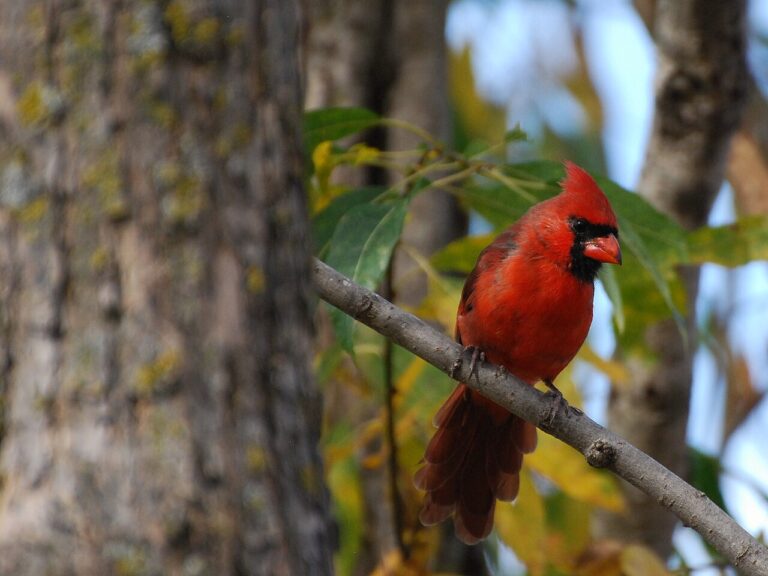
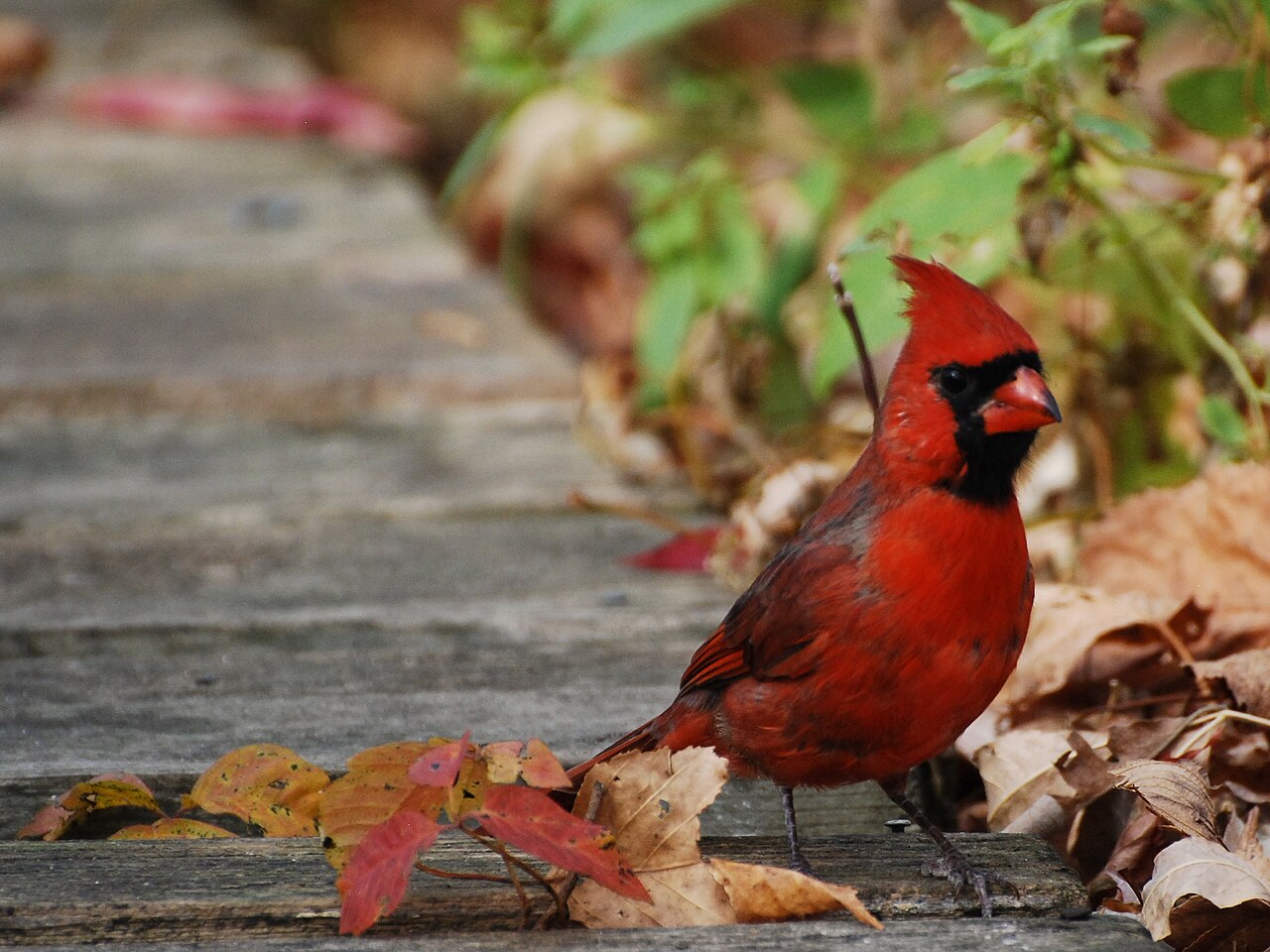
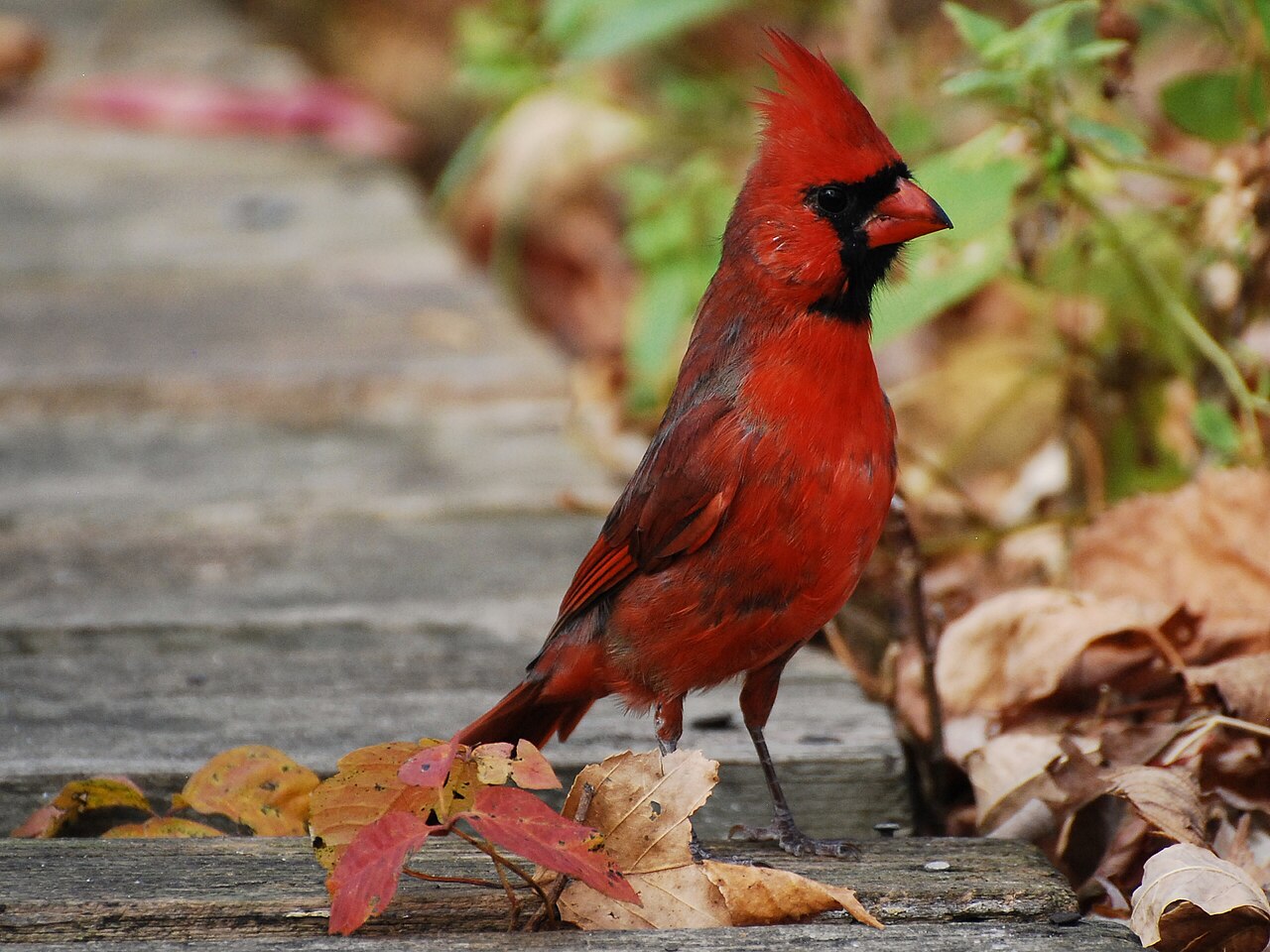
The northern cardinal is the default answer across most of the eastern and central United States. Males are entirely red including the tail, with a pointed crest, a black mask around a thick cone-shaped orange bill, and a habit of visiting feeders where they are hard to miss. Females are warm brown with red highlights and the same crest and bill.
Tanagers cause the most confusion because they are equally red and far less familiar. A scarlet tanager male has a brilliant red body with jet black wings and tail, no crest, and stays high in the forest canopy, so sightings are brief. A summer tanager is red all over including the wings, with no crest and a paler bill, and it favors open woodland in the south.
Smaller red birds are common at feeders. House finches show red only on the head, throat, and upper chest over a streaky brown body, and they are the red bird most people actually see daily without registering it. In the southwest, the vermilion flycatcher is a small striking bird with a red crown and underparts and a dark mask. Our guide to red birds works through the full identification range.
Red Bird Meaning Across Cultures
Red is the most emotionally loaded color in nearly every symbolic tradition, carrying associations with blood, fire, life force, passion, courage, and danger. Birds add their own layer, since flight and the ability to move between earth and sky make them natural messengers in folklore worldwide.
Combined, red birds are read as symbols of vitality and vital energy, of passion and love, of courage and confidence, and of important news arriving. In several Native American traditions cardinals are associated with courtship, monogamy, and good fortune, and the number twelve recurs in some tellings. In Chinese symbolism red birds connect to the Vermilion Bird of the south, a guardian figure associated with summer and fire.
The most widespread modern reading in North America is more specific and more personal. A cardinal appearing at a window, in a yard, or at a meaningful moment is widely understood as a visit from a deceased loved one, a belief that has grown enormously in the last few decades and now appears on memorial cards, jewelry, and garden ornaments. Our guides to cardinal symbolism and what a cardinal visit means go into that tradition in depth.
Why Red Birds Are Red
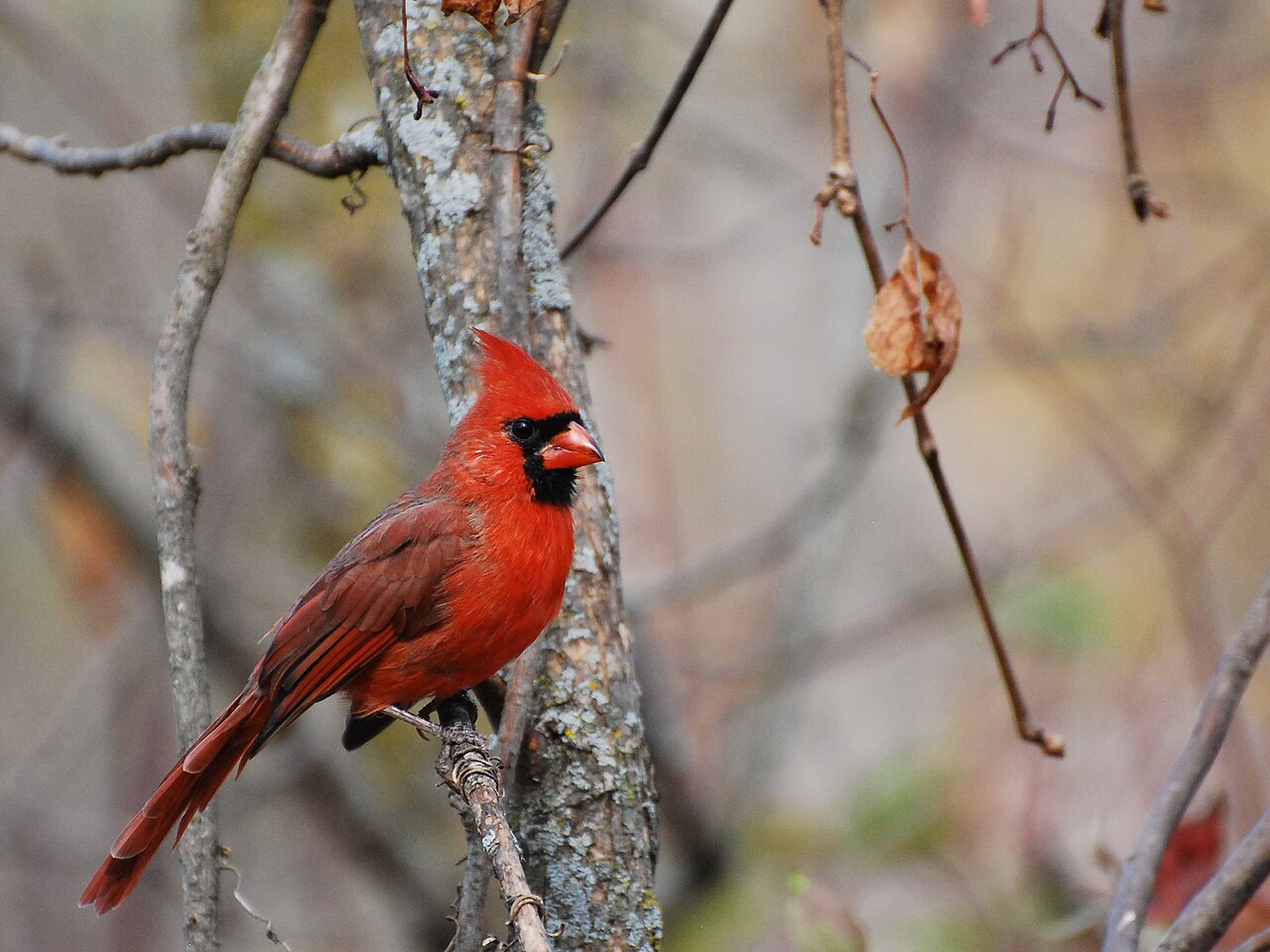
The biology here is genuinely striking and it changes how a red bird looks once you know it. Birds cannot synthesize red carotenoid pigments. They obtain yellow carotenoids from their diet, mainly from fruits, seeds, and insects that ate plants, and then convert them into red pigments using an enzyme in specialized cells.
That conversion is metabolically demanding, which makes redness an honest signal. A male cardinal in brilliant plumage has been finding good food and is in good physical condition, and a duller male has not. Research has found that brighter male cardinals hold better territories and raise more young, so females attending to color are reading real information.
The same logic explains variation you can watch in your own yard. House finch males range from bright red through orange to yellow depending entirely on diet during molt, and a yellow house finch is not a different species but a bird that molted on a poor diet. Feeding high-quality seed genuinely affects how red the finches at your feeder become the following year, which is a rare case where backyard practice changes something visible.
Cardinals: The Most Common Red Bird Message
Cardinals dominate red bird symbolism for reasons that are partly practical. They do not migrate, so they are present all winter when the landscape is bare and a red bird against snow is unmissable. They visit feeders readily, they are common across a huge range, and they sing year-round.
They are also unusually visible in pairs. Cardinals are largely monogamous, mates stay together through the year, and males feed females beak to beak during courtship, which is an easily observed behavior that reinforces the associations with devotion and partnership.
The winter presence is probably the strongest single factor. A brilliant red bird appearing in a grey yard in January, during the months when grief and memory press hardest, is exactly the kind of event that becomes meaningful. Our guide to the female cardinal covers the less-noticed half of the pair, which many people do not realize is the same species.
What a Red Robin Means
Robins carry their own distinct symbolism and deserve separating from the cardinal tradition. In European folklore, especially British, the robin is strongly associated with the dead and with Christmas, and the belief that a robin appearing after a bereavement represents a visiting spirit is older and better established in Britain than the American cardinal version.
The two robins are different birds. The European robin is small, round, and orange-breasted, in the flycatcher family. The American robin is a much larger thrush with a brick-orange breast and grey back, familiar for pulling worms from lawns. The American species was named by settlers because the breast color reminded them of home.
American robin symbolism leans toward renewal rather than remembrance. Because robins are among the earliest and most visible signs of spring across much of the country, they signify new beginnings, growth, and the end of winter. Someone who sees a red-breasted bird and looks up its meaning may find British death symbolism attached to a bird that in North America means the opposite.
Tanagers and the Rarer Red Birds
Scarlet tanagers are dramatic and briefly seen, which shapes how encounters feel. Males spend the breeding season high in mature deciduous forest canopy, and a flash of brilliant red against green foliage is often the only view. They winter in South America, so North American sightings are limited to the breeding months.
Summer tanagers occupy open woodland in the southern states and are specialists on bees and wasps, catching them in flight and rubbing off the stingers before eating them. That habit gives them a folklore role as a bird of protection and fearlessness in some tellings.
Vermilion flycatchers of the southwest and the red crossbill, whose crossed bill tips pry open conifer cones, round out the group. Because these birds are less familiar, sightings tend to be interpreted more openly than cardinal sightings, and many people simply search for what they saw rather than what it means. Both questions are worth taking seriously, which our broader guide to bird symbolism addresses across species.
Seeing a Red Bird After a Loss
This is why most people arrive at the question, and it deserves a straightforward answer rather than either mockery or overclaiming. The belief that a cardinal represents a visiting loved one is genuinely widespread, genuinely comforting to many people, and not something ornithology can confirm or refute.
What can be said is that the experience is real and common. Grief heightens attention, and a bright bird appearing at a significant moment lands with force it would not otherwise have. Cardinals are also territorial and habitual, returning to the same yards and perches day after day, so a bird that seems to be visiting deliberately often genuinely is returning deliberately, for reasons of territory and food.
Both things can be true at once. The bird has a nest nearby and a feeder it likes, and the moment still meant something to the person who saw it. If sightings become a source of comfort, that is worth having, and if grief feels unmanageable, talking to someone about it matters more than any interpretation of a bird. Our guide to birds with red heads helps if the identification itself is what you are unsure about.
What a Red Bird Says About Your Yard
Practically, a red bird in your yard is information about habitat. Cardinals need dense shrubby cover for nesting, which is why they favor property edges, hedgerows, and gardens with thickets rather than open lawn. A cardinal pair settling in means you have provided cover, not just food.
Feeder preferences are specific. Cardinals favor black oil sunflower and safflower seed, and they need a platform or hopper feeder with space to perch, since their body shape suits tube feeders poorly. They feed most actively at dawn and dusk, earlier and later than most feeder birds, which is why the first and last visitors of the day are so often cardinals.
Tanagers ask for something different entirely. They need mature forest and rarely visit feeders, though orange halves and grape jelly occasionally draw them during migration. If you want more red birds generally, the reliable levers are native shrubs and small trees for cover and fruit, water in a shallow moving source, and no pesticides, since the insects that vanish are what nestlings are fed.
Related reading: Swallow Tattoo Meaning.
Related reading: Woodpecker Spiritual Meaning.
Related reading: Blue Bird Meaning.
Frequently Asked Questions
What does seeing a red bird mean?
Traditionally, vitality, passion, courage, and news arriving. The most widespread modern reading in North America is that a cardinal represents a visit or message from a deceased loved one. Which meaning applies partly depends on which red bird you saw, since robins and tanagers carry different traditions.
What red bird is not a cardinal?
Scarlet tanagers have red bodies with black wings and tails, summer tanagers are red all over with no crest and a pale bill, house finches show red only on the head and chest over streaky brown, and vermilion flycatchers of the southwest have red underparts and a dark mask.
Why are cardinals red?
Because they convert yellow carotenoid pigments from their diet into red ones using a specialized enzyme. Birds cannot make red from scratch, so brightness reflects how well a bird has been eating. Brighter male cardinals hold better territories and raise more young.
Does a red bird mean someone is visiting from heaven?
That belief is widespread and comforting to many people, and ornithology can neither confirm nor refute it. What is verifiable is that cardinals are territorial and habitual, returning to the same yards daily, so a bird that seems to visit deliberately often genuinely is.
What does a red robin mean?
In British folklore the robin is strongly linked to the dead and to Christmas, and a robin after a bereavement is read as a visiting spirit. The American robin is a different and larger bird, a thrush, and its symbolism leans toward spring, renewal, and new beginnings instead.
Why do I keep seeing the same red bird?
Cardinals are territorial and return to the same perches, feeders, and yards day after day, often for years. Males also attack their reflections in windows and car mirrors during breeding season, mistaking them for rivals, which produces repeated visits to the same spot.
How do I attract red birds to my yard?
Offer black oil sunflower and safflower seed on a platform or hopper feeder with room to perch, and provide dense shrubby cover for nesting, which matters more than food. Add native fruiting shrubs, a shallow water source, and avoid pesticides, since nestlings are fed insects rather than seed.