American Bullfrog Identification: Size, Sound and Pond Impact
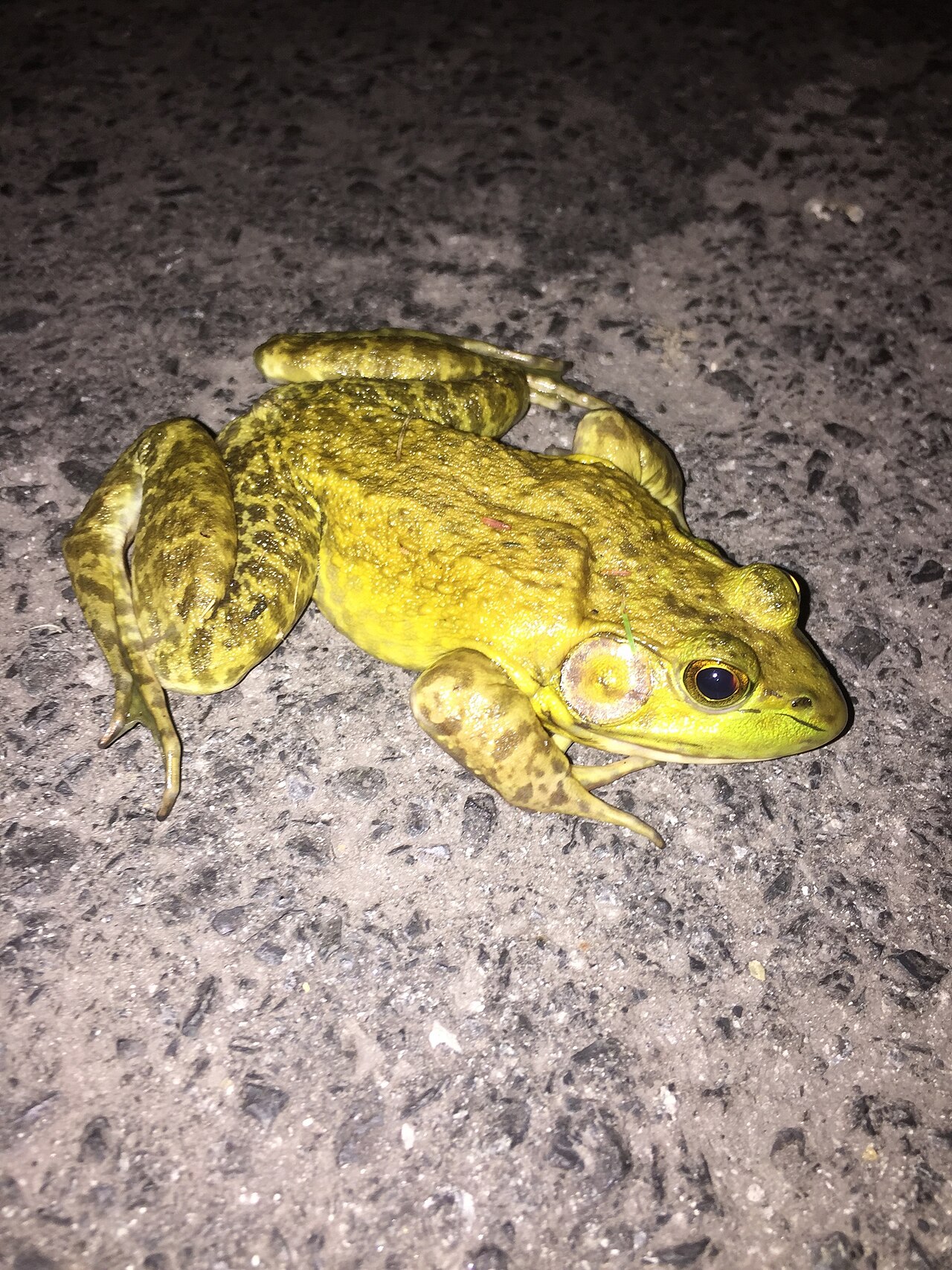
The American bullfrog (Lithobates catesbeianus) is the largest frog native to North America, a heavy bodied ambush predator that reaches 8 in (20 cm) from snout to vent and swallows anything it can fit in its mouth. That deep “jug o rum” rolling across a warm pond after dark in June is this species calling.
It is native east of the Rockies and introduced almost everywhere else, from California to Hawaii and Japan. At home it is an ordinary part of a healthy pond. Outside that range the same appetite makes it one of the most damaging amphibians on the continent.
The American bullfrog is North America’s largest native frog, growing 3.5 to 8 in (9 to 20 cm) long and weighing up to 1.5 lb (680 g). It is harmless to people, with no venom and no dangerous bite, but west of the Rockies it is an invasive predator that eats native frogs, fish, and snakes.
| Quick Facts | American Bullfrog |
|---|---|
| Scientific name | Lithobates catesbeianus |
| Body length | 3.5 to 8 in (9 to 20 cm) |
| Weight | Up to 1.5 lb (680 g) |
| Lifespan | 7 to 9 years wild, up to 16 captive |
| Native range | Eastern and central US, southern Canada |
| Call | Deep “jug o rum”, carries 0.5 mi (800 m) |
| Diet | Insects, crayfish, fish, snakes, birds, frogs |
How to Identify an American Bullfrog
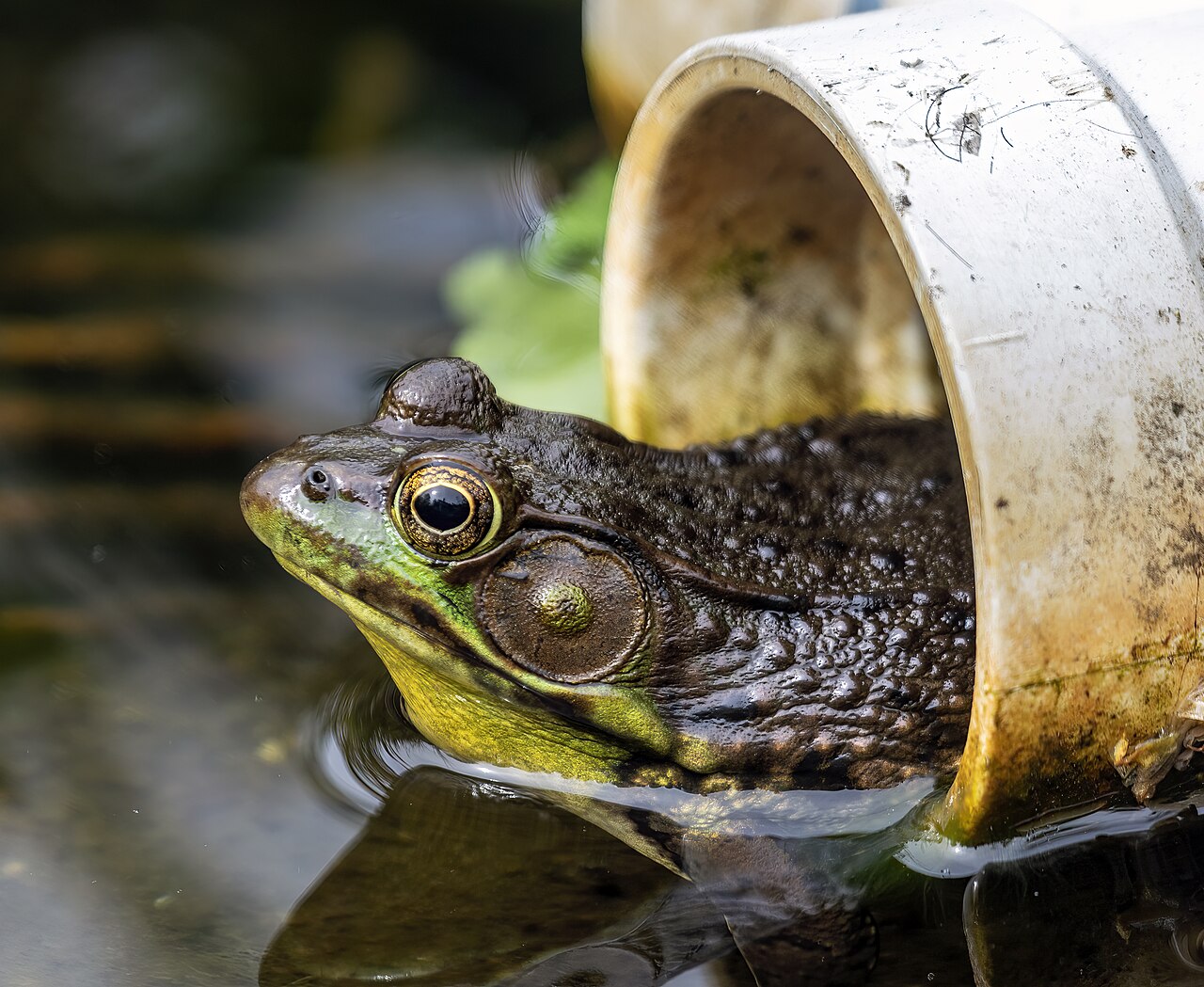
Look at the back, not the size. A bullfrog has no dorsolateral ridges, the two raised folds that run from behind the eye down each side of the back. The green frog (Lithobates clamitans), the species mistaken for it most often, has them clearly. That single feature settles almost every backyard argument.
Size and ear help once the frog is adult. Males have a tympanum, the circular eardrum behind the eye, noticeably wider than the eye itself, and a yellow throat in breeding season; females have an eye sized tympanum. The general bullfrog profile covers the other species that carry the name, and the African bullfrog is a completely unrelated animal despite sharing it.
Are Bullfrogs Harmless?
Bullfrogs are harmless to people. They have no venom and no skin toxin that matters through intact skin, and although they carry tiny vomerine teeth on the roof of the mouth, a bite from the biggest individual feels like a firm pinch.
The caution is hygiene, not defense. Wild amphibians can carry Salmonella, so wash your hands afterward. Handling also strips the mucus layer frogs need to breathe through their skin, so wet hands and short contact protect the frog more than they protect you.
Is the American Bullfrog Invasive?
Yes, outside its native range the American bullfrog is invasive, and several western states list it as prohibited or regulated. It moved west in the early 1900s for frog leg farming, escaped, and established itself in irrigation ditches and stock ponds across California, Oregon, Washington, and Arizona. The US Geological Survey tracks the spread in its nonindigenous aquatic species database.
Two traits make it so effective. It overpowers almost anything smaller, including the red legged frogs and pond turtles it now shares water with, and one female lays up to 20,000 eggs at a time. Its tadpoles also taste bad to most native fish, so they survive where native tadpoles are eaten. In the East, herons, snakes, and cannibalism keep it in check.
Is It Good to Have Bullfrogs in Your Pond?
In the eastern United States a bullfrog is a sign the water supports a top amphibian predator, and it works through slugs, beetles, and mosquito larvae all summer. It also draws in wildlife worth watching, from wading birds to the occasional American kestrel hunting the bank.
West of the Rockies the answer flips. A breeding pair will hollow out the smaller amphibians in a small pond within two or three seasons, and removal is far harder than exclusion. Check your state wildlife agency first: moving a live bullfrog is illegal in some western states. For frog song without the appetite, the American green tree frog is a gentler neighbor.
Can I Keep an American Bullfrog as a Pet?
You can, and they are hardy and long lived, but they are demanding. One adult needs a 40 gallon breeder or larger with deep water, a dry land shelf, a strong filter, and a locking lid. They are solitary and will eat smaller tank mates, including other bullfrogs.
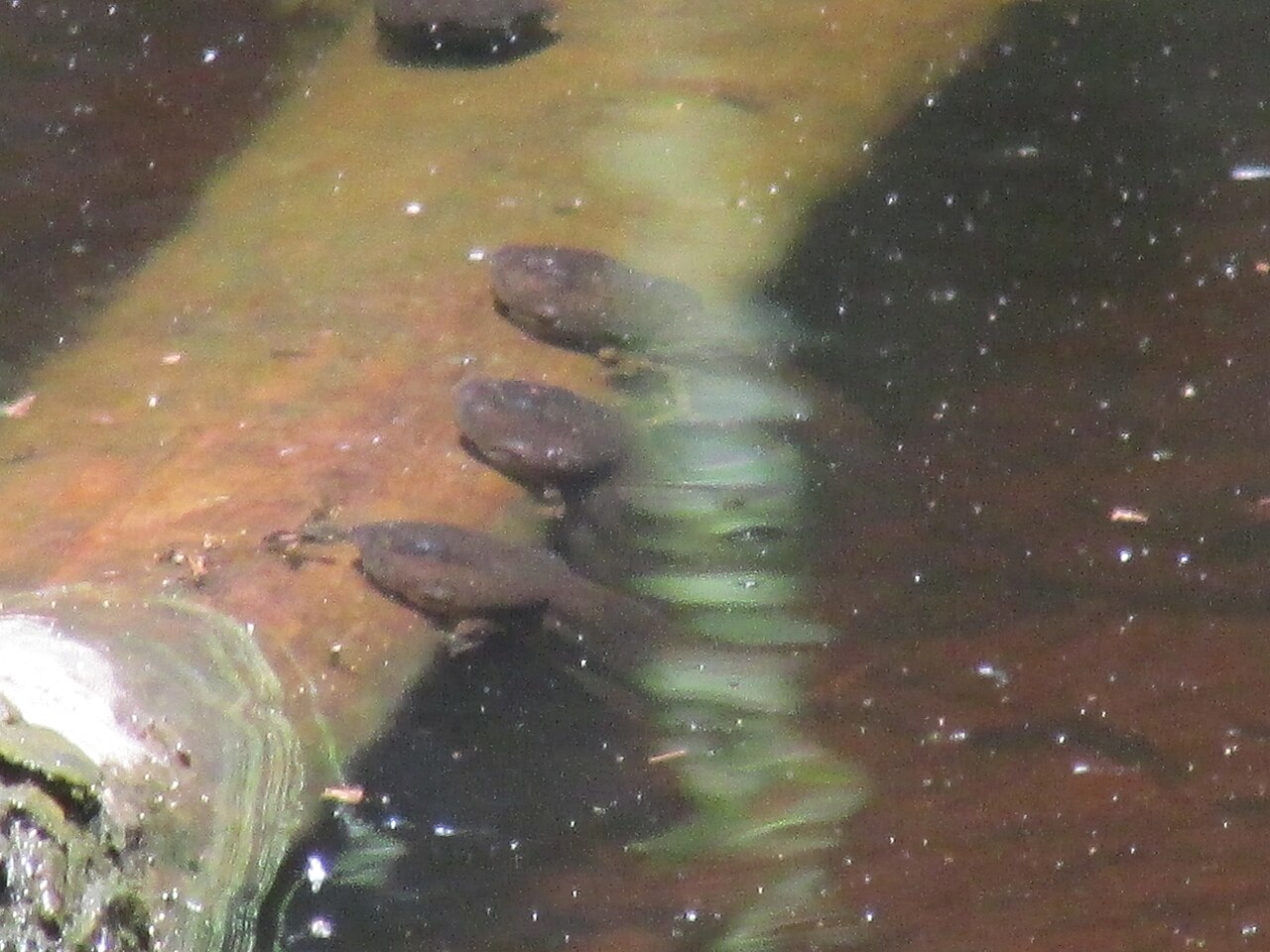
Feeding is live prey: nightcrawlers, crickets, and an occasional pinkie mouse for a large adult, two or three times a week. Never collect one where it is regulated, and never release a captive frog, which is how most western populations started. The bullfrog tadpole stage alone can last two years, so this is a decade long commitment.
Frequently Asked Questions
What month do bullfrogs lay eggs?
Bullfrogs lay eggs from late May through August across most of their range, peaking in June and July once water holds above 70 F (21 C). In the deep South the season can open in April. A female deposits a floating film of up to 20,000 eggs that hatches within three to five days.
Do frogs attract snakes?
Yes, a pond full of frogs is a reliable food source and will draw watersnakes, garter snakes, and in the South cottonmouths. Frogs are not the cause though, they are one symptom of good habitat. Standing water, cover, and rodents pull snakes in just as strongly, so clearing frogs rarely changes the snake count.
Can two bullfrogs live together?
Only if they are closely matched in size, and even then it is risky. Bullfrogs are cannibalistic, and a frog a third larger will eventually try to swallow the smaller one. Most keepers house them singly. In the wild, calling males hold territories several feet apart and fight over the boundaries.
Do frogs return to the same pond?
Adult bullfrogs show strong site fidelity and usually return to the same stretch of shoreline each year, often the pond where they hatched. Males may hold one calling territory for several summers, marked by their calls. Juveniles are the dispersers, travelling up to a mile overland in wet weather.