African Bullfrog: Size, Diet & Care Guide
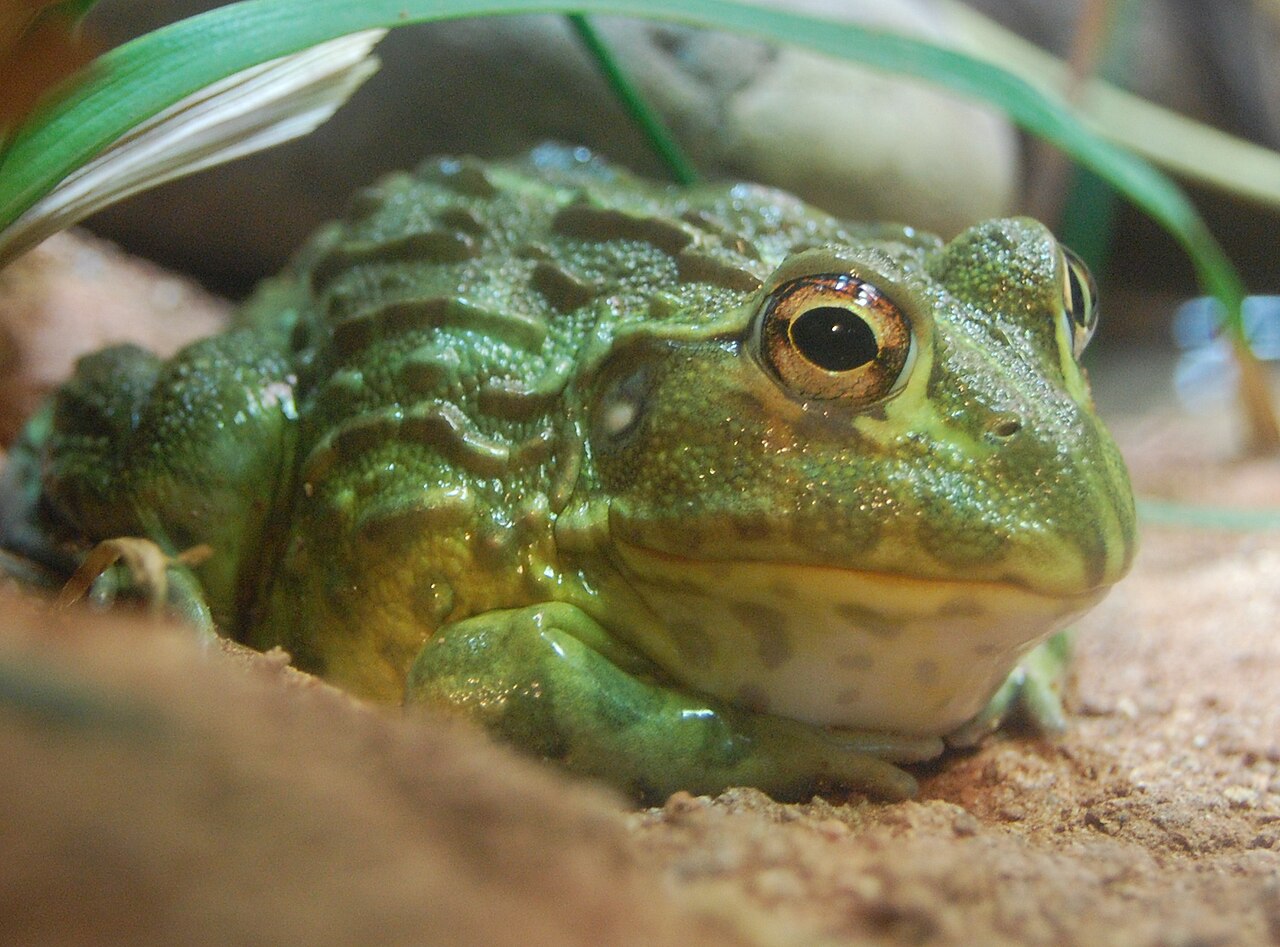
The African bullfrog (Pyxicephalus adspersus), also called the pixie frog, is one of the largest and longest-lived frog species commonly kept as a pet, with males reaching up to 9 to 10 inches and captive lifespans of 20 to 40 years, occasionally longer. This guide covers realistic size expectations by sex, enclosure and care requirements, their genuinely voracious diet, and why this species, despite being labeled beginner-friendly, is really better suited to someone prepared for its size, appetite, and defensive bite.
| Detail | Value |
|---|---|
| Scientific name | Pyxicephalus adspersus |
| Male size | Up to 9-10 inches |
| Female size | About half the male’s size, ~3.5-5.5 inches |
| Lifespan | 20-40 years; some reports up to 45-50 |
| Minimum enclosure | 15+ gallon tank for a single frog |
How Big Do African Bullfrogs Get?
African bullfrogs show dramatic sexual size dimorphism, unusual among frogs generally: males can reach a substantial 9 to 10 inches in length and weigh up to 1.5 kilograms, making them one of the largest frog species on Earth, while females typically grow to only about half that size, commonly 3.5 to 5.5 inches. This size difference is thought to help during breeding, since the bulky, somewhat clumsy males can grip a considerably smaller female more easily during amplexus, the mating embrace characteristic of frog reproduction. Because of this pronounced difference, the sex of an African bullfrog has a major practical impact on the enclosure size and overall care commitment a keeper should genuinely expect.
African Bullfrog Lifespan
This species is exceptionally long-lived for an amphibian, with typical captive lifespans of 20 to 30 years and some documented individuals, particularly males, reportedly living 45 to 50 years. This kind of longevity is highly unusual among frogs generally, more comparable to lifespans seen in some salamander species than typical anuran life expectancy, and it means a prospective keeper is genuinely signing up for a multi-decade commitment, potentially spanning generations of ownership within a single family, rather than a short-term pet purchase.
African Bullfrog Enclosure Setup
Despite their impressive size, African bullfrogs are relatively inactive, spending much of their time buried or partially buried in substrate, which means a single adult can be comfortably housed in a 15-gallon tank or larger rather than requiring the sprawling enclosure their size might otherwise suggest. Moist coco fiber substrate deep enough to allow the frog to bury itself completely is considered ideal, paired with a large, easy-to-enter water dish for soaking. Temperatures should stay in the 75 to 90°F range with roughly a 5-degree nighttime drop, and while humidity above 70 percent with constant water access is commonly recommended for novice keepers, wild African bullfrogs naturally experience dry periods and are capable of aestivating, entering a dormant, water-conserving state inside a cocoon of shed skin, though most care guides recommend avoiding deliberately inducing this state in a captive pet.
What Do African Bullfrogs Eat?
African bullfrogs are voracious, opportunistic carnivores with an enormous gape relative to their body size, and in the wild they consume large invertebrates along with small vertebrates, including other frogs, small reptiles, rodents, and even nestling birds when the opportunity arises. One remarkable documented case recorded a single bullfrog consuming 17 venomous juvenile Rinkhals, a cobra-like African elapid snake, apparently in one sitting without apparent harm, illustrating just how aggressive and capable a predator this species genuinely is despite its amphibian classification. In captivity, appropriately sized crickets, roaches, superworms, and earthworms form the dietary staple, with rodents offered only occasionally, roughly once every two to three weeks for adults, since a diet too rich in rodents is a well-documented path to obesity in this species.
Common African Bullfrog Health Issues
Beyond obesity from overly generous rodent feeding, African bullfrogs kept in overly dry conditions without adequate humidity or soaking access can develop skin problems and dehydration-related stress, since even a species tolerant of natural dry periods still needs consistent access to moisture in captivity. Impaction, caused by ingesting substrate along with food, is another documented risk shared with other substrate-burrowing pets like certain reptile species, which is part of why moist coco fiber rather than loose gravel or sand is generally the preferred substrate choice for this species specifically.
African Bullfrog Feeding Schedule by Age
Feeding frequency and portion size shift considerably as the frog grows. Juveniles under about three inches should be fed daily, offered as much appropriately sized food as they will consume within roughly 15 minutes, while sub-adults do well on a schedule of every other day with three to five medium-sized prey items per feeding. Adult African bullfrogs need feeding far less frequently than their size might suggest, typically every three to four days with larger prey such as several roaches or a single properly sized rodent, and dusting food with a calcium supplement about once weekly helps prevent nutritional deficiencies across all life stages.
Do African Bullfrogs Bite?
Yes, and this is a genuine, well-documented consideration rather than an exaggerated warning. African bullfrogs possess two prominent, tooth-like projections on their lower jaw, sometimes called fangs, that help grip and hold prey before swallowing, and these same structures make their bite capable of drawing blood, a rare trait among frogs generally, most of which cannot deliver a meaningfully painful bite at all. Males in particular can be defensive and are known to bite when handled, which is a significant reason most care guides recommend this species primarily for observation rather than regular handling, treating it more like a display animal than an interactive pet.
African Bullfrog vs Other Large Pet Frogs
Compared with other large, commonly kept pet frog species like the Argentine horned frog (Ceratophrys ornata), African bullfrogs require broadly similar care philosophy, both species are sit-and-wait ambush predators that spend considerable time buried and share a genuinely voracious feeding style, but African bullfrogs generally tolerate slightly less humidity and drier conditions between soakings, reflecting their savanna origin compared with the horned frog’s more consistently moist South American habitat. Someone comparing exotic pet options more broadly might also look at a crested gecko as a lower-commitment alternative, given its shorter lifespan and simpler feeding schedule relative to a multi-decade bullfrog commitment.
Are African Bullfrogs Good Pets for Beginners?
African bullfrogs are frequently marketed as beginner-friendly given their straightforward enclosure needs and hardy constitution, but this label deserves some genuine nuance. Their care requirements are indeed simple compared with many other exotic pets, but their eventual large size, multi-decade lifespan commitment, voracious and messy feeding habits, and capacity for a painful defensive bite make them arguably better suited to someone who has done real research and understands exactly what they are taking on, rather than an impulse purchase based purely on a juvenile’s small, appealing size. A prospective owner comparing this species against other large, long-lived exotic pets, such as a ball python, will find the actual husbandry simpler for the bullfrog, but the multi-decade commitment and defensive temperament are comparably serious considerations either way.
African Bullfrog Breeding Behavior
Wild African bullfrog breeding is described as “explosive,” with adults converging rapidly on temporary pools that form after heavy seasonal rains, mating quickly to take full advantage of short-lived water before it evaporates. Remarkably, some males have been observed actively guarding breeding pools and even digging channels to prevent tadpoles from drying out as puddles shrink, a rare and genuinely notable example of parental care in frogs, a group not generally known for extensive parental investment after eggs are laid.
African Bullfrog Handling and Temperament
Despite their bulky, somewhat comical appearance, African bullfrogs are best treated as a look-rather-than-handle pet, both because of their bite risk and because frog skin generally is highly sensitive to the natural oils and residues present on human skin, which can genuinely harm the animal with repeated handling. When handling is genuinely necessary, such as for a health check or enclosure maintenance, clean, moistened hands (or gloves) and brief handling sessions minimize risk to both the frog’s sensitive skin and the handler’s fingers, and most keepers find that this species is simply more rewarding to observe in a well-set-up enclosure than to interact with directly on a regular basis.
Related reading: Crested Gecko Care.
Related reading: Mediterranean House Gecko.
Related reading: Pacman Frog.
Related reading: Gila Monster Bite.
Related reading: Veiled Chameleon.
Related reading: Earless Monitor Lizard.
Related reading: Indian Star Tortoise.
Related reading: Green Anole.
Related reading: Bullfrog Sound.
Frequently Asked Questions
How big do African bullfrogs get?
Males can reach 9 to 10 inches, among the largest frog species, while females grow to only about half that size, typically 3.5 to 5.5 inches, an unusually dramatic size difference for a frog species.
How long do African bullfrogs live?
This species is exceptionally long-lived, typically 20 to 30 years in captivity, with some documented individuals, mostly males, reportedly reaching 45 to 50 years, unusual longevity for an amphibian.
What size enclosure does an African bullfrog need?
Despite their large size, a single adult can be comfortably housed in a 15-gallon tank or larger, since they are relatively inactive and spend much of their time buried in substrate rather than actively moving around.
What do African bullfrogs eat?
They are voracious carnivores eating large insects, other frogs, small reptiles, and rodents in the wild. In captivity, crickets, roaches, superworms, and earthworms form the staple diet, with rodents offered only occasionally.
Do African bullfrogs bite?
Yes, they have two tooth-like projections on their lower jaw capable of drawing blood, and males in particular can be defensive. Most care guides recommend this species mainly for observation rather than regular handling.
Are African bullfrogs good for beginners?
Their care requirements are relatively simple, but their large size, multi-decade lifespan, and capacity for a painful bite mean they suit a prepared, research-minded keeper better than an impulse purchase.
How often should you feed an African bullfrog?
Juveniles need daily feeding, sub-adults every other day, and adults every three to four days with larger prey. Rodents should only be offered every two to three weeks for adults to prevent obesity.
Whatever species a prospective keeper ultimately chooses, taking the time to genuinely understand the multi-decade commitment, adult size, and temperament involved leads to a far better outcome for both keeper and animal than a decision made purely on a juvenile’s small, appealing size.
Regular observation of feeding behavior, body condition, and skin appearance remains the simplest, most reliable way for a keeper to catch any of these issues early, well before they progress into something more serious.
For a keeper genuinely prepared for the size, appetite, and multi-decade commitment involved, few amphibians offer as much personality and presence in an enclosure as a well-cared-for African bullfrog does over its remarkably long life.
Researching thoroughly before purchase, rather than after bringing a frog home, remains the single best predictor of a genuinely successful, long-term keeping experience with this species, the same research-first approach that serves any prospective exotic pet owner well regardless of species.