Bull Snake: How to Tell It Apart From a Rattlesnake
A bull snake (Pituophis catenifer sayi) is a large, non-venomous constrictor native to the central United States, known for its bluffing display of hissing loudly and vibrating its tail to mimic a rattlesnake when threatened. Despite the intimidating act, bull snakes pose no venom risk to humans and are often considered beneficial to have around farms and gardens because of how many rodents they eat.
Bull snakes are one of the most commonly confused snakes in North America, frequently mistaken for both rattlesnakes and their close relative, the gopher snake. This guide covers how to identify a bull snake, how it behaves, where it lives, and how to tell it apart from the snakes it is most often confused with.
A bull snake is a large, non-venomous constrictor found across the central and western United States, closely related to the gopher snake. It grows up to 8 feet long, hisses loudly and vibrates its tail as a bluff defense, and primarily eats rodents, making it beneficial around farms and gardens.
| Trait | Detail |
|---|---|
| Scientific name | Pituophis catenifer sayi |
| Average length | 4 to 6 ft, up to 8 ft (1.2 to 1.8 m, up to 2.4 m) |
| Venomous | No |
| Range | Central and western United States, into Canada and Mexico |
| Diet | Rodents, ground-nesting bird eggs, small mammals |
| Lifespan | 12 to 20 years in the wild, longer in captivity |
What Is a Bull Snake?
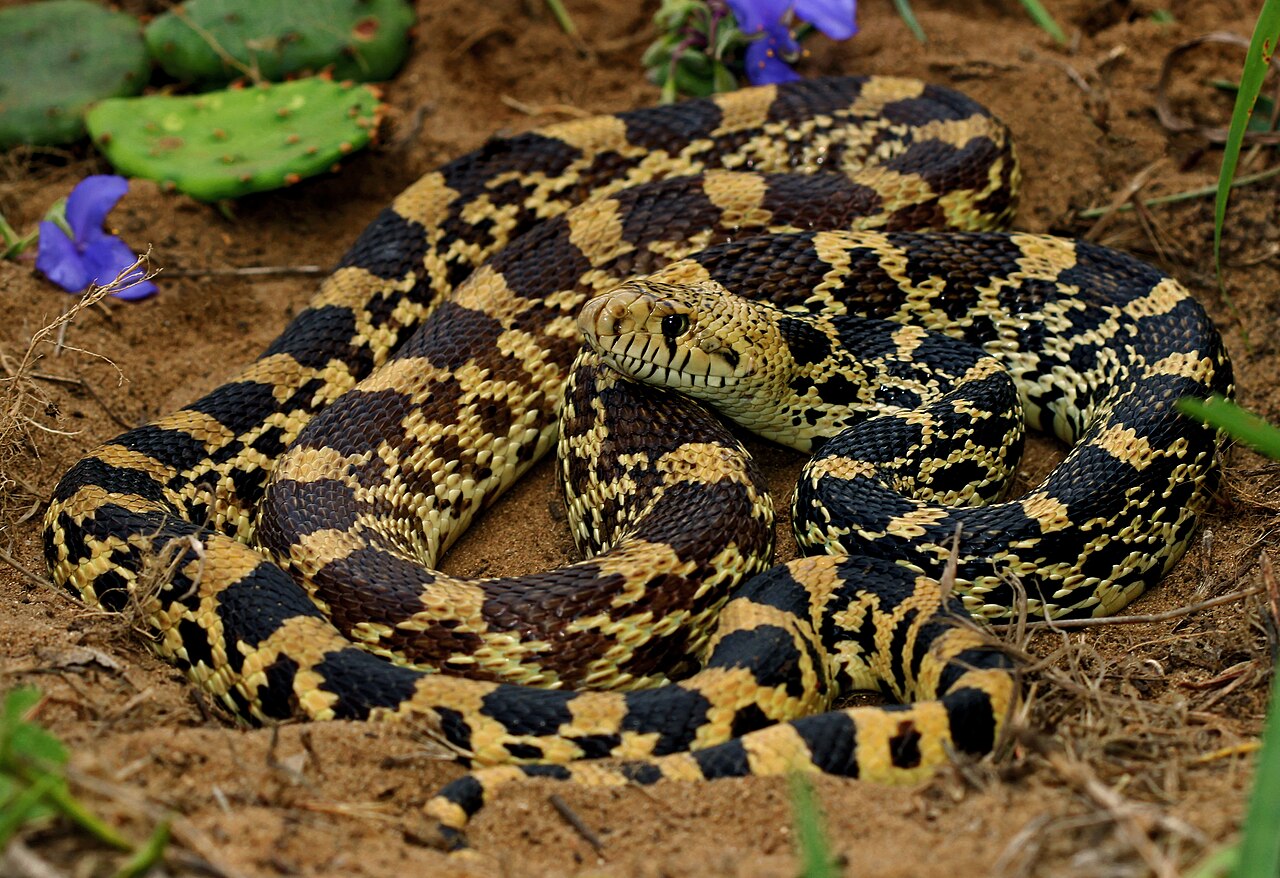
A bull snake is a large, powerfully built constrictor snake belonging to the subspecies Pituophis catenifer sayi, part of the broader gopher snake species group found across North America. Adults typically show a yellowish or tan base color with dark brown or black blotches running down the length of the body, giving them a pattern that superficially resembles several venomous species.
Bull snakes are one of the largest snake species in much of their range, regularly reaching 4 to 6 feet in length, with some individuals stretching close to 8 feet. Despite their size and dramatic defensive display, they rely entirely on constriction to subdue prey and have no venom apparatus at all.
These snakes are strongly associated with open habitats including prairies, agricultural fields, and grasslands, where their rodent-heavy diet makes them a natural, if often misunderstood, form of pest control.
Bull Snake vs Gopher Snake: Are They the Same?
Bull snakes are technically a subspecies of gopher snake, meaning every bull snake is a gopher snake, but not every gopher snake is a bull snake. The broader species, Pituophis catenifer, includes several regional subspecies, and “bull snake” specifically refers to the sayi subspecies found across the Great Plains and central United States.
Other gopher snake subspecies, such as the Pacific gopher snake found along the West Coast, look similar but carry slightly different names depending on region, which is why the terms “bull snake” and “gopher snake” are sometimes used interchangeably even though they are not always describing the exact same subspecies.
In practice, most people use “bull snake” for the plains-dwelling populations and “gopher snake” more broadly for the species as a whole, but both names describe fundamentally the same non-venomous, rodent-hunting constrictor.
Bull Snake vs Rattlesnake: How to Tell Them Apart
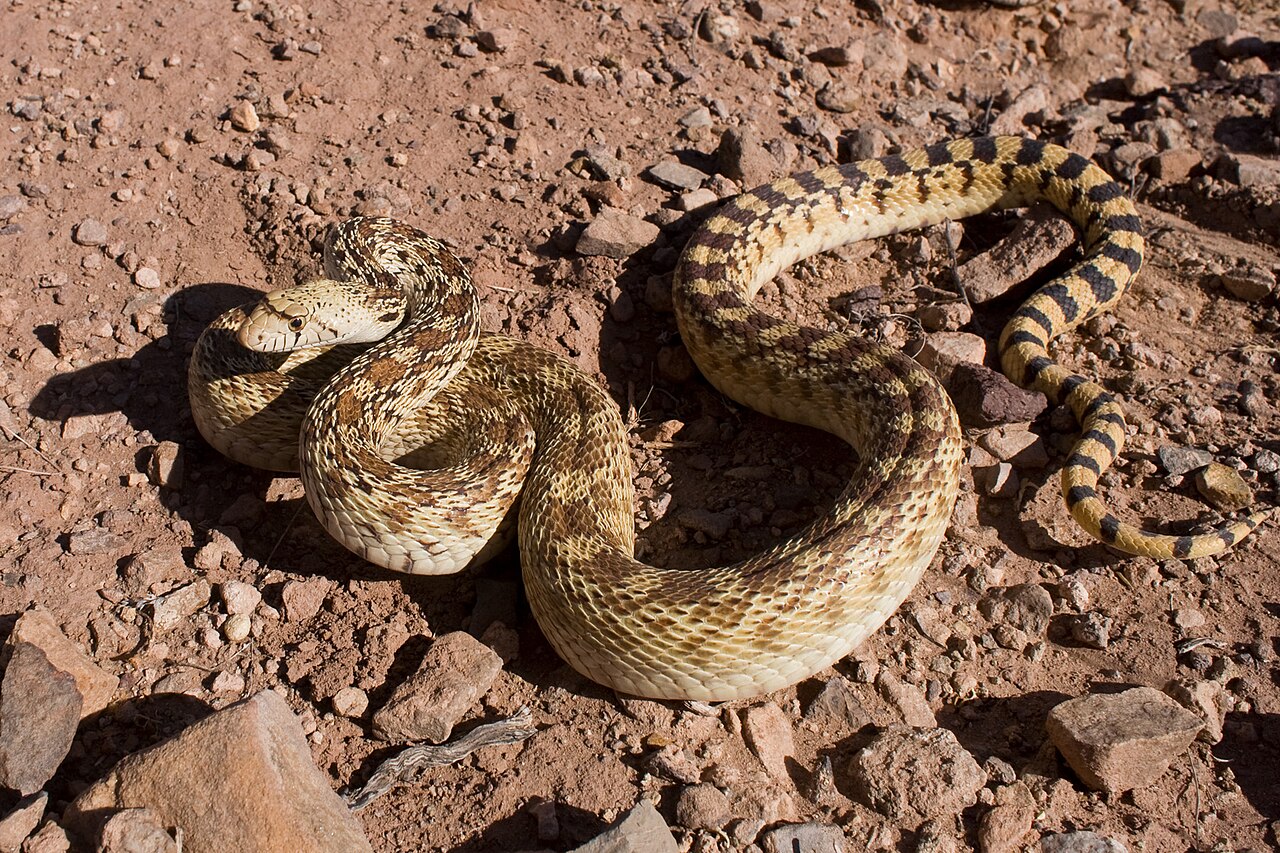
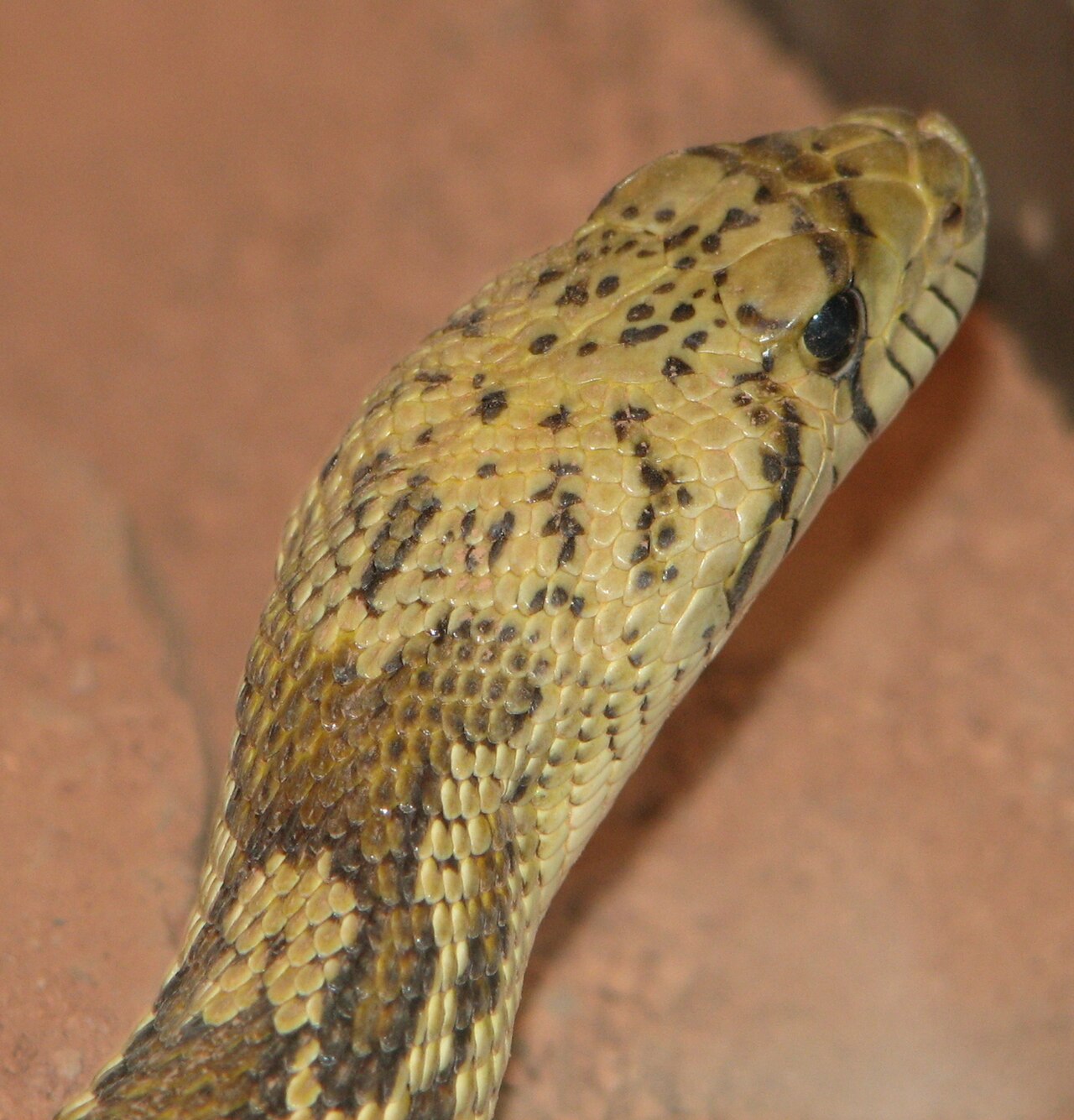
The clearest way to tell a bull snake from a rattlesnake is the tail and head shape: bull snakes have a narrow, pointed tail with no rattle segments and a rounded head, while rattlesnakes have a visible rattle and a distinctly triangular, wider head. Bull snakes also lack the heat-sensing pits found between a rattlesnake’s eyes and nostrils.
Despite these differences, bull snakes are frequently mistaken for rattlesnakes because of their defensive behavior. When threatened, a bull snake flattens its head, hisses loudly, and rapidly vibrates its tail against dry leaves or grass, producing a buzzing sound that closely mimics an actual rattle.
This mimicry is a defense strategy rather than a coincidence. Predators and threats that avoid rattlesnakes are more likely to avoid a bull snake performing the same warning display, even though the bull snake has no venom to back up the bluff.
Why Is It Called a Bull Snake?
The name “bull snake” most likely comes from the loud, deep hissing sound the species produces when threatened, which some early observers compared to the bellowing of a bull. This hiss is unusually loud for a snake, produced partly by a specialized structure in the windpipe that amplifies the sound as air is forced out.
Combined with the tail-vibrating display, this bellowing hiss forms the core of the bull snake’s bluff defense, aimed at convincing predators or humans that the snake is more dangerous than it actually is.
Some regional folk names for the species reference this same behavior, and the “bull” comparison has stuck as the most widely used common name across much of the snake’s range in the central United States.
Bull Snake vs Garter Snake: Key Differences
Bull snakes and garter snakes are easy to tell apart once you know what to look for: bull snakes are considerably larger, often reaching several feet in length, while adult garter snakes typically stay under 3 feet. Garter snakes also tend to have prominent longitudinal stripes, whereas bull snakes show blotched, saddle-like patterning instead.
Diet is another clear distinction. Garter snakes primarily eat amphibians, worms, and small fish, while bull snakes focus heavily on rodents and are powerful enough to take much larger prey through constriction.
Behaviorally, garter snakes rarely put on the dramatic hissing and tail-vibrating display that bull snakes are known for, making a threatened bull snake’s defensive act one of the more reliable ways to distinguish the two species in the field.
Are Bull Snakes Venomous?
No, bull snakes are completely non-venomous and have no venom glands or fangs capable of delivering venom. They rely entirely on constriction, wrapping around prey and applying pressure until it can no longer breathe, rather than any chemical means of subduing food.
The confusion around bull snake venom typically stems from their rattlesnake mimicry and intimidating size, not from any actual toxin. A bull snake bite can still be painful due to their strong jaw and rows of small teeth, but it carries no venom-related medical risk.
Basic first aid, cleaning the wound and monitoring for infection, is generally all that is needed after a bull snake bite, unlike the emergency response required for a venomous snakebite.
Will a Bull Snake Bite You?
A bull snake will bite if it feels cornered or is handled roughly, but like most non-venomous snakes, its first response to a threat is usually to hiss, flatten its head, and vibrate its tail rather than strike immediately. Given an escape route, most bull snakes will retreat rather than confront a person.
If a bite does occur, it is typically a defensive reaction rather than a predatory one, and the snake usually releases quickly once it realizes the “prey” is far too large to constrict or swallow. Bites can still draw blood due to the snake’s teeth, though they carry no venom.
Giving a bull snake plenty of space and avoiding attempts to pick it up, especially in the wild, is the most reliable way to avoid a defensive bite in the first place.
Where Do Bull Snakes Live?
Bull snakes are found primarily across the central United States, including states like Nebraska, Kansas, Oklahoma, Texas, and Colorado, with related gopher snake subspecies extending the broader range further west and south. They favor open habitats such as prairies, farmland, sandy scrublands, and grasslands where rodent populations are abundant.
Within this range, bull snakes are often found in and around agricultural areas, since tilled fields and grain storage tend to support large rodent populations that make ideal hunting grounds. Farmers in the region frequently recognize and tolerate bull snakes specifically because of this rodent control benefit.
These snakes are also skilled burrowers, and they frequently take over abandoned rodent burrows rather than digging extensive tunnels of their own, using them for shelter, temperature regulation, and egg-laying.
What Do Bull Snakes Eat?
Bull snakes primarily eat rodents, including pocket gophers, ground squirrels, mice, and rats, making them one of the more effective natural rodent control species in their range. Their size and constriction strength allow them to take prey considerably larger than many other snake species of similar length can manage.
In addition to rodents, bull snakes will eat ground-nesting bird eggs and occasionally young birds when the opportunity arises, along with rabbits and other small mammals. This varied diet makes them opportunistic hunters rather than specialists focused on a single prey type.
Because of their strong preference for rodents, bull snakes are frequently found near barns, grain silos, and other structures that attract mice and rats, where they can hunt efficiently with minimal competition.
What Eats Bull Snakes?
Hawks, owls, and other birds of prey are among the most significant predators of bull snakes, particularly targeting younger or smaller individuals that are easier to catch and subdue. Coyotes and other mid-sized mammalian predators will also take bull snakes when the opportunity arises.
Young bull snakes face considerably more predation pressure than adults, since a fully grown bull snake’s size and defensive bluffing display make it a much less appealing target for most predators. This is one reason juvenile mortality tends to be higher than adult mortality in the species.
Humans represent another significant threat to bull snakes, largely due to mistaken identity. Because of their rattlesnake mimicry, bull snakes are sometimes killed by people who assume they are dealing with a venomous species rather than a harmless rodent hunter.
Bull Snake Size and Lifespan
Adult bull snakes typically measure 4 to 6 feet long, with well documented individuals reaching close to 8 feet, making them one of the largest snake species found in the central United States. Hatchlings, by contrast, emerge at a modest 12 to 20 inches and grow quickly during their first few years.
In the wild, bull snakes generally live 12 to 20 years, with lifespan influenced heavily by predation risk, habitat quality, and food availability. In captivity, where these risks are reduced, well cared for bull snakes have been documented living into their twenties.
Growth rate slows noticeably after the first few years of life, with most of a bull snake’s dramatic size increase happening while it is still a juvenile actively building fat reserves for winter brumation.
Are Bull Snakes Good to Have Around?
Yes, bull snakes are generally considered beneficial to have around farms, gardens, and rural properties specifically because of how effectively they control rodent populations. A single adult bull snake can consume a significant number of mice, rats, and gophers over the course of a season.
Along with species like the king snake, milk snake, rat snake, and Texas rat snake, bull snakes belong to a broader group of non-venomous constrictors that many landowners actively encourage rather than remove, precisely because of the natural pest control they provide.
The main practical concern with bull snakes is mistaken identity rather than any real danger they pose, since their rattlesnake mimicry sometimes leads people to kill a harmless, beneficial snake out of caution. Learning to identify the tail and head differences covered above helps avoid that outcome. The U.S. Fish and Wildlife Service species profile confirms the subspecies classification and non-venomous status detailed here.
Frequently Asked Questions
What time of day are bull snakes most active?
Bull snakes are primarily active during the day, especially in the morning and late afternoon, though they may shift toward more crepuscular or nocturnal activity during the hottest summer months. This helps them avoid extreme daytime heat while still hunting effectively.
Can a bull snake mate with a rattlesnake?
No, bull snakes and rattlesnakes belong to entirely different families and cannot interbreed. The similarities in appearance and defensive behavior are the result of mimicry, not any close genetic relationship between the two species.
How big do bull snakes get?
Most adult bull snakes reach 4 to 6 feet in length, with exceptional individuals documented at close to 8 feet. This makes them one of the largest non-venomous snake species found across the central United States.
Are bull snakes legal to keep as pets?
In most U.S. states, bull snakes are legal to keep as pets, and they are commonly available through reptile breeders due to their manageable size and generally calm temperament once acclimated. Regulations vary by state and locality, so checking local wildlife laws before acquiring one is recommended.
What is a bull snake’s worst enemy?
Birds of prey, particularly hawks and owls, pose the greatest natural threat to bull snakes, especially to younger individuals. Human activity, including vehicle strikes and mistaken-identity killings, is also a significant source of mortality for the species.
Do bull snakes actually rattle their tails like rattlesnakes?
Bull snakes vibrate their tails rapidly against dry vegetation to produce a buzzing sound similar to a rattlesnake’s rattle, but they have no actual rattle segments. The sound comes entirely from the tail striking dry leaves, grass, or debris rather than any specialized rattle structure.