Gila Monster Bite: What Happens and What to Do
A Gila monster bite is genuinely venomous, intensely painful, and almost never fatal. The lizard clamps down and chews rather than striking, working venom into the wound through grooved teeth in the lower jaw, and it may hold on for minutes. Victims consistently describe the pain as among the worst they have experienced, but no confirmed death from a Gila monster bite has occurred in modern medical times.
The species is also one of the great success stories in venom research. A protein isolated from Gila monster saliva became the basis for a widely used class of type 2 diabetes drugs, which is a reasonable argument for valuing an animal that most people would rather avoid. This guide covers what the bite does, first aid, why bites happen at all, and the biology behind the venom.
| Quick Facts | Gila Monster Bite |
|---|---|
| Species | Heloderma suspectum |
| Venom delivery | Grooved teeth in the lower jaw, chewed in |
| Bite behavior | Clamps and holds, sometimes for minutes |
| Main effect | Severe pain, swelling, drop in blood pressure |
| Confirmed modern deaths | None verified in the modern medical era |
| Legal status | Protected in Arizona, Nevada, and elsewhere |
What Happens in a Gila Monster Bite
The bite begins with a clamp rather than a strike. A Gila monster seizes and holds, often rolling or chewing to work the jaws deeper, and it can maintain the grip for several minutes. That behavior is not aggression so much as the only delivery method available to it.
Immediate pain is the dominant symptom and it is severe. Victims describe burning, radiating pain that spreads up the limb within minutes and can persist for hours, accompanied by rapid swelling, redness, and sometimes bleeding that is slower to stop than the wound size suggests.
Systemic effects follow in more serious cases. A drop in blood pressure is the most consistently reported, along with weakness, dizziness, nausea, vomiting, sweating, and a rapid heart rate, typically developing within the first hour. Teeth frequently break off in the wound, which adds a mechanical injury and infection risk on top of the envenomation.
How the Venom Is Delivered
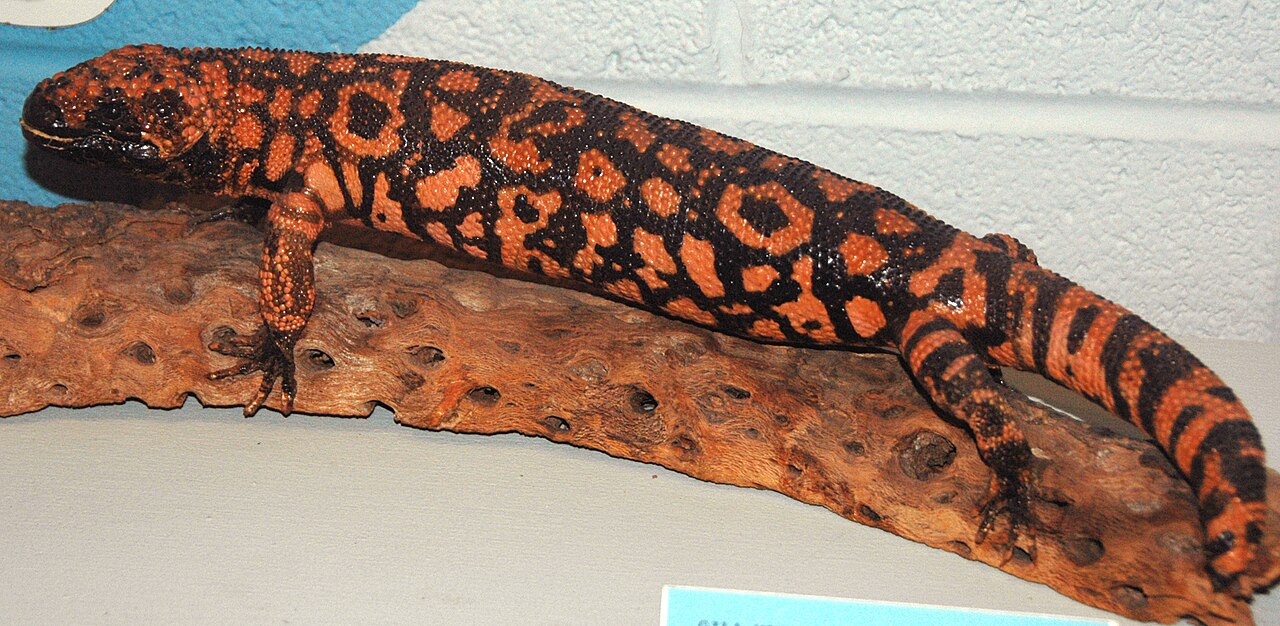
Gila monsters have no fangs in the snake sense. Venom glands sit in the lower jaw rather than the upper, and grooved teeth channel the venom into the wound by capillary action as the lizard chews, which is why sustained contact matters so much more than it does with a snake.
The result is a dose-by-duration system. A brief bite delivers relatively little venom, while a prolonged grip delivers considerably more, and this is the single most important practical fact about the bite. Getting the animal off quickly reduces severity directly.
Whether the venom is primarily defensive remains debated. Gila monsters eat eggs, nestling birds and rodents, and other small prey they can overpower without venom, so the leading interpretation is that the system evolved mainly for defense against predators rather than for hunting. That fits the behavior, since a Gila monster hisses, gapes, and backs away long before it bites.
First Aid for a Gila Monster Bite
Get the lizard off first, and this is the step that determines how bad the bite becomes. Recommended methods include submerging the animal in water, applying a flame under the jaw, or prying the jaws with a strong lever, and pulling straight back is the worst option because it tears tissue and leaves teeth in the wound.
Then treat it as a medical emergency. Call emergency services or poison control at 1-800-222-1222 in the United States, keep the bitten limb below heart level, remove rings and tight clothing before swelling starts, and get to a hospital. Do not apply a tourniquet, do not cut the wound, and do not attempt suction, since all three cause additional damage without removing venom.
Hospital care is supportive rather than antivenom-based, since no commercial antivenom for Gila monster bites is produced. Treatment focuses on pain control, which often requires opioids, wound irrigation and removal of broken teeth, tetanus prophylaxis, antibiotics for the substantial infection risk, and monitoring and support of blood pressure. Most patients recover fully, though pain and swelling can persist for days.
Why Bites Are So Rare
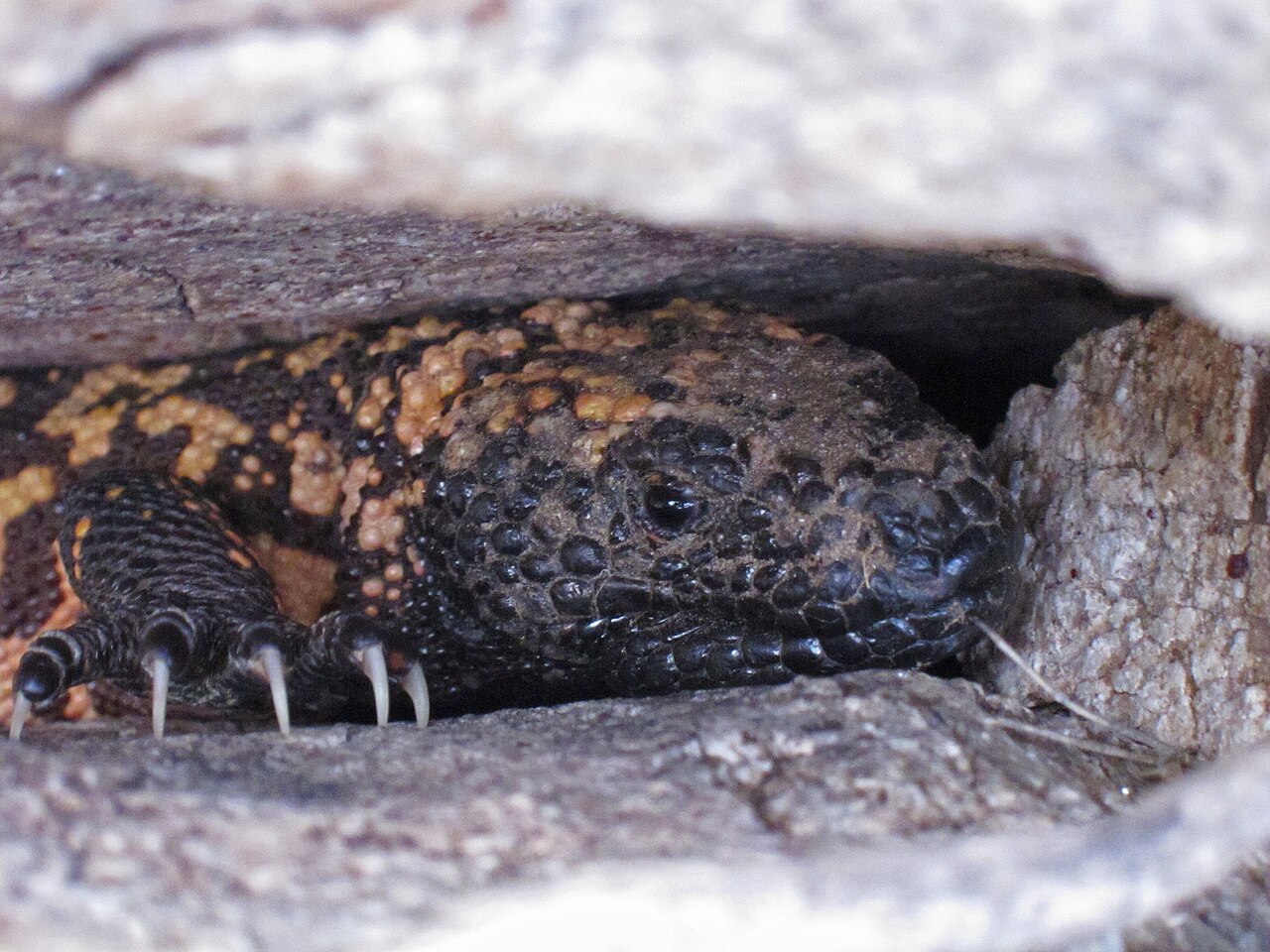
Gila monsters are slow, secretive, and spend roughly 90 percent of their lives underground in burrows, emerging mainly in spring and after summer rains. Encounters are uncommon even within their range, and most people living in Arizona for decades never see one in the wild.
They are also unmistakably reluctant. The defensive sequence runs through hissing with an open mouth, backing away, and gaping conspicuously, and a bite comes only after all of that has been ignored. The animal is advertising rather than ambushing.
Case reviews consistently find the same pattern: the large majority of bites happen to people who picked the animal up, handled a captive specimen, or were intoxicated at the time. Bites to people simply walking in Gila monster habitat are essentially unheard of, which makes this one of the most avoidable venomous encounters in North America.
The Lizard Itself
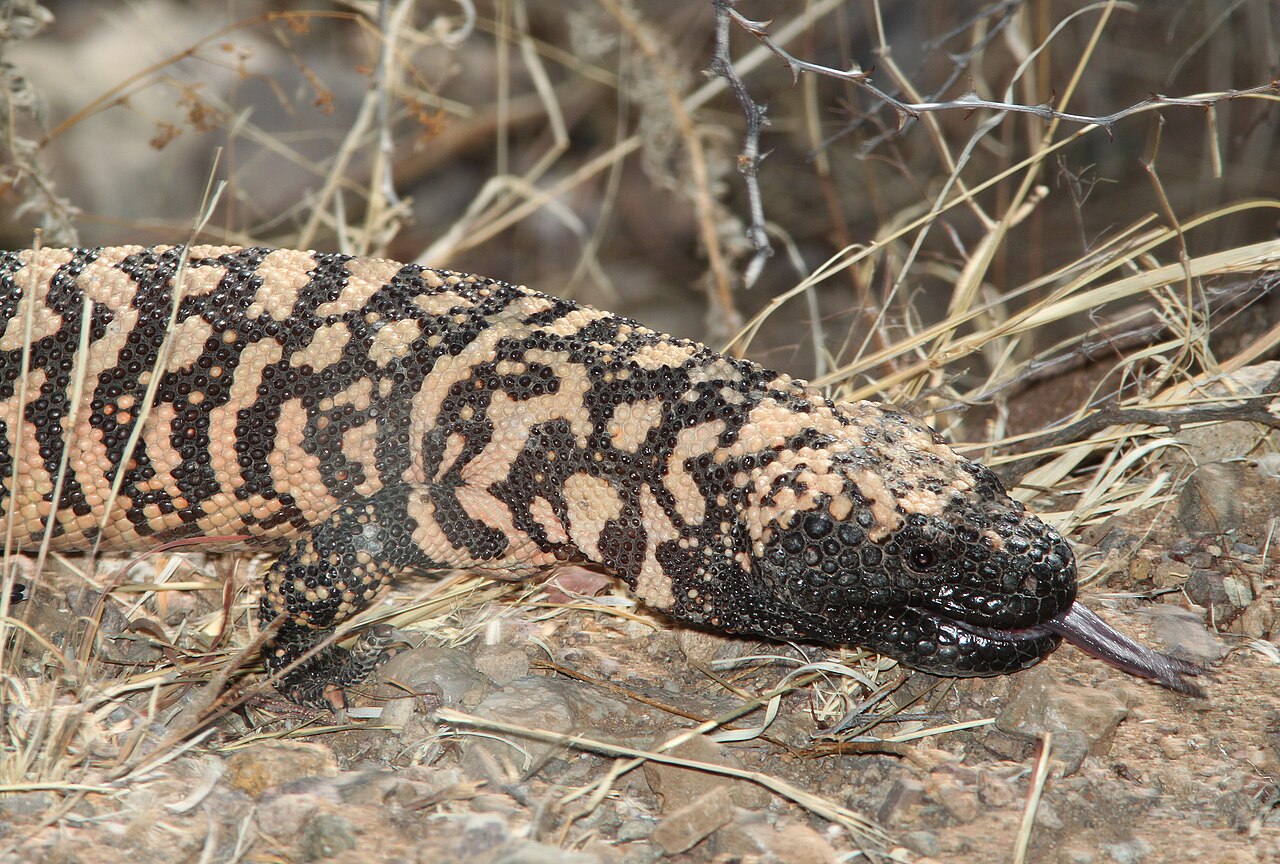
The Gila monster is a heavy-bodied lizard reaching 20 to 24 in and 3 to 5 lb, patterned in black with pink, orange, or yellow beading. That beaded appearance comes from osteoderms, small bones embedded in the scales, which give the skin its distinctive texture and some armor.
It occupies desert and scrubland in Arizona, southwestern New Mexico, southern Nevada, southeastern California, southwestern Utah, and northern Mexico, favoring rocky slopes, arroyos, and desert grassland with burrow access.
Its metabolism is remarkable. Gila monsters can consume up to a third of their body weight in a single meal and store fat in the tail, and an adult may eat only five to ten times a year, spending the rest of the time inactive underground. The Mexican beaded lizard is its close relative and the only other venomous lizard in the genus, and both are among the few venomous lizards known.
From Venom to Diabetes Medicine
This is the part of the story worth knowing even if you never go near a desert. In the 1990s researchers isolated a peptide from Gila monster saliva called exendin-4, which closely resembles a human hormone called GLP-1 that stimulates insulin release after eating.
The difference was durability. Human GLP-1 breaks down within minutes, while exendin-4 remains active far longer, which made it a viable drug candidate rather than a laboratory curiosity. A synthetic version, exenatide, was approved in 2005 for type 2 diabetes and became the first of the GLP-1 receptor agonist class.
That class has since expanded enormously, and later drugs in the same family are now among the most widely prescribed medications for diabetes and weight management worldwide. The lineage traces directly back to a venomous desert lizard that most people would have preferred to kill on sight, which is a reasonable illustration of why species with no obvious value are worth keeping around.
What the Venom Actually Contains
Gila monster venom is a complex mixture rather than a single toxin. It contains kallikrein-like enzymes that break down proteins and cause the dramatic drop in blood pressure, along with phospholipase A2, hyaluronidase that helps the venom spread through tissue, and several bioactive peptides.
Notably absent are the neurotoxins and potent tissue-destroying components found in many venomous snakes. That difference explains the clinical picture: overwhelming pain and cardiovascular effects rather than paralysis or the extensive tissue necrosis associated with some viper bites.
The peptides are where the research interest sits. Alongside exendin-4, the venom contains helodermin, helospectin, and gilatide, and several have been studied for effects on memory, blood pressure, and metabolism. A venom evolved for defense has turned out to be an unusually rich source of pharmacologically active compounds.
Legal Protection
Gila monsters are protected across their range. Arizona was the first state to protect a venomous animal by law, granting the species legal protection in 1952, and it remains illegal to collect, harass, or kill them without a permit. Nevada, New Mexico, Utah, and California all provide protection as well.
Penalties are real, including fines and potential criminal charges. Keeping one as a pet is prohibited in most of the range without specific permits, and captive-bred animals in the legal trade require documentation, which is why the species is uncommon in private collections despite being much sought after.
Conservation concerns center on habitat loss to development, road mortality, and illegal collection for the pet trade. The species is slow to mature and reproduces at low rates, so populations recover poorly from losses. If you encounter one on a road or trail, the appropriate response is to photograph it from a distance and leave it alone, and to report injured animals to a state wildlife agency rather than handling them yourself.
Other Venomous Lizards
Until recently, the Gila monster and the Mexican beaded lizard were regarded as the only venomous lizards in the world. That view has changed, and research since the mid-2000s has identified venom glands and venom-related proteins in monitor lizards including the Komodo dragon, and in various iguanian lizards.
The current understanding is that venom evolved once in a broad group and was retained or reduced in different lineages. Whether a particular lizard’s oral secretions count as venom depends partly on definition, and the debate is ongoing among specialists.
For practical purposes in North America, the Gila monster is the only venomous lizard you can encounter, and nothing else in the region requires this level of caution. Common lizards people meet in yards and gardens are entirely harmless, as our guides to what lizards eat, the crested gecko, and the blue-tailed skink describe, and the reptiles that do warrant care are covered in our guides to the baby rattlesnake and the king snake.
Frequently Asked Questions
Is a Gila monster bite deadly?
Extremely rarely. No confirmed death from a Gila monster bite has been verified in the modern medical era, though the bite causes severe pain, swelling, and sometimes a drop in blood pressure. It is a medical emergency requiring hospital treatment, but full recovery is the normal outcome.
How does a Gila monster deliver venom?
Through grooved teeth in the lower jaw, with venom glands in the lower jaw rather than the upper. The lizard clamps and chews, working venom in by capillary action, so a longer bite delivers more venom. It has no fangs and cannot strike like a snake.
What should I do if a Gila monster bites me?
Get the animal off first, using water submersion or prying the jaws rather than pulling straight back. Then call emergency services or poison control at 1-800-222-1222, keep the limb below heart level, and remove rings. Do not use a tourniquet, cut the wound, or attempt suction.
Is there antivenom for Gila monster bites?
No commercial antivenom is produced. Hospital treatment is supportive, focusing on pain control which often requires opioids, wound irrigation and removal of broken teeth, tetanus prophylaxis, antibiotics for infection risk, and blood pressure monitoring.
Why are Gila monster bites so rare?
Because the lizards spend roughly 90 percent of their lives underground, move slowly, and give an unmistakable warning sequence of hissing, gaping, and backing away. Nearly all documented bites involve someone deliberately handling the animal.
How did Gila monster venom become a diabetes drug?
Researchers isolated a peptide called exendin-4 from the saliva, closely resembling the human hormone GLP-1 that triggers insulin release but lasting far longer in the body. A synthetic version, exenatide, was approved in 2005 and became the first GLP-1 receptor agonist.
Are Gila monsters protected?
Yes. Arizona protected the species in 1952, the first venomous animal protected by state law in the United States, and Nevada, New Mexico, Utah, and California also protect them. Collecting, harassing, or killing one without a permit is illegal and carries real penalties.