What Do Scorpions Eat? Diet, Hunting, and Feeding
Scorpions eat live prey, almost entirely arthropods. Crickets, roaches, beetles, moths, spiders, centipedes, and other scorpions make up the bulk of the diet, and the largest species occasionally take small lizards, snakes, and rodents. They hunt at night, they wait more than they chase, and they detect prey through vibration rather than sight.
What makes them remarkable is not what they eat but how little of it they need. A scorpion’s metabolic rate is among the lowest of any land animal, and some species survive six to twelve months without a meal. This guide covers the hunting method, the two-stage venom system, cannibalism, what to feed a pet scorpion, and the desert mouse that eats them and feels nothing.
| Quick Facts | Scorpion Diet |
|---|---|
| Main prey | Crickets, roaches, beetles, spiders, other scorpions |
| Hunting style | Ambush, detects prey by vibration |
| Active | Night, hiding by day |
| Feeding frequency | Every 1 to 2 weeks in captivity |
| Survival without food | Up to 6 to 12 months in some species |
| Digestion | External, liquefies prey before drinking it |
What Do Scorpions Eat in the Wild?
The wild diet is dominated by insects and other arthropods. Crickets, cockroaches, beetles, moths, grasshoppers, termites, centipedes, millipedes, and spiders all feature, and the exact mix depends entirely on what is locally abundant rather than on any preference.
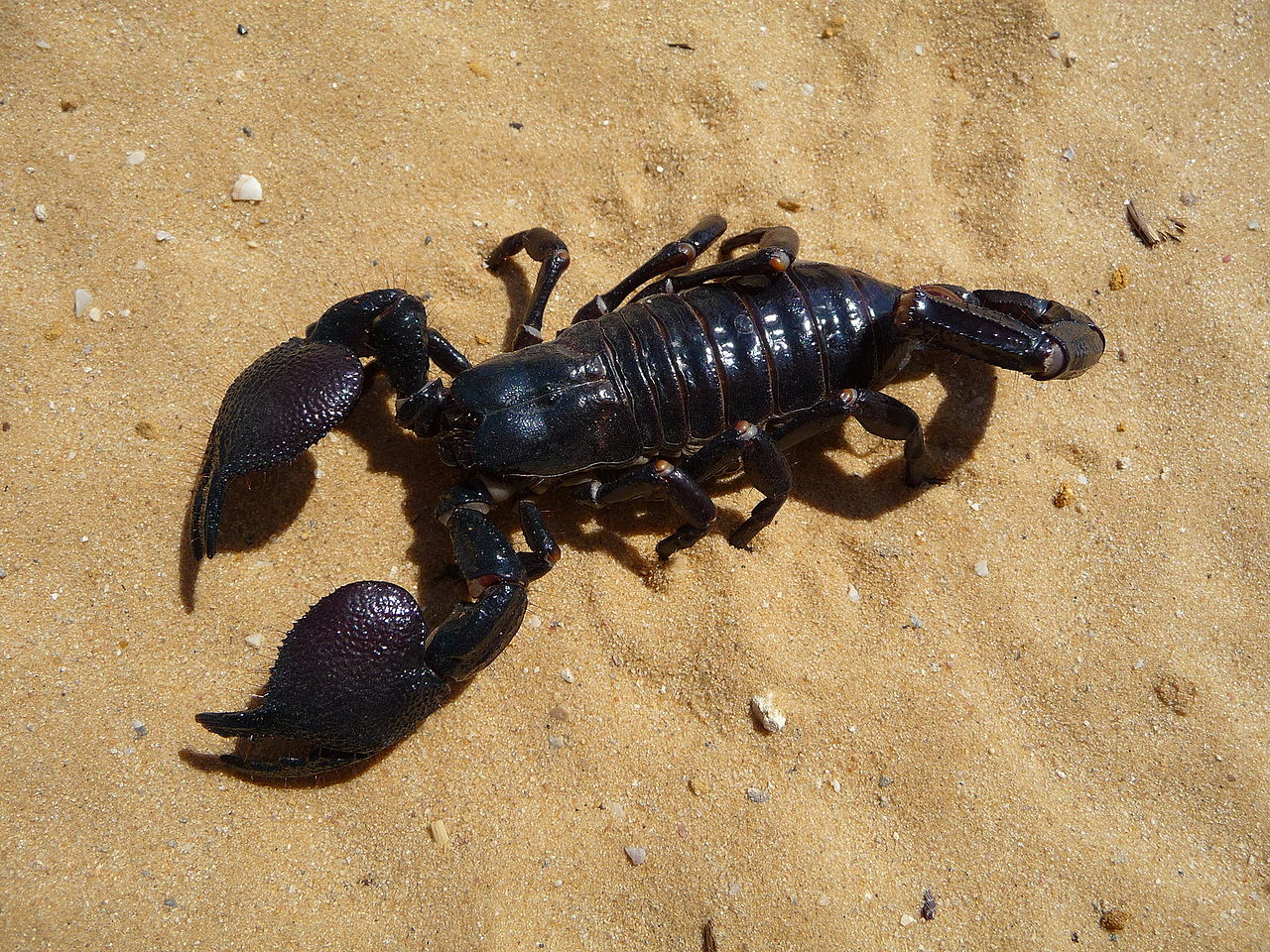
Larger species widen the menu. Emperor scorpions and other big-bodied species take small lizards, small snakes, and occasionally young rodents, subduing them with the pincers and using the sting when the prey resists. Species with heavy pincers rely on crushing more than on venom, while slender-clawed species do the opposite.
Feeding itself happens outside the body. A scorpion has no jaws capable of chewing solid food, so it uses chelicerae, small pincer-like mouthparts, to tear the prey apart while flooding it with digestive fluid, then drinks the liquefied tissue and discards a dry husk. A single meal can occupy an hour or more. The insects at the base of that food chain are covered in our guide to what crickets eat.
How Scorpions Find Prey Without Seeing It
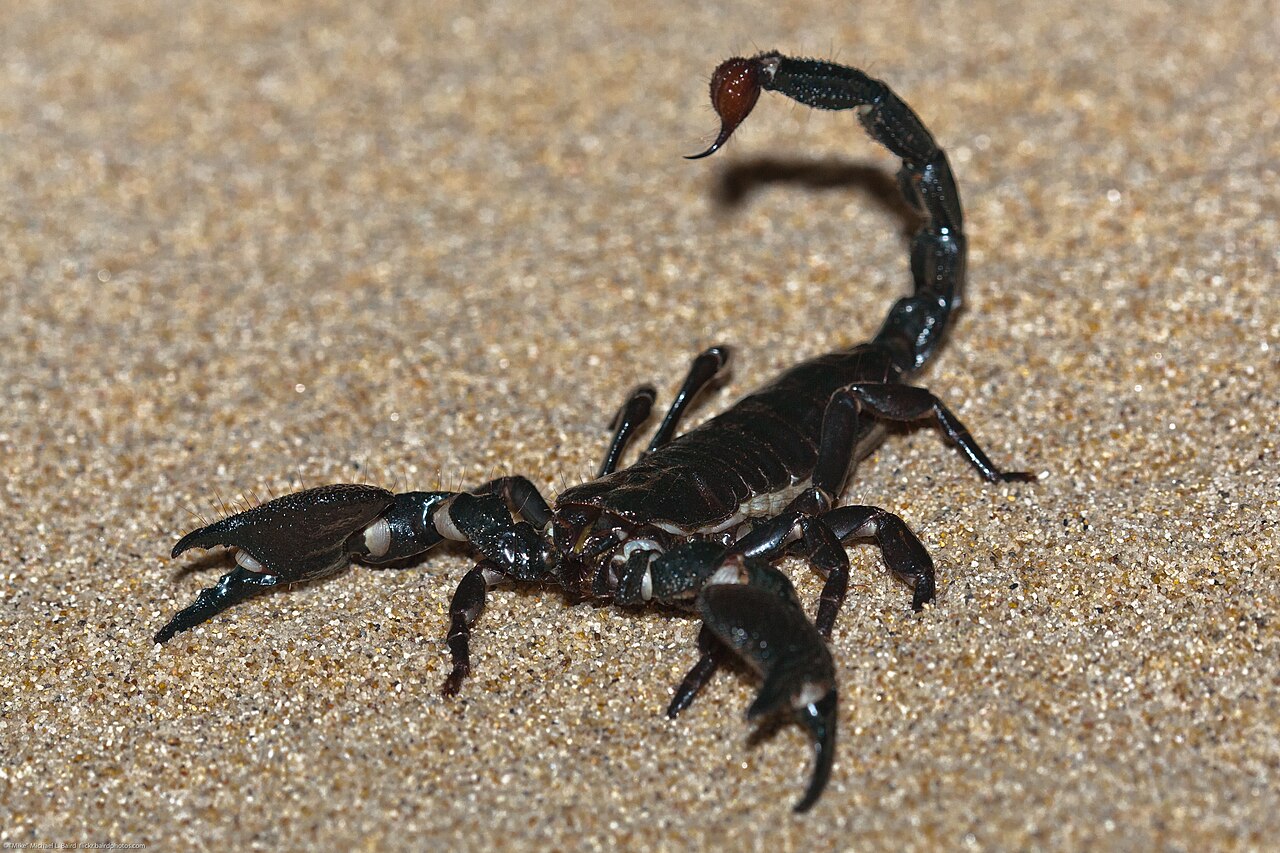
Scorpion eyesight is poor despite having six to twelve eyes, and vision plays almost no role in hunting. They locate prey through two remarkable sensory systems instead.
The first is a pair of comb-like structures on the underside of the abdomen called pectines, unique to scorpions. These drag along the substrate and carry thousands of chemical and mechanical receptors, letting the animal read the ground for prey trails, mates, and substrate texture as it moves.
The second is vibration detection. Fine hairs called trichobothria on the pincers sense air movement, while slit sensilla in the leg joints detect substrate vibration, and the combination is precise enough that a scorpion can determine both the direction and the distance of an insect walking on sand. Research on sand scorpions has shown they locate prey by comparing the arrival time of vibrations at each of their eight legs.
The Two-Stage Venom System
Scorpion venom is not a single fluid, and the way it is used is more economical than most people assume. Several species produce a transparent prevenom first, then a milky white venom that follows if the prevenom proves insufficient.
The prevenom is cheap to make and rich in potassium salts and short peptides that cause immediate intense pain. Against a small insect it is often enough on its own, and against a predator the pain arrives fast enough to end the encounter. The milky venom that follows contains the complex neurotoxins and is metabolically expensive to produce.
That expense drives behavior. Venom regeneration takes days to weeks, so scorpions meter their use carefully, frequently subduing prey with the pincers alone and stinging only when necessary. This is also why species with large powerful pincers tend to have milder venom, while slender-pincered species such as the Arizona bark scorpion rely on potency instead. Our guide to the Gila monster bite describes a similar defensive venom system in a very different animal.
Cannibalism and Maternal Care
Scorpions eat other scorpions routinely, including their own species. Cannibalism is common enough that it shapes their distribution, since juveniles disperse partly to avoid larger individuals, and it is the main reason captive scorpions must be housed alone.
Maternal care sits alongside that. Scorpions give birth to live young rather than laying eggs, and the newborns, called scorplings, climb onto the mother’s back and remain there through their first molt, typically one to three weeks. She does not feed them during this period and they rely on stored yolk.
Once they disperse, the relationship ends abruptly and she may eat any that linger. That combination of genuine parental investment followed by cannibalism is common across arachnids, and our guide to the baby wolf spider describes the same pattern in a spider that carries its young the same way.
How Long Scorpions Survive Without Food
This is the most striking fact about scorpion biology. Their metabolic rate is exceptionally low, roughly a third to a tenth of what comparably sized insects require, and some species have survived six to twelve months without eating under laboratory conditions.
Several adaptations combine to allow it. Scorpions have an unusually efficient book lung system, a low activity level with long motionless periods, a cuticle that minimizes water loss, and the ability to store large amounts of energy from a single meal in a specialized organ.
The practical consequence is that a scorpion in a house is not starving and is not desperate. It can wait weeks for an insect to walk past its hiding place, which is exactly what it does. Water matters more than food, and a scorpion will die of dehydration long before starvation, which is why they concentrate around moisture sources indoors.
Desert and Bark Scorpions
Desert species face the toughest conditions and their diet reflects opportunism rather than specialization. Desert hairy scorpions take beetles, other scorpions, spiders, centipedes, and small lizards, and their large size lets them handle prey that smaller species cannot.
The Arizona bark scorpion is the medically significant species in the United States and lives differently. It climbs, which most scorpions do not, and hunts on tree trunks, walls, and ceilings, taking small soft-bodied insects including crickets, moths, and flies. Its climbing habit is why it turns up indoors more than any other North American species and why it is found on ceilings rather than floors.
Prey availability drives seasonal activity. Scorpions are most active during warm humid periods when insects are abundant, particularly after monsoon rains in the southwest, and they become nearly dormant in cold or extremely dry conditions. That is when they retreat to burrows and simply wait.
Feeding a Pet Scorpion
Emperor scorpions are the most commonly kept species and their care is straightforward. Feed appropriately sized live crickets, dubia roaches, mealworms, or superworms, choosing prey no longer than the scorpion’s body, and offer food every one to two weeks for adults.
Juveniles eat more often, roughly weekly, and take smaller prey such as pinhead crickets and fruit flies. Gut-load feeder insects for a day before offering them, since the nutrition passes directly to the scorpion, and remove any uneaten prey within a day because a hungry cricket will gnaw a molting scorpion.
Two rules prevent most problems. Never feed a scorpion that is about to molt or has just molted, since a freshly molted animal is soft and defenseless for several days. And house scorpions individually unless you are keeping a species with documented communal tolerance, because cannibalism resolves most cohabitation experiments in one direction. Water should always be available in a shallow dish with pebbles to prevent drowning.
Why Scorpions Glow Under UV Light
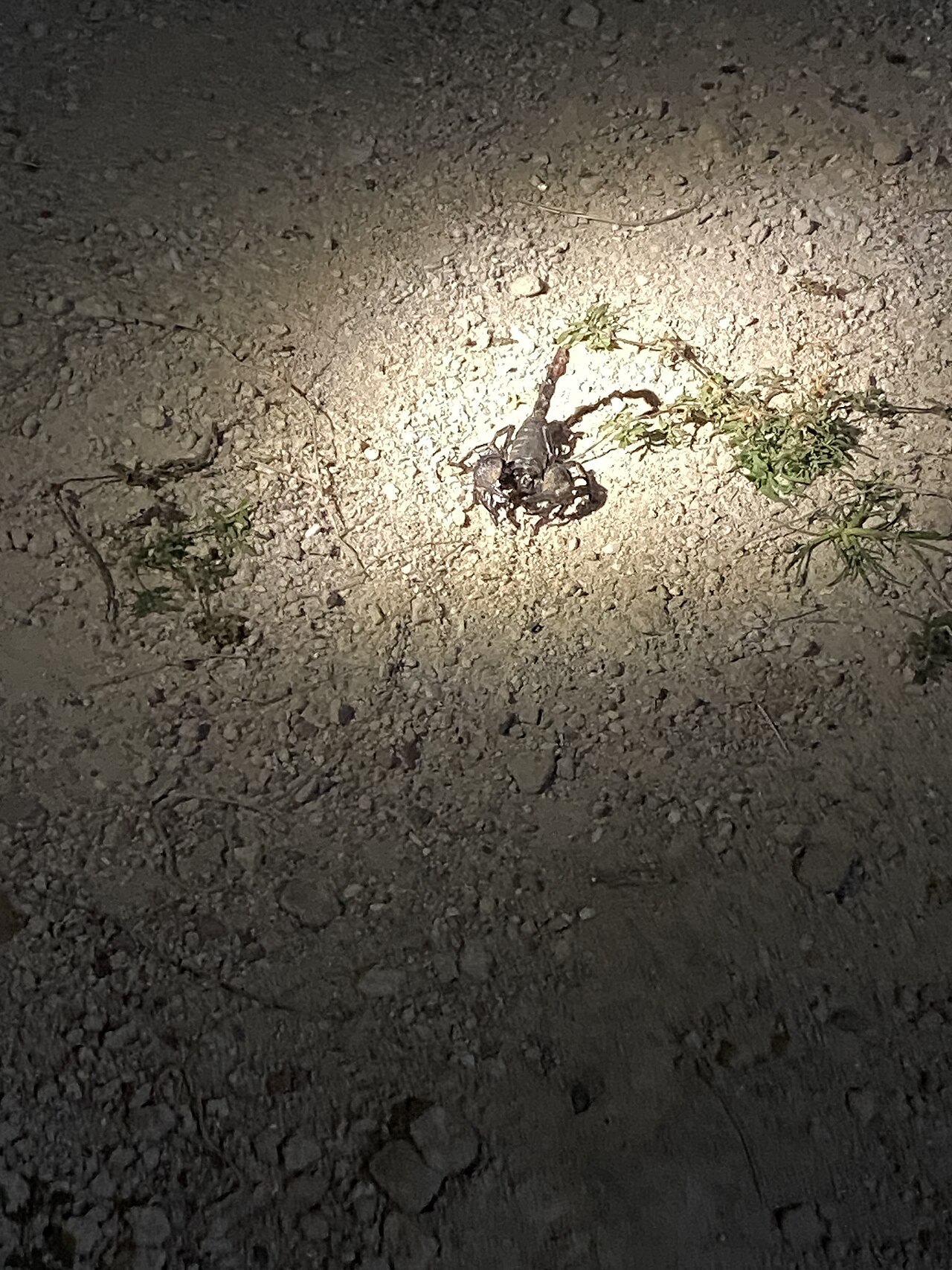
Every scorpion fluoresces bright blue-green under ultraviolet light, a property that university researchers and pest control operators both exploit to find them at night. The glow comes from compounds in the hyaline layer of the cuticle, and it appears only after the exoskeleton hardens, so a freshly molted scorpion does not fluoresce.
The function is still debated. Proposals include using the whole body as a light detector to judge shelter darkness, confusing prey, protecting against ultraviolet damage, and pure evolutionary accident with no function at all. Experiments have shown scorpions respond to green light with their body surface even when their eyes are covered, which supports the light-detection idea without settling it.
For anyone hunting scorpions around a property, the practical value is unambiguous. A cheap ultraviolet torch turns an invisible animal into a glowing target from several yards away, which is how professionals survey infestations and how homeowners in the southwest check porches before walking barefoot.
What Eats Scorpions
Plenty of things. Owls, particularly elf owls and burrowing owls, take them regularly, along with roadrunners, shrikes, coyotes, foxes, bats, centipedes, tarantulas, and larger scorpions.
The most remarkable predator is the southern grasshopper mouse, a small carnivorous rodent of the southwestern deserts. It hunts Arizona bark scorpions deliberately, and research has shown that a mutation in its sodium channels converts the pain signal from the venom into a pain blocker, so the venom that causes agonizing pain in other mammals produces almost no pain response in this mouse.
The mouse also handles the sting behaviorally, biting the stinger off before eating the rest. That combination of physiological immunity and learned technique has made the grasshopper mouse a significant subject in pain research, since understanding how it switches off the pain pathway has implications for analgesic development. The predators covered in our guides to what lizards eat and the southern house spider take smaller scorpions where their ranges overlap.
Frequently Asked Questions
What do scorpions eat?
Live arthropods almost exclusively, including crickets, roaches, beetles, moths, spiders, centipedes, and other scorpions. Larger species occasionally take small lizards, snakes, and rodents. They digest prey externally, liquefying the tissue and drinking it.
How do scorpions find prey in the dark?
Through vibration and chemical sensing rather than sight. Comb-like pectines on the underside read the ground, while fine hairs on the pincers detect air movement and slit organs in the legs detect substrate vibration, precise enough to locate an insect by comparing arrival times at each leg.
How long can a scorpion live without eating?
Six to twelve months in some species, thanks to an exceptionally low metabolic rate, efficient book lungs, and the ability to store energy from a single meal. Dehydration kills them long before starvation, which is why they concentrate around moisture.
Do scorpions eat each other?
Yes, routinely, including their own species. Cannibalism is common enough that it shapes dispersal, and it is the main reason captive scorpions must be housed individually. Mothers may eat their own young once the scorplings leave her back.
What should I feed a pet scorpion?
Live crickets, dubia roaches, mealworms, or superworms no longer than the scorpion’s body, every one to two weeks for adults and roughly weekly for juveniles. Never feed a scorpion near a molt, and remove uneaten prey within a day.
Do scorpions use venom on every prey item?
No. Venom is metabolically expensive and takes days to weeks to regenerate, so scorpions often subdue prey with the pincers alone. Several species also produce a cheap transparent prevenom first, using the potent milky venom only when needed.
What animals eat scorpions?
Owls, roadrunners, shrikes, coyotes, foxes, bats, centipedes, tarantulas, and larger scorpions. The southern grasshopper mouse hunts bark scorpions deliberately and carries a sodium channel mutation that turns the venom’s pain signal into a pain blocker.