Blue-Tailed Skink: Identification & Facts
The blue-tailed skink is not a single species but a common name applied to several similar-looking skinks, most notably the five-lined skink and the western skink, both recognized by juveniles’ vivid, electric-blue tails that fade to gray or brown as the lizard matures. This guide covers identification, whether the “poisonous scorpion” reputation has any truth to it, why juveniles have blue tails at all, and the genuine, if narrow, risk to pets.
| Feature | Detail |
|---|---|
| Common species | Five-lined skink, Western skink |
| Juvenile coloring | Black/dark brown body, yellow stripes, bright blue tail |
| Adult coloring | Stripes fade, tail turns gray/brown |
| Venomous? | No |
| Dangerous to cats? | Debated; some toxin risk reported, not confirmed venomous |
What Is a Blue-Tailed Skink?
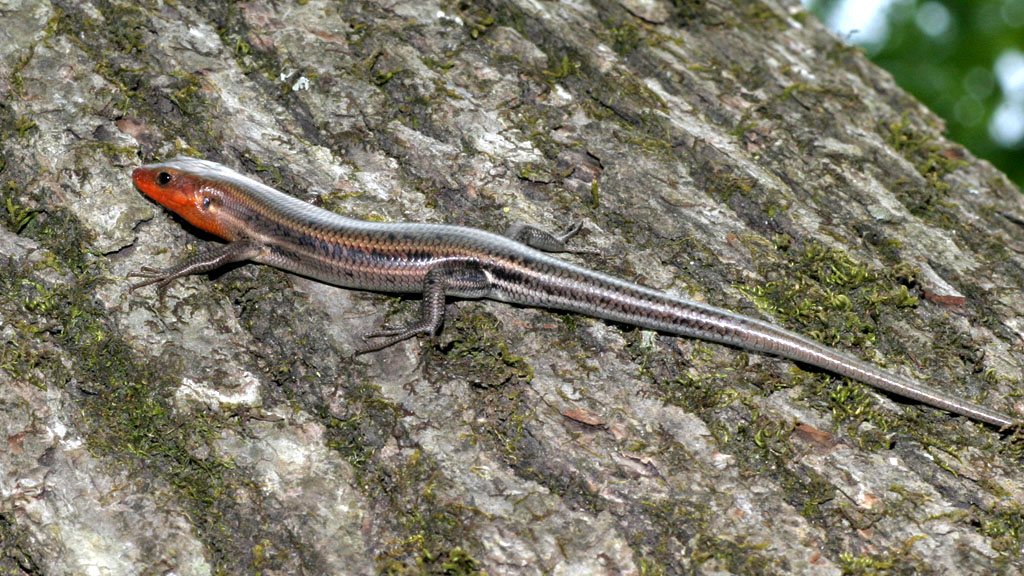
“Blue-tailed skink” most commonly refers to juveniles of the five-lined skink (Plestiodon fasciatus) in the eastern and southeastern United States, or the western skink (Plestiodon skiltonianus) in the western states and parts of British Columbia. Both species look nearly identical at a glance: a sleek, glossy black or dark brown body marked with five narrow yellow or cream stripes running the length of the body, paired with an unmistakable, vividly blue tail in young individuals. Despite the alarming local nickname “scorpion” in parts of the southeastern US, these lizards have no sting, no stinger, and pose no genuine threat resembling that of an actual scorpion in any way.
Why Do Juvenile Skinks Have Blue Tails?
The bright blue coloring is a deliberate evolutionary strategy rather than an incidental feature, and it exists specifically because juvenile skinks are especially vulnerable to predation. The vivid tail draws a predator’s attention and strike toward the most expendable part of the lizard’s body rather than its head or vital organs, and if a predator does grab the tail, the skink can simply detach it and escape relatively unharmed, a defense called caudal autotomy. The tail continues twitching and wriggling on its own for a period after detaching, further distracting the predator while the skink flees to safety, and the lizard eventually regrows a replacement tail, though the regrown version is typically a duller gray rather than the original bright blue.
Why Does the Blue Fade as Skinks Age?
As five-lined and western skinks mature into adults, both the vivid blue tail coloring and the bold yellow body stripes gradually fade, and adult males in particular often develop a broader head along with reddish-orange coloration on the snout during breeding season, a dramatic enough shift that adult and juvenile skinks are sometimes mistaken for entirely different species by casual observers. This age-related color change makes sense functionally: adult skinks are larger, faster, and less vulnerable to the same predators that threaten juveniles, so the costly, attention-drawing blue tail signal becomes less necessary to maintain once the animal has grown past its most vulnerable early life stage.
Are Blue-Tailed Skinks Venomous or Poisonous?
No, blue-tailed skinks are not venomous; they lack the specialized fangs or venom glands required to inject any toxin through a bite, and according to the Savannah River Ecology Laboratory, a skink bite presents no meaningful threat to a person of any age. The bite itself, while not dangerous, can be mildly painful given the skink’s small, sharp teeth, but there is no record of lasting injury to a human from a blue-tailed skink bite. Some researchers have found evidence that skink skin secretions may contain mild toxins capable of causing illness specifically in a predator that eats the lizard, a genuinely different claim from being venomous through a bite, and one that remains an active area of scientific study rather than settled fact.
Are Blue-Tailed Skinks Dangerous to Cats?
This is a long-debated question without a fully settled scientific answer. Persistent regional folklore, particularly across the southeastern United States, holds that cats who catch and eat blue-tailed skinks can become seriously ill or worse, and some researchers have documented genuine neurological symptoms in cats following skink consumption, though the exact toxin responsible remains under active study. A separate, better-documented risk applies regardless of the toxin debate: like most reptiles, skinks can carry Salmonella bacteria in their digestive tract, and a cat that hunts, handles, or eats a skink risks a genuine Salmonella infection independent of any separate neurological toxin question, a straightforward bacterial risk rather than a mysterious folk toxin.
How Many Times Can a Skink Regrow Its Tail?
Skinks can regenerate a lost tail, but this regeneration comes with real limits and costs. The new tail typically grows back within a matter of weeks to a couple of months depending on the individual and conditions, but it is never an exact replacement: the regrown tail contains cartilage rather than the original bony vertebrae, often appears visibly duller or differently shaped than the original, and repeated tail loss over an individual’s lifetime becomes progressively more taxing on the animal’s overall energy reserves. Because of this real cost, tail loss functions as a genuine last-resort defense rather than something a skink can rely on repeatedly without consequence.
Blue-Tailed Skink Habitat and Behavior
Both common blue-tailed skink species favor moist, ground-level habitats: open woodlands, forest edges with minimal dense undergrowth, and areas offering ample cover like leaf litter, rock piles, and fallen logs. They are diurnal, active and foraging during the day, and frequently seen basking in patches of sun on rocks, logs, or building foundations. When threatened, a skink’s first response is typically rapid flight toward the nearest available cover rather than any form of confrontation, reserving the dramatic tail-detachment defense specifically for situations where a predator has already made physical contact and a quick escape alone is no longer sufficient.
Do Blue-Tailed Skinks Make Sounds?
Skinks are generally silent animals and do not vocalize in any way comparable to a bird or mammal, relying instead entirely on visual and physical defenses like the tail-detachment strategy covered above rather than any warning call or hiss. This silent nature is one more reason the “scorpion” folklore likely persists in some rural communities: an animal that cannot be heard approaching and that moves quickly through leaf litter can feel unexpectedly startling to encounter, even though it poses no real threat of any kind to a person nearby.
Blue-Tailed Skink vs Other Similar Lizards
Blue-tailed skinks are sometimes confused with other lizard species that share a superficially similar striped pattern, but a few features help distinguish them reliably. According to state wildlife extension resources, skinks have notably smooth, glossy, overlapping scales that give them a distinctly sleek appearance compared with the more textured, rougher scales typical of many other lizard families, and their relatively short legs relative to body length give them a somewhat snake-like, gliding movement style across open ground. Unlike a typical insectivorous lizard with a more triangular head shape, skinks have a more streamlined, tapered head that blends smoothly into the body without a pronounced neck.
Can You Keep a Blue-Tailed Skink as a Pet?
Five-lined and western skinks are occasionally kept as pets given their manageable small size and visually striking juvenile coloring, though most captive skinks available in the reptile trade are actually other skink species better suited to consistent captive breeding and handling, such as the blue-tongue skink, which is unrelated to the blue tail feature despite the similar-sounding name. For anyone specifically drawn to the wild five-lined or western skink, most individuals encountered are wild, native animals rather than captive-bred stock, and collection regulations vary by state, so checking local wildlife regulations before collecting one from the wild matters more than it would for a species with an established, farmed captive population like a crested gecko or African bullfrog, both readily available through captive breeding rather than wild collection.
Related reading: Crested Gecko Care.
Frequently Asked Questions
What is a blue-tailed skink?
This is a common name for juveniles of the five-lined skink or western skink, two similar lizard species recognized by a black or dark brown body with yellow stripes and a vivid blue tail that fades with age.
Are blue-tailed skinks poisonous or venomous?
No, they are not venomous and lack any fangs or venom glands to inject toxin through a bite. Some skin secretions may contain mild toxins that could affect a predator that eats the lizard, but this is separate from venom.
Why do young skinks have blue tails?
The bright blue draws a predator’s attention and strike toward the tail rather than the head. If grabbed, the skink can detach the tail and escape, a defense called caudal autotomy, then regrow a duller replacement tail.
Are blue-tailed skinks dangerous to cats?
This is debated. Some researchers report neurological symptoms in cats after eating skinks, though the exact toxin is unconfirmed. Separately, skinks can carry Salmonella, posing a more established bacterial risk to cats that hunt them.
Why do skinks lose their blue tail color as adults?
As skinks mature, they become larger, faster, and less vulnerable to predators, so the costly, attention-drawing blue tail signal becomes less necessary, fading to gray or brown alongside the fading body stripes.
Can a blue-tailed skink hurt a person?
No meaningful threat exists. Skinks are not venomous, and while a bite can be mildly painful due to their small teeth, there is no record of lasting injury to a human from a blue-tailed skink.
Where do blue-tailed skinks live?
Five-lined skinks live across most of the eastern United States, while western skinks are found in the western US and parts of British Columbia. Both favor moist, ground-level habitats with plenty of cover like leaf litter and logs.
Whether encountered darting across a woodpile or basking on a warm rock, a blue-tailed skink remains one of the more genuinely harmless, if occasionally misunderstood, small reptiles a person is likely to come across in North American backyards and woodlands, alongside other frequently misidentified small creatures like a garden anole or fence lizard.
Learning to recognize this species confidently also helps dispel the persistent, if entertaining, local folklore surrounding its supposed “scorpion sting,” replacing an old country legend with a more accurate, genuinely interesting picture of how the lizard actually defends itself.
The next time an electric-blue tail vanishes into a woodpile, it is worth appreciating the split-second evolutionary calculation that made that exact escape possible, a defensive strategy as elegantly specific as the mimicry seen in a bluffing rat snake facing its own predators.
Comparing this defense against other backyard wildlife strategies, from a camouflaged insect to a startled small mammal, highlights just how many different survival solutions have evolved within a single suburban yard.