Centipede vs Millipede: Key Differences Explained
Centipedes and millipedes are often confused since both are long, many-legged arthropods, but they belong to entirely different classes with genuinely different diets, defenses, and risk to humans: centipedes are venomous carnivorous hunters with one pair of legs per body segment, while millipedes are harmless detritivores with two pairs of legs per segment that curl into a ball rather than bite when threatened. This guide covers the clearest ways to tell them apart and why the distinction actually matters for anyone encountering one at home.
| Trait | Centipede | Millipede |
|---|---|---|
| Class | Chilopoda | Diplopoda |
| Legs per segment | 1 pair, pointing outward | 2 pairs, pointing downward |
| Body shape | Flattened | Rounded/cylindrical |
| Diet | Carnivore (insects, prey) | Detritivore (decaying plants) |
| Defense | Venomous bite | Curls up, releases odor |
| Speed | Fast | Slow |
Legs Are the Easiest Way to Tell Them Apart
The single most reliable identifying feature is leg count and position per body segment. Centipedes have exactly one pair of legs per body segment, with those legs positioned along the flanks and clearly visible pointing outward and away from the body, giving them a distinctly leggy, splayed appearance. Millipedes have two pairs of legs per segment instead, positioned directly beneath the body and pointing downward toward the ground, which makes their far greater total leg count considerably harder to see at a casual glance despite millipedes technically having many more legs overall than most centipedes.
Body Shape: Flat vs Round
Viewed from the side, centipedes have a noticeably flatter, more dorsoventrally compressed body, while millipedes are distinctly more rounded and cylindrical, often described as tube-shaped or worm-like in overall profile. This shape difference connects directly to how each group lives: a flatter body lets centipedes squeeze into tight cracks and crevices while hunting prey, while a millipede’s more rigid, rounded exoskeleton better supports its slower, burrowing lifestyle through soil and leaf litter.
Centipede vs Millipede Diet
Centipedes are strict carnivores, actively hunting insects and other small invertebrates and killing prey with venom injected through modified front legs called maxillipeds, or forcipules, a genuinely unusual adaptation found in no other arthropod group. Millipedes, by contrast, are primarily detritivores, feeding on decaying plant matter, leaf litter, and organic debris, playing a genuinely valuable ecological role in decomposition and nutrient cycling; a smaller number of millipede species will also feed on the roots and leaves of young seedling plants, occasionally making them a mild garden nuisance despite their otherwise harmless reputation.
Centipede and Millipede Encounters With Other Backyard Wildlife
Both centipedes and millipedes occupy modest but genuine roles in a broader backyard food web, serving as prey for birds, small reptiles, and other insectivorous predators despite their own predatory or decomposer roles within that same ecosystem. A healthy population of either, particularly millipedes given their beneficial decomposition role, is generally a sign of a functioning garden ecosystem rather than a problem, similar to how a modest population of ground beetles signals a healthy, naturally balanced yard rather than an infestation needing treatment.
Which One Bites: Centipede or Millipede Danger
Centipedes can and do bite defensively when handled or threatened, injecting venom through their forcipules that, while capable of killing small prey outright, is typically not life-threatening to a healthy human, though bites from larger centipede species can be genuinely quite painful and some individuals experience a more significant allergic reaction. Millipedes, in sharp contrast, do not bite or sting at all; their primary defense is curling their body into a tight coil or ball and, in many species, secreting a foul-smelling, occasionally toxic defensive fluid, some of which contains compounds related to cyanide, that can irritate skin or eyes on contact, meaning the real millipede risk is topical irritation from handling rather than any bite.
How Centipedes and Millipedes Defend Themselves Differently
The two groups rely on almost opposite defensive strategies. A disturbed centipede’s typical response is rapid flight, using its long, powerful legs to escape quickly rather than confront a threat directly, reserving an actual bite for situations where escape is not possible. A threatened millipede instead curls its body into a protective coil, presenting its tougher exoskeleton rather than its more vulnerable underside, and many species simultaneously release the defensive secretions mentioned above as an additional deterrent, a passive strategy that works precisely because millipedes are too slow to reliably outrun most predators the way a fast-moving centipede can.
Common Species You’re Likely to Encounter
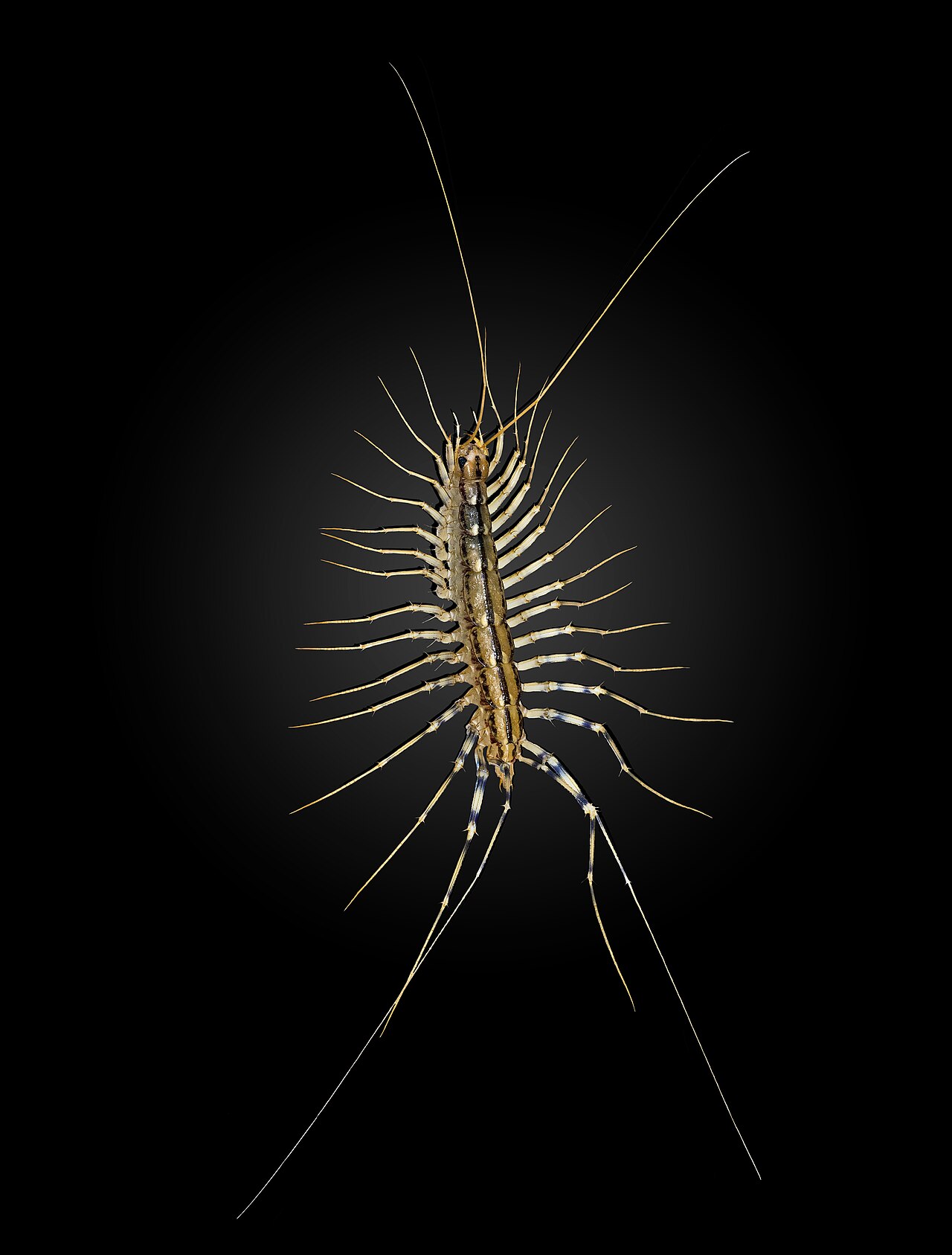
In North American homes, the house centipede is by far the most frequently encountered centipede species, recognized by its unusually long legs and the thick brown stripes running down its segmented body, a distinct look compared to the shorter, more hook-like legs of other centipede types. Among millipedes, garden and greenhouse millipede species are the most commonly encountered in yards and gardens, typically dark brown or black and considerably smaller than the impressively large giant African millipede sometimes kept as an exotic pet, a size difference not unlike comparing a common jumping spider to a much larger tarantula species.
Can You Keep Centipedes or Millipedes as Pets?
Yes, both are occasionally kept by invertebrate enthusiasts, though the giant African millipede, capable of reaching over a foot in length and living more than seven years, is by far the more commonly kept species given its docile temperament and relatively simple care compared with keeping a genuinely venomous centipede. Large centipede species, by contrast, are kept far less frequently and generally only by experienced invertebrate keepers specifically prepared to handle a venomous animal safely, given the real bite risk involved compared with a millipede’s harmless, if occasionally messy, defensive secretions.
Where Do Centipedes and Millipedes Live?
Habitat preference offers another useful, if less immediately visible, clue. Centipedes generally favor drier environments and are frequently found in basements, closets, and other dry, dark indoor spaces, with the common house centipede being a genuinely frequent indoor visitor across much of North America. Millipedes strongly prefer moist conditions instead, commonly found in damp mulch, beneath rocks and logs, and in garden soil rich with the decaying organic matter that makes up their primary diet, and they are considerably more likely to turn up outdoors in a damp garden bed than inside a typical home.
Do Centipedes or Millipedes Belong to the Insect Family?
Neither. Despite common assumptions, centipedes and millipedes are not insects; both belong to the subphylum Myriapoda, a group of arthropods distinct from true insects like beetles, wasps, or small companion pet, which are themselves arachnids rather than insects either. University entomology programs classify centipedes under class Chilopoda and millipedes under class Diplopoda specifically, a taxonomic distinction that also explains their genuinely different leg arrangements, since insects have exactly six legs total while myriapods have vastly more, organized very differently across a segmented body.
How Many Legs Do They Actually Have?
Despite their names, neither group has the exact number of legs their common name suggests: “centi” means hundred and “milli” means thousand in Latin, but no centipede has exactly 100 legs and no millipede has exactly 1,000, with actual leg counts varying enormously by species. Some centipede species have as few as 30 legs, while certain millipede species can have several hundred, and one record-holding species was documented with over 1,300 legs, technically making it the only known arthropod to actually exceed 1,000. This naming mismatch is one more small but genuinely interesting reminder that common names, however memorable, are not always scientifically precise descriptions of the animals they refer to.
Related reading: Bullet Ant.
Related reading: Giant Millipede.
Frequently Asked Questions
What is the main difference between centipedes and millipedes?
Centipedes have one pair of legs per body segment and are venomous carnivores, while millipedes have two pairs of legs per segment and are harmless detritivores that feed on decaying plant matter.
Do centipedes or millipedes bite?
Centipedes can bite and inject venom through modified front legs, which can be painful but is rarely dangerous to humans. Millipedes do not bite at all; their defense is curling up and releasing a foul-smelling secretion.
How can you tell a centipede from a millipede quickly?
Watch their behavior: a disturbed centipede will run away quickly, while a threatened millipede will curl into a tight ball and stay still. Body shape also helps, since centipedes are flatter and millipedes more rounded.
Which is more dangerous, a centipede or a millipede?
Centipedes are more concerning due to their venomous bite, though it’s rarely dangerous to healthy humans. Millipedes don’t bite, but their defensive secretions can irritate skin or eyes if handled.
Do centipedes and millipedes really have 100 or 1,000 legs?
No, these are just common names based on Latin roots, not literal counts. Centipedes typically have far fewer than 100 legs, and while some millipedes have many legs, very few approach or exceed 1,000.
What do centipedes and millipedes eat?
Centipedes are carnivores that hunt insects and other small invertebrates, injecting venom to subdue prey. Millipedes are detritivores that feed on decaying plant matter and leaf litter.
Where are you most likely to find a centipede vs a millipede?
Centipedes prefer drier spots and are common indoors in basements and closets. Millipedes prefer moist environments and are more commonly found outdoors in damp mulch, soil, and under logs.
Understanding which group you are actually looking at determines the right response entirely, whether that means leaving a beneficial decomposer alone in the garden or handling a venomous hunter with appropriate caution indoors.
Both animals, despite their frequently unsettling first impression, ultimately play genuinely useful roles in their respective niches, one as a natural insect population control and the other as a quiet, essential decomposer working through the leaf litter underfoot.
The next time either creature turns up under a garden stone, a quick glance at leg arrangement and body shape, followed by watching its immediate reaction, should settle the identification confidently within seconds.
Getting comfortable with this identification skill removes a surprising amount of unnecessary anxiety around one of the more commonly, if unfairly, feared groups of backyard creatures.
Each of these small, often-overlooked creatures plays a genuinely specific role in the backyard ecosystem, worth a moment of curiosity rather than automatic alarm.
A basic understanding of leg count, body shape, and defensive behavior turns what once felt like an unsettling backyard mystery into a quick, confident identification every time.
The distinction ultimately comes down to a handful of consistent, learnable traits rather than genuine ambiguity, once someone knows exactly what to look and watch for in the moment.
Sharing this simple identification framework with anyone else in the household who reacts with alarm at the sight of either creature, or an unrelated but equally startling small insect, can turn a moment of fear into a small, genuinely interesting nature lesson instead.