Pastel Ball Python: Cost, Size and Care of the Morph Behind Everything
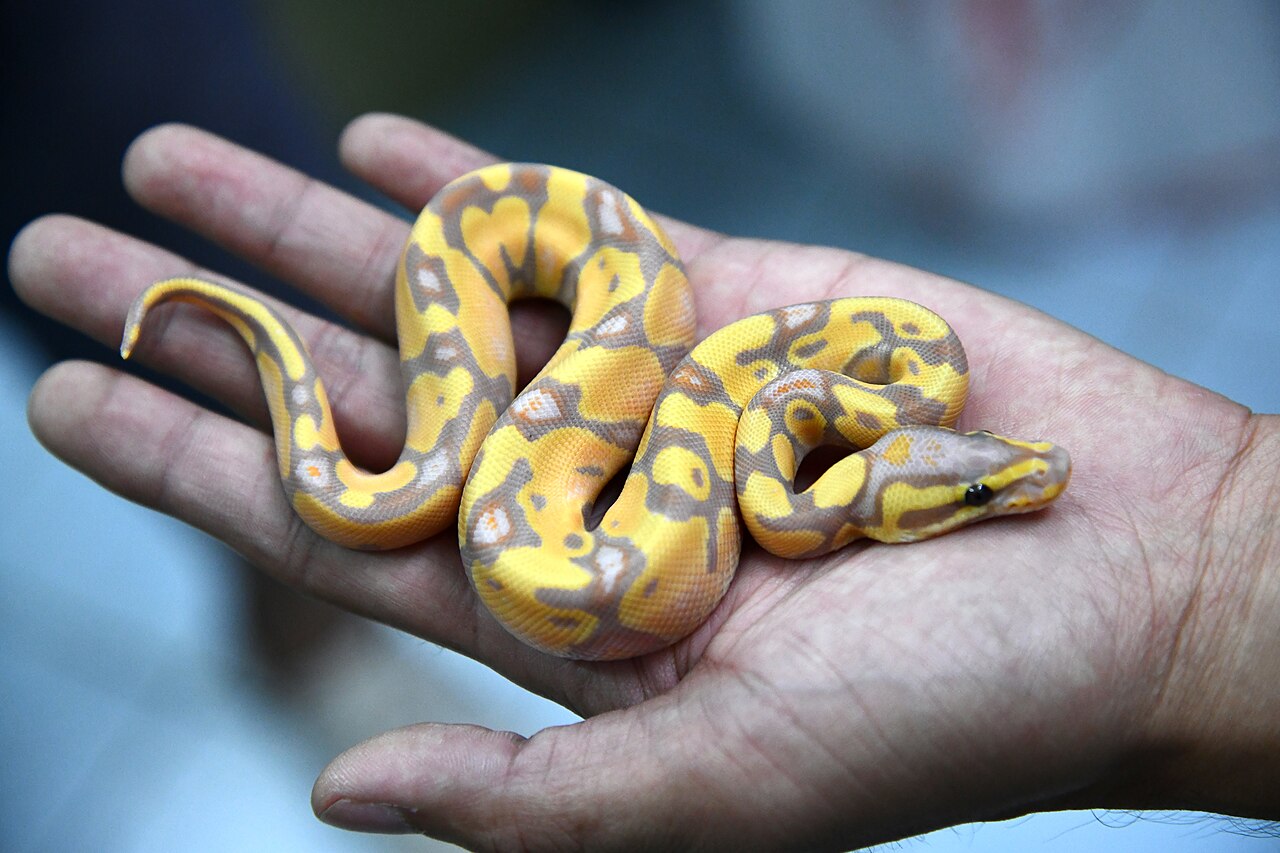
A pastel ball python is a normal ball python (Python regius) carrying one copy of the pastel gene, which brightens the yellow, fades the dark pigment, and lightens the head and lips. It is not a separate species, it is not more dangerous, and it needs exactly the same care as any other ball python. What makes it worth knowing is its position in the hobby: pastel is the base ingredient in hundreds of designer combinations, which is why it stays cheap while the snakes built on top of it sell for hundreds.
That combination of low price and high genetic value makes the pastel the morph most first-time keepers actually end up buying, often without being told what the gene does or what it costs to keep the animal for the next two decades. This guide covers identification, the difference between pastel and super pastel, realistic prices, adult size, and the enclosure numbers that keep one alive.
A pastel ball python is a co-dominant color morph of Python regius with brighter yellow blotches, reduced black pigment, pale lips, and green-tinted eyes as a hatchling. Adults reach 3 to 5 ft (90 to 150 cm), live 20 to 30 years, and typically sell for $50 to $100 in the United States.
| Quick fact | Pastel ball python |
|---|---|
| Species | Python regius, West and Central Africa |
| Genetics | Co-dominant (incomplete dominant), super form exists |
| Adult size | Females 3 to 5 ft (90 to 150 cm), males 2 to 3 ft (60 to 90 cm) |
| Lifespan | 20 to 30 years in captivity, records above 45 years |
| Typical price | $50 to $100, super pastel $125 to $250 |
| Venomous | No, a non-venomous constrictor |
| Beginner suitable | Yes, with correct heat and humidity |
What Makes a Ball Python a Pastel?
A ball python is a pastel when it inherits at least one copy of the pastel gene, a co-dominant mutation that reduces melanin and intensifies the yellow pigment already present in the wild-type pattern. Co-dominant means a single copy already changes the snake visibly, unlike recessive genes such as albino, which stay hidden until two copies meet.
The gene was first reproduced in captivity in the late 1990s, and it spread fast because it does two useful things at once. It makes a plain snake look brighter, and it stacks cleanly with almost every other morph without introducing health problems.
Because the effect is visual rather than structural, a pastel is still a normal ball python underneath. Its scales, skeleton, feeding response, and temperament are unchanged. Anyone selling a pastel as rare, delicate, or special in care terms is selling a story rather than a snake.
How to Recognize a Pastel Ball Python
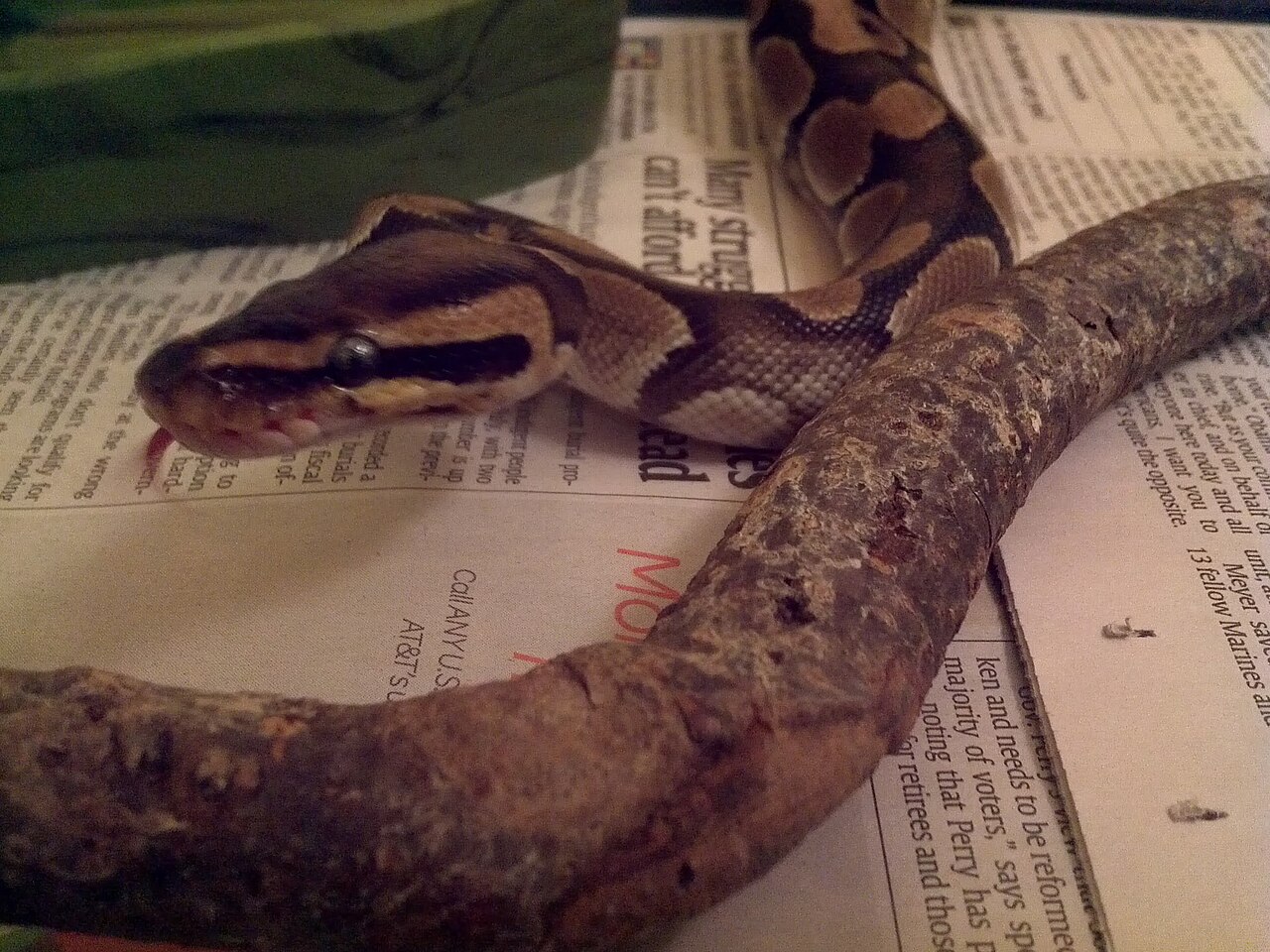
You recognize a pastel by the contrast rather than by one single marking. Set it next to a normal ball python and the pastel shows brighter, more saturated yellow blotches, a lighter brown or faded black background, and noticeably clean white lip scales.
Hatchlings are the easiest to call. A pastel hatchling usually has green-tinted eyes, a washed-out head, and pale blushing inside the dark saddles along the flanks. That blushing is the pigment loss working from the center of each dark patch outward.
The catch is that pastel fades with age. Many adults brown out, meaning the yellow dulls toward tan over the first two or three years. A browned-out adult is still genetically pastel and still passes the gene on, which is why breeders trust paperwork and parentage over a photo. If the eye color and lip scales are ambiguous, compare it against an albino ball python, where the pigment loss is total rather than partial.
Pastel vs Super Pastel: What Changes With Two Copies
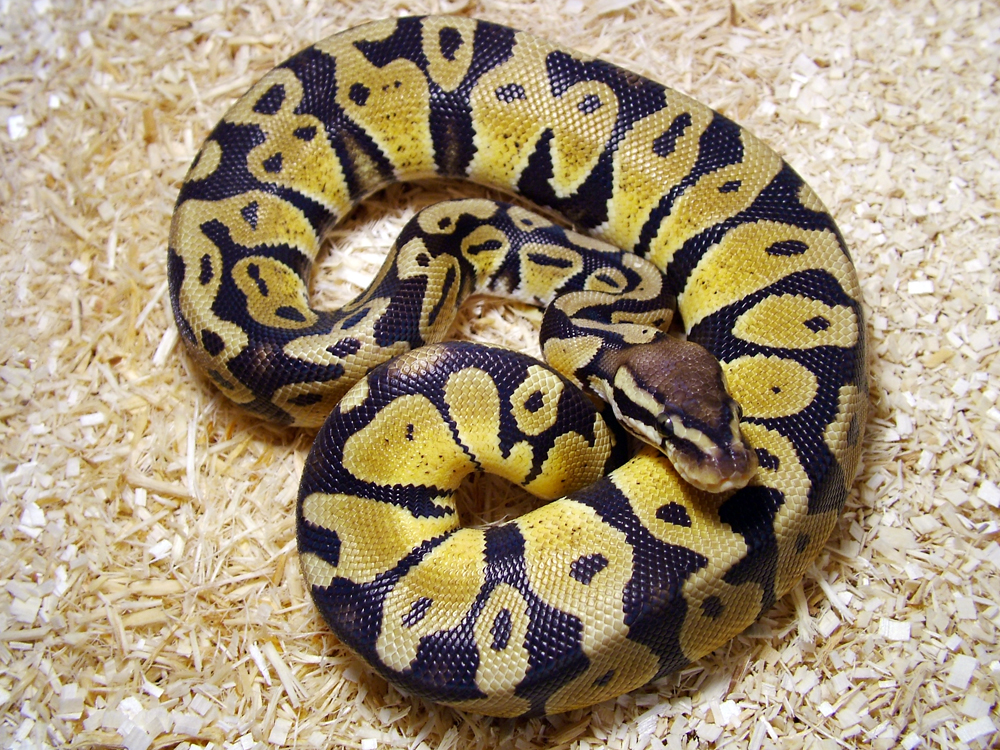
A super pastel carries two copies of the same gene and looks like a pastel turned up. The dark pigment recedes further, the pattern often breaks into faded bars, the head can be almost solid pale yellow, and the eyes stay light into adulthood.
The important part is what happens in a clutch. Breeding two pastels gives roughly 25 percent supers, 50 percent single-gene pastels, and 25 percent normals, so a super costs more because it is the less frequent outcome, not because it is fragile. Bred to a normal, a super throws 100 percent pastel babies, which is exactly why breeders keep them.
For a pet keeper the practical difference is price and brightness, nothing else. Super pastels eat, shed, and behave like any other ball python and carry no known neurological or fertility issues, unlike some other super forms discussed further down.
Pastel Ball Python Size and Growth
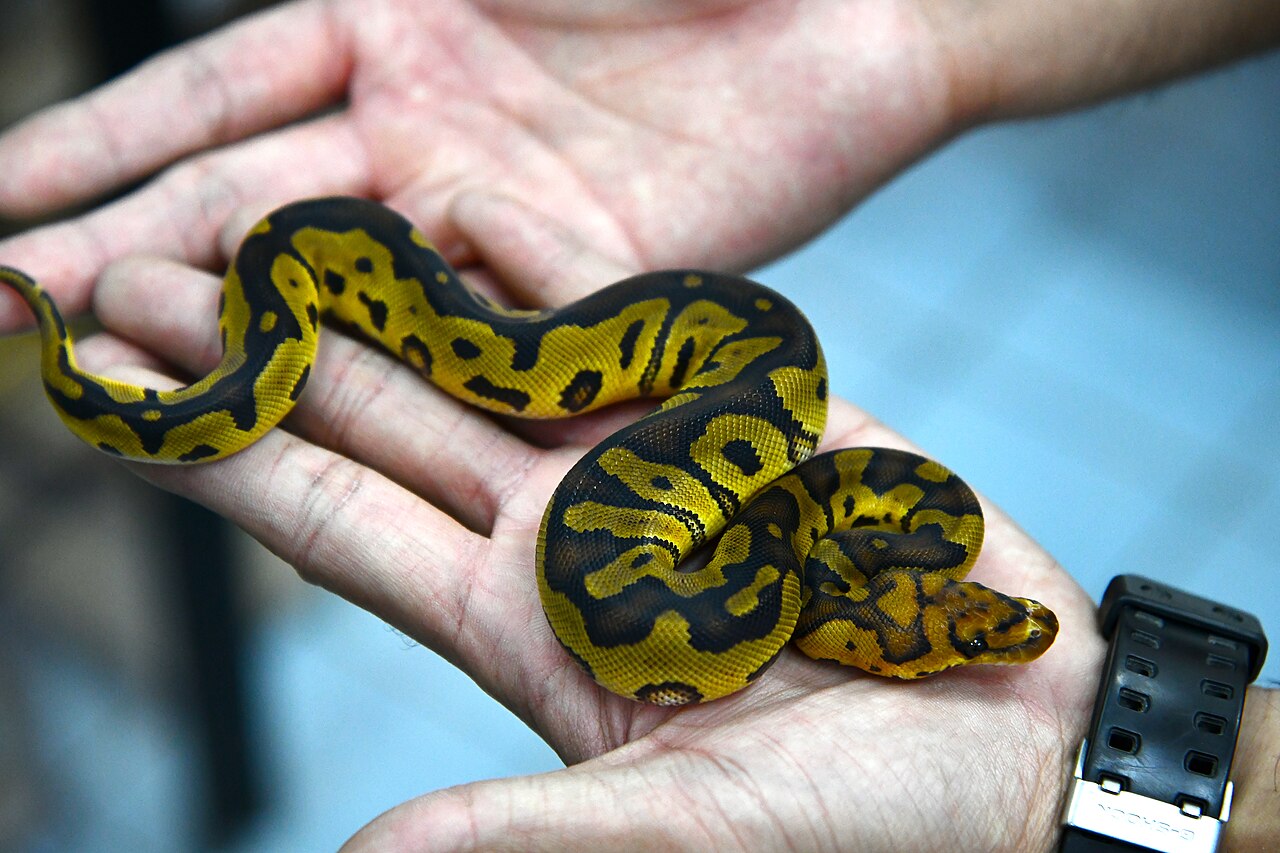
Adult females reach 3 to 5 ft (90 to 150 cm) and 1,500 to 2,200 g, while males stay at 2 to 3 ft (60 to 90 cm) and 900 to 1,500 g. The pastel gene has no effect on size, so plan for a normal ball python and buy the enclosure for the adult, not the hatchling.
Hatchlings leave the egg around 10 to 17 in (25 to 43 cm) and gain weight fastest in the first 18 months. A well fed female reaches breeding weight at roughly 3 years, though age matters more than the number on the scale for her long-term health.
Growth that stalls is nearly always a husbandry signal rather than a genetic one. Cold ambient temperatures slow digestion, and a snake that refuses food for weeks during the cooler months is usually responding to season and light cycle, not illness. A body condition check beats a weekly weigh-in: a healthy ball python is rounded in cross section, not triangular.
How Much Does a Pastel Ball Python Cost?
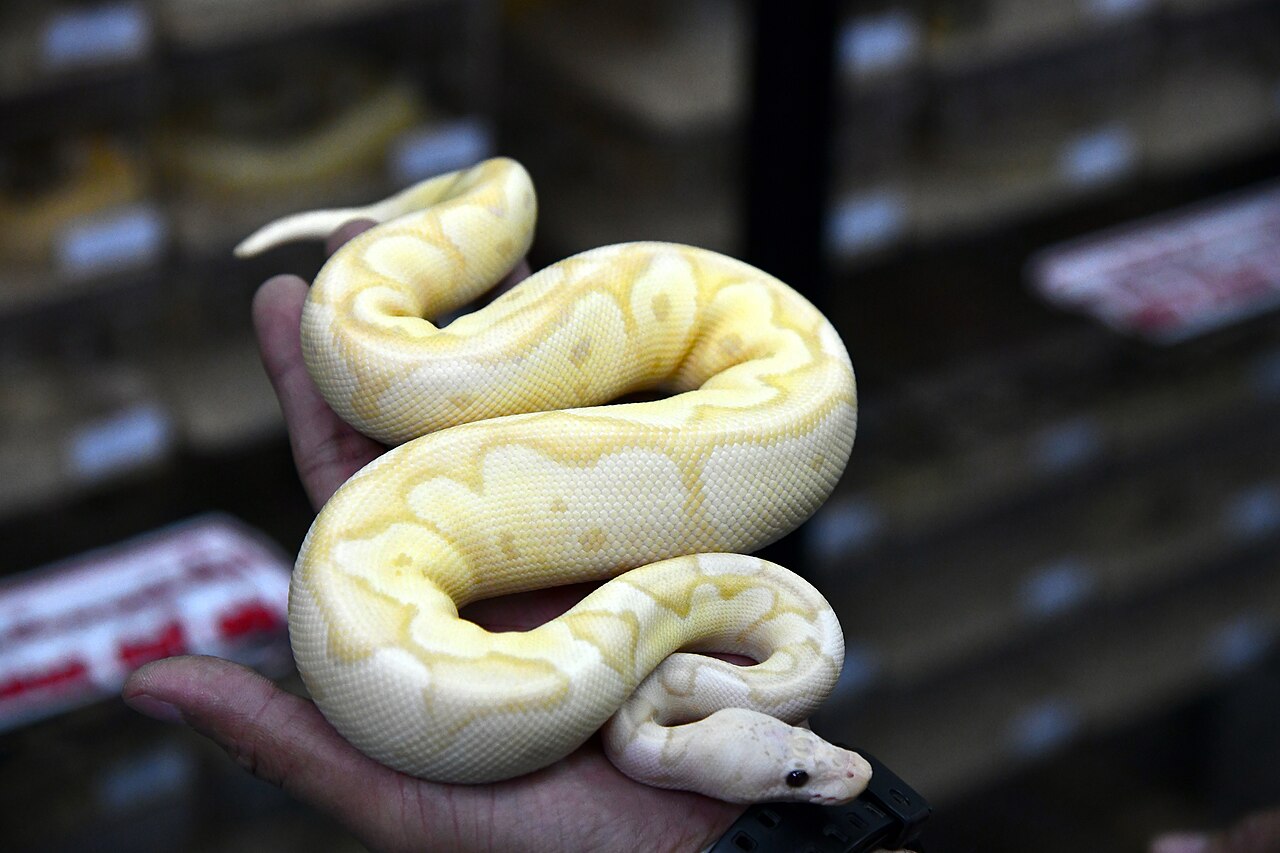
A single-gene pastel typically costs $50 to $100 from a breeder in the United States, with super pastels at $125 to $250 and pastel combinations running from $150 into the thousands. Prices dropped hard over the last decade because captive production outpaced demand, which is good news for buyers and a warning for anyone treating snakes as an investment.
The animal is the cheap part. A correct setup costs $250 to $450 once you add a 40 gallon enclosure, thermostat, heat source, two hides, substrate, and a water bowl, and feeding runs $60 to $150 per year. Vet care for a reptile is not covered by insurance and a single visit can exceed the price of the snake.
Cheaper is not automatically worse, but ask what the animal is eating, when it last ate, and whether it takes frozen thawed rodents. A pastel that reliably eats thawed prey is worth more than a bargain hatchling that has never fed.
Are Pastel Ball Pythons Good Pets?
Pastel ball pythons are good pets for beginners who can hold stable heat and humidity, because the species is slow, non-venomous, and tolerant of handling. They are poor pets for anyone who wants an animal that interacts, since a ball python spends most of its day in a hide and shows none of the responsiveness of a mammal.
The realistic commitment is 20 to 30 years, which outlasts most apartments, relationships, and jobs. Rescues in the United States are full of surrendered ball pythons for exactly that reason.
Their two real demands are heat and privacy. A snake kept too cool stops digesting and regurgitates, and a snake without a tight hide on both the warm and cool side stays stressed and refuses food. If those two things are handled, a pastel is close to the lowest maintenance vertebrate pet available. Keepers who want a similar commitment in an amphibian often land on the strawberry pacman frog instead, which needs less space but far more attention to moisture.
Enclosure Setup for a Pastel Ball Python
An adult needs a minimum of 4 ft by 2 ft of floor space, which in practice means a 40 gallon breeder tank or a PVC enclosure of similar footprint. Hatchlings can start in something smaller, but most keepers save money by buying the adult enclosure once and filling it with clutter.
Two identical hides matter more than décor. Place one on the warm side and one on the cool side, each just large enough for the snake to touch the walls, so the animal never has to choose between the right temperature and feeling safe. Add cork bark, leaf litter, or artificial foliage to break up the open floor.
Substrate should hold moisture without molding. Cypress mulch, coconut husk, and orchid bark all work; aspen does not, because it collapses at ball python humidity. A water bowl big enough for the snake to soak in belongs on the cool side, refilled and scrubbed weekly. The layout logic is the same one that suits a pied ball python or any other morph, since the gene never changes the husbandry.
Temperature, Humidity, and Shedding
Hold a warm side surface of 88 to 92 F (31 to 33 C), a cool side of 76 to 80 F (24 to 27 C), and ambient humidity between 55 and 65 percent, rising to 70 percent during a shed cycle. Every heat source runs through a thermostat, without exception, because an unregulated mat is the most common cause of burns in this species.
Measure with a digital probe and an infrared temperature gun rather than a stick-on dial, which reads the glass instead of the animal. Check the warm hide floor, not the air above it.
A clean shed comes off in one piece, including the eye caps and tail tip. Stuck shed means the humidity dropped, and the fix is a humid hide packed with damp sphagnum moss rather than pulling at the skin. Retained eye caps that persist across two cycles need a reptile vet. Corn snakes show the same pattern, and keepers who have raised an albino corn snake will recognize the routine.
Feeding a Pastel Ball Python
Feed a frozen thawed rodent roughly as wide as the thickest part of the snake, every 7 days for juveniles and every 10 to 14 days for adults. Prey size is judged by width, not weight, and a rat that leaves a visible lump for more than a day was too large.
Thaw in the refrigerator, then warm the rodent in a sealed bag in warm water until the head reads about 100 F (38 C). Ball pythons hunt by heat-sensing pits, so a cold offering is often refused by an otherwise healthy snake. Never microwave prey and never feed live rodents unattended, since a live rat can injure a snake badly in minutes.
Refusal is normal. Adult males in particular fast for weeks or months in winter and during breeding season, and a snake that holds its weight is not starving. Weigh monthly and act when the trend drops more than 10 percent, not on the first missed meal.
Handling and How to Tell if Your Ball Python Trusts You
A ball python does not bond with its keeper the way a dog or parrot does, so trust here means the absence of a stress response rather than affection. The reliable signals are a snake that moves smoothly through your hands, tongue flicks while exploring, holds normal muscle tone, and keeps eating on schedule.
Stress looks different and is easy to read. Balling up tight, hissing, jerky retreats, and refusing food after handling all say the animal wants to be left alone. Hatchlings show more of this and grow out of it with short, calm sessions.
Handle 2 to 3 times a week for 10 to 15 minutes, never within 48 hours of a meal, and skip handling entirely when the eyes turn blue before a shed. Support the body along its whole length and let the snake move rather than restraining it. Bites happen mostly during feeding confusion, are shallow, and require soap and water rather than a doctor.
Which Ball Python Morphs to Avoid, and Where Pastel Fits
Pastel is one of the safe genes, with no documented neurological or lethal effects in either the single or the super form. The morphs that carry known problems are a short and well documented list, and buyers deserve to hear it before the sale rather than after.
Spider and champagne carry a wobble, a neurological head tremor that ranges from barely visible to severe and never fully disappears. Super spider and super champagne are not viable. Desert females are widely reported as infertile, and super black pastel and super cinnamon frequently produce kinked spines and duckbill deformities. The spider ball python page covers that debate in detail, and it remains genuinely contested among keepers.
Clean combinations built on pastel avoid all of this. Pastel paired with banana ball python genetics, with piebald, or with clown produces some of the most popular snakes in the hobby without any welfare cost. For an overview of the species itself, the Smithsonian National Zoo maintains a reliable profile at nationalzoo.si.edu.
Frequently Asked Questions
Are pastel ball pythons rare?
No. Pastel is one of the most widely produced ball python morphs in the world and has been bred in large numbers since the late 1990s. That abundance is why a single-gene pastel costs $50 to $100 while high-end combinations built from the same gene sell for hundreds or thousands of dollars.
What is the rarest color of ball python?
Purple tones are the hardest to produce, which is why lavender albino and its combinations stay expensive decades after the morph appeared. True blue does not exist in this species. Blue eyed leucistic snakes are solid white with blue eyes rather than blue-bodied, and their rarity comes from needing two specific genes.
What snake is worth $100,000?
The figure traces back to early lavender albino ball pythons, whose first captive-bred animals reportedly changed hands for tens of thousands of dollars around 2001. Sources disagree on whether any single snake actually sold for $100,000, since most of these numbers are asking prices rather than verified sales.
What is a holy grail ball python?
Holy grail is a marketing term breeders apply to whichever combination is currently hardest to reproduce, so the name has shifted over the years rather than describing one fixed morph. It usually means a multi-gene recessive combination that takes several generations of planned breeding to hit.
What is the prettiest ball python?
That is a matter of taste, and the hobby has no agreement on it. Pastel, banana, piebald, and clown combinations dominate popularity lists because they read as clean and high contrast in photos. Judge an animal in daylight instead of under the LED strips used at reptile expos, which exaggerate yellows.
Do pastel ball pythons need a heat lamp or a heat mat?
Either works if it runs through a thermostat and produces a warm side of 88 to 92 F (31 to 33 C). Overhead halogen suits screen-top glass tanks because it raises ambient temperature, while mats suit PVC enclosures that already hold heat. Ceramic emitters work for both but dry the air faster.