Poison Dart Frog: How Toxic They Really Are, Species by Species
Poison dart frogs are small, brightly colored frogs of the family Dendrobatidae, found in the rainforests of Central and South America. Most are under 1.5 in (4 cm) long, most carry toxins strong enough to sicken a predator, and exactly three species were ever used to tip blowgun darts. The rest of the family borrowed the name.
Their toxicity is also not a fixed trait. Wild dart frogs build their chemical defense out of what they eat, which is why the same species in a glass tank is harmless enough to hold, and why a golden poison frog in Colombia is one of the most toxic animals on Earth. Here is how the poison works, what touching one actually does, and which species deserve the reputation.
Poison dart frogs store alkaloid toxins in their skin, taken from the mites and ants they eat in the wild. Touching one is not usually dangerous to intact skin, but the golden poison frog (Phyllobates terribilis) carries enough batrachotoxin to kill an adult human. Captive bred dart frogs lose their toxicity entirely and are safe to keep.
| Species | Size | Toxicity | Used on darts |
|---|---|---|---|
| Golden poison frog (P. terribilis) | 2 in (5 cm) | Lethal to humans | Yes |
| Black legged dart frog (P. bicolor) | 1.5 in (4 cm) | Severe | Yes |
| Kokoe dart frog (P. aurotaenia) | 1.4 in (3.5 cm) | Severe | Yes |
| Dyeing dart frog (Dendrobates tinctorius) | 2 in (5 cm) | Mild to moderate | No |
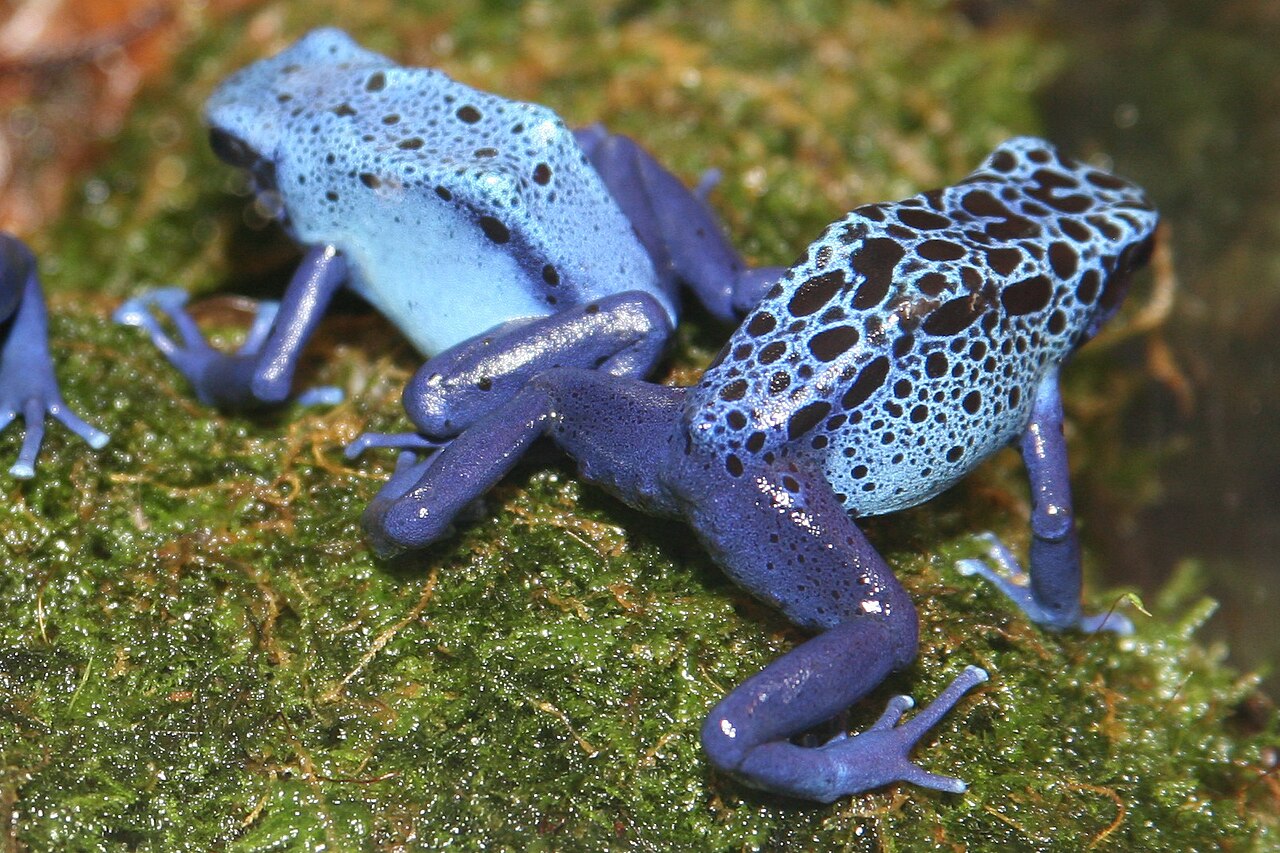
| Blue poison frog (D. tinctorius “azureus”) | 1.7 in (4.5 cm) | Mild | No |
| Strawberry poison frog (Oophaga pumilio) | 0.9 in (2.4 cm) | Mild | No |
What Is a Poison Dart Frog?
Dendrobatidae covers roughly 180 to 200 described species across Nicaragua, Costa Rica, Panama, Colombia, Ecuador, Peru, Brazil and the Guianas. They are diurnal, which is unusual for frogs, and they are loud for their size. Their bright coloring is aposematic, a warning signal that tells predators the animal is not worth eating.
Not every member of the family is toxic. Many are dull brown and harmless, and the vivid reds, blues and yellows track the species that actually have something to advertise. Parental care is another family trait: males guard the eggs, then carry hatched tadpoles on their backs to water held in bromeliads or tree holes, a strategy that separates their tadpole stage from that of most pond breeding frogs.
What Happens If I Touch a Poison Dart Frog?
With most species, nothing at all. Dart frog toxins are secreted from skin glands and have to enter the bloodstream or a mucous membrane to do damage, so brief contact with intact skin on a mildly toxic species usually causes no more than a tingle or mild irritation. Handlers who work with wild animals still wear gloves, because a cut, a hangnail, or rubbing an eye afterward changes the calculation completely.
The exception is serious. Phyllobates terribilis secretes batrachotoxin, which is absorbed readily and blocks sodium channels in nerve and muscle. Handling one bare handed is genuinely dangerous, and indigenous Emberá hunters historically handled them with leaves. Touching is also bad for the frog. Amphibian skin absorbs oils, salts and residues from human hands, and that alone is a reason to leave any wild frog where it sits.
Are Dart Frogs Poisonous to Humans?
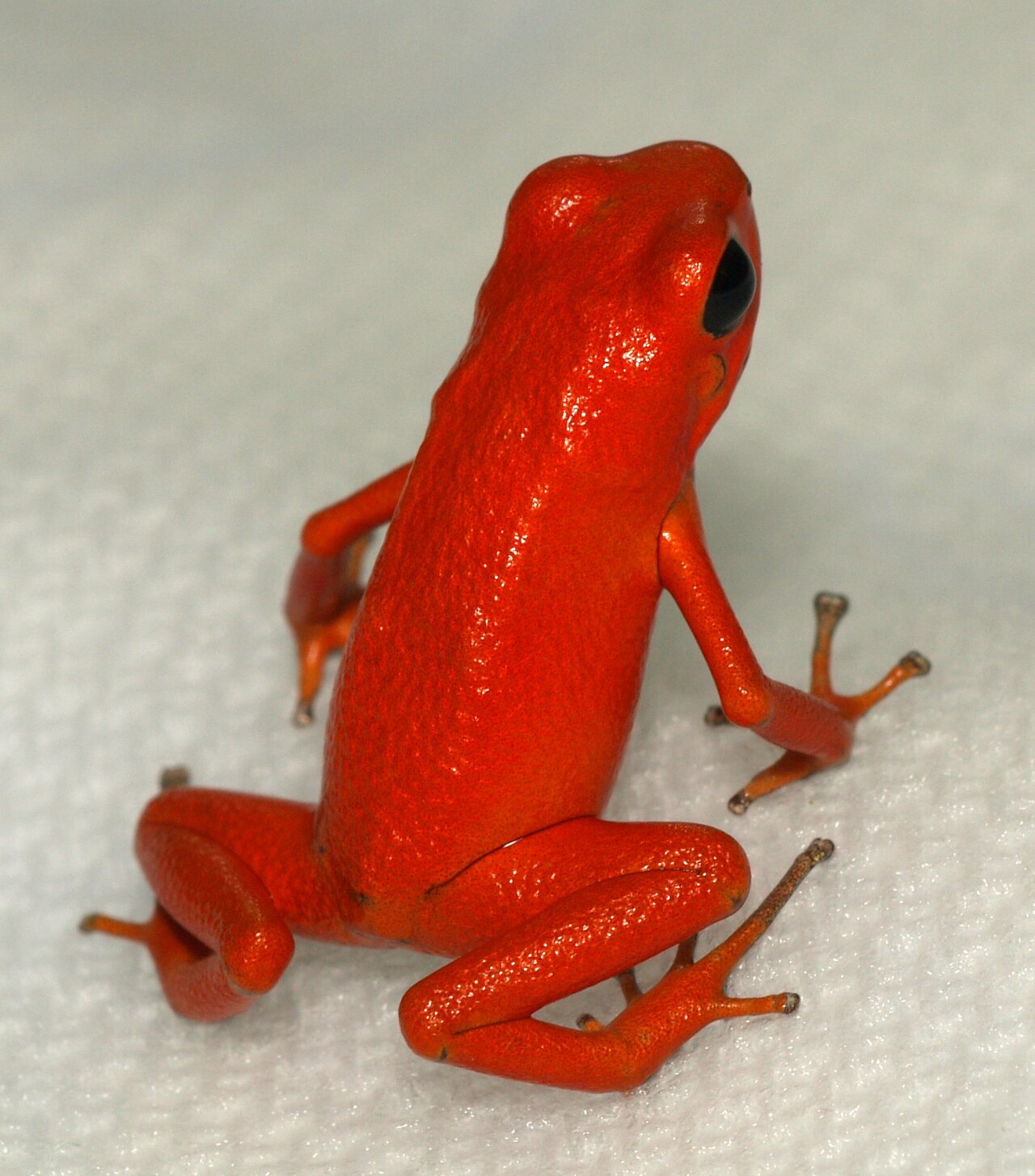
Poisonous, yes. Venomous, no. The distinction matters: a dart frog has no fangs, no stinger and no delivery mechanism, and it can only hurt something that touches or eats it. Of the roughly 200 species, only the three Phyllobates species used for darts pose a realistic threat to a person, and even those require poor handling or an open wound.
Documented human deaths are essentially absent from the modern record, and the danger is almost entirely a risk of field handling in a narrow part of Colombia. The mild species most people encounter, in zoos or private collections, would at worst cause local burning if their secretions reached a cut. The safe habit is simply no bare hands, which applies equally to species like the tomato frog that secrete irritating skin mucus.
What Is the Deadliest Frog in the World?
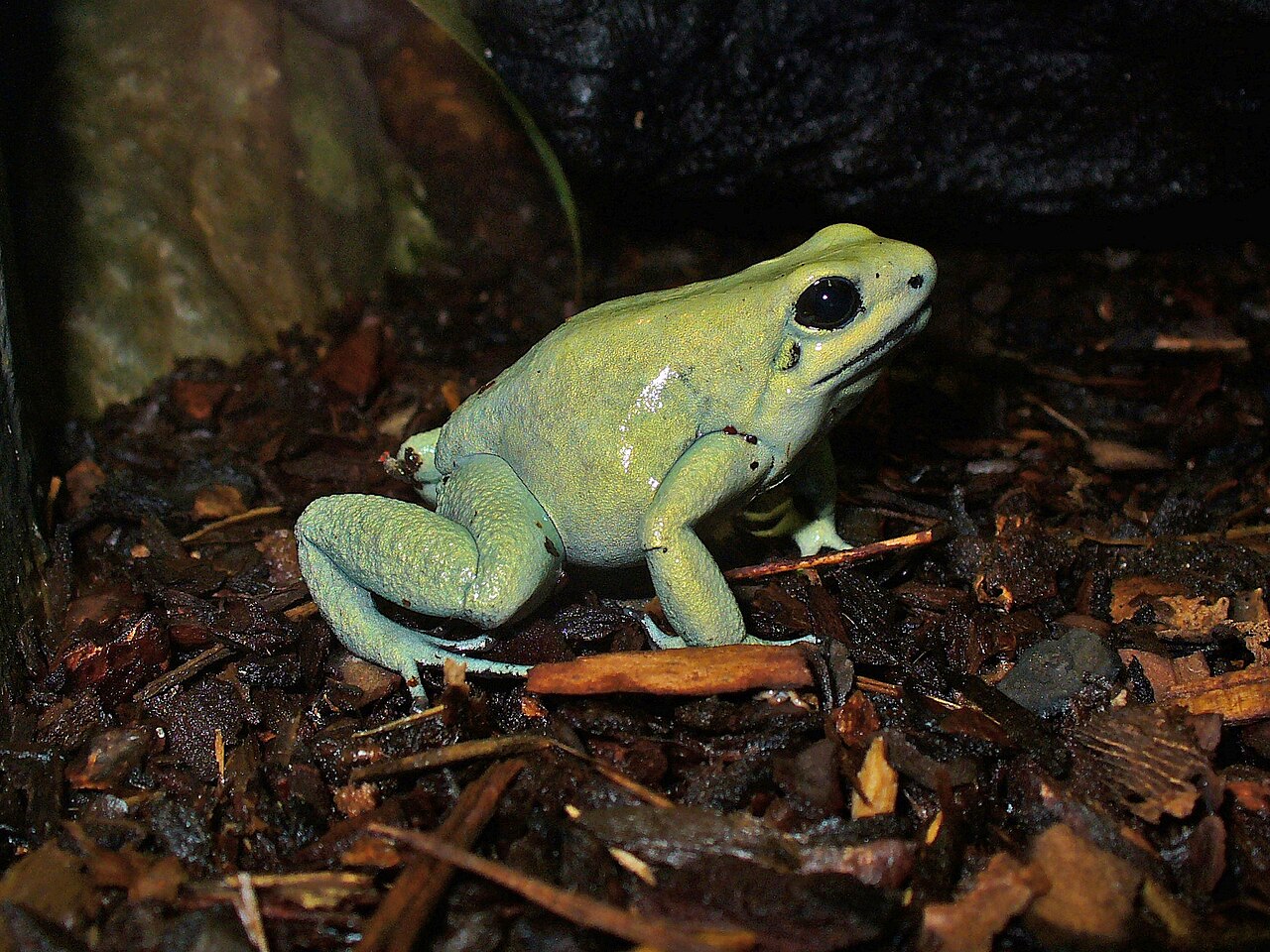
The golden poison frog, without a close competitor. A single wild adult carries about 1 mg of batrachotoxin, and estimates commonly put the lethal human dose near 100 to 200 micrograms, meaning one frog holds enough to kill several adults. It is roughly 2 in (5 cm) long and bright yellow, orange or mint green depending on the population.
Those numbers come from wild frogs in a restricted range on Colombia’s Pacific coast, and they vary with locality and season. Estimates of exactly how many people one frog could kill differ widely between sources and should be read as rough figures, not measurements. What is not disputed is that no other amphibian comes near it.
Where the Poison Actually Comes From
Dart frogs do not manufacture their alkaloids. They sequester them from prey, mainly oribatid mites, formicine ants, millipedes and small beetles, then concentrate and store the compounds in skin glands. Over 800 distinct alkaloids have been identified across the family, and the mix differs between populations of the same species because the local prey differs.
This is why toxicity vanishes in captivity. A frog raised on fruit flies and crickets never acquires the source compounds, and captive bred animals are non toxic for life. It also means a wild caught frog slowly loses potency in a collection, and that reintroducing captive stock to the wild does not immediately restore its defense. Their calls stay the same either way, a subject we cover in frog sounds.
What Animal Is Immune to Poison Dart Frogs?
One predator is known to specialize on them: the fire bellied snake Leimadophis epinephelus, a Colombian colubrid that tolerates batrachotoxin well enough to eat Phyllobates, though not without limit. Resistance in that case comes from modified sodium channels that the toxin cannot bind as tightly.
Beyond that, immunity is scarce. Some spiders and large invertebrates take dart frogs without apparent harm, and mildly toxic species are eaten by a wider set of snakes and birds. The frogs’ real defense is that predators learn the warning colors and stop trying, which only works because most of the family is genuinely unpleasant to eat.
Can I Keep a Dart Frog as a Pet?
Yes, and captive bred dart frogs are a well established part of the hobby. They are legal in the US, they live 10 to 15 years with good care, and because they are raised on cultured insects they carry no meaningful toxicity. Buy captive bred only, both for safety and because wild collection pressures already threatened species.
The setup is the demanding part. Dart frogs need a planted, bioactive vivarium at 72 to 80 F (22 to 27 C) with 80 percent humidity, a drainage layer, and a steady supply of flightless fruit flies and springtails dusted with calcium and vitamin A. They are display animals, not handling animals. Keepers who want a frog they can interact with are usually better served by a Pacman frog or a White’s tree frog. Care sheets from institutions such as the Smithsonian National Zoo are a good starting reference.
Related reading: Strawberry Poison Dart Frog.
Related reading: Poison Dart Frog Adaptations.
Related reading: Poison Dart Frog Habitat.
Related reading: Poison Dart Frog Colors.
Related reading: Poison Dart Frog Diet.
Frequently Asked Questions
Can you survive a poison dart frog?
For nearly all species, yes, since their toxins cause irritation rather than systemic harm through intact skin. A significant batrachotoxin exposure from a golden poison frog is different, and there is no antidote. Treatment is supportive care, which makes avoiding bare handed contact the only real protection.
What kills a poison dart frog?
Habitat loss is the leading cause, along with the chytrid fungus Batrachochytrium dendrobatidis, which has devastated Neotropical amphibians. Natural predators include the resistant fire bellied snake, some spiders and large arthropods. In captivity, most losses trace to low humidity, poor ventilation or a calcium deficient diet.
What animals can coexist with dart frogs?
In a vivarium, the safe tankmates are the cleanup crew: springtails, isopods and millipedes. Mixing dart frog species is discouraged because of hybridization and aggression, and mixing them with larger frogs ends badly. Anything big enough to eat a dart frog eventually will.
Why are they called dart frogs?
Because three Phyllobates species were used by Emberá and Noanamá hunters in western Colombia to coat blowgun darts. The frog was held over a flame or simply rubbed along the dart tip, and the coating stayed effective for months. The other 200 or so species were never used this way.
How long do poison dart frogs live?
Captive dart frogs commonly reach 10 to 15 years, and some Dendrobates individuals have passed 20. Wild lifespans are shorter and harder to measure, with most estimates in the 4 to 8 year range. Small species such as the strawberry poison frog sit at the low end.
How many poison dart frogs live in one area?
Densities can be high in good habitat, with strawberry poison frogs reaching several thousand per acre in parts of Costa Rica. They are territorial rather than social, and males call to hold small patches of forest floor. The collective terms people use for them are covered in what a group of frogs is called.