Elk Sounds: 6 Calls, What Each Means and When You Hear Them
An elk bugle is the long, rising whistle a bull makes in autumn, and it carries farther than any other sound in the American West. It starts as a low grunt, climbs into a thin scream that can hold for several seconds, then breaks into a series of grunts that hunters call chuckles. Hear it once at dusk in September and you will never mistake it again.
Bugling is only one of at least six sounds elk (Cervus canadensis) use. Cows mew, calves squeal, alarmed animals bark, and herd bulls make a strange underwater popping noise most people never notice. Each sound has a season, a time of day, and a meaning, and each one tells you something different about the animal standing in the dark timber.
Elk make six main sounds: the bull bugle, a sharp alarm bark, the nasal cow mew, the higher calf mew, close range chuckles, and the deep glunking of a herd bull. Bugling peaks during the September and October rut, mostly at dawn and dusk.
What Does an Elk Bugle Sound Like?
A full bugle has three parts. It opens with a low, breathy grunt, rises into a clear whistle that can reach a pitch most people associate with a bird rather than a 700 pound animal, then falls off into two to six staccato grunts. Written out, it sounds something like “ohh-EEEEE-ahh, uh-uh-uh.”
Young bulls squeak. Mature bulls produce a deeper, raspier note with more volume and a longer glide at the top. The whistle comes from the larynx and nasal passages working together, which is why the sound seems too high for the body producing it. No other North American mammal makes anything close to it.
| Sound | What it sounds like | Who makes it | When you hear it |
|---|---|---|---|
| Bugle | Rising whistle, then grunts | Bulls | September to October, dawn and dusk |
| Bark | One sharp, dog like yelp | Cows mostly | Year round, when alarmed |
| Cow mew | Nasal “eee-uh,” two notes | Cows | Year round, herd on the move |
| Calf mew | Higher, thinner squeal | Calves | June to winter |
| Chuckle | Fast “uh-uh-uh” grunts | Bulls | Rut, close range |
| Glunk | Hollow pop, like a dripping cave | Herd bulls | Rut, while tending cows |
Why Do Bull Elk Bugle?
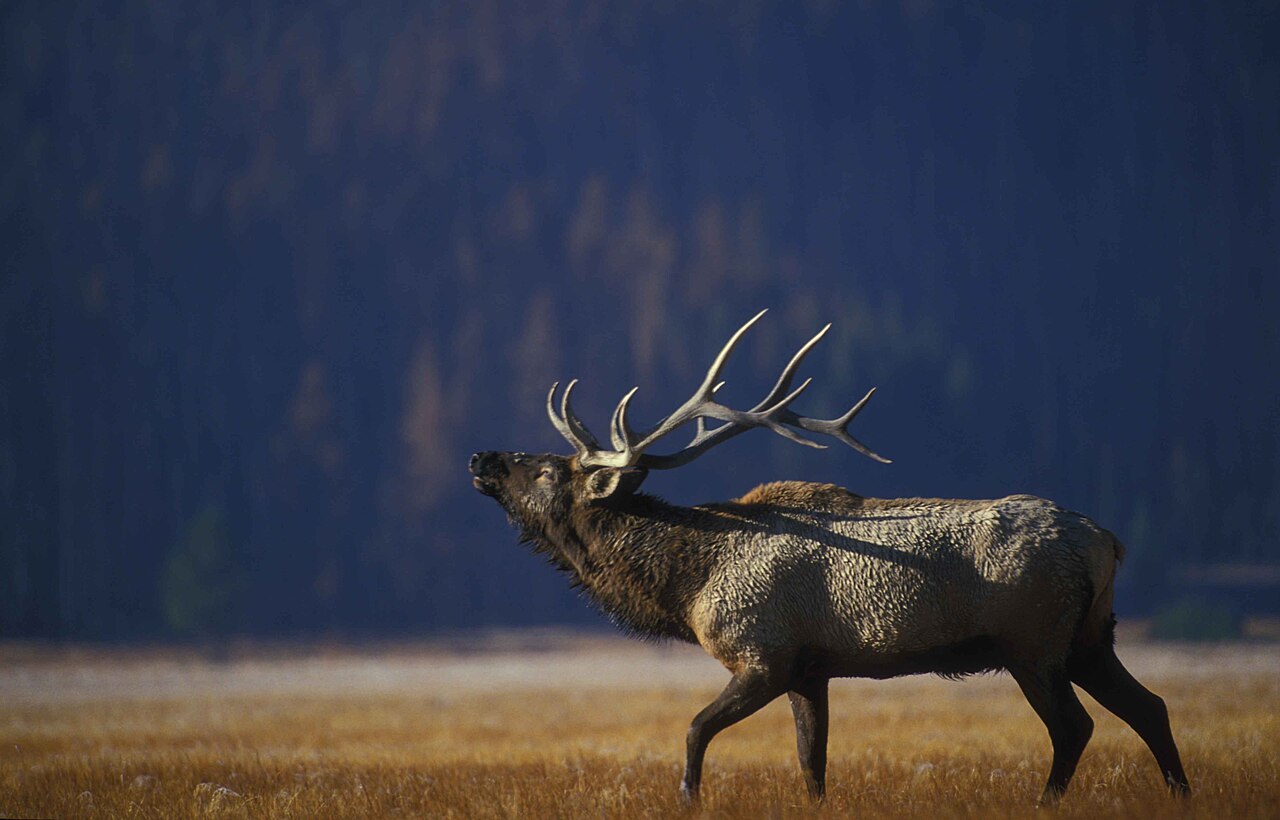
Bugling is advertising and intimidation at the same time. A bull announces his size and condition to cows, warns satellite bulls to keep their distance, and answers rivals he cannot see. Because the whistle travels through timber better than a low grunt does, it works as a long distance billboard in country where animals rarely see each other.
Cows respond to the quality of the call, not just the volume. Bulls that bugle most often tend to be the ones holding harems, and the effort costs them: herd bulls lose a large share of their body weight across a five week rut. A bull still screaming in late October is usually a bull that has run out of competition, not one that has run out of energy.
What Time of Day Do Elk Bugle the Most?
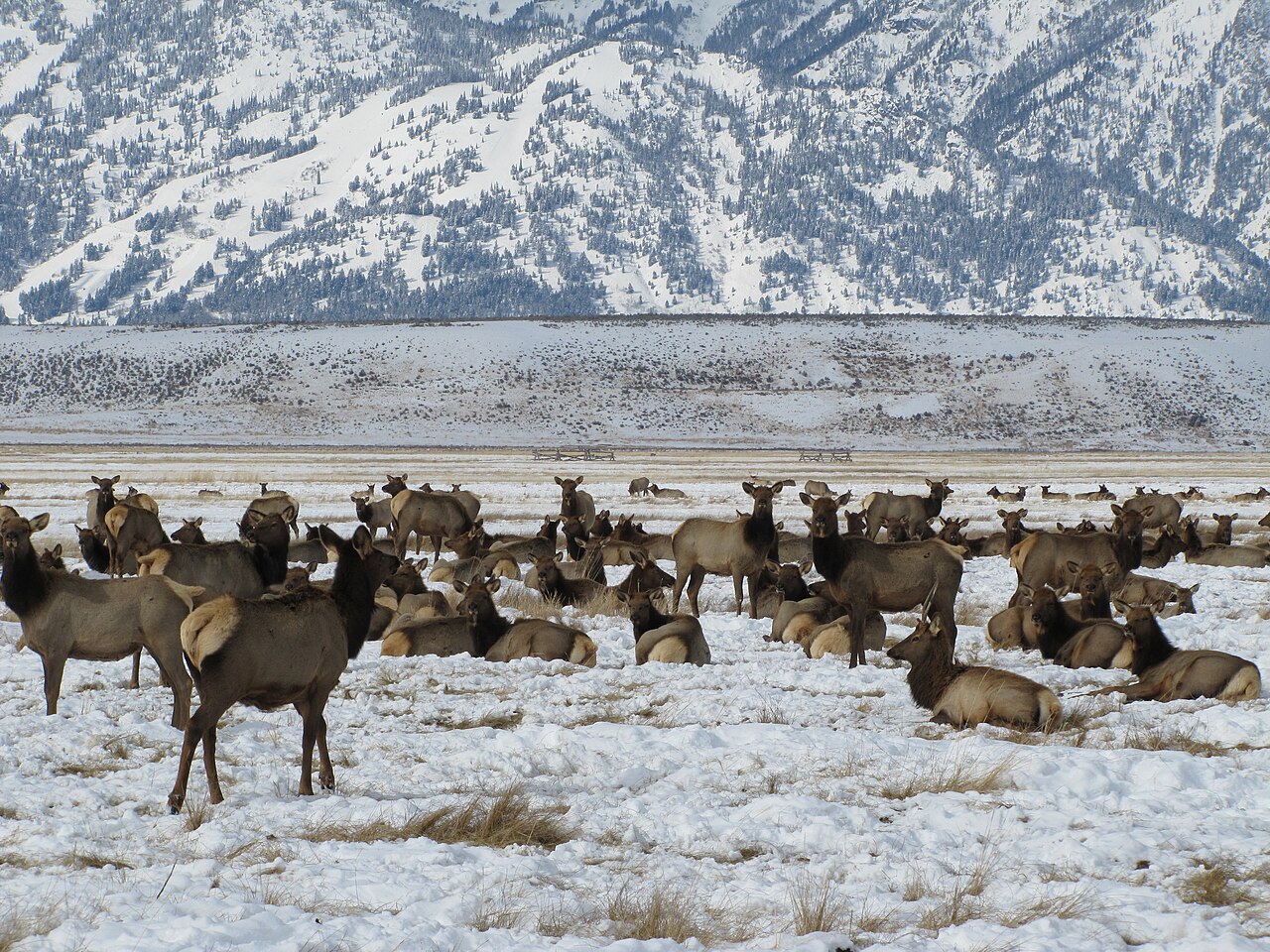
Elk bugle most in the two hours around first light and the hour before dark, with a second burst well after midnight. Those windows match the herd’s feeding movement between open meadows and dark timber, and cool, still air carries the sound much farther than the warm, rising air of midday.
During the peak of the rut, a hot bull may bugle at any hour. Overcast, windless mornings produce the most responses; hot afternoons and strong wind produce almost none. If you are listening from a campground or a pullout, plan on being in place 30 minutes before sunrise rather than arriving at it.
How Far Away Can You Hear an Elk Bugle?
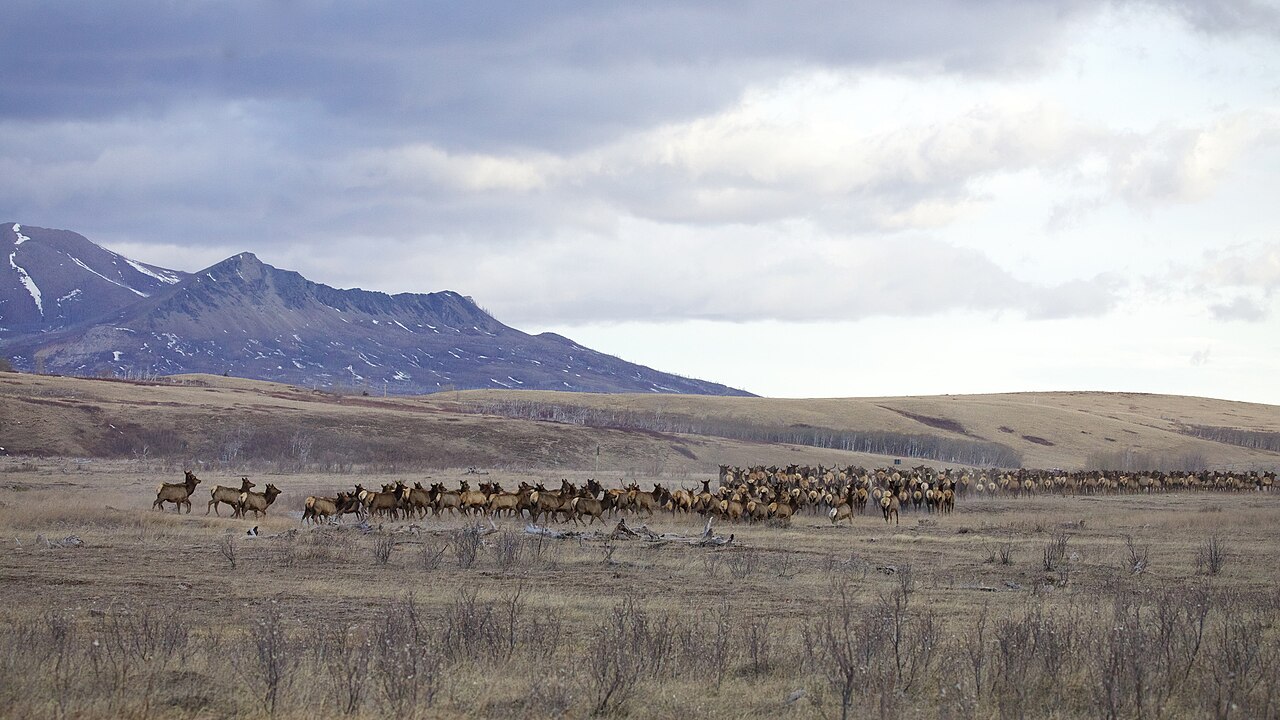
A mature bull bugle carries about 1 mile (1.6 km) in normal conditions and up to 2 miles (3.2 km) on a cold, still morning in open country. Sound travels downhill and downwind far better than up, so an elk you hear clearly may be much farther away than it seems.
Terrain matters more than volume. Dense conifer timber eats the grunt portion first, leaving only the thin whistle, which is why distant bugles sound ghostly and incomplete. If you can hear the opening grunt and the closing chuckles, the bull is usually inside 300 yards (275 m).
What Does It Mean When a Bull Elk Barks?
A bark means the elk has detected something it cannot identify and is warning the herd. It is a single, sharp, dog like yelp, much shorter than a bugle, and it is almost always followed by every head in the meadow coming up at once. Cows bark more often than bulls do.
Hearing a bark means you have been made. The herd may stand and stare for a minute, then filter into timber without running. Barking also happens at coyotes, loose dogs, and hikers who crest a ridge into the wind, so it is a reaction to uncertainty rather than proof of real danger.
Cow and Calf Mews: The Everyday Elk Sound
The mew is the sound you will actually hear most. It is a nasal, two note “eee-uh” that cows use to keep contact while the herd feeds and moves, and it works at conversational volume rather than across a canyon. A feeding herd mews constantly, often a dozen times a minute.
Calf mews are thinner, higher, and more insistent, and a separated calf will repeat the call until its mother answers. Cows know their own calf’s voice. In late June, near calving grounds, that back and forth is the clearest sign that a herd has young animals with it, even when you cannot see them in the grass.
Chuckles, Glunks and Grunts: The Close Range Calls
Chuckles are the grunt series at the tail of a bugle, and bulls also use them alone when another bull is close. They sound like a quick “uh-uh-uh-uh” from deep in the chest and signal an animal that is agitated and committed rather than one calling across a drainage.
Glunking is the odd one. A herd bull tending cows makes a hollow, liquid pop, like water dripping into a barrel, usually while walking stiff legged with his nose out. You only hear it inside about 100 yards (90 m), and it almost always means a mature bull with cows is standing very close.
Elk Sounds Through the Year
Bugling begins with scattered practice calls in late August, peaks from roughly September 15 to October 10, and tapers through late October. A few bulls bugle into November when cows cycle again, and the occasional bull sounds off in spring, which surprises people who think the call belongs only to autumn.
Mews and barks run all year. Calf sounds start in late May and June, and winter herds on low elevation range are mostly quiet except for contact mews. If you want the full September soundtrack, go during the rut; if you want to learn the mew, any month works.
Sounds People Mistake for Elk
The most common error runs the other direction: visitors hear a bugle and assume it is a hawk, an owl, or a woman screaming. A distant bugle stripped of its grunts sounds remarkably like a raptor. Our guide to birds that sound like owls covers the same problem in the bird world.
Going the other way, a bobcat’s caterwaul and a cow elk’s bark both get reported as elk. So do coyotes in full chorus. The test is structure: an elk bugle rises and then drops in one continuous breath, while almost every mimic is either flat or repeated in even pulses. Compare it with bat sounds and with the mimicry in blue jay calls, and you will hear how different a real elk breath is.
Why Do Elk Pee When They Bugle?
Rutting bulls spray urine on their own bellies, legs, and neck manes, and they often do it while bugling because both behaviors serve the same purpose. The sound carries the message to animals far away, and the scent carries it to animals close by. The result is the strong, musky smell around a rut wallow.
Bulls also dig and roll in wallows, soaking the mane in a mix of mud and urine. Cows investigate the scent, and rival bulls read it as a status report. The habit makes a bull easier to find by nose than by eye, and the smell lingers in a wallow for days.
Where to Hear Elk Safely
Rocky Mountain National Park, Yellowstone, Great Smoky Mountains, and the Oak Creek and Hardware Ranch wildlife areas all run reliable September bugling. Many hold evening ranger programs at meadow overlooks, and the National Park Service Rocky Mountain pages post seasonal elk viewing guidance each fall.
Keep at least 75 ft (23 m) between you and any elk, and more during the rut. Rutting bulls charge, and cows with calves are worse. Stay in or beside your vehicle at roadside meadows, never place yourself between a bull and his cows, and skip calling in parks entirely: pulling a bull toward a crowd of people is how visitors get hurt. Wildlife listening habits transfer well across species, as our notes on bald eagle sounds and barred owl calls show.
Frequently Asked Questions
What is the best bugle for elk hunting?
Most callers use a latex diaphragm reed paired with an open grunt tube, which gives the widest range of pitch and volume in one setup. External reed bugles are easier for beginners and work well in cold weather. Realism matters more than the brand: volume without the right rise and fall spooks bulls.
What does 6 by 6 elk mean?
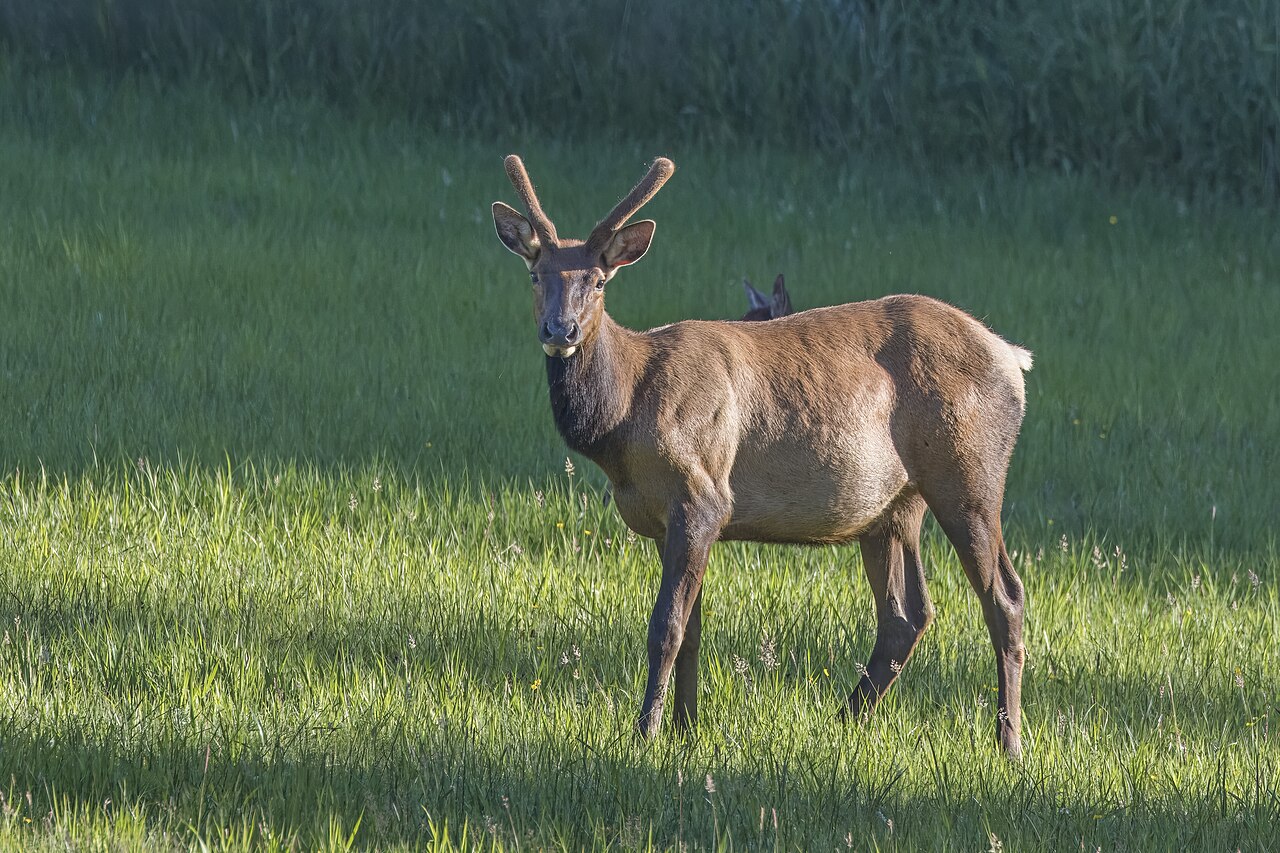
It describes antlers, not sound. A 6 by 6 bull carries six points on each antler, the classic royal bull of the Rockies. Hunters and photographers use the shorthand to describe maturity, since point counts generally rise with age before falling off again in very old animals.
What is a herd of elks called?
A group of elk is simply a herd, and the plural of elk is elk rather than elks. Herds split by season: cows, calves, and yearlings run in large nursery groups, while bulls form smaller bachelor bands outside the rut and go mostly solitary during it.
Do deer and elk ever mate?
Elk and white-tailed or mule deer do not interbreed; they belong to different genera and their chromosome counts differ. Elk can hybridize with red deer (Cervus elaphus), their close Eurasian relative, and that has happened on game farms and in New Zealand, which is why some states restrict red deer imports.
What is the main predator of elk?
Wolves and mountain lions take the most elk where both exist, with grizzly and black bears heavily targeting newborn calves in June. Coyotes pick off calves and winter weakened animals. In most of the lower 48, however, human hunters remain the single largest source of adult elk mortality.
What color can elk not see?
Elk are dichromatic: they see blues and yellows well but cannot distinguish red and orange from green and brown. That is why blaze orange clothing stays legal for hunters. Elk compensate with excellent motion detection, wide field of view, and strong low light vision, so movement gives you away long before color does.