Bald Faced Hornet Nest: Size, Danger, and When to Remove It
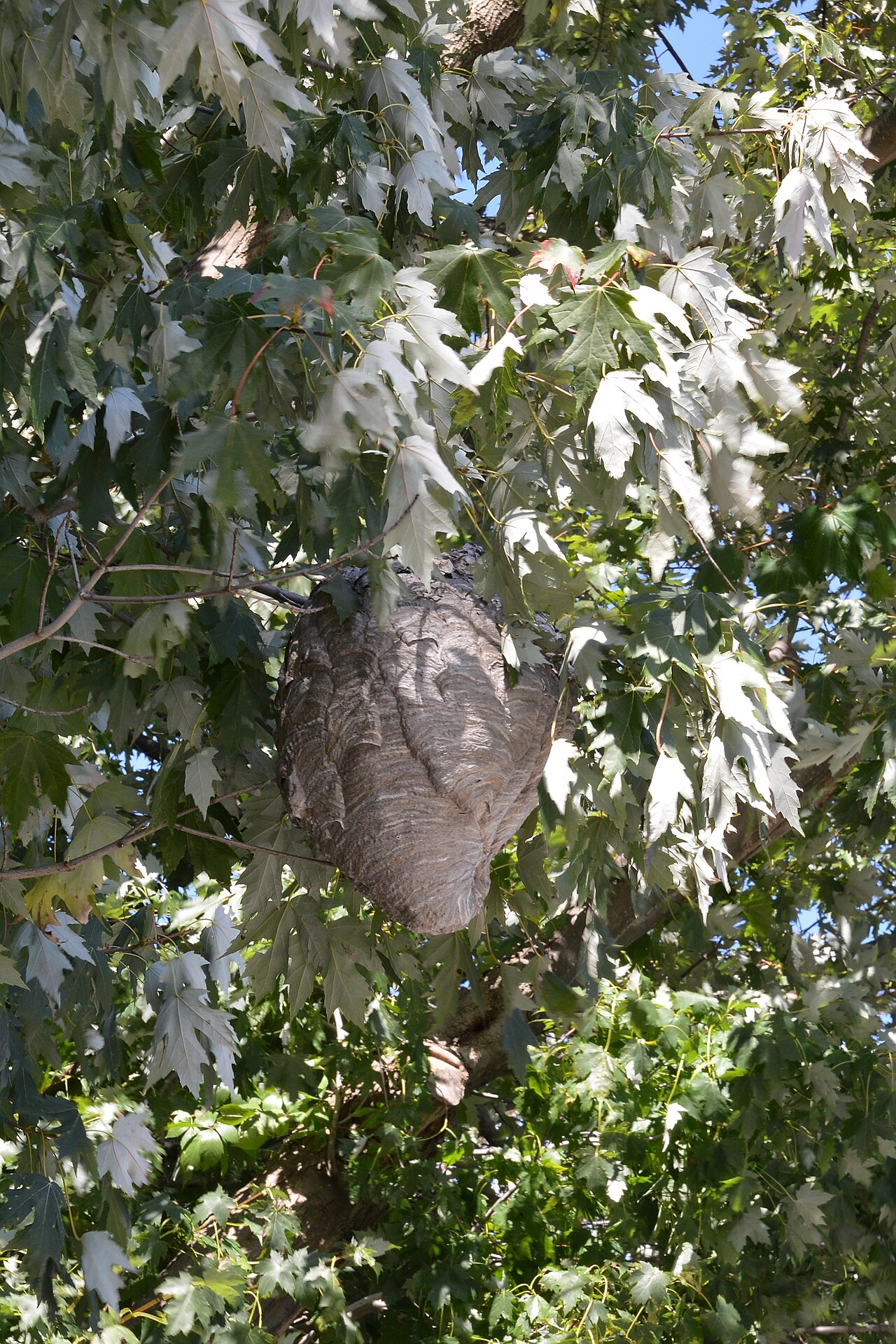
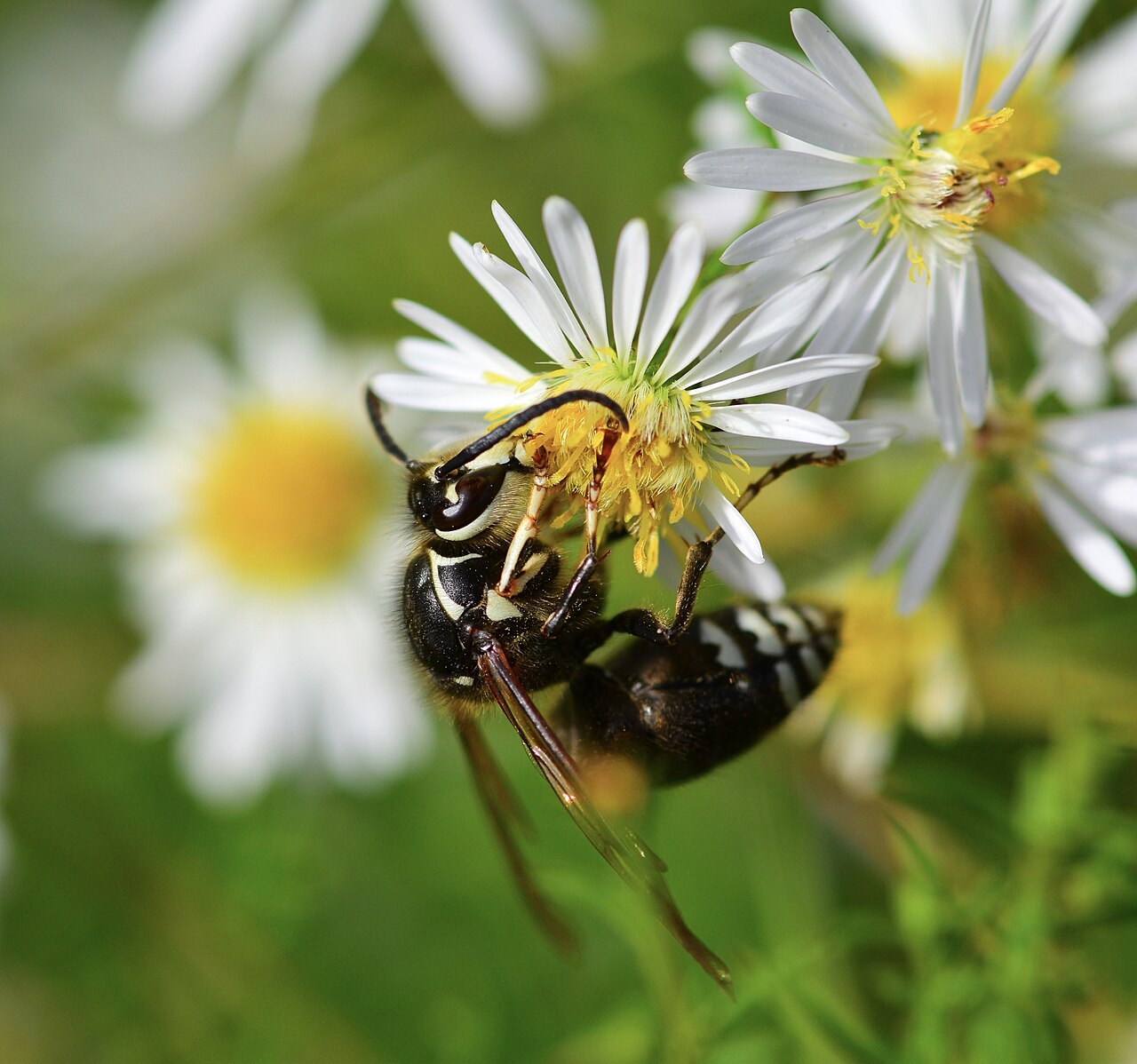
A bald faced hornet nest is the grey, football shaped paper ball hanging from a tree limb, a soffit, or a shrub, built by Dolichovespula maculata, a yellowjacket rather than a true hornet. A mature nest holds 400 to 700 workers by late summer and is defended aggressively within about 10 feet (3 m).
The most useful fact about this nest is that it is annual. Every colony dies with the first hard frost, and the envelope is never reused, which decides whether you act now or wait.
A bald faced hornet nest is a grey paper sphere 12 to 24 inches (30 to 60 cm) across with a single entrance hole near the bottom. The colony dies off each fall and never reoccupies the nest. Remove it only if it sits within about 10 feet of a doorway, walkway, or play area.
What a Bald Faced Hornet Nest Looks Like
The nest is chewed wood fiber and saliva, grey and layered. It starts in May as a golf ball built by one overwintered queen and reaches basketball size by August. The single entrance sits low on the sphere and is guarded constantly.
| Feature | Bald Faced Hornet Nest | Paper Wasp Nest |
|---|---|---|
| Shape | Enclosed grey sphere | Open umbrella of cells |
| Size in August | 12 to 24 in (30 to 60 cm) | 3 to 8 in (8 to 20 cm) |
| Entrance | One hole near the bottom | None, cells face down |
| Colony size | 400 to 700 | 20 to 75 |
| Typical spot | Tree limb, soffit, shrub | Eaves, deck rails, grills |
| Reused next year | No | No |
An open nest with visible hexagonal cells belongs to a paper wasp. Our guide to the hornet nest versus wasp nest covers the other lookalikes.
Should I Destroy a Bald-Faced Hornet Nest?
Destroy the nest only when its location puts people at risk. A nest more than 10 feet from foot traffic or high in a tree is better left alone, because the colony hunts flies and caterpillars all summer and dies on its own in fall.
Remove it when it hangs over a door, a deck, a play set, or a spot you have to mow, or when someone in the household has a stinging insect allergy. Penn State Extension takes the same position in its guidance: tolerate distant nests, treat nests near activity.
Do Bald-Faced Hornets Return to the Same Nest Every Year?

No. Bald-faced hornets do not return to the same nest every year, and no colony reoccupies an old envelope. Workers, males, and the founding queen die in late fall. Only newly mated queens survive, each overwintering alone under bark or leaf litter before starting a new nest elsewhere in spring.
Old nests fall apart over winter or get torn open by birds hunting the last larvae, and an empty nest is harmless. A new nest in the same tree next year means the site is attractive, not that the colony returned, a pattern shared with the general hornet nest cycle.
How Do I Get Rid of a Bald-Faced Hornet Nest?

Treat after dark, when nearly all workers are inside. Wear full cover, use a jet spray aerosol rated for hornets from at least 15 feet (4.5 m), aim at the entrance hole, and leave immediately. Do not use a ladder: a hornet response while climbing is the main injury risk.
Wait 24 hours, confirm no traffic at the entrance, then bag the nest. Skip it and call a professional if the nest is out of reach, near an allergic person, or inside a wall void. Timing and safe distance are in our hornet nest removal walkthrough, and the insect is profiled in our bald-faced hornet guide.
Frequently Asked Questions
What smell do bald-faced hornets hate?
Peppermint, clove, and lemongrass oil deter scouting workers from landing spots and are sometimes used on eaves before nest building starts in spring. No scent clears an established nest, and spraying oils at an active colony provokes a defensive response without reducing the population.
What month do hornets abandon their nest?
In most of the United States the colony breaks down between late September and early November, driven by the first hard frost. Southern colonies can stay active into December. Once nighttime temperatures stay below freezing for several days, the nest is empty except for dead workers.
How aggressive are bald-faced hornets?
They are among the most defensive social wasps in North America and will sting repeatedly without losing the stinger. Aggression is tied to distance from the nest: they ignore people foraging away from it but respond within roughly 10 feet, and vibration from a mower or trimmer triggers a fast attack.
How long will hornets return to a destroyed nest?
Foragers that were away during treatment circle the site for one to three days, then disperse or die. If activity continues past a week, the treatment missed the interior of the nest. A second nest nearby is also possible, which our murder hornet comparison helps rule out.