Can Guinea Pigs Eat Apples? Vitamin C, Seeds, and Limits
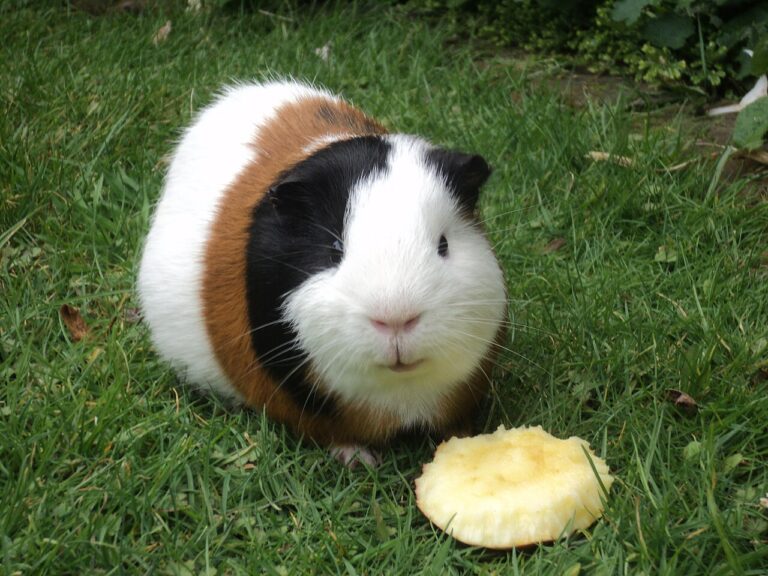
Guinea pigs can eat apples, and a small piece once or twice a week is a genuinely useful treat because it supplies vitamin C. That matters more for guinea pigs than for almost any other pet, since they share a rare trait with humans: they cannot manufacture vitamin C internally and must obtain every bit of it from food.
The limits are sugar and acid. Apples run around 10 percent sugar, which disrupts the gut flora of an animal built to ferment grass all day, and the acidity contributes to mouth sores when fed too often. This guide covers the vitamin C question, safe portions, whether skin and seeds are a problem, how green apples compare, and what should actually make up the bulk of the diet.
| Quick Facts | Apples for Guinea Pigs |
|---|---|
| Safe to feed | Yes, in small amounts |
| Frequency | 1 to 2 times per week |
| Portion | A slice about 1 in wide per pig |
| Skin | Safe, wash thoroughly first |
| Seeds and core | Remove, seeds contain amygdalin |
| Daily vitamin C need | About 10 to 30 mg depending on age and health |
Can Guinea Pigs Eat Apples Safely?
Yes. Apple flesh contains nothing toxic to guinea pigs, and most take to it enthusiastically. A slice offers vitamin C, potassium, and pectin, a soluble fiber that supports gut bacteria, plus a high water content that helps hydration in an animal that often drinks less than it should.
The caution is about quantity rather than safety. Guinea pigs evolved to eat grass, which means a digestive system built for continuous processing of high-fiber, low-sugar material. Fruit sits well outside that design, and the problems that follow are digestive rather than toxic.
The working framework is that hay makes up roughly 80 percent of the diet, fresh vegetables most of the rest, and fruit is an occasional extra rather than a daily item. Within that structure an apple slice twice a week is entirely reasonable and does real nutritional work. Our guide to whether chickens can eat apples covers the same fruit for a very different digestive system.
Vitamin C: Why Guinea Pigs Are Different
Almost every mammal manufactures its own vitamin C in the liver. Guinea pigs cannot, because the gene for the enzyme that performs the final step, L-gulonolactone oxidase, is non-functional in the species. Humans, other primates, and a handful of other animals share the same defect, which is precisely why guinea pigs became a standard laboratory model for scurvy research.
The consequences are practical and serious. A guinea pig deprived of dietary vitamin C develops scurvy within weeks, showing a rough coat, reluctance to move, swollen painful joints, bleeding gums, loose teeth, poor wound healing, and weight loss. Adults need roughly 10 to 30 mg per day, with pregnant, ill, or growing animals at the higher end.
Apples contribute but do not carry the load. A typical apple provides around 4.6 mg of vitamin C per 100 g, which is modest, and vitamin C degrades quickly in stored produce. Bell peppers are the standout source at over 100 mg per 100 g, and a small daily piece of bell pepper covers the requirement more reliably than any fruit. Treat apples as a bonus rather than as the vitamin plan.
Sugar and Acid: The Real Limits
Guinea pig digestion runs on hindgut fermentation, with a large cecum full of bacteria that break down fiber. That system is finely balanced and sugar disrupts it, allowing the wrong bacteria to proliferate and producing soft stools, bloating, and in serious cases gastrointestinal stasis, which is a genuine emergency.
Bloat deserves specific mention because it kills. Gas trapped in the digestive tract causes a visibly distended abdomen, hunched posture, refusal to eat, and rapid decline, and it needs immediate veterinary attention rather than watchful waiting. Sudden diet changes and sugary or gas-producing foods are common triggers.
Acidity is the second constraint. Apples are mildly acidic, and frequent fruit feeding is associated with sores at the corners of the mouth and on the lips. Sugar also feeds oral bacteria, and dental disease is one of the most common health problems in captive guinea pigs, driven mainly by insufficient hay chewing but not helped by regular sweets.
Apple Seeds and Core
Remove the seeds. Apple seeds contain amygdalin, a compound that releases cyanide when the seed coat is crushed, and while the amount in a few seeds is small, a guinea pig weighs only 2 to 3 lb, so the margin is far narrower than it would be for a person.
Guinea pigs also chew thoroughly, unlike chickens which swallow pips whole and pass them intact. That difference matters: a chewed seed releases its contents while a swallowed one does not, so the same seed poses more risk here than it does in a chicken run.
The core itself is fibrous and hard, and it presents a choking risk rather than a chemical one. Cut it away along with the seeds and offer only the flesh with skin attached. It takes seconds and removes the question entirely.
Apple Skin and Green Apples
The skin is safe and worth keeping. It carries fiber and a share of the antioxidants, and guinea pigs enjoy the texture. The one caveat is pesticide residue, since apples are among the more heavily treated crops and a guinea pig eating skin takes in whatever remains on the surface, so wash thoroughly under running water or choose organic.
Green apples such as Granny Smith are more acidic and lower in sugar than red varieties. The lower sugar is a small advantage, the higher acidity a small disadvantage, and the two roughly cancel out. Feed them on the same schedule as any other apple.
All varieties are acceptable, so the choice comes down to what your pig prefers. Serve at room temperature rather than straight from the refrigerator, since cold food can cause digestive upset, and remove any uneaten pieces within a few hours before they attract flies or begin to ferment.
How Much Apple and How Often
A slice roughly 1 in wide per guinea pig, once or twice a week, is the sensible ceiling. That is a genuinely small amount and it looks stingy next to how enthusiastically most pigs receive it, which is exactly why keepers overshoot.
Fruit as a whole should stay at that level. Some keepers offer a small piece of some fruit two or three times a week rather than apple every time, which spreads the variety without increasing the total, and that is a better approach than a daily fixed ration of anything sweet.
Watch the droppings as your indicator. Firm, uniform, oval pellets in good numbers mean the balance is right. Soft, misshapen, or clumped droppings mean too much fresh food relative to hay, and the response is to cut fruit and vegetables back and make sure unlimited hay is available. Reduced hay consumption is the earliest warning sign, because a pig filling up on treats stops eating the fiber that keeps both gut and teeth working.
What Guinea Pigs Should Actually Eat
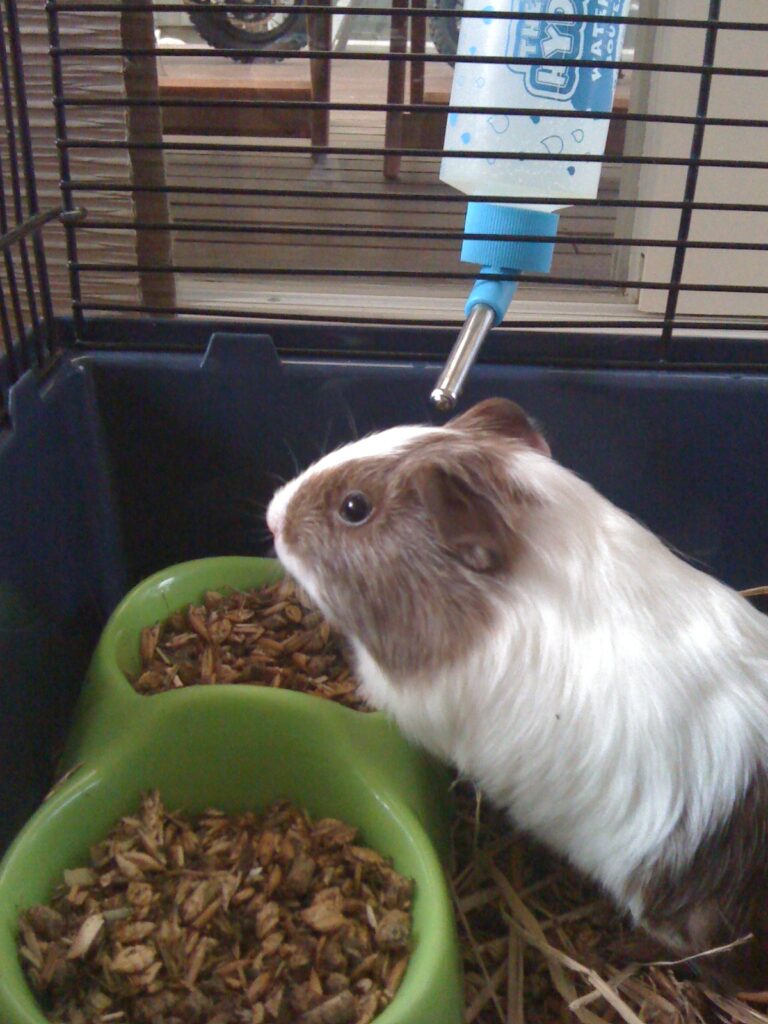
Unlimited grass hay is the foundation and is not optional. Timothy, orchard, or meadow hay should be available at all times and should make up around 80 percent of intake, because the long fiber drives gut motility and the constant chewing wears down teeth that grow continuously throughout life.
Fresh vegetables come next, at roughly a cup per pig per day. Bell peppers lead for vitamin C, alongside romaine and other leaf lettuces, cilantro, parsley in moderation, cucumber, and small amounts of carrot. Alfalfa hay is appropriate only for young, pregnant, or nursing animals, since its high calcium content contributes to bladder stones in adults.
Pellets fill a small supporting role, at about an eighth of a cup per day of a plain timothy-based guinea pig pellet with added vitamin C, avoiding mixes with seeds, corn, or colored pieces. Fresh vegetables need washing as carefully as fruit, and the same pesticide caution applies as in our guide to whether chickens can eat tomatoes. Fresh water must be constantly available, and vitamin C should not be added to the water bottle, since it degrades within hours in light and makes the water taste unpleasant enough that some pigs drink less. Our guide to guinea pig breeds covers the animals themselves in more detail.
Signs You Are Feeding Too Much Fruit
Soft or misshapen droppings are the first and most reliable signal, usually appearing within a day of overfeeding. Persistent diarrhea in a guinea pig is serious rather than merely messy, because dehydration develops fast in an animal this size.
Behavioral signs follow. A pig that ignores hay and waits for treats has reoriented its diet in a way that will cause dental and digestive problems within months, and the fix is to remove fruit entirely for a couple of weeks rather than to negotiate.
The serious signs need a veterinarian experienced with exotic pets. A distended abdomen, hunched posture, teeth grinding, refusal to eat, and lethargy point toward bloat or gastrointestinal stasis, both of which progress quickly. Weight loss over successive weeks, a rough staring coat, difficulty walking, or bleeding gums point toward scurvy and mean the vitamin C intake has been inadequate for some time.
Safe and Unsafe Fruits
Fruits in the same occasional-treat category as apple include blueberries, strawberries with the leafy tops, raspberries, pear without seeds, melon, kiwi, and orange in very small amounts. Kiwi and orange are notably high in vitamin C, though the acidity of citrus limits how much is sensible.
Several foods should never be offered. Avocado is high in fat and contains persin, rhubarb is toxic, and potato, onion, garlic, and mushrooms all cause problems. Iceberg lettuce provides almost nothing and causes diarrhea, dairy and meat cannot be digested by a herbivore at all, and no processed human food belongs in a hutch.
Dried fruit deserves a specific warning. Removing the water concentrates the sugar dramatically, so a raisin or a piece of dried apple delivers several times the sugar of the fresh equivalent in a smaller package. The same principle applies across small pets, and our guides to whether bearded dragons can eat grapes and to the baby hedgehog cover how differently other small species handle the same foods.
Related reading: can guinea pigs eat grapes.
Related reading: can guinea pigs eat tomatoes.
Related reading: can bearded dragons eat bananas.
Related reading: can guinea pigs eat strawberries.
Related reading: can rabbits eat apples.
Related reading: Can Guinea Pigs Eat Blueberries?.
Related reading: can guinea pigs eat bananas.
Related reading: can guinea pigs eat spinach.
Related reading: can guinea pigs eat watermelon.
Related reading: can guinea pigs eat oranges.
Frequently Asked Questions
Can guinea pigs eat apples?
Yes, a slice about 1 in wide once or twice a week. Apples supply vitamin C, potassium, and pectin, but around 10 percent sugar and mild acidity mean they belong in the occasional treat category rather than the daily diet.
Why do guinea pigs need vitamin C from food?
Because they cannot make it. The gene for L-gulonolactone oxidase, the enzyme for the final synthesis step, is non-functional in guinea pigs as it is in humans. Adults need roughly 10 to 30 mg daily, and deficiency causes scurvy within weeks.
Can guinea pigs eat apple skin?
Yes, and the skin carries useful fiber and antioxidants. Wash thoroughly under running water first, since apples carry more pesticide residue than most produce and guinea pigs eat the skin directly.
Are apple seeds dangerous for guinea pigs?
Remove them. Seeds contain amygdalin, which releases cyanide when crushed, and guinea pigs chew thoroughly rather than swallowing seeds whole. At 2 to 3 lb body weight the margin is much narrower than for a larger animal. Remove the hard core too.
Can guinea pigs eat green apples?
Yes. Green apples are more acidic and lower in sugar than red varieties, which roughly balances out. Feed them on the same once or twice weekly schedule, at room temperature rather than straight from the refrigerator.
How do I know if I am feeding too much fruit?
Soft or misshapen droppings are the first sign, usually within a day. Reduced hay consumption is the earliest behavioral warning. A distended abdomen, hunched posture, teeth grinding, or refusal to eat point to bloat or gut stasis and need immediate veterinary attention.
What should make up most of a guinea pig’s diet?
Unlimited grass hay, around 80 percent of intake, plus about a cup of fresh vegetables daily and an eighth of a cup of plain timothy-based pellets. Bell peppers are the best vitamin C source. Never add vitamin C to the water bottle, since it degrades within hours.