Can Rabbits Eat Apples? Seeds, Skin, and Portions
Rabbits can eat apples, and the skin is fine, but the seeds must be removed because they contain amygdalin, a cyanogenic compound. The portion is one to two thin slices, or roughly a tablespoon of chopped apple per two pounds of body weight, once or twice a week for an adult.
Apples are among the sweeter common fruits at around 10 percent sugar, which puts them above strawberries and below bananas and grapes on the caution scale. The core issue is not the sugar itself but what it displaces: a rabbit that fills up on fruit eats less hay, and hay is what keeps the gut moving and the teeth ground down. This guide covers portions, seeds, leaves and branches, and what happens if you overdo it.
Rabbits can eat apple flesh and skin in small amounts, one to two thin slices once or twice a week for an adult. Seeds must be removed because they contain amygdalin, which releases cyanide when chewed. Apple wood and leaves from unsprayed trees are safe and useful for chewing. No fruit for rabbits under twelve weeks.
| Part | Guidance |
|---|---|
| Flesh | Safe; 1 to 2 thin slices per serving |
| Skin | Safe; wash thoroughly |
| Seeds | Remove; contain amygdalin |
| Core and stem | Remove with the seeds |
| Apple wood and twigs | Safe and good for chewing, if unsprayed |
| Leaves | Safe from unsprayed trees |
| Frequency | Once or twice a week |
Are Apples Safe for Rabbits?
The flesh and skin are, and rabbits generally take them enthusiastically. Apples are not toxic, contain useful fibre particularly in the skin, and are a reasonable occasional treat within the general fruit allowance.
Sugar is the limiting factor rather than anything harmful. At around 10 percent sugar an apple is roughly double a strawberry and roughly half a banana, and a rabbit’s gut relies on a steady supply of long fibre rather than on sugars, which ferment and can disrupt the bacterial balance that keeps digestion moving.
The other issue is preference. Rabbits have a strong sweet tooth and no sense of proportion about it, so a rabbit offered apple will eat it in preference to hay every time. That displacement, rather than the apple itself, is what causes problems. The guide to strawberries for rabbits covers a lower-sugar alternative.
How Much Apple Can a Rabbit Have?
One to two thin slices for an average adult of five to eight pounds, or roughly a tablespoon of chopped apple per two pounds of body weight, once or twice a week. For a dwarf breed under three pounds, half a thin slice is enough.
Fruit and sweet treats together should stay under about 5 percent of daily intake, which for most pet rabbits works out at one to two tablespoons of fruit a day at absolute maximum, and less is better. An apple slice easily accounts for that whole allowance.
Rabbits under twelve weeks should have no apple or any other fruit. Young rabbits have developing gut flora and react badly to sugar, and the standard approach is unlimited hay, measured pellets, and mild greens introduced gradually from about twelve weeks, with fruit among the last additions.
Do You Have to Remove Apple Seeds?
Yes. Apple seeds contain amygdalin, a cyanogenic glycoside that releases hydrogen cyanide when the seed coat is broken by chewing, and a rabbit chews thoroughly. The same applies to pear seeds and to the pits of cherries, peaches, plums, and apricots.
The risk from a single accidentally swallowed seed is low, since an intact seed passes through without releasing much, and the quantity involved is small. This is a precaution rather than an emergency, and a rabbit that has eaten one seed does not need a vet.
What makes it worth doing properly is body size. A rabbit weighs a small fraction of a person, so a dose that is irrelevant to a human is not necessarily irrelevant to a two-kilogram animal, and there is no benefit to leaving the seeds in. Core the apple and the question disappears.
Can Rabbits Eat Apple Skin, Leaves, and Wood?
All three, with conditions. Apple skin is safe and contains more fibre and more of the nutrients than the flesh, so peeling removes what little value the apple has. Wash it thoroughly, since apples are consistently among the produce items with the highest pesticide residue and are usually waxed.
Apple leaves and twigs from an unsprayed tree are safe and genuinely useful. Rabbits need to chew constantly, and untreated apple, willow, hazel, and pear wood are among the standard safe chew woods, better for the teeth than any manufactured chew toy and free if you have a tree.
Stone fruit wood is the exception to watch. Cherry, peach, plum, and apricot wood and leaves contain the same cyanogenic compounds as the pits and should be avoided, and wilting leaves of those species are more dangerous than fresh ones. Dry apple branches for a few weeks before offering them. The guide to broccoli for rabbits covers another item where the safe version depends on the part.
What Happens If a Rabbit Eats Too Much?
Soft or misshapen droppings first, usually within a day, along with a drop in the number produced. That is the early warning and the point to cut fruit back and increase hay.
Gastrointestinal stasis is the serious outcome. Sugar disrupts the bacterial balance in the caecum, gas builds, and because rabbits cannot burp or vomit, that gas causes pain. A rabbit in pain stops eating, gut motility stops, contents dehydrate and compact, and the situation becomes life-threatening within hours.
The signs are recognisable: a rabbit sitting hunched with the abdomen pressed to the floor, refusing food including favourite treats, grinding its teeth loudly, and producing few or no droppings. That needs a rabbit-experienced vet the same day rather than the next morning. The rabbit poop guide covers the daily check that catches it early.
What Fruits Can Rabbits Not Eat?
Avocado is genuinely toxic through persin and should never be given in any part. Rhubarb, both leaf and stalk, is toxic through oxalic acid at dangerous levels. Those two are absolute exclusions.
Everything else common is safe in small quantities once the seeds and pits are out: pear, banana in very small amounts, blueberry, raspberry, blackberry, melon, papaya, mango, peach, plum, and cherry. Grapes are safe but sugary at around 16 percent.
Dried fruit of any kind is best avoided, since drying concentrates the sugar several-fold and the convenience of a shelf-stable treat leads directly to overfeeding. The same applies to commercial rabbit treats built on dried fruit, yogurt drops, and honey sticks. Yogurt drops are particularly poor since rabbits are lactose intolerant after weaning.
Do Rabbits Have a Favourite Fruit?
Most take enthusiastically to banana, grape, apple, and strawberry, roughly in that order, and that ranking is close to the reverse of what is good for them. Banana is the highest-sugar common fruit at over 12 percent and is sticky enough to coat the teeth, which is why it is the one to limit hardest despite being the most eagerly accepted.
Preference is not a guide to what should be fed, and this is worth saying plainly because rabbits are extremely persuasive about it. A rabbit that has learned fruit exists will beg, nudge, and refuse greens in the hope of something better, and the response is consistency rather than negotiation.
Where preference is genuinely useful is in medication and health checks. A rabbit that will take a small piece of apple reliably is far easier to give oral medication to, and a rabbit that suddenly refuses its favourite treat is telling you something is wrong well before other signs appear.
What Are Better Treats?
Fresh herbs, which most rabbits love and which carry none of the sugar. Cilantro, basil, mint, dill, parsley in rotation, and carrot tops all work as training and bonding treats and can be grown in a pot on a windowsill for less than a bag of commercial treats costs.
Dried forage is the other option. Dried raspberry, blackberry, and strawberry leaves are sold as rabbit forage, are safe daily, and are fibrous rather than sugary, and a handful scattered in the hay encourages foraging behaviour as well as feeding.
Compressed hay-based treats and plain untreated wood chews complete the list. What all of these have in common is that they support rather than compete with hay intake, which is the whole point of a rabbit’s diet. The Netherland dwarf guide covers portions for the smallest breeds.
What Should Most of the Diet Be?
Hay, at 80 to 90 percent of intake and available every hour of the day. Grass hay such as timothy, orchard, or meadow does two jobs nothing else does: the long fibre keeps a gut moving that cannot afford to stop, and side-to-side chewing wears down molars that grow continuously at two to three millimetres a month.
Fresh leafy greens come next at about one packed cup per two pounds of body weight daily, split across three or more types, with romaine, green leaf lettuce, cilantro, basil, dill, mint, carrot tops, and dandelion greens all suitable. Rotate kale, parsley, spinach, and chard rather than feeding them daily because of calcium and oxalate content.
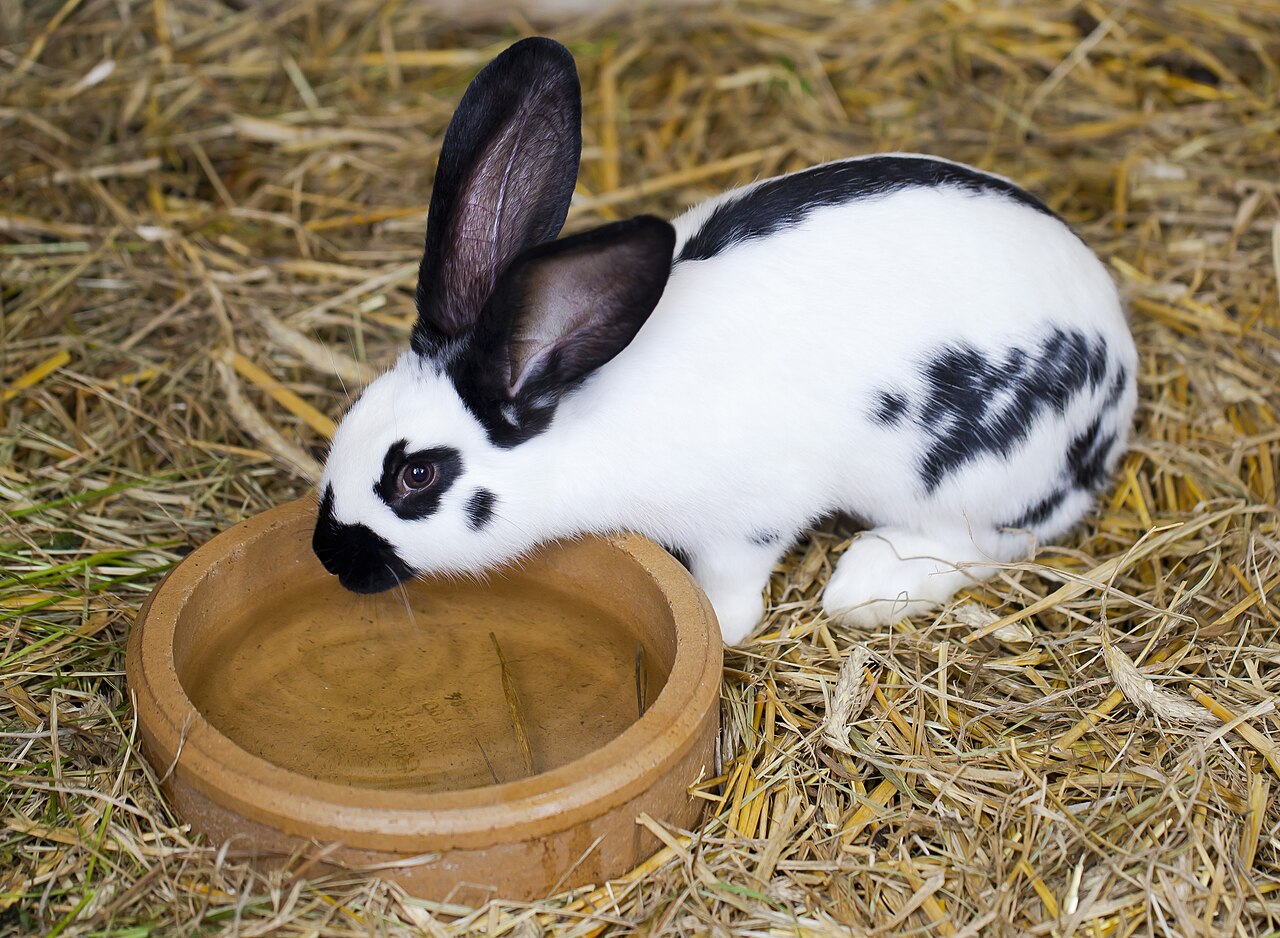
Pellets are a supplement at roughly a quarter cup per five pounds of body weight, plain and high-fibre rather than a muesli mix. If a rabbit is not eating enough hay, cut pellets rather than hay. Fresh water at all times, ideally in a heavy bowl since rabbits drink considerably more from a bowl than a bottle. University extension exotic pet programmes such as the University of Illinois (illinois.edu) and the House Rabbit Society both maintain current feeding guidance. The baby rabbit guide covers the stage where these decisions matter most.
Frequently Asked Questions
Can rabbits eat apples?
Yes, one to two thin slices once or twice a week for an average adult, with the seeds removed. The skin is safe and contains more fibre than the flesh.
Can rabbits eat apples with the skin?
Yes, and the skin is the better part nutritionally. Wash thoroughly, since apples are usually waxed and rank among the produce items with the highest pesticide residue.
Do you have to remove apple seeds?
Yes. Apple seeds contain amygdalin, which releases cyanide when chewed. A single accidental seed is not an emergency, but coring the apple removes the question entirely.
Can rabbits eat apple wood and leaves?
Yes, from unsprayed trees, and apple twigs are among the best chew materials for wearing down teeth. Avoid cherry, peach, plum, and apricot wood, which contain cyanogenic compounds.
What happens if a rabbit eats too much apple?
Soft or reduced droppings first, then potentially gastrointestinal stasis, which is life-threatening within hours. A rabbit that stops eating or producing droppings needs a vet the same day.
Are any fruits toxic to rabbits?
Avocado and rhubarb should never be given. Everything else common is safe in small amounts once seeds and pits are removed. Dried fruit is best avoided because the sugar is concentrated.
What is a better treat than fruit?
Fresh herbs such as cilantro, basil, and mint, dried raspberry or blackberry leaves, and untreated apple or willow twigs, all of which support hay intake rather than competing with it.

Similar Posts
Can Guinea Pigs Eat Grapes? Safe Portions, Skin and Seeds
Guinea pigs can eat grapes as an occasional treat, but sugar makes portion size the whole game. Here is exactly how many, how often, and what to remove first.
Can Rabbits Eat Tomatoes? Safe Parts and What to Avoid
Ripe flesh yes, in small amounts. Leaves, stems, and green fruit are toxic. What’s safe, how much, and what solanine poisoning looks like.
Can Rabbits Eat Grapes? Safe Amounts by Size
Grapes are safe for rabbits but sugary. How many per week by body size, why raisins are worse, what happens if you overdo it, and which fruits to avoid entirely.
Can Guinea Pigs Eat Strawberries? Portions and Vitamin C
Yes, one small berry once or twice a week, tops included. Why guinea pigs need dietary vitamin C, why bell pepper beats fruit, and which fruits to avoid entirely.
Can Rabbits Eat Bananas? Yes, But Far Less Than You Think
Banana is safe for adult rabbits in teaspoon portions twice a week. Here is the exact amount by body weight, the peel question, and the warning signs.
Hamster Poop: What Healthy Droppings Look Like
Hamster poop should be firm dark pellets, and a healthy hamster makes 50 to 100 a day. What soft or missing droppings mean, why hamsters use one corner, and cleaning advice.