Can Rabbits Eat Broccoli? The Gas Question Answered
Rabbits can eat broccoli, but it is one of the more contentious vegetables in rabbit keeping because it causes gas in some individuals and not in others. The workable approach is a small amount, roughly one tablespoon of chopped florets or a leaf per two pounds of body weight, two or three times a week, with the leaves and stalks preferred over the florets.
The gas question matters more in rabbits than in most animals because they cannot burp or vomit. Anything that produces gas in the gut has to pass through, and a rabbit with trapped gas is in real pain and at risk of the gut slowing to a stop. This guide covers portions, which parts to feed, the gas debate, and what to watch for.
Rabbits can eat broccoli in small amounts, about a tablespoon of chopped florets or one leaf per two pounds of body weight, two or three times a week. Leaves and stalks are better tolerated than florets. Broccoli causes gas in some rabbits, and because rabbits cannot burp, trapped gas is painful and can trigger gut stasis.
| Part or Question | Guidance |
|---|---|
| Leaves | Best part; fibrous, well tolerated |
| Stalks | Good; chop to prevent gulping |
| Florets | Most likely to cause gas; smallest portion |
| Portion | About 1 tbsp chopped per 2 lb body weight |
| Frequency | 2 to 3 times a week, not daily |
| Under 12 weeks | Avoid; introduce slowly after that |
| Watch for | Soft droppings, reduced output, hunching |
Is Broccoli Safe for Rabbits?
Yes, it is non-toxic and nutritious, containing fibre, vitamin C, vitamin K, folate, and useful minerals, and rabbits generally eat it readily. No part of the plant is poisonous, including leaves, stalks, and florets.
The complication is fermentation. Broccoli is a brassica, and brassicas contain raffinose and related sugars that gut bacteria ferment, producing gas. In most animals that is a minor inconvenience; in a rabbit, which has no mechanism to release gas from the stomach, it can build up painfully.
Individual tolerance varies a great deal, which is why advice on broccoli splits. Some rabbits eat it several times a week with no effect at all, others produce soft droppings after a single serving, and the only way to know which you have is to introduce it carefully and watch. The guide to cucumber for rabbits covers a vegetable with none of this ambiguity.
How Much Broccoli Can a Rabbit Have?
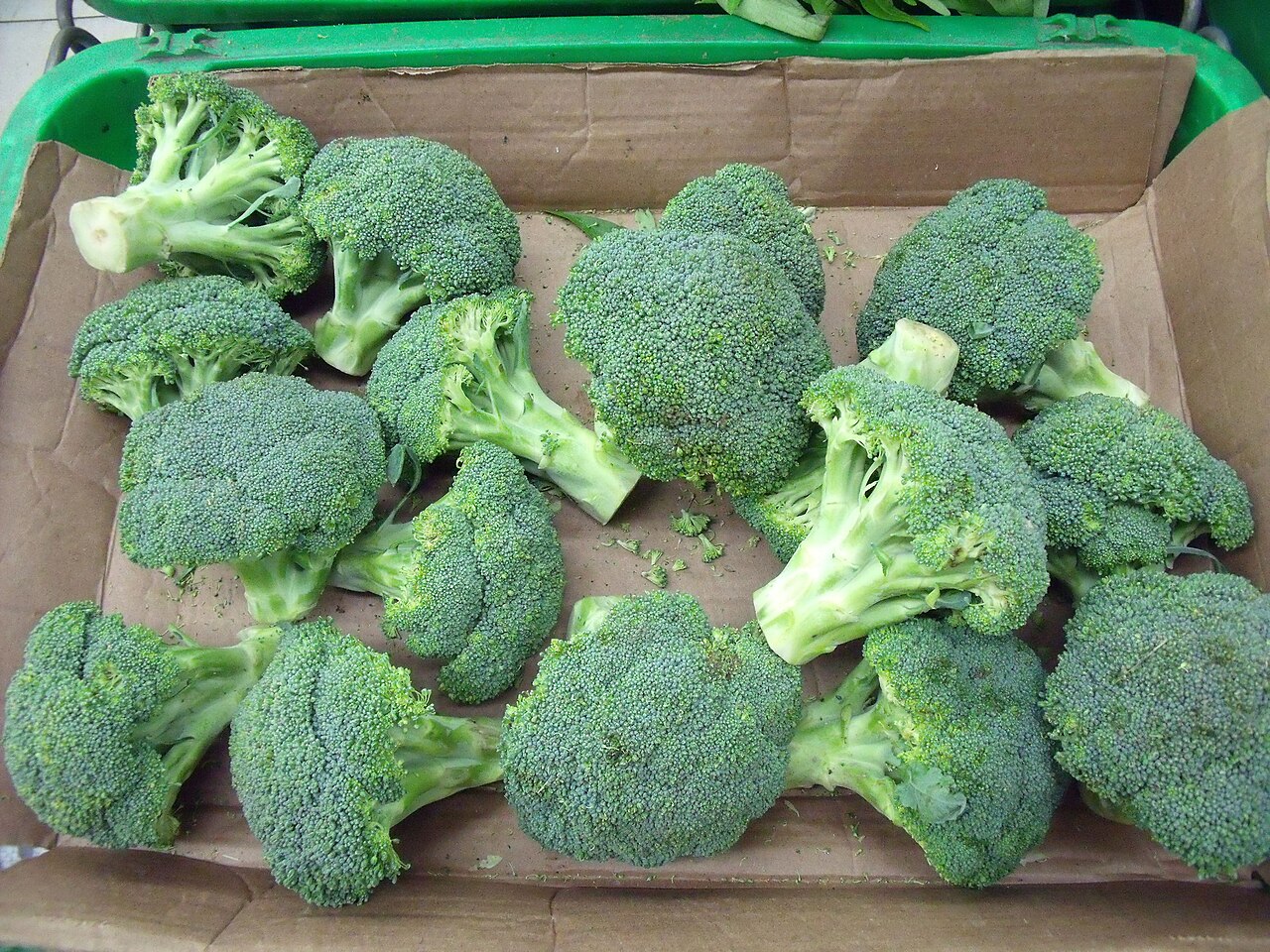
About one tablespoon of chopped broccoli per two pounds of body weight, two or three times a week rather than daily. For a five-pound rabbit that is roughly two to three tablespoons in a serving, and it should be one component of a mixed greens portion rather than the whole thing.
Total fresh vegetables should come to around one packed cup per two pounds of body weight daily, split across three or more types. Rotating brassicas rather than feeding them every day spreads the fermentation load and reduces the chance of a problem building up.
Rabbits under twelve weeks should not have broccoli. Young rabbits have immature gut flora and react badly to gas-producing foods, and the standard approach is unlimited hay, measured pellets, and mild greens introduced gradually from about twelve weeks with brassicas among the last additions.
Which Part Is Best?
The leaves. Broccoli leaves are the most fibrous part, are lower in the fermentable sugars that cause gas, and are closest to what a rabbit’s digestive system is built for. They are also usually thrown away, so anyone growing broccoli has a free supply.
Stalks come second and are well tolerated, though they should be chopped rather than given whole. A rabbit gnawing a thick stalk can bite off a large piece and swallow it, and while choking is rare in rabbits, chopping removes the risk and makes the portion easier to judge.
Florets are the part most likely to cause gas and the part most people offer first. They are also the part with the strongest flavour, so rabbits often prefer them, which makes restraint necessary. If a rabbit is going to react to broccoli, florets are usually what does it. The guide to strawberries for rabbits covers portioning for treats generally.
Why Is Gas Dangerous for Rabbits?
Because there is no way out. Rabbits have a one-way digestive system with a powerful cardiac sphincter, and they physically cannot vomit or burp, so gas produced in the stomach and caecum can only move forward through the gut.
Trapped gas causes bloating and severe pain, and a rabbit in pain stops eating. That is where it turns dangerous, because a rabbit that stops eating stops gut motility, gut contents dehydrate and compact, and gastrointestinal stasis develops. Stasis is life-threatening within hours rather than days.
The signs are recognisable once known: a rabbit sitting hunched with its abdomen pressed to the floor, refusing food including favourite treats, grinding its teeth loudly, showing a distended or tight abdomen, and producing few or no droppings. Any of that means a rabbit-experienced vet the same day. The rabbit poop guide covers the daily check that catches it early.
What Other Brassicas Can They Eat?
Most of them, with the same caution. Kale, cabbage, cauliflower, Brussels sprouts, bok choy, broccoli rabe, and turnip greens are all safe in principle and all carry the same gas potential, so they should be rotated rather than fed together or daily.
Kale is the one worth flagging separately, and not for gas. It is high in calcium, and excess dietary calcium contributes to bladder sludge and stones, which are among the more common rabbit health problems. Kale, parsley, spinach, and chard should all appear a couple of times a week rather than every day.
Cauliflower has a stronger reputation for causing gas than broccoli and is often left off recommended lists entirely, though the same individual variation applies. Cabbage in quantity is another common trigger. If a rabbit reacts badly to one brassica, it is reasonable to assume the rest will be similar.
What Vegetables Should Rabbits Eat Daily?
Leafy greens, and a mix rather than one type. Romaine and green leaf lettuce, cilantro, basil, dill, mint, carrot tops, radish tops, watercress, endive, and dandelion greens are all suitable for daily feeding and cause none of the problems brassicas can.
Herbs are underused and rabbits generally love them. Cilantro, basil, mint, dill, and parsley in rotation add variety without sugar or gas risk, and most are easy to grow in a pot, which makes them cheaper than buying bagged salad.
Middle-tier vegetables including bell pepper, cucumber, courgette, celery, and broccoli belong several times a week rather than daily. Carrot is a treat rather than a vegetable in rabbit terms, being high in sugar despite its reputation, and should be limited to small pieces. The Netherland dwarf guide covers portions for the smallest breeds.
What Vegetables Should Rabbits Never Eat?
Iceberg lettuce is the most common mistake. It is nutritionally empty, contains lactucarium which can cause problems in quantity, and its high water content with almost no fibre produces loose droppings. Darker lettuces are fine and iceberg is simply not worth feeding.
Potato, potato leaves, tomato leaves, and any green part of a nightshade plant contain solanine and should be avoided, though ripe tomato flesh in small amounts is safe. Onion, garlic, leek, and chives should never be given. Rhubarb is toxic in leaf and stalk both. Avocado is toxic through persin.
Corn, including sweetcorn kernels and corn cobs, is best avoided because the hulls are indigestible and have been associated with intestinal blockages. Beans, peas in quantity, and any processed human food are also off the list. University extension exotic pet programmes such as the University of Illinois (illinois.edu) and the House Rabbit Society both maintain current safe and unsafe food lists worth checking against.
How Do You Treat Gas at Home?
Only alongside a vet, not instead of one, and only in the mildest cases. A rabbit that is still eating and still producing droppings but seems uncomfortable after a new vegetable can often be helped by gentle abdominal massage and by encouraging movement, since activity stimulates gut motility.
Simethicone drops, the same infant anti-gas product sold for babies, are widely used by rabbit keepers and recommended by many rabbit-experienced vets for suspected gas, given at intervals over the first hour. It works by breaking up gas bubbles and is not a treatment for stasis itself.
The line to watch is eating. A rabbit that refuses food, produces no droppings, sits hunched and pressed down, or grinds its teeth loudly has moved past home management, and every hour matters at that point. Do not withhold food, do not wait until morning, and do not assume it will pass.
What Should Most of the Diet Be?
Hay, at 80 to 90 percent of everything a rabbit eats, available at every hour. Grass hay such as timothy, orchard, or meadow does two jobs nothing else does: long fibre keeps the gut moving, and side-to-side chewing wears down molars that grow continuously at two to three millimetres a month.
Greens come next at about a cup per two pounds of body weight daily, and pellets last at roughly a quarter cup per five pounds, plain and high-fibre rather than a muesli mix with seeds and coloured pieces. Rabbits selectively eat the sugary parts of mixes and leave the fibre.
If a rabbit is not eating much hay, cut pellets rather than hay. Pellets are palatable and calorie-dense and require little chewing, so a rabbit on generous pellets has no reason to work through a pile of hay, and reducing them to a measured portion usually restores hay intake within a week or two. Fresh water at all times, ideally in a heavy bowl rather than a bottle. The baby rabbit guide covers the stage where these decisions matter most.
Frequently Asked Questions
Can rabbits eat broccoli?
Yes, in small amounts: about a tablespoon of chopped broccoli per two pounds of body weight, two or three times a week. Leaves and stalks are better tolerated than florets.
Does broccoli give rabbits gas?
It can. Brassicas contain fermentable sugars that produce gas, and rabbits cannot burp, so trapped gas is painful and can trigger gut stasis. Tolerance varies a lot between individuals.
Which part of broccoli is best for rabbits?
The leaves, which are the most fibrous and lowest in fermentable sugars. Stalks are good if chopped. Florets are the part most likely to cause problems and should be the smallest share.
What are the signs of a problem?
Soft or reduced droppings first, then a rabbit sitting hunched with the abdomen pressed down, refusing food, grinding teeth, and producing nothing. That needs a vet the same day.
What other brassicas can rabbits eat?
Kale, cabbage, cauliflower, Brussels sprouts, and bok choy, all with the same gas caution and all rotated rather than daily. Kale is also high in calcium and contributes to bladder sludge.
What vegetables can rabbits not eat?
Iceberg lettuce, potato and potato leaves, onion, garlic, leek, rhubarb, avocado, and corn. Ripe tomato flesh is fine but the leaves and stems are not.
What vegetables are best daily?
Leafy greens in a mix: romaine, green leaf lettuce, cilantro, basil, dill, mint, carrot tops, and dandelion greens, at about a cup per two pounds of body weight.

Similar Posts
Can Rabbits Eat Tomatoes? Safe Parts and What to Avoid
Ripe flesh yes, in small amounts. Leaves, stems, and green fruit are toxic. What’s safe, how much, and what solanine poisoning looks like.
Can Guinea Pigs Eat Blueberries?
Yes, one or two berries once or twice a week. Vitamin C and antioxidants, but sugar means portion control matters. How much is safe and what to watch for.
Guinea Pig Sounds: What Every Wheek, Purr, and Rumble Means
Guinea pig sounds decoded: wheeking, purring, rumbling, chutting, teeth chattering, and shrieking, plus the noises that mean a vet visit rather than a conversation.
Can Rabbits Eat Bananas? Yes, But Far Less Than You Think
Banana is safe for adult rabbits in teaspoon portions twice a week. Here is the exact amount by body weight, the peel question, and the warning signs.
Can Rabbits Eat Cucumber? Portions and Cautions
Yes, two or three thin slices a few times a week, skin and seeds included. Why the risk is water rather than sugar, and which greens belong in the daily bowl instead.
Can Bearded Dragons Eat Watermelon? Portions and Risks
Yes, once or twice a month in a bite the size of the space between their eyes. Why the calcium ratio matters more than the sugar, and which fruits are actually worth feeding.