What Do Kangaroos Eat? Diet, Digestion, and Water Needs
Kangaroos are strict herbivores, eating grasses, leaves, shrubs, and occasionally roots and bark, with grasses forming the overwhelming majority of the diet for the large species most people picture. They do not eat meat, and their teeth, stomach, and digestive process are all built specifically around fermenting tough, low-quality plant material.
What makes their digestion notable is that they arrived at a similar solution to cattle and sheep by a completely separate evolutionary route, chewing cud and fermenting fibre in a chambered stomach while being marsupials rather than ruminants. This guide covers what kangaroos eat, how the digestion works, their water needs, and why feeding them is a bad idea.
Kangaroos are strict herbivores eating grasses, leaves, shrubs, and occasionally roots and bark, with grasses making up most of the diet for large species. They ferment fibre in a chambered stomach and chew cud like cattle, despite being marsupials rather than ruminants. They can survive long periods without drinking by extracting moisture from plants, and feeding wild kangaroos causes real harm.
| Aspect | Kangaroo Diet |
|---|---|
| Diet type | Strictly herbivorous |
| Main food | Grasses, especially for large species |
| Also eats | Leaves, shrubs, roots, bark, fungi in some species |
| Meat | Never; not physically equipped for it |
| Digestion | Chambered stomach, chews cud; not a true ruminant |
| Water | Can go long stretches drawing moisture from plants |
| Feeding time | Mostly dusk, night, and dawn |
What Do Kangaroos Eat?
Grasses form the core of the diet for the large kangaroo species, red kangaroos, eastern greys, and western greys, which are grazers in the same broad sense as cattle, cropping grass close to the ground across open grassland and woodland.
Diet varies by species within the group. Red kangaroos favour green grass and forbs in arid country, eastern greys take a broader mix including more browse, and smaller relatives such as wallabies lean more heavily toward leaves, shrubs, and in some species fungi.
Seasonal shifts are substantial in an environment as variable as inland Australia. After rain, kangaroos concentrate on fresh green growth, while in drought they switch to tougher, drier vegetation, shrubs, and occasionally roots and bark, which is what allows them to persist where a less flexible grazer could not. The moose diet guide covers a northern herbivore with a comparable seasonal switch between browse and green growth.
Do Kangaroos Ever Eat Meat?
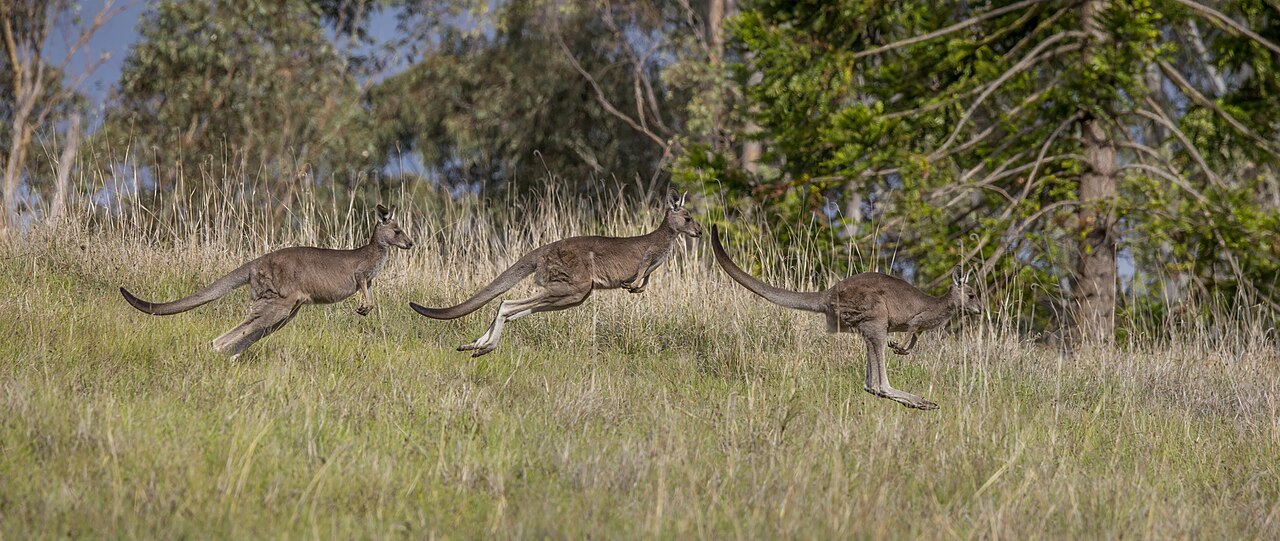
No. Kangaroos are strict herbivores with no predatory behaviour, and their anatomy makes meat-eating impractical regardless of opportunity: their teeth are built for grinding fibre, and their chambered stomach is designed around microbial fermentation of plant material rather than protein digestion.
Their front teeth crop vegetation and their molars grind it, and those molars wear down over years of abrasive grass chewing and are gradually replaced from the back of the jaw as older ones fall out, a conveyor-belt arrangement shared with elephants and driven entirely by a lifetime of tough plant matter.
Isolated anecdotes of kangaroos consuming animal material are not evidence of omnivory, and there is no documented predatory behaviour in any kangaroo species. The koala diet guide covers another Australian marsupial with an even narrower plant diet.
How Does Kangaroo Digestion Work?
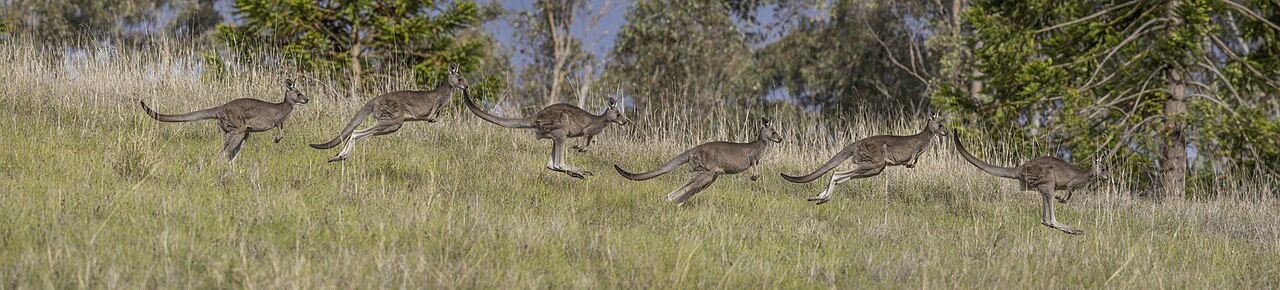
Through foregut fermentation in a chambered stomach, where microbes break down cellulose that the kangaroo itself cannot digest, releasing nutrients the animal then absorbs, which is the same broad strategy cattle and sheep use.
Kangaroos also regurgitate and re-chew food, a behaviour called merycism that closely resembles a cow chewing cud, though it occurs less regularly and less systematically than in true ruminants and appears to be triggered more opportunistically.
The striking part is that this arose independently. Kangaroos are marsupials, separated from placental ruminants by well over a hundred million years of evolution, meaning the chambered stomach and cud-chewing represent convergent evolution toward the same solution to the same problem rather than shared inheritance. The giraffe diet guide covers a true ruminant tackling the same fibre problem through inherited rather than convergent anatomy.
Why Is Kangaroo Digestion of Scientific Interest?
Because kangaroo foregut fermentation produces markedly less methane than the equivalent process in cattle and sheep, a difference driven by a different balance of gut microbes rather than by any structural difference in the stomach itself.
Livestock methane is a significant contributor to agricultural greenhouse gas emissions, so researchers at Australian universities and CSIRO have studied kangaroo gut microbiology specifically to understand what makes the difference and whether anything transferable could reduce emissions from conventional livestock.
Results have been mixed and the practical application remains uncertain, since gut microbial communities are difficult to alter durably in another species, but the underlying finding stands: two systems that look functionally similar can differ substantially in what they emit.
How Much Water Do Kangaroos Need?
Less than their size suggests. Red kangaroos in particular are adapted to arid country and can go extended periods without drinking, extracting most of the moisture they need from the plants they eat, especially when green growth is available after rain.
Behavioural adaptations reduce water loss further: kangaroos feed mainly at dusk, night, and dawn, resting in shade through the heat of the day, and they lick their forearms so that evaporation from the thin skin there provides cooling without the water cost of panting heavily.
They will drink readily when water is available and concentrate around waterholes in drought, which is when they most often come into contact with livestock and farm infrastructure, and this concentration around scarce water is a recurring source of human-kangaroo conflict in dry years.
When Do Kangaroos Feed?
Mostly around dusk, through the night, and into early morning, a crepuscular and nocturnal pattern that avoids the heat of the Australian day and reduces water loss substantially compared to feeding in full sun.
During the day they typically rest in shade, often scraping away warm surface soil to lie on cooler ground beneath, and groups will shift position through the day to stay in shade as it moves rather than remaining in one spot.
This timing is the practical reason kangaroo-vehicle collisions cluster around dawn and dusk on rural roads, since the animals are moving toward or away from feeding grounds exactly when visibility for drivers is poorest, a well-documented pattern in Australian road safety data.
What Is a Kangaroo’s Favourite Food?
Fresh green grass after rain, which offers the best combination of nutrition and moisture content and is what kangaroos actively select when it is available, moving considerable distances to reach areas where rain has produced new growth.
This selectivity matters ecologically. Kangaroos preferentially graze the most nutritious available vegetation, which is why they congregate on irrigated pasture, golf courses, and roadside verges where green growth persists during dry periods when surrounding country has browned off.
That preference is also the root of most agricultural conflict, since a paddock of improved pasture is simply better food than the surrounding rangeland, and kangaroo numbers concentrating there during drought can put real pressure on grazing available for livestock.
Do Kangaroos Compete With Livestock?
To an extent, and it is a genuinely contested topic in Australian land management. Kangaroos and sheep both graze grass, and during drought the overlap increases as both concentrate on whatever green feed remains.
Research has found the overlap is smaller than often assumed, since kangaroos and sheep show somewhat different plant preferences and grazing patterns, and kangaroos are more mobile, moving away from depleted areas rather than remaining where feed has run out.
Water infrastructure built for livestock has increased kangaroo numbers in areas that previously could not support them year-round, which means the competition is partly a consequence of pastoral development rather than a purely natural dynamic.
Do Joeys Eat the Same Food?
Not initially. A newborn joey is roughly the size of a jellybean and attaches to a teat inside the pouch, feeding exclusively on milk for months before it ever encounters solid food, and the milk composition changes over that period to match its developmental stage.
Around five to six months a joey begins putting its head out of the pouch and sampling grass, gradually building the gut microbe population it will need to ferment fibre, since that microbial community is acquired rather than inherited and takes time to establish.
Weaning is gradual and a joey may continue nursing intermittently well after it has left the pouch permanently, often while a younger sibling is already attached to a different teat producing milk of a completely different composition, which is a genuinely unusual arrangement among mammals. The possum diet guide covers another marsupial with a very different feeding strategy.
What Eats Kangaroos?
Dingoes are the main natural predator of adult kangaroos on mainland Australia, hunting cooperatively and targeting young, old, or weakened individuals more often than healthy adults, which a large male kangaroo can genuinely fight off.
Wedge-tailed eagles take joeys and smaller wallabies, and introduced red foxes and feral cats prey on young of smaller macropod species, contributing significantly to declines in several smaller relatives even where the large kangaroo species remain abundant.
Vehicle collisions kill very large numbers annually and, in populated regions, likely exceed natural predation as a cause of death, making roads a more significant mortality factor for kangaroos near settlement than any predator. The dolphin diet guide covers another large animal where human impact outweighs natural predation.
Should You Feed Wild Kangaroos?
No, and this is more consequential than with most wildlife. Bread and processed human food cause lumpy jaw, a bacterial infection of the jaw that is painful, difficult to treat, and frequently fatal in kangaroos, and it is directly associated with unnatural diets.
Habituation is the second problem. Kangaroos fed regularly lose their wariness of people and begin approaching and demanding food, and a large male standing over six feet tall with powerful kicking legs and forearm claws is capable of causing serious injury when a person fails to produce food.
Australian wildlife authorities consistently advise against feeding kangaroos for both reasons, and several popular tourist sites have introduced restrictions or bans after injuries to visitors, which is a reliable indicator of how the pattern develops once feeding becomes routine at a location.
Frequently Asked Questions
What do kangaroos eat?
Grasses primarily, plus leaves, shrubs, and occasionally roots and bark. They are strict herbivores and eat no meat at all.
Do kangaroos chew cud like cows?
They regurgitate and re-chew food in a similar way, though less systematically than true ruminants. Their chambered stomach evolved independently from that of cattle.
How much water do kangaroos need?
Far less than their size suggests. Red kangaroos in particular draw most of their moisture from plants and can go long periods without drinking.
When do kangaroos feed?
Mainly at dusk, through the night, and at dawn, resting in shade during the heat of the day to reduce water loss.
What is a kangaroo’s main predator?
Dingoes on the mainland, with wedge-tailed eagles taking joeys. Near settlement, vehicle collisions kill more kangaroos than predators do.
Why shouldn’t you feed wild kangaroos?
Human food causes lumpy jaw, a painful and often fatal jaw infection, and habituated kangaroos become bold enough to injure people who have no food to give.