Parakeet Sounds: What Each Call Means and When You Hear It
Most parakeet sounds mean one of four things: contact, contentment, courtship or alarm. A budgerigar (Melopsittacus undulatus), the bird sold as a parakeet in nearly every US pet store, keeps up a running chatter when it feels safe, switches to a single loud repeated note when it loses sight of its flock, and produces a flat shriek when something frightens it. Learning those four categories explains almost everything you hear from the cage.
The quieter sounds matter just as much. Beak grinding, soft clicking and a low muttering song are the signals keepers most often miss, and they are the ones that tell you the bird is settled. This guide works through each sound type, what time of day and year you hear it, what it is commonly confused with, and the two cases where a sound is a reason to call a vet.
Constant light chirping and chattering means a content parakeet. A single loud repeated chirp is a contact call asking where its companion is. Rapid high screaming is alarm. Soft beak grinding before sleep means comfort. Wheezing, clicking while breathing or sudden silence from a normally noisy bird are the sounds that signal illness.
| Sound | What it sounds like | What it means |
|---|---|---|
| Chatter or warble | Long bubbling mix of chirps and squeaks | Content, relaxed, often practicing mimicry |
| Contact call | One sharp “cheep” repeated every few seconds | Looking for you or a cage mate |
| Alarm call | Harsh, flat, fast screeching | Fear; something is wrong right now |
| Beak grinding | Faint grating, like a tiny zipper | Settling down to sleep, fully at ease |
| Courtship chatter | Fast masked singing plus head bobbing | Mating display, usually from males |
| Chick begging | Thin rasping peep, almost buzzing | Nestling asking to be fed |
| Hissing or clicking breath | Audible effort on each breath | Possible respiratory illness; see a vet |
Chirping and Chattering: The Everyday Content Sound
The sound you hear most is a loose, continuous warble, a bubbling stream of chirps, squeaks and clicks with no clear start or end. A parakeet produces it while preening, eating or watching the room, and it is the vocal equivalent of a person humming. Volume stays moderate and the bird’s body stays loose.
Within that chatter a budgie rehearses sounds it has picked up from the household, which is why owners catch fragments of a microwave beep or their own whistle buried in the stream. A bird chattering with its feathers slightly loose and one foot tucked up is as relaxed as it gets. Silence from a bird that normally chatters all morning is more informative than any noise it makes.
The Contact Call: One Loud Chirp, Over and Over
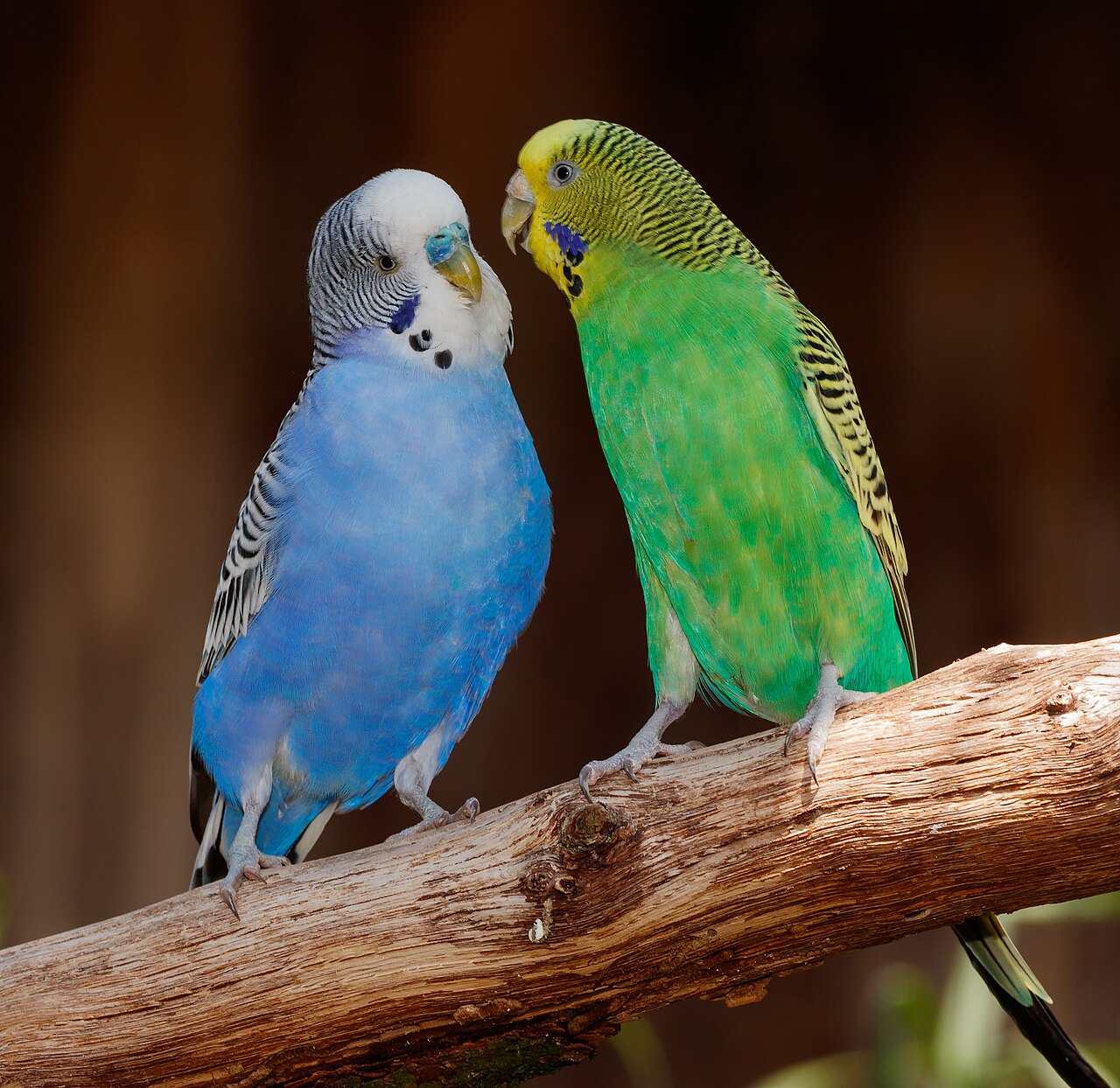
The contact call is the single most misread parakeet sound. It is one clear, piercing “cheep” repeated at regular intervals, far louder than the chatter and aimed at the room. In the wild, budgies move in flocks across the Australian interior and use this call to stay together; in a living room, the flock is you.
It starts when you leave the room, when you walk out of sight behind a doorway, or when a cage mate is moved. Answering with a whistle usually stops it within seconds, which confirms the diagnosis. Ignoring it does not teach the bird to be quiet, it teaches the bird to call louder. Other species use the same strategy, which is why a lone blue jay calling outdoors sounds equally repetitive and equally insistent.
Alarm Calls and Screaming
An alarm call is flat, harsh and fast, with none of the musical variation of chatter. It comes with a visible posture change: feathers slicked tight to the body, eyes wide, head high, sometimes a flutter against the cage bars. Unlike the contact call, it does not stop when you answer.
The usual triggers are a cat or dog appearing, a hawk shadow past a window, a vacuum, a new object near the cage, or sudden darkness. A screaming session that continues after the trigger leaves usually means the bird cannot see what alarmed it. Move to where the bird is looking and remove it. Parakeets do not scream for attention the way larger parrots do, so take the sound at face value.
Beak Grinding, Clicking and Tongue Sounds
Beak grinding is a faint grating noise, like a zipper pulled very slowly, produced by sliding the lower mandible against the upper. It happens almost exclusively in the half hour before sleep and it is the clearest comfort signal a parakeet gives. Nothing needs to be done about it.
Tongue clicking, a sharp repeated tick against the beak, is different and usually appears during play or mild excitement. Loud beak snapping or a quick lunge paired with a short squawk is a warning to back off, often from a bird guarding a perch or a mirror. None of these are illness sounds. The one noise that resembles them and does matter is clicking that comes on each breath rather than on demand.
Courtship Sounds: Masked Singing and Feeding Calls
Male budgies court with a long, fast, intricate song delivered inches from the female’s face, called masked singing because the bird often fans and bobs its head while producing it. It is denser and more urgent than ordinary chatter, and it runs for a minute or more without a break. Head bobbing, pupil pinning and regurgitation feeding go with it.
Female parakeet sounds are typically shorter and lower: a single loud chirp, a chattering scold, and a distinctive low growl when defending a nest box or a favorite corner. Females vocalize less overall and almost never develop the long rehearsed song, which is the simplest acoustic clue to sex in an unsexed pair. Courtship noise peaks in spring in most households, though indoor light and steady food can trigger it any month.
Baby Parakeet Sounds in the Nest
Nestlings start with a thin rasping peep that sounds closer to a buzzing insect than a bird, given in bursts whenever a parent lands. By two weeks it coarsens into a louder repeated rasp audible across a room, which is the sound most people notice first if a pair has bred unexpectedly. Hunger makes it continuous.
Chicks also hiss and may make a snake-like rattling sound when a hand reaches into the nest box, a bluff defense that fledglings keep for a week or two after leaving. Juvenile birds then spend several weeks producing broken, half-formed chatter while learning the adult repertoire. Soft, infrequent peeping from a chick that is not being fed is a warning sign; healthy chicks are loud.
Talking, Mimicry and Whistling Back
Budgies are among the best mimics of any parrot, and male birds kept alone learn fastest. The voice is thin, scratchy and fast, so human words come out compressed and need context to recognize. A bird usually practices a new phrase inside its chatter for days before producing it cleanly.
Whistled tunes are learned faster than words, which is why many parakeets end up whistling the first two notes of whatever their owner repeats most. The practical downside is that an easily learned whistle becomes a contact call, and a bird that learns a smoke alarm chirp will use it at full volume. Teach the sound you are willing to hear two hundred times a day.
Parakeet Sounds at Night
A healthy parakeet is silent at night. Normal exceptions are a short burst of chirping when a car light sweeps the room, a few seconds of rustling as the bird shifts on its perch, and beak grinding as it falls asleep. Anything more sustained is worth investigating.
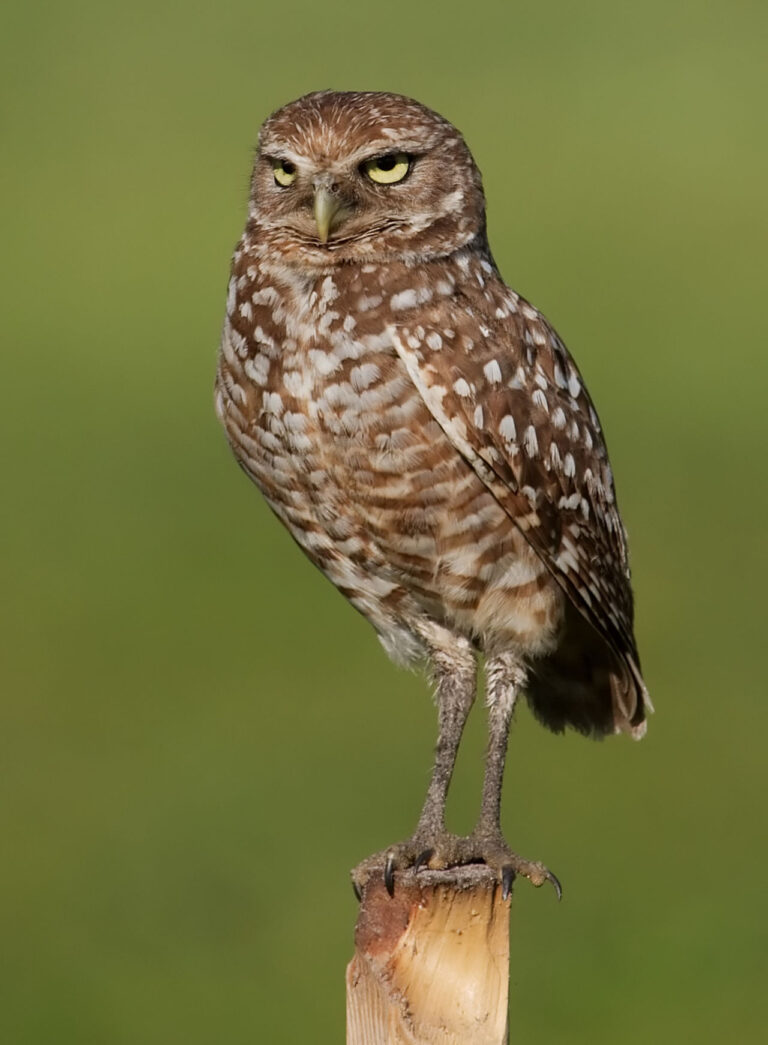
Night fright is the common cause of real nighttime noise: the bird panics in the dark, thrashes against the cage and screams, often after a shadow or a sound. A dim night light and a cage position away from windows usually ends it. If the noise is a scratching or scuttling rather than a bird call and it comes from the ceiling or inside a wall, the bird is not the source. Those cases are covered in bat sounds in walls and attics, and a repeated hollow screech outside the window is more likely a barn owl.
When the Sound Means Illness
Three acoustic changes justify a vet visit. Clicking or a wet rattle on each breath points to a respiratory infection or air sac mites, the latter common in budgies and often worse at night. Wheezing combined with tail bobbing at rest indicates labored breathing. Voice change, where the chirp becomes hoarse or drops out entirely, can signal a throat or airway problem.
Sudden quiet is the fourth and most important signal. Parakeets hide illness, and a bird that stops chattering, sits low with fluffed feathers and keeps both eyes closed is usually sick rather than tired. Budgies live roughly 7 to 10 years with good care and most of that span is noisy, so silence in a healthy adult is abnormal and should not be waited out.
Time of Day and Season
Parakeets are loudest twice a day. The dawn chorus starts as soon as light reaches the cage and runs 20 to 40 minutes of full volume chatter, and a second round builds in the late afternoon. Midday is quiet, with naps and soft grinding, and the bird winds down steadily after sunset.
Seasonally, courtship song and nest-defense growling increase in spring, and a molting bird of any season is noticeably quieter and crankier for two to three weeks. Indoor birds respond to household light more than to the calendar, so a bird under lamps until midnight will keep breeding-season noise going year round. Capping the light at about 12 hours settles the cycle. Wild songbirds follow the same pattern, which is why cardinal song and Carolina wren calls also spike at first light.
What Parakeet Sounds Get Confused With
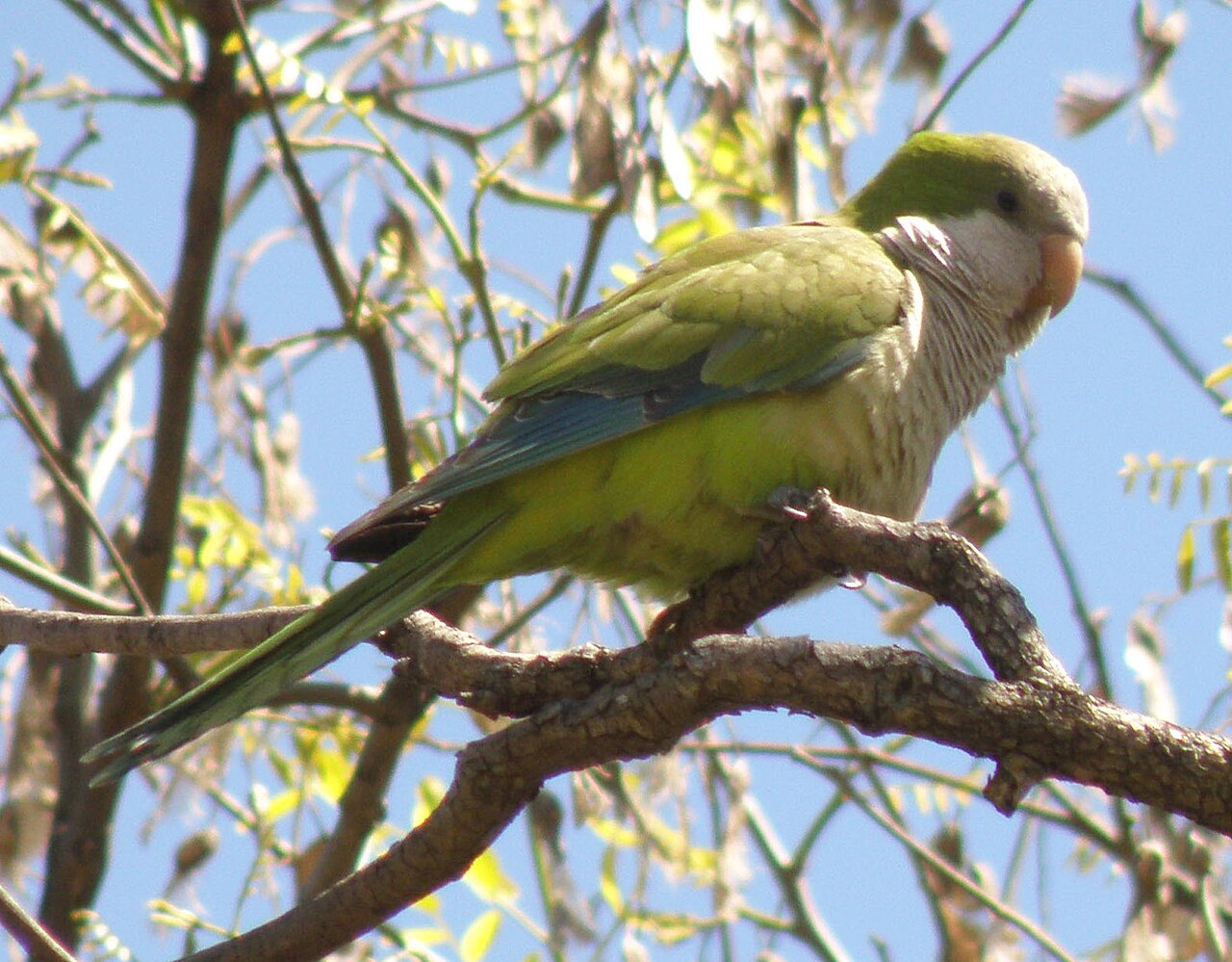
Indoors, the common mix-up is between a contact call and an electronic chirp: smoke detector low-battery beeps, a dishwasher cycle end and phone notifications all sit in the same frequency range, and birds copy them. Outdoors in the United States, the loud harsh squawking from treetops in Florida, Texas, Illinois and the New York area comes from feral monk parakeets (Myiopsitta monachus), whose call is far rougher and louder than a pet budgie’s and is often mistaken for a parrot escape. The Cornell Lab account for the monk parakeet has reference recordings.
Pet budgie chatter is also confused with young starlings and with house sparrow flocks in a hedge, both of which produce a similar continuous mixed babble. The distinguishing feature is structure: a budgie’s chatter includes clear mimicked fragments and sharp clicks that wild sparrows do not produce. Confusion runs the other way too, as the entries on birds that sound like owls show.
Frequently Asked Questions
Are budgies happy when they sing?
Generally yes. Long, loose, varied singing and chattering is produced by relaxed birds and stops when they are frightened or unwell. The one qualification is that a lone male’s extended song can also be courtship directed at a mirror or a toy, which indicates a bird looking for a mate rather than one that is content.
What does a budgie bird sound like?
Like a fast, scratchy stream of high chirps, squeaks and clicks, pitched higher and thinner than a canary and far less musical. Individual calls are short and sharp, around the volume of a smoke detector beep at close range. Mimicked words come out compressed and gravelly rather than clear.
How loud is a parakeet?
Measured close to the cage, a single budgie’s chatter sits roughly in the 60 to 70 decibel range, about the level of conversation, with alarm calls peaking higher. One bird is apartment-friendly. A flock of six in one room is not, because contact calling is contagious and the whole group answers each other.
Should you cover your parakeets at night?
Covering helps if the cage sits where lights or headlights pass, because it signals that the day is over and reduces night fright. Leave at least one side open for airflow and skip the cover entirely if your bird panics under it. A consistent 10 to 12 hours of dark matters more than the cover itself.
Do parakeets get attached to their owners?
Yes, and the contact call is the proof. A bonded budgie calls when you leave the room, answers your whistle, and will preen your fingers or regurgitate toward you, which is affection behavior rather than illness. Single birds bond harder to people; a pair bonds to each other and stays noticeably more independent.
What is the 3-3-3 rule for parakeets?
It is a shelter guideline borrowed from dog adoption and applied to new birds: roughly three days to stop panicking, three weeks to settle into a routine, three months to feel at home. It is a rule of thumb rather than research. Vocally, expect near silence in week one and normal chatter by week three.