Types of Doves: A Complete Guide
North America is home to several types of doves and pigeons, most commonly the mourning dove and the rock pigeon, along with the white-winged dove, Eurasian collared-dove, and ground doves. Doves and pigeons belong to the same family and are gentle, familiar birds known for their soft cooing. This guide covers how many types of doves there are, common species you can see, how to tell them apart, where they live, and the difference between doves and pigeons.
| Dove | Key Features |
|---|---|
| Mourning Dove | Slim, tan, long pointed tail |
| Rock Pigeon | City pigeon, variable colors |
| White-winged Dove | White wing stripe, southern |
| Eurasian Collared-Dove | Pale, black neck collar |
| Common Ground Dove | Tiny, scaly, ground-dwelling |
| Inca Dove | Small, scaly, long tail |
| Band-tailed Pigeon | Large, western forests |
| White-tipped Dove | Plain, south Texas |
How Many Types of Doves Are There?
There are several species of doves and pigeons in North America, all belonging to the same bird family, and worldwide there are more than three hundred species. The terms dove and pigeon are used somewhat interchangeably, with no strict scientific distinction between them, though smaller species are often called doves and larger ones pigeons. The most familiar North American species are the mourning dove and the rock pigeon, the common city pigeon, but the group also includes the white-winged dove, the introduced Eurasian collared-dove, the tiny common ground dove and Inca dove, the western band-tailed pigeon, and a few others. Doves and pigeons are generally plump-bodied birds with small heads, and they are known for their soft cooing calls, their swift, direct flight, and their gentle demeanor. Many are common and widespread, thriving around people. This variety makes doves a familiar and beloved group, as explored in our guide to dove symbolism.
Common Types of Doves
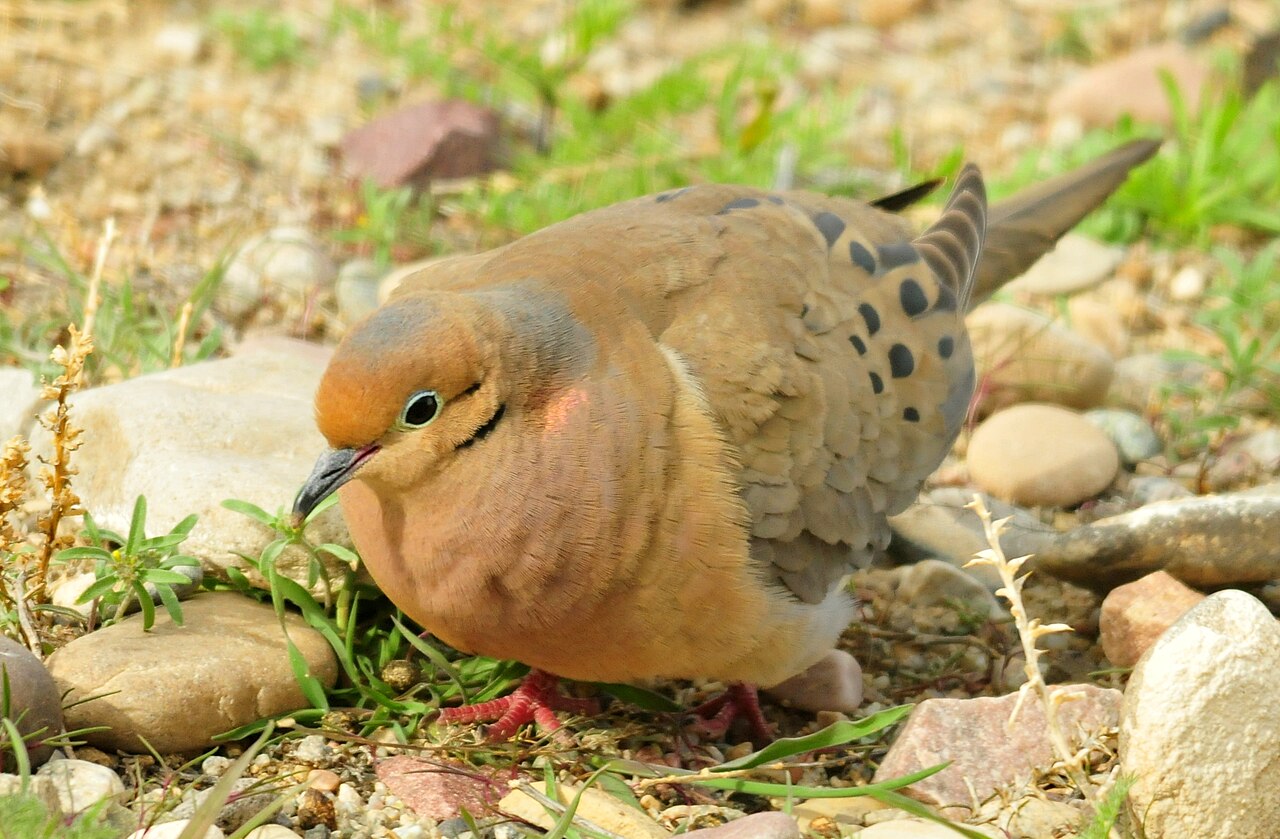
Several types of doves are especially common and worth knowing. The mourning dove is one of the most widespread and abundant birds in North America, a slim, soft tan dove with a long, pointed tail and a mournful cooing call, covered in our guide to the mourning dove. The rock pigeon, the familiar city pigeon, comes in a wide variety of colors and is found in urban areas everywhere. The white-winged dove is a plumper dove of the southern United States with a bold white stripe on the wing. The Eurasian collared-dove, an introduced species now widespread, is pale gray with a distinctive black collar on the back of the neck. The tiny common ground dove and Inca dove are small, scaly-looking doves often seen on the ground, and the band-tailed pigeon is a large native pigeon of western forests. Each has its own look, but all share the gentle, familiar character of the dove family.
How to Tell Doves Apart
Telling doves apart is easier when you focus on size, color, and key markings. Start with size, since the group ranges from the tiny ground and Inca doves up to the larger rock and band-tailed pigeons. Note the tail shape, as the mourning dove has a distinctive long, pointed tail, while others have squarer or rounded tails. Look for standout field marks, such as the white wing stripe of the white-winged dove, the black neck collar of the Eurasian collared-dove, or the scaly appearance of the ground and Inca doves. The rock pigeon is highly variable in color due to its domestic ancestry. Habitat and region help too, since some doves are limited to the South or West. By combining size, tail shape, distinctive markings, and range, you can identify most doves and pigeons you encounter, a satisfying skill for a group that includes the bird in our guide to mourning dove symbolism.
Where Doves Live
Doves and pigeons live in a wide variety of habitats across North America, and many are strongly associated with people. The mourning dove is found almost everywhere, in open woods, farmland, suburbs, and backyards, and readily visits feeders and open ground for seeds. The rock pigeon is tied to cities, towns, farms, and structures, thriving in urban environments worldwide. The Eurasian collared-dove has spread rapidly and is common in towns and suburbs, while the white-winged dove is found in the southern states, including deserts and towns. The small ground and Inca doves inhabit warm southern regions, often in open, dry areas, and the band-tailed pigeon lives in western forests and mountains. Many doves are seed-eaters that forage on the ground and come to feeders, making them frequent backyard visitors. Because so many doves thrive around people, they are among the most familiar and accessible birds, as detailed in our guide to attracting birds.
Doves vs Pigeons
One of the most common questions about this group is the difference between doves and pigeons, and the answer is that there is no strict scientific distinction. Doves and pigeons belong to the same family, and the two names are used loosely and interchangeably. In general usage, smaller, more delicate species tend to be called doves, while larger, bulkier species are often called pigeons, but this is a matter of custom rather than a firm rule. For example, the slim mourning dove is called a dove, while the chunky city bird is called a pigeon, yet both are part of the same family and share the same basic features, including plump bodies, small heads, cooing calls, and the ability to produce a nutritious substance to feed their young. So while the names may suggest different birds, doves and pigeons are essentially the same kind of bird, differing mainly in size and in the names people have traditionally given them, a gentle group celebrated in our guide to dove symbolism.
The Mourning Dove, America’s Most Common Dove
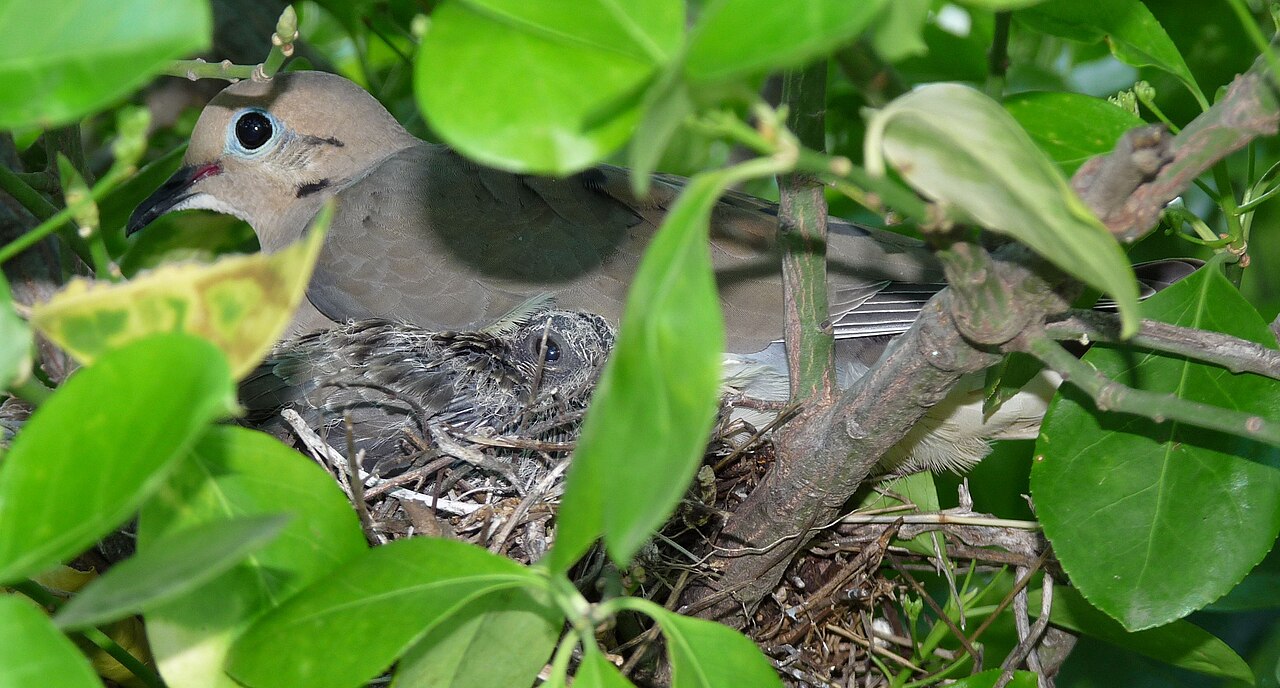
The mourning dove deserves special attention as the dove most people know best. According to the Cornell Lab of Ornithology, the mourning dove is one of the most abundant and widespread birds in North America, found across the continent in open and semi-open habitats and readily visiting backyards. Its soft, mournful cooing is a familiar sound, and its slim body, long pointed tail, and gentle manner make it easy to recognize. Like all doves and pigeons, the mourning dove has the unusual ability to produce a nutritious substance, sometimes called crop milk, to feed its young, and it can also drink by sucking up water, unlike most birds. Mourning doves are prolific breeders, raising multiple broods a year, which helps keep their numbers high. Understanding how common and successful the mourning dove is helps explain why it is such a familiar backyard bird, as explored in our guide to mourning dove symbolism.
Attracting Doves to Your Yard
Attracting doves to your yard is easy, since several dove species are eager seed-eaters that readily visit feeding areas. The mourning dove in particular is a common backyard visitor and prefers to feed on the ground or on low platform feeders rather than clinging to hanging feeders. Scattering seed such as millet, cracked corn, or black oil sunflower on the ground or a low tray is an effective way to draw them in, and doves often arrive in small groups. Providing a source of water for drinking is also appreciated, as doves drink regularly. A calm, open feeding area with some nearby trees or shrubs for perching and safety suits doves well. Because doves are gentle and often abundant, offering ground-level seed is usually enough to enjoy regular visits from these peaceful birds, adding their soft cooing and graceful presence to your yard, as celebrated in our guide to dove symbolism.
Frequently Asked Questions
How many types of doves are there?
North America has several dove and pigeon species, including the mourning dove, rock pigeon, white-winged dove, Eurasian collared-dove, and ground doves, with over three hundred worldwide.
What is the most common dove?
The mourning dove is one of the most common and widespread birds in North America, a slim tan dove with a long pointed tail and a soft, mournful cooing call.
What is the difference between a dove and a pigeon?
There is no strict scientific difference. Both belong to the same family, and the names are used interchangeably, with smaller species often called doves and larger ones pigeons.
What dove has a black ring on its neck?
The Eurasian collared-dove has a distinctive black half-collar on the back of its neck. It is an introduced species that has spread widely across North America.
Are doves and pigeons the same bird?
Essentially yes. Doves and pigeons belong to the same family and share the same basic features, differing mainly in size and in the names people traditionally use.
How do you identify different doves?
Look at size, tail shape, and distinctive markings like the white-winged dove’s wing stripe or the collared-dove’s neck collar, along with habitat and region.
Where do doves live?
Doves live in open woods, farmland, deserts, towns, and backyards across North America. Many, like the mourning dove and rock pigeon, thrive around people.