Dove Tattoo Meaning: Peace, Faith, and Memorial Designs
A dove tattoo means peace, love, and hope, and in a large share of cases it also means memorial: a loved one released, a soul at rest, a promise that grief eventually flies. The dove carries more inherited meaning per square inch than almost any other tattoo subject, thanks to two ancient sources, the biblical dove returning to Noah’s ark with an olive branch and the dove as the Holy Spirit, and one modern one, the international peace movement that put the bird on posters worldwide.
The details steer the message hard. One dove reads as peace or a soul; two doves mean love and lifelong partnership; three carry the Trinity or a family. A dove with an olive branch says reconciliation, one with a broken chain says freedom, and a dove with a date says goodbye. This guide covers every major dove design, what the tattoo signals for men and for women, the memorial tradition, placement choices, and the crucial detail most people never consider: which dove you are actually getting.
| Core meaning | Peace, love, hope, purity |
| Religious reading | Holy Spirit, Noah’s dove, divine promise |
| Memorial use | A soul released; very common with names and dates |
| Two doves | Love, partnership, lifelong bond |
| Olive branch | Peace after conflict, reconciliation, new start |
| Popular placements | Forearm, chest, hand, shoulder, behind the ear |
What a Dove Tattoo Means
Peace is the dove’s headline meaning and the reason it is one of the few tattoos that reads identically in nearly every country. The image traces to Genesis, where a dove returns to Noah carrying an olive leaf, proof the flood had receded and the world was livable again, and that scene gave Western culture its permanent symbol for the end of catastrophe. Picasso’s 1949 lithograph carried the same bird into secular politics, and the peace-dove has stayed public property ever since.
Love is the second pillar and the older one. Doves were sacred to Aphrodite and Venus, and real doves back the symbolism: most species are strongly monogamous, pair for extended periods, and both partners share incubation and feeding duties. That biological fidelity is why two doves facing each other has been shorthand for devoted partnership for millennia, from Roman mosaics to modern couples’ tattoos, and why the design lands equally well for a marriage, a long friendship, or a parent-child bond.
Hope and purity round out the core. The dove’s white plumage, gentle voice, and habit of appearing in open sky made it the natural emblem for innocence and for good news arriving, and modern wearers use it for renewal after hard chapters: sobriety, recovery, leaving a violent situation, starting over in a new country. The bird carries all three meanings at once without contradiction, which is exactly why it survives every tattoo trend cycle. For the broader symbolic tradition behind the bird, our dove symbolism guide covers the full cultural ledger.
The Memorial Dove: Tattoos for Loss
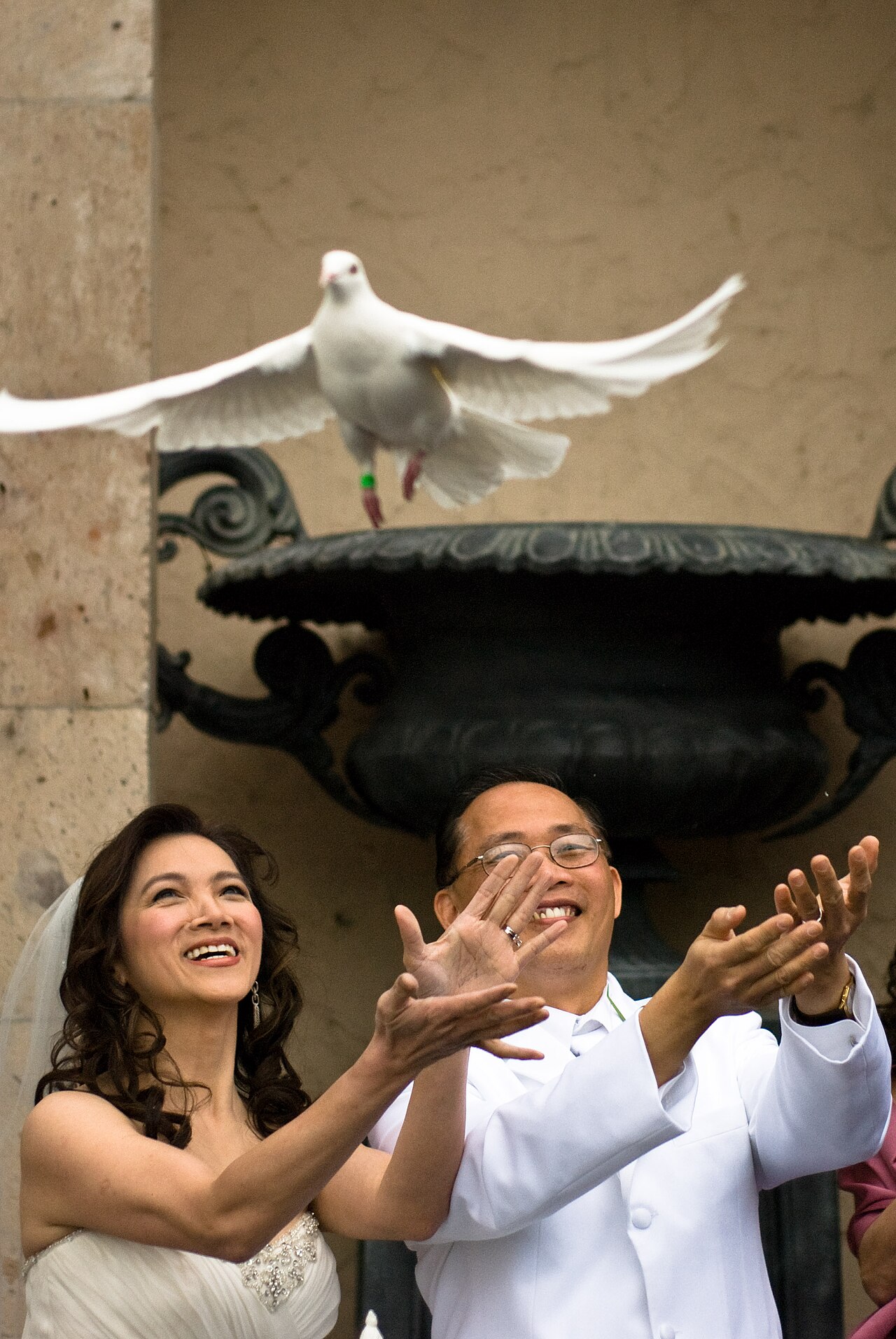
A large share of dove tattoos are memorials, and the design does that job better than almost anything else because the imagery holds grief and comfort simultaneously. The dove ascending, wings up, head lifted, reads as a soul released rather than a life ended, which is precisely the framing mourners want on their skin. Common compositions add a name in script, birth and death dates, a halo, praying hands, a cross, rosary beads, or a portrait with the dove flying free of it.
Specific conventions have developed. A dove flying upward with a beam of light or clouds is the classic ascension design. A dove carrying a rose or a small object associated with the person personalizes it, and a released dove with an open cage or open hands underneath says letting go, often chosen by parents. Multiple doves can mark multiple losses, and some wearers add one bird per family member lost, quietly extending the piece over years, which the design absorbs gracefully because doves naturally appear in groups.
The bird was already tied to mourning before tattooing borrowed it. Doves are released at funerals in many traditions specifically for that ascension image, and the mourning dove earns its name from its plaintive cooing, a sound that has meant loss to American ears for generations, as our mourning dove symbolism guide explores. Choosing a dove memorial is stepping into a very old, very widely understood language, which matters, because a memorial tattoo does its work best when strangers instantly read what it is.
Dove Tattoo Meaning for Men
Dove tattoos are more popular with men than most people assume, with search interest for men’s dove designs running high, and the male register leans toward peace as hard-won rather than peace as decoration. The most common contexts are faith, memorial, and reformation: a man marking a religious commitment, honoring someone lost, or declaring a break from a violent or destructive past. In that last reading, the dove is the deliberate opposite of the aggressive imagery it often sits beside.
Design language differs from the delicate versions. Men’s dove pieces tend toward larger scale and heavier contrast: photorealistic black and grey doves in flight across a forearm or chest, doves paired with praying hands, rosaries, crosses, or clouds, and doves worked into religious sleeves alongside cathedral architecture and portraits. Chicano and black-and-grey traditions gave the dove a particularly strong place in men’s tattooing, where doves with names and dates function as both faith statement and memorial.
Hand and neck doves deserve a note because they are heavily searched and heavily visible. A dove on the back of the hand reads as a permanent, public commitment to the peace or faith meaning, and it is a frequent choice after prison, recovery, or conversion. It also carries the standard consequences of hand placement in conservative workplaces. Men who want the same statement with more control over exposure usually move it to the forearm or chest, the placements that dominate the category, as covered across the range in our bird tattoo meanings guide.
Dove Tattoo Meaning for Women
For women, dove tattoos most often carry love, faith, and remembrance in more intimate scale and style. Fine-line and minimalist doves are the fastest-growing format: a small flying silhouette on the wrist, forearm, collarbone, ribs, or behind the ear, sometimes no bigger than a thumbnail, holding the full meaning without announcing it. Watercolor treatments, dotwork, and doves paired with florals, olive branches, or script are the most requested styles.
The love and partnership reading tends to lead. Two doves in flight, sometimes with a shared ribbon, heart, or infinity line, mark marriages and long relationships; a dove with children’s names or birth dates marks motherhood. The freedom reading follows close behind, especially the dove escaping an open cage or breaking a chain, a design with real currency among survivors of controlling relationships, and one of the clearest cases where a gentle image carries a fierce statement.
The faith and memorial registers work exactly as they do for men, just usually smaller and often placed where the wearer can see it: the inner forearm, the wrist, the sternum. One design worth knowing is the dove with a specific flower, lilies for purity and funerals, roses for love, forget-me-nots for remembrance, which lets a single small tattoo say something quite precise. If the intended meaning is spiritual visitation rather than mourning, the redbird tradition may fit better, and our cardinal visits meaning guide covers that parallel belief.
One, Two, or Three Doves: How Numbers Change the Message
Dove tattoos are one of the few designs where counting genuinely changes the meaning, and wearers should choose deliberately. A single dove is the default: peace, hope, the Holy Spirit, or one soul, and in memorials it represents the person lost. A single dove in flight leans freedom and ascension; a single dove perched or landing leans peace arriving and settling.
Two doves mean love and partnership, the most requested multi-bird version by a wide margin. Facing each other, they read as a bonded pair; flying together, as two people traveling the same road; with a ribbon or shared branch, as marriage specifically. Couples often split the design, one dove each, positioned to face the partner’s, which is why matching two-dove tattoos are a staple of anniversary work. Some wearers also use two doves for a parent and child, or for a person and someone they lost.
Three doves most often invoke the Trinity, Father, Son, and Holy Spirit, in Christian pieces, and otherwise stand for a family unit or the classic past-present-future arrangement. Larger flocks read as family, congregation, or souls released collectively, and scattered ascending groups are common in memorials for multiple losses. Cascading flock designs also solve a practical problem elegantly: they scale from wrist to full back and can be extended later, one bird at a time, without redesigning the piece.
Olive Branches, Chains, and Other Dove Pairings
The olive branch is the dove’s signature accessory and its most legible one: peace after conflict, reconciliation, a truce with someone or with yourself. Because of the Noah story, it also carries the specific meaning of survival, the flood ended, the ground is dry. Wearers frequently choose it after long illnesses, legal battles, family estrangements, and wars, and the design reads clearly enough that it works small, on a wrist or ankle, without explanation.
The broken chain or open cage means freedom won, and it is one of the strongest statements in the dove catalog: escape from addiction, abuse, incarceration, or a life someone else was running. Related designs include a dove pulling free of barbed wire and a dove rising from cupped, opening hands. The religious pairings run parallel: a dove with a cross, praying hands, or rosary anchors faith; a dove descending in a beam of light is specifically the Holy Spirit as described at Christ’s baptism; and a dove with a laurel or halo bridges memorial and devotion.
A few pairings deserve a caution. Doves with military insignia, dates, or dog tags read as service memorials and are common and well understood, but doves paired with weapons carry an intentional irony that some artists will discuss with you before committing. And doves with heart-and-banner combinations sit squarely in American traditional territory, where the design is bold, timeless, and ages beautifully, unlike the fine-line variants that soften over decades. The same aging logic applies to every delicate bird design, from doves to hummingbird tattoos.
Which Dove Are You Getting? Species and Design Accuracy
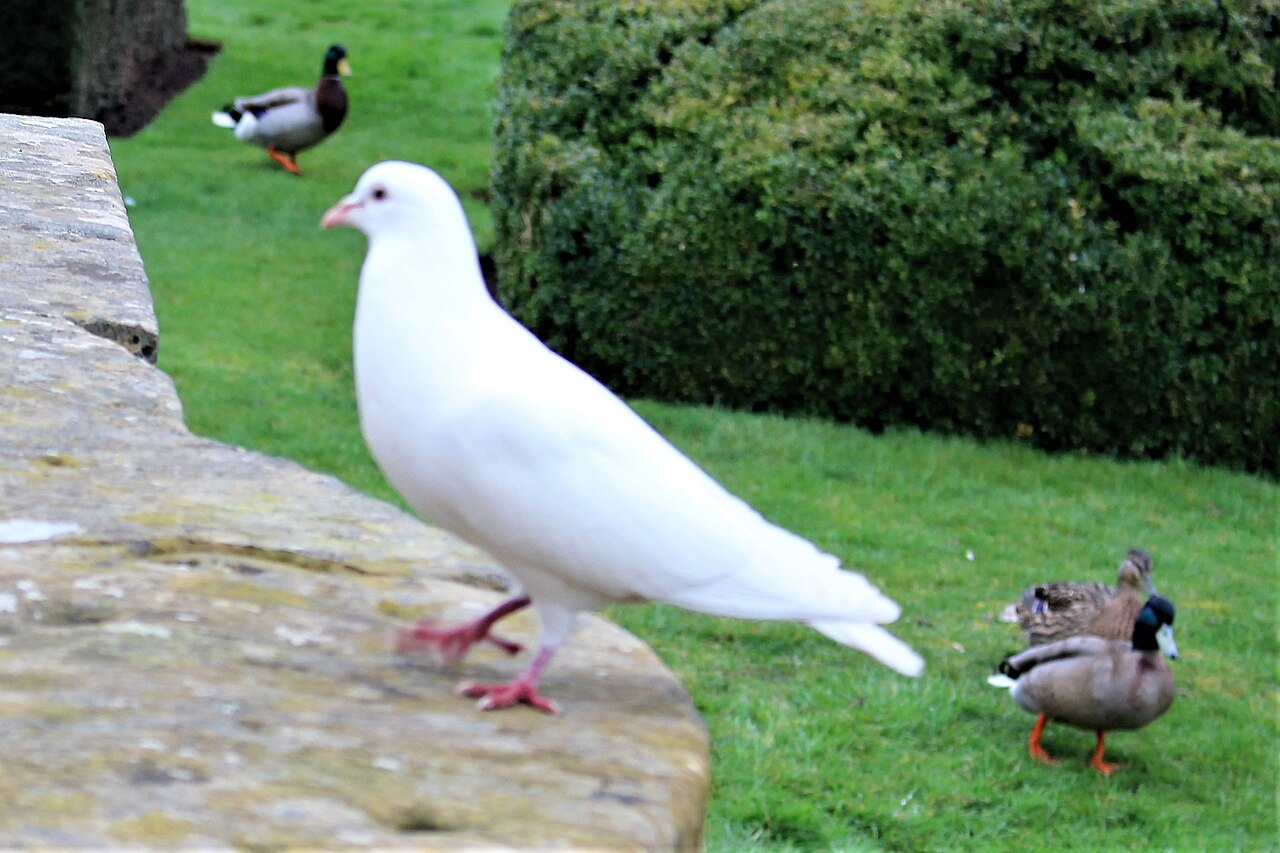
Most dove tattoos depict a white bird, and the white dove of symbolism is not a wild species at all: it is the domesticated rock pigeon, bred for white plumage and released ceremonially at weddings and funerals. That is not a flaw, symbolically the white dove is its own thing, but it does explain why realistic dove tattoos often look pigeon-shaped, because anatomically they are. Artists working from ceremonial release photos are drawing rock pigeons, and the results are correct.
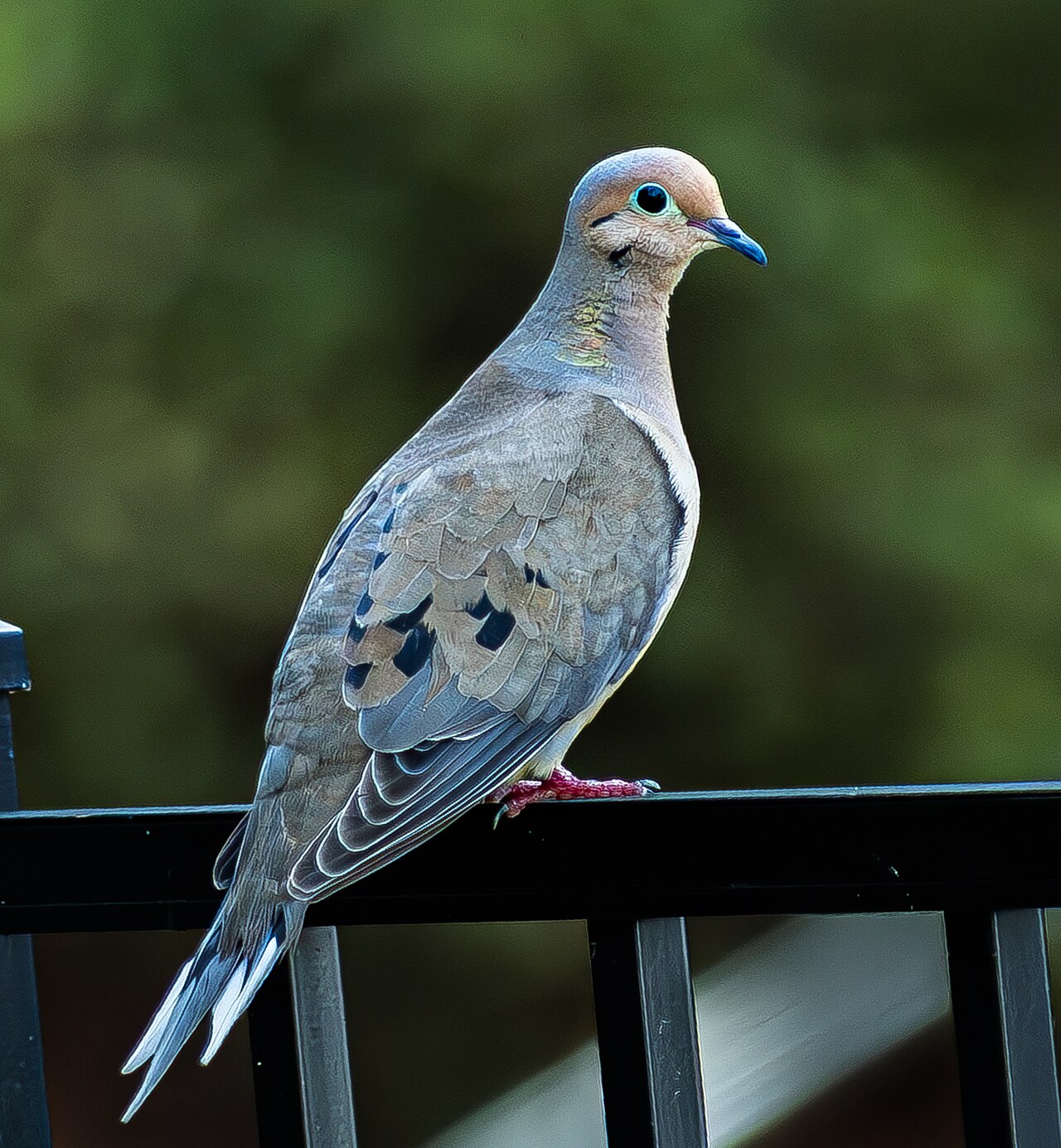
The alternative is a species dove, and in North America that usually means the mourning dove, the soft grey-brown bird with black wing spots, a long pointed tail, and the mournful cooing that gave it a name. Mourning dove tattoos carry a distinctly American, distinctly memorial flavor, and they suit black and grey work beautifully because the bird’s real palette is subtle. Wearers who want their memorial dove to be the actual bird they heard calling in their grandmother’s yard should ask for this species specifically.
Beyond those two, the ringneck dove, white with a thin dark collar, appears in classic religious art, and turtle doves carry their own literary and biblical weight, especially in pairs. Design-wise, the details worth specifying to your artist are the tail shape (fanned for a white ceremonial dove, long and pointed for a mourning dove), the wing position, and whether you want a species-accurate bird or the stylized symbol. Both are legitimate; only one of them is a specific animal, and a five-minute conversation prevents the wrong one.
Placements and Styles for Dove Tattoos
The dove’s shape suits both large and tiny work, which is why it appears everywhere on the body. The forearm leads for medium pieces, holding a flying dove along the muscle with room for script. The chest carries doves in flight over the heart, the natural home for memorials and faith pieces, and the upper back and shoulder blade suit ascending compositions where the wings can follow the bone. Hand and neck placements maximize the statement, at maximum visibility cost.
Small dove tattoos are the category’s growth area: wrist, inner forearm, collarbone, behind the ear, ankle, and finger, usually a flying silhouette or a few clean lines. They work because the dove silhouette, pointed wings, fanned tail, small head, is recognizable at almost any size. Style options run the full range: fine-line and minimalist for small work, black and grey realism for large memorials, American traditional for bold aging pieces, and watercolor for softer, modern versions.
Frequently Asked Questions
What does a dove tattoo symbolize?
Peace, love, hope, and purity at the core, with strong religious meaning (the Holy Spirit, Noah’s dove) and heavy memorial use, where an ascending dove represents a soul released rather than a life ended.
What do two doves in a tattoo mean?
Love and lifelong partnership. Real doves pair closely and share nest duties, so two facing or flying birds have symbolized devoted couples for millennia. Some wearers use the pair for a parent and child instead.
Is a dove tattoo religious?
It can be, but it does not have to be. The dove is a central Christian symbol of the Holy Spirit and divine promise, yet it also functions as a purely secular emblem of peace, freedom, and remembrance.
What does a dove tattoo mean for a man?
Usually faith, memorial, or peace chosen deliberately after a hard chapter. Men’s dove designs skew larger and higher-contrast, often paired with praying hands, crosses, names, or dates, and are common in black-and-grey traditions.
What does a dove with an olive branch mean?
Peace after conflict and survival, from the Genesis account of a dove bringing Noah an olive leaf after the flood. It is the most legible pairing in the dove catalog and works well even at small scale.
What do three doves mean in a tattoo?
Most often the Christian Trinity, and otherwise a family of three or a past-present-future arrangement. Larger flocks read as family, congregation, or multiple souls released.
What does a dove and broken chain tattoo mean?
Freedom won: escape from addiction, abuse, incarceration, or a controlling situation. Related designs include a dove leaving an open cage or rising from opening hands.