Golden Eagle: Western Giant Guide
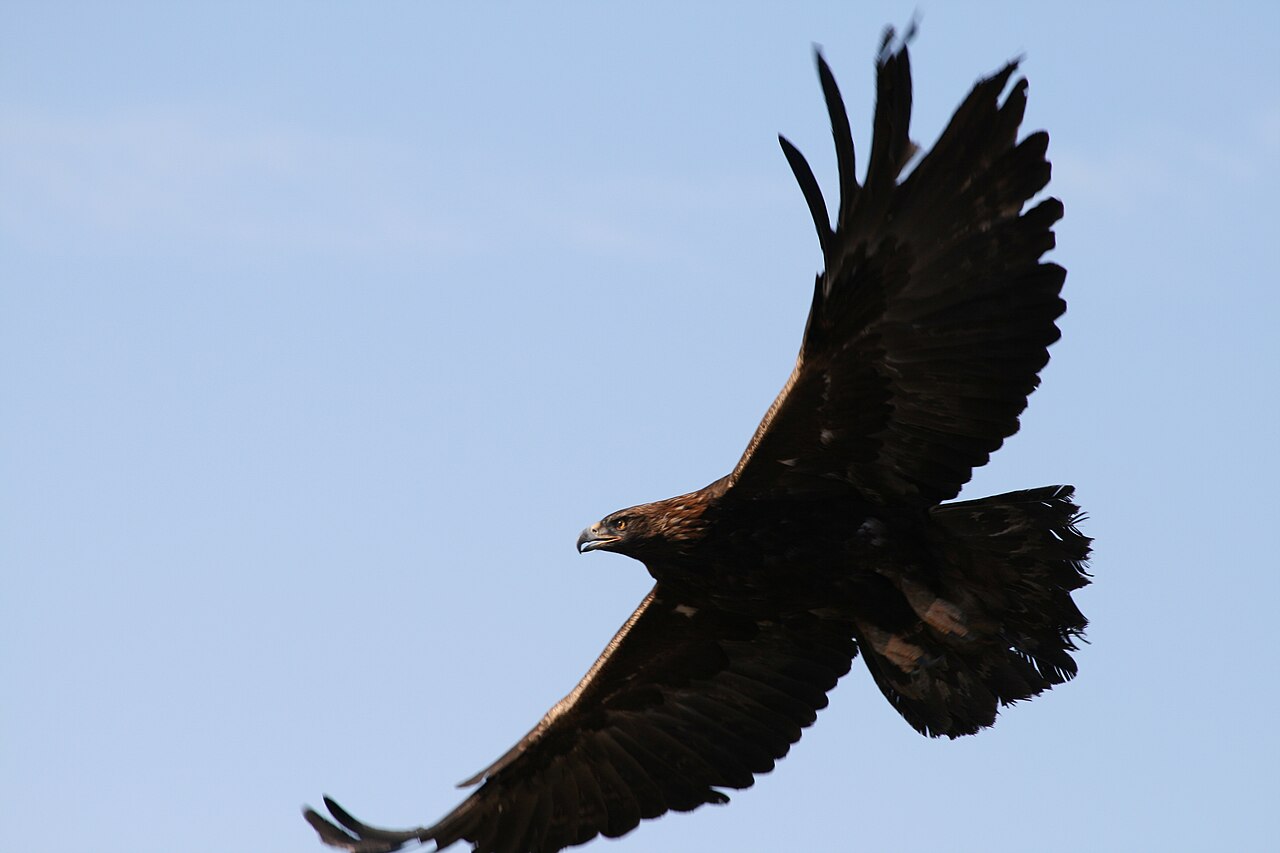
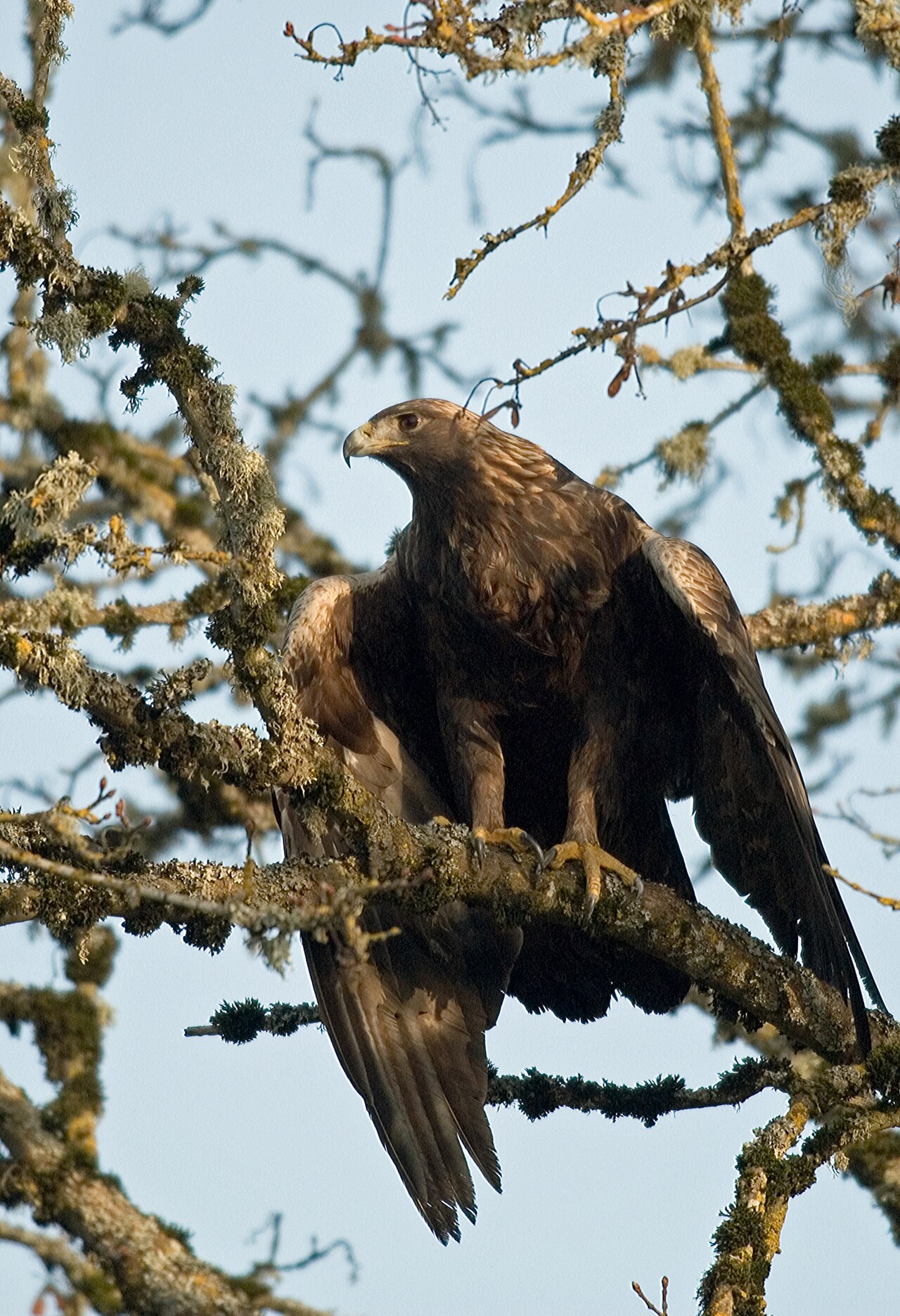
The golden eagle is a large, powerful raptor of open and mountainous terrain, mostly dark brown overall with a wash of golden feathers on the back of its head and neck that gives the species its name. With a wingspan approaching seven feet and legs feathered all the way to the toes, unlike a bald eagle’s bare lower legs, the golden eagle is widely considered one of the most capable and versatile hunters among North American birds of prey, able to take down prey as large as young deer.
| Fact | Detail |
|---|---|
| Wingspan | 6 to 7.5 ft |
| Weight | 6.5 to 13 lbs (females larger) |
| Diet | Rabbits, ground squirrels, prairie dogs, occasionally larger mammals |
| Habitat | Open country, mountains, and grasslands, mainly in the western US |
| Legs | Feathered to the toes (key ID feature vs. bald eagle) |
| Top speed | 150+ mph in a hunting dive |
Size and Appearance
Golden eagles are almost entirely dark brown, with the golden feathers that give the species its name limited to the nape and crown, a detail visible mainly at close range or in good light. Adults have a wingspan of roughly six to seven and a half feet, rivaling a bald eagle’s, and females again outweigh males, reaching up to 13 pounds compared to a male’s 6.5 to 9 pounds, a size difference common across most raptor species and generally attributed to the demands of incubation and defending the nest. One of the most reliable field marks separating a golden eagle from an immature bald eagle, which is also dark brown before developing its white head, is the leg: a golden eagle’s legs are feathered all the way down to the toes, while a bald eagle’s lower legs are bare and yellow. For the full lineup of eagle species found in North America, see our eagle species guide.
Golden Eagle vs. Bald Eagle: Key Differences
Confusion between the two species is common because juvenile bald eagles lack the white head that makes adults so recognizable, leaving both species looking like a large, uniformly dark raptor at a glance, especially to a casual observer watching from a moving car or a considerable distance away. The most dependable difference is the legs: golden eagles have feathers running all the way to their toes, while bald eagles have bare yellow legs at any age. Habitat offers a second clue, since golden eagles favor open country, mountains, and grasslands, particularly in the western half of the US, while bald eagles stick close to rivers, lakes, and coastlines. Golden eagles also carry their head and bill more prominently forward in flight and show a more uniform underside, whereas young bald eagles typically show more mottled white patches on the wing linings and body, a distinction that becomes easier with practice but still trips up even experienced birders at long range. For a detailed side-by-side, see our bald eagle guide.
Diet and Hunting Behavior
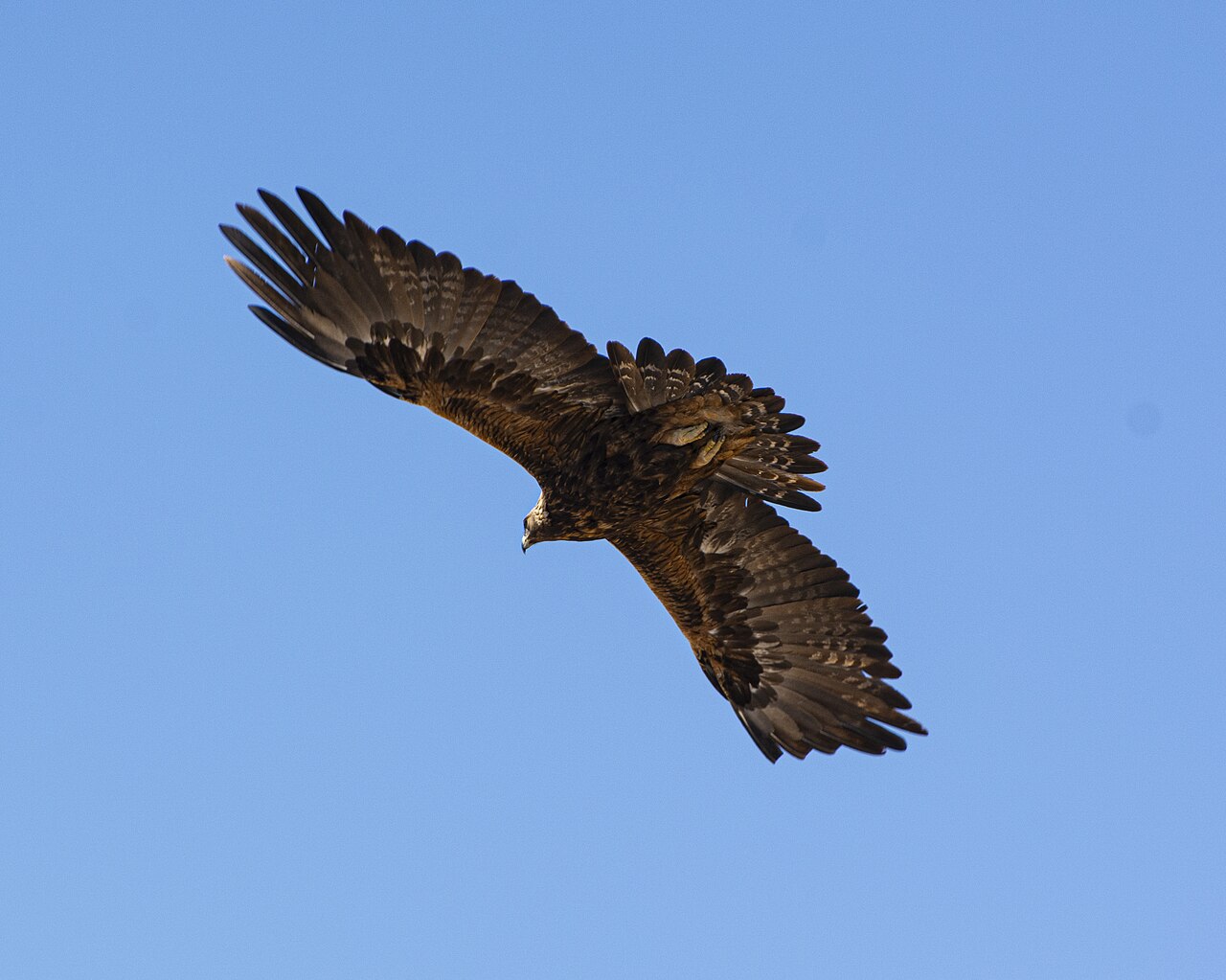
Golden eagles hunt live prey almost exclusively, relying on exceptional eyesight and speed rather than the scavenging habits bald eagles frequently show. Rabbits, ground squirrels, and prairie dogs make up the bulk of their diet across most of their range, but golden eagles are also capable of taking prey as large as young deer, foxes, and other mid-sized mammals, occasionally hunting in pairs to bring down something too large for one bird alone, a level of cooperation rarely documented in most solitary raptor species. In a hunting stoop, a golden eagle can exceed 150 miles per hour, among the fastest flight speeds of any bird, and it strikes prey with its talons using tremendous crushing force, generating pressure per square inch that far exceeds what a human hand can produce. Historically, golden eagles were trained by falconers across Europe and Central Asia specifically for their ability to take down wolves and foxes, a testament to their power relative to body size, in sharp contrast to a fish specialist like the osprey.
Range and Habitat
Golden eagles are found across much of the Northern Hemisphere, and in North America they are concentrated in the western United States, western Canada, and Alaska, favoring open habitat such as prairie, desert, tundra, and mountainous terrain where they can spot prey from great distances. They are far less common in the eastern US, where dense forest cover limits the open hunting grounds they rely on, though a small population breeds in eastern Canada and winters in the Appalachians, a pattern also seen in several hawk species that favor open country. Golden eagles nest on cliff ledges or in large trees, often reusing and adding to the same nest site for years, and pairs typically hold large hunting territories that can span dozens of square miles in sparse desert habitat. The species also holds cultural weight beyond North America; a golden eagle appears on the coat of arms of Mexico, depicted grasping a serpent, a design tied to Aztec founding legend, one of several eagle species that carry deep symbolic meaning among birds of prey worldwide.
Conservation Status
Golden eagles are protected in the United States under the same Bald and Golden Eagle Protection Act that covers bald eagles, along with the Migratory Bird Treaty Act, making it illegal to kill, harm, or possess golden eagle parts without a federal permit. According to the Cornell Lab of Ornithology, golden eagle populations in North America are generally stable overall but face localized pressure from habitat loss, collisions with wind turbines and vehicles, and lead poisoning from scavenged carrion shot with lead ammunition. Unlike the bald eagle’s dramatic mid-century collapse and recovery, golden eagle numbers have stayed comparatively steady, in part because the species was never as directly affected by the pesticide DDT, which concentrated more heavily in fish-eating birds near water. Conservation groups continue to monitor golden eagle populations closely, particularly around expanding wind energy infrastructure in the open western terrain the species depends on for hunting.
Nesting and Life Cycle
Golden eagles build large stick nests on cliff ledges, rock outcrops, or occasionally tall trees, and a single nest site may be used and expanded by the same pair for many consecutive years, growing into a substantial structure over time. Pairs typically lay one to three eggs, and incubation lasts around six weeks, with both parents sharing feeding duties once the eggs hatch, though it is common for only the strongest one or two chicks to survive to fledging due to sibling competition for food. Young golden eagles remain dependent on their parents for several months after leaving the nest, practicing hunting skills on smaller prey before attempting anything as large as a jackrabbit or young deer on their own. Golden eagles can live 20 to 30 years in the wild, and established breeding pairs tend to hold the same territory for most of their adult lives, defending dozens of square miles of hunting ground from rival eagles and occasionally from other large raptors that stray too close to an active nest site.
Frequently Asked Questions
How big is a golden eagle?
A golden eagle has a wingspan of roughly 6 to 7.5 feet and weighs between 6.5 and 13 pounds, with females larger than males, closely rivaling a bald eagle in size.
What does a golden eagle look like?
A golden eagle is almost entirely dark brown with a wash of golden feathers on the back of the head and neck, and its legs are feathered all the way to the toes, unlike a bald eagle’s bare legs.
What does a golden eagle eat?
Golden eagles eat mostly rabbits, ground squirrels, and prairie dogs, and they are capable of taking prey as large as young deer or foxes, especially when hunting in pairs.
Is a golden eagle bigger than a bald eagle?
The two species are close in size, with wingspans and weights that overlap substantially; golden eagles are not reliably larger, and the two are best told apart by leg feathering and habitat rather than size alone.
How fast can a golden eagle fly?
A golden eagle can exceed 150 miles per hour in a hunting stoop, making it one of the fastest flying birds when diving on prey.
What eats a golden eagle?
Adult golden eagles have few natural predators, though eggs and young chicks are occasionally vulnerable to other large raptors, mammalian predators, or corvids raiding an unguarded nest.
Where do golden eagles live?
Golden eagles are concentrated in the western United States, western Canada, and Alaska, favoring open prairie, desert, tundra, and mountainous terrain over the dense forests and coastlines bald eagles prefer.
How long do golden eagles live?
Golden eagles typically live 20 to 30 years in the wild, and established breeding pairs often hold the same large hunting territory for most of their adult lives.